Is your factory facing unexpected machine downtime without knowing the cause in advance? Transitioning into a Smart Factory with Industrial IoT sensors is the solution for sustainably addressing these issues. As experts in automation solutions, SCMA will guide you through this technology and provide a checklist to help elevate your production line to its highest efficiency.
What are Industry 4.0 Sensors?
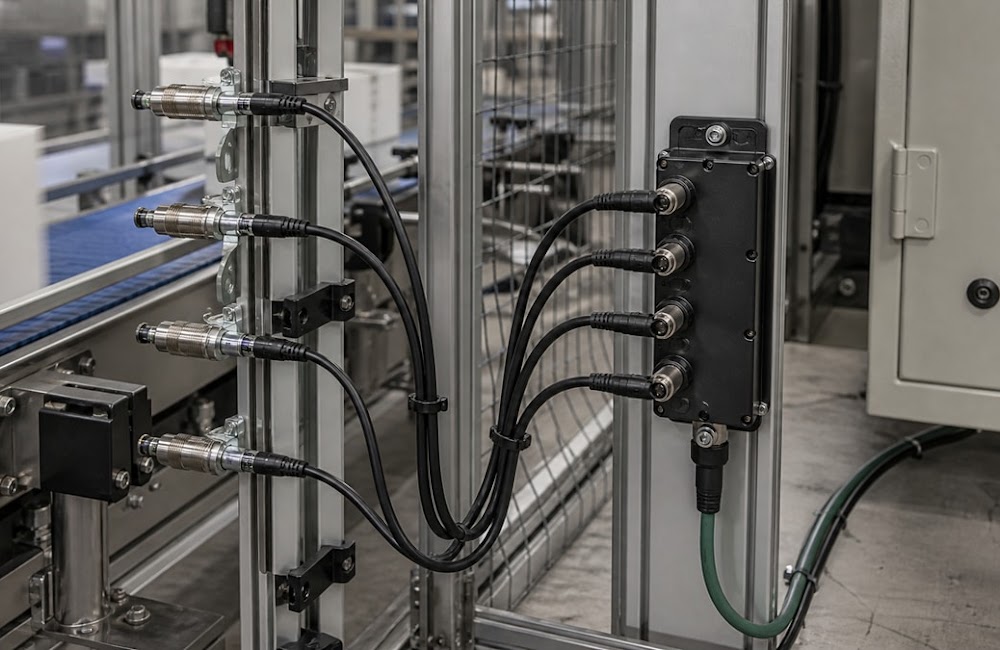
Industry 4.0 sensors are measuring devices that can communicate and transmit real-time data through an industrial internet of things (IIoT) network. These devices truly serve as the eyes and sensory organs of a smart factory, providing insights that enable machines to work autonomously, analyze trends, and alert for anomalies to prevent machine failure before it occurs (Predictive Maintenance).
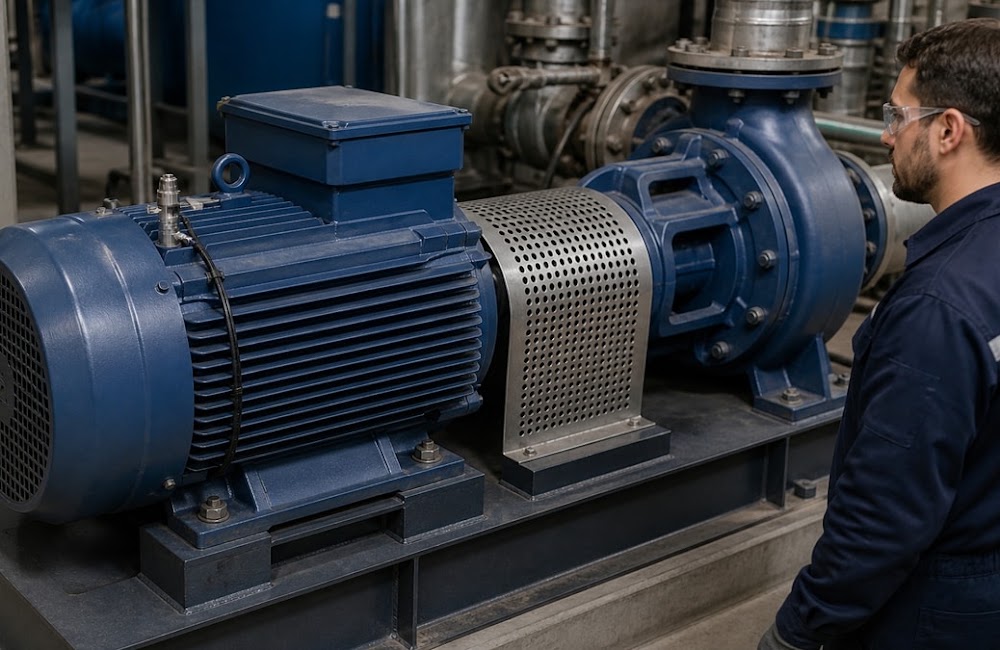
How Industrial 4.0 Sensors Work
In the era of Industry 4.0, sensors function as the eyes of machinery. The principle of operation begins with measuring physical values and converting them into electrical signals. Based on the experience of the SCMA engineering team, we summarize the working principles of various types of sensors used in smart factories as follows:
Proximity Sensors
The device operates by creating an electromagnetic field or emitting light to detect objects without contact. When a workpiece enters the predetermined range, the induced capacitance changes, and this type of sensor accurately signals the control system in the production line.
Vision Sensors
The system uses high-resolution cameras to capture images of objects on the production line and send data for software processing. The program compares color, shape, and size with standard values to quickly identify defective workpieces. This technology helps maintain excellent product quality standards.
Motion Detection / Safety Light Curtain (Area Sensors)
The device works by shooting beams between the transmitter and receiver to create a safety zone. If an employee crosses the light curtain, the system converts it into an electrical signal that immediately stops the machinery. This high level of safety is considered the heart of industrial operations.
Transducers
The principle involves receiving energy in one form during production processes such as pressure or temperature and then converting them into standard electrical signals. The central control system reads these values for analysis to perform Predictive Maintenance effectively.
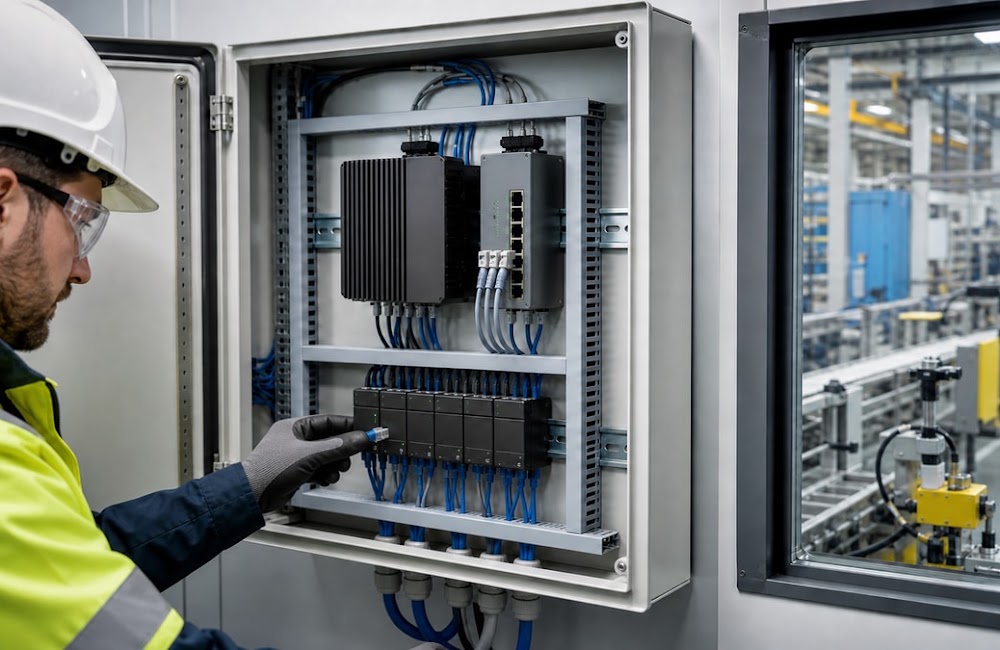
How many types of Industry 4.0 sensors are there?
The sensor system for Industry 4.0 has a wide range of applications to support high-level data communication. SCMA, the leading automation systems distributor, categorizes equipment according to Smart Factory standards into five main types:
1. Process Sensors
This group of devices monitors important environmental conditions in production lines, such as temperature sensors, pressure sensors, flow meters, and liquid level measurement. Real-time data analysis helps ensure stable product quality control.
2. Proximity Sensors
This type of sensor is designed to detect the position of objects, divided into metal-detecting (Inductive) and general object detection (Capacitive) sensors. Contactless technology meets the needs of high-speed production conveyor belt operations.
3. Photoelectric/Optical Sensors
The equipment uses a light beam to detect moving objects through conveying systems. This type of technology is highly accurate in position verification, and applying these Industry 4.0 sensors helps reduce errors in counting workpieces.
4. Vision Sensors
Sophisticated industrial cameras perform detailed inspections of the shape, color, or position of workpieces. The system sends image data for real-time defect sorting and SCMA recommends this equipment to reduce waste costs in factories.
5. Vibration & Condition Monitoring Sensors
These devices continuously monitor abnormalities in motors or machinery. Vibration data is used to plan Predictive Maintenance, allowing maintenance teams to replace parts before severe damage occurs.
Maintenance of Industrial 4.0 Sensors
The maintenance system focuses on using smart technology to assess the condition of machinery in advance. From SCMA's case study, important technologies for Predictive Maintenance include the following methods:
Use of IO-Link Sensors
The IO-Link system enables operators to automatically configure parameters for Industrial 4.0 sensors. The equipment can immediately alert about abnormal conditions or machine degradation. This insight clearly reduces production downtime.
Automatic Calibration
This approach uses real-time sensor condition analysis software to assess accuracy. The system plans alerts for component replacement before deviations affect the workpiece quality. Automatic calibration helps maintain the quality level of Smart Factories reliably.
Sophisticated Network System (AS-Interface)
Data connection with AS-i standard reduces wiring complexity in operational areas. Control systems can quickly identify sensor malfunction locations. This technology makes maintenance processes easy and efficient.
Using Industrial 4.0 Sensors
Utilizing equipment in conjunction with SCMA's solutions drives the tangible potential of Smart Factories. The key is to extract real-time data for analysis, reducing production costs.
1. Processing and Quality Control
The use of Vision Sensors alongside Process Sensors helps to meticulously inspect both environmental conditions and workpieces. The system processes the information by comparing it with standard values to identify defective products. Implementing this type of Industrial 4.0 sensor system maintains brand standards.
2. Automation & Object Detection
Object sensors work in conjunction with safety light curtains to control production lines while protecting employees. If someone enters a dangerous area, the machinery will immediately stop operating. A highly secure automated system is a crucial foundation for smart factories.
3. Intelligent Communication and Network System
The AS-Interface system uses a single cable to connect sensors with central control systems. This configuration simplifies wiring design complexity, allowing the factory to quickly communicate commands with sensors.
Benefits of Industrial 4.0 Sensors
Smart sensors help elevate production lines to work in harmony as a single system. The ability to collect real-time data offers significant advantages for various aspects of the industry:
Predictive Maintenance
The equipment can detect abnormal vibrations or heat from machines. Engineering teams analyze this data to perform preventive maintenance before damage occurs, clearly reducing downtime.
High Accuracy and Efficiency
Sensors can measure various parameters with precision and send reliable data. The products produced are of consistent quality. Using Industrial 4.0 sensors significantly reduces waste in the production process.
No-Threshold Connectivity (IoT Integration)
The technology allows for data transmission through a network to a central control center. Managers can monitor production lines remotely, making decisions to improve systems in Smart Factories faster.
Maximum Workplace Safety
The installation of safety devices protects the lives of employees in working areas. The system immediately shuts down machines upon detecting risks, thus practically increasing factory safety.
How to Choose Industrial 4.0 Sensors
When considering the purchase of industrial 4.0 sensors from leading brand dealers, system compatibility must be taken into account. Based on the experience of the SCMA engineering team, we recommend the following evaluation principles:
- Select Technology that Supports IO-Link: Look for sensors capable of sending digital data directly. Using this technology helps to efficiently extract insights for Predictive Maintenance.
- Define Usage Types Clearly: Specify requirements such as whether the production line needs Process Sensors for temperature measurement or Vision Sensors to check product quality.
- Prioritize Vibration Measurement Devices: Considering the installation of Vibration Sensors helps assess machine condition promptly, reducing sudden machinery downtime issues.
- Evaluate Working Environment Conditions (Application Conditions): Assess risks such as high heat exposure, chemical contact, or dust to choose models that are durable in these environments.
- Select Communication Systems That Fit: Consider what type of connectivity your central control system supports to ensure optimal data transmission in a Smart Factory.
Preparation Before Installing Industrial 4.0 Sensors
Moving towards a Smart Factory requires a step-by-step plan for industrial 4.0 sensor systems. The SCMA engineering team recommends the following checklist to prepare before integrating the system into actual use:
- Evaluate Existing Network Structure: Check if the current machine control system supports digital communication (such as IO-Link).
- Define Clear Measurement Goals: Specify areas where losses need to be reduced to select appropriate devices such as Process Sensors that fit the nature of work.
- Consult Automation System Experts: Working with experienced partners helps design a communication system that works seamlessly together.
Summary
Industrial 4.0 sensors are the key to transforming production lines into smart factories (Smart Factory). The application of these devices enables operators to perform predictive maintenance (Predictive Maintenance) to sustainably reduce costs. If your factory is ready for an efficiency upgrade, SCMA's expert team is happy to provide consultation and offer the most accurate solutions.
Ready to purchase Industrial 4.0 sensors? You can buy them from SCMA today!
Selecting a distributor who understands engineering complexities is the start of success SCMA Co., Ltd. is dedicated to delivering Industrial 4.0 sensor technology to enhance production lines. We provide high-quality sensor product groups from leading global brands, and our team of engineers is ready to offer solution design services and calibration work for long-term cost-effective results.
Frequently Asked Questions
How do Industrial 4.0 sensors differ from regular sensors?
New equipment communicates digital data directly through networks, allowing control systems to analyze the data deeply for immediate assessment of machine status.
Why is IO-Link technology important in manufacturing lines?
This communication standard enables sensors to report their own wear and tear. This information helps engineers plan maintenance more accurately in advance.
Is it necessary to completely overhaul the existing sensor system for a Smart Factory?
The factory can gradually upgrade critical systems first. The SCMA engineering team is ready to help design new systems that connect with your existing infrastructure.
Which industries are suitable for Vision Sensors group equipment?
This technology meets the needs of automotive and electronics industries requiring high precision in real-time shape inspection of workpieces.
Does SCMA offer after-sales services for smart sensor systems?
We provide comprehensive services from system design, calibration work to maintenance by skilled technicians specializing in automation.