
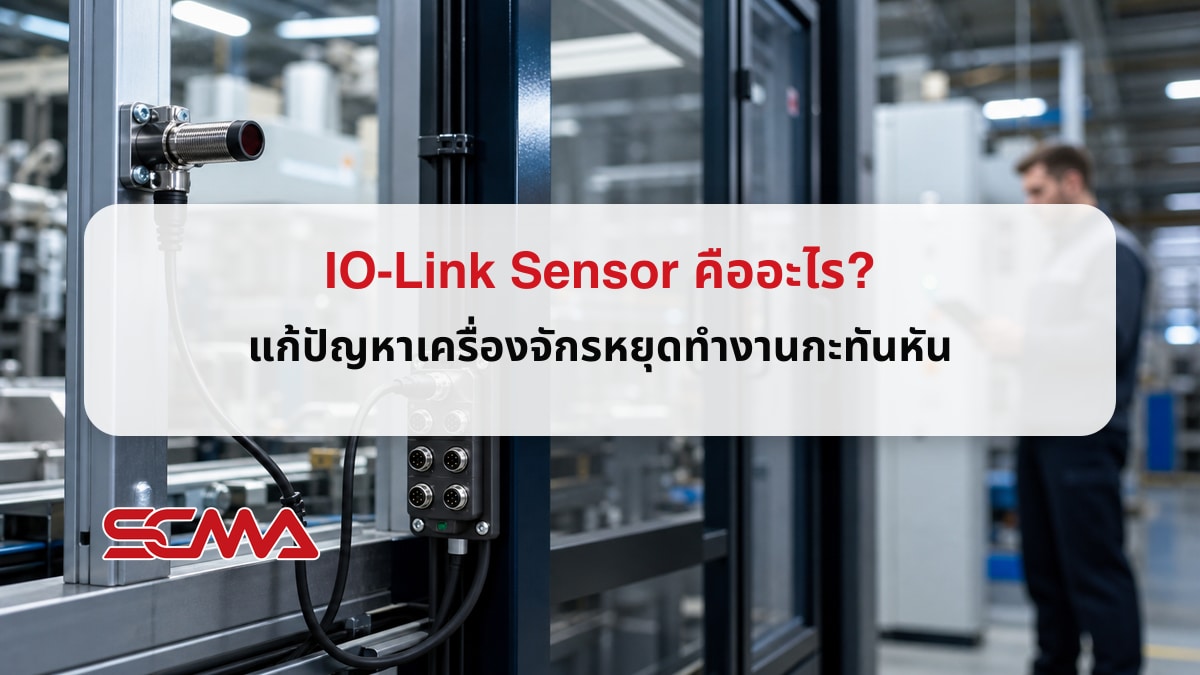
Is your factory facing issues with machinery stopping due to sensor malfunctions? Choosing to use the IO-Link Sensor, which is an intelligent industrial sensor technology, is a solution for elevating your automation system's stability. SCMA Co., Ltd., the provider of measurement tool solutions, will guide you in understanding how this technology works and provide a comprehensive list to help you select the right options to enhance production efficiency sustainably at your factory.
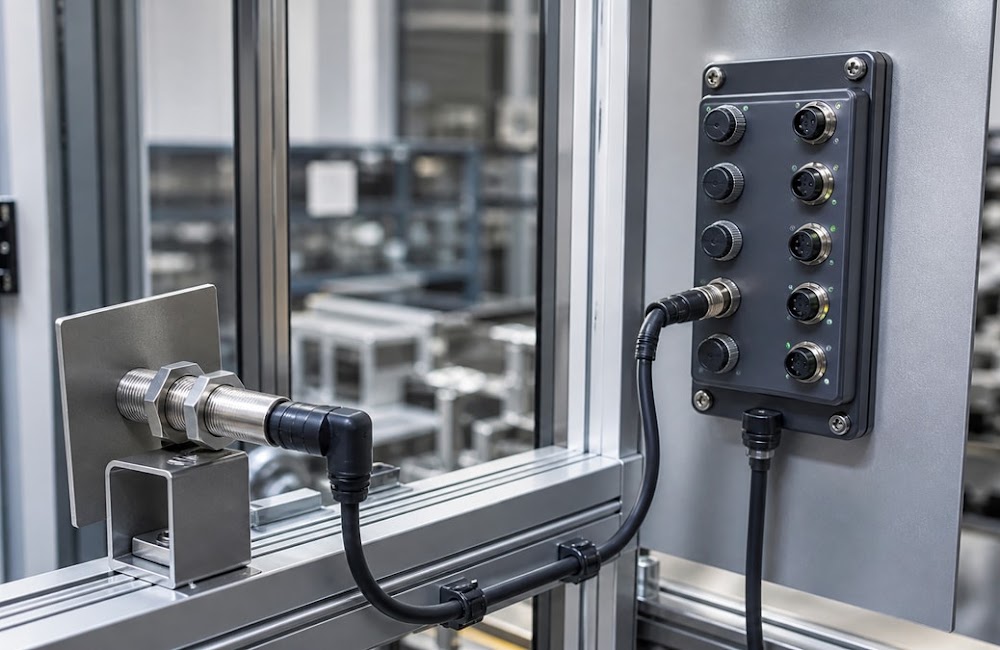
What is an IO-Link Sensor?
An IO-Link sensor is an industrial sensor that supports standard digital communication (Point-to-Point), enabling the sensor to send real-time status data. This system has the capability for precise and detailed diagnostics of abnormalities, making it a key technology in transitioning traditional manufacturing plants into fully digitalized ones.
How IO-Link Sensors Work
Based on the experience of the SCMA engineering team, understanding how this technology works is a crucial foundation for designing efficient automation systems. This industrial sensor technology operates through a single standard cable, enabling fast data communication.
Bidirectional Communication
This system stands out with superior bidirectional communication compared to general sensors. Devices not only send measured values (Process Data) to the central control system but users can also remotely send commands (On-Demand Data) to immediately adjust the operating mode of smart sensors.
Three Types of Data Transmission in a Single Line
This communication technology can transmit three types of important data through a single cable. This includes actual measured values (Process Data), configuration information (Service Data), as well as status notification data (Event Data) such as high temperature warnings to prevent machinery from shutting down.
Usage with IO-Link Master
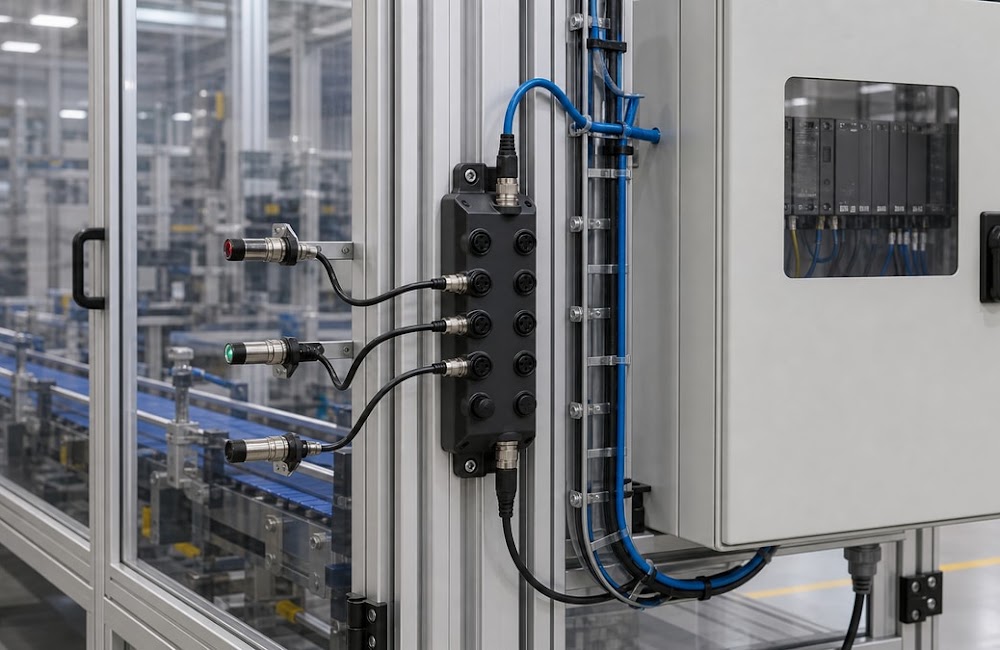
In an automation system, sensors must first send digital signals to a central device called the IO-Link Master. This device then converts the signal and forwards the data to the central control system (PLC), making on-site wiring simple and uncomplicated.
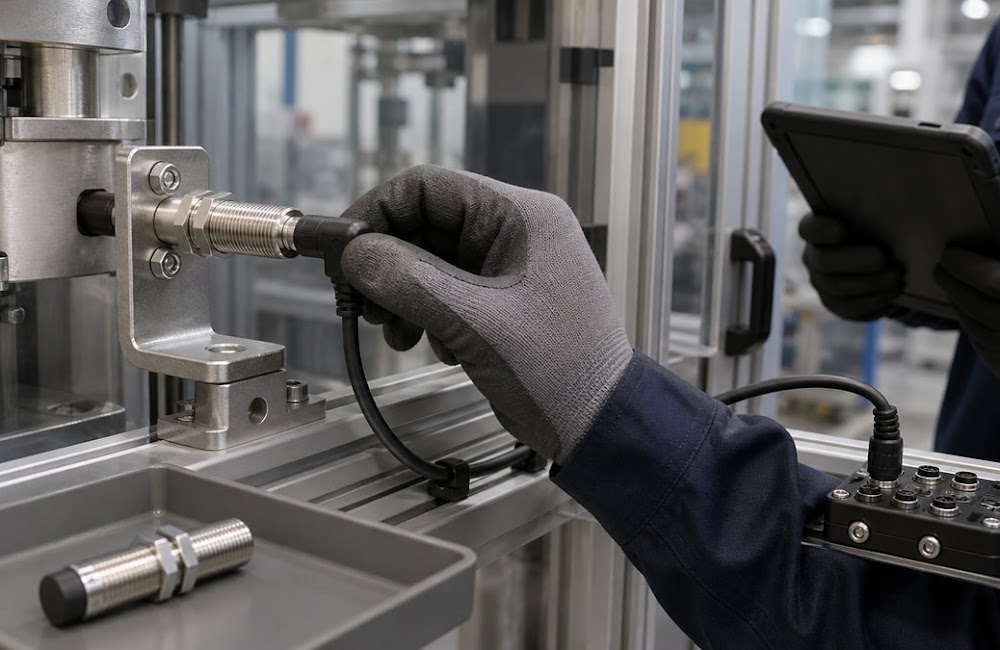
How Many Types of IO-Link Sensors Are There?
The range of detection devices in the IO-Link Sensor group is diverse to meet different manufacturing process requirements. Selecting the correct industrial sensor type for specific job site characteristics is a key factor in determining the success of an automated control system.
Proximity Sensors
This type of equipment is used to detect the presence of objects without direct contact. There are options such as inductive sensors for detecting metal, capacitive sensors for non-metallic detection, and cylinder sensors that precisely meet mechanical machine requirements.
Distance & Measurement Sensors
For tasks requiring spatial accuracy, distance and measurement sensors are the best choice. This group includes laser beam switches, ultrasonic sensors, and fiber optic sensors for accurately measuring the distance of workpieces in automated systems.
Process Sensors
In industries dealing with liquids or chemicals, process sensors are essential equipment. These devices measure important variables such as temperature, pressure, liquid level, and water flow rate within pipelines to maintain system balance.
Maintaining IO-Link Sensors
The SCMA maintenance engineering team emphasizes that maintaining this technology helps shift the work style towards predictive maintenance (Predictive Maintenance). Bidirectional digital data provides advance warnings to prevent sudden machine downtime.
Remote Monitoring Through System
System administrators can check the health status of industrial sensors in real-time through software without having to go on-site. The system will display abnormalities such as excessively high temperatures or declining signal quality, allowing teams to plan maintenance ahead of time.
Cleaning and Physical Inspection
No matter how advanced the network system is, lens cleaning and physical equipment inspection remain necessary. Users should check cable connector (Connector) connections tightly to prevent moisture accumulation that may disrupt signals in the automatic system.
Managing Wear and Tear and Maintenance Cycle Alerts
New models have built-in capabilities for counting working cycles (Cycle counts). When usage reaches a predetermined limit, the system automatically sends maintenance cycle alerts. This function helps replace parts before severe damage occurs.
Using IO-Link Sensors
The application of digital communication technology in automation systems helps reduce the complexity of cable management. The Point-to-Point infrastructure structure ensures that smart sensors operate at maximum stability when transmitting data.
Device Connection (Connection)
The initial installation begins with connecting the device to the IO-Link Master signal box using standard 3-wire cables. Afterward, the Master receives digital data for processing by the controller (PLC) or the main SCADA system of the industrial plant.
Sensor Configuration and Communication (Parameterization)
Engineers can set detection ranges and change operating modes directly through central software. Remote configuration of industrial sensors saves a tremendous amount of time compared to manually tuning each device individually.
Data Storage System for Replacement and Maintenance
A key feature is the system's parameter memory function. If a sensor malfunctions and needs replacement, the IO-Link Master immediately downloads previous settings onto the new unit, allowing the automation system to resume operation quickly without reconfiguration.
Advantages of IO-Link Sensors
Investing in an upgrade to use the IO-Link Sensor standard offers long-term business returns. This technology addresses common issues in industrial plants while significantly enhancing production efficiency.
Simplifying Cable Management
This system saves space in control cabinets and clearly reduces the amount of cable needed on-site. Simplifying cable management makes automation system design easier and greatly reduces material costs.
Accuracy of Digital Data Transmission
Digital signal data transmission eliminates interference issues (Noise) found in analog systems. The values received by the control system are highly accurate, reflecting the actual status measured by industrial sensors on-site.
Predictive Maintenance Support
Self-diagnostic functions help engineering teams anticipate equipment abnormalities. Early warnings about dirty lens issues are crucial for preventing sudden machine downtime in production lines.
How to Choose an IO-Link Sensor
Selecting industrial sensors that are cost-effective and meet the requirements of automated systems involves considering several factors together. The expert team from SCMA, the main distributor of ifm brand in Thailand, recommends a key checklist to help you make the right decision when choosing equipment.
- Choose the type that matches the job characteristics: Distinguish between measuring sensors (Measuring Sensors) such as flow meters which send multiple parameters simultaneously and detection sensors for counting workpieces. You should opt for IO-Link technology instead of analog systems because it provides more detailed information at a similar price.
- Check physical specifications: Evaluate the installation pattern, thread size, and detection range to suit the job site. Choose the correct level of dust and water protection such as IP69K standard for areas that require harsh cleaning with high-pressure washes. Also check the power supply voltage specification.
- Check advanced parameters for diagnostics: Select models with Smart Features to support predictive maintenance. The equipment must have the ability to alert abnormal status, such as lens dirty warning signals or nearing end-of-life usage.
- Select connecting devices (IO-Link Master & Hubs): Choose a system master that aligns with the main communication protocol of the factory (Profinet, EtherNet/IP). If there are multiple installation points in the same area, consider using an IO-Link Hub to consolidate signals into the master, helping save on wiring and costs.
Key Components of the IO-Link System
To achieve optimal performance from an IO-Link Sensor, users should have a comprehensive understanding of the entire system structure. This infrastructure consists of several automatic devices that work together to connect data from the field to the controller.
- IO-Link Master: Acts as the central hub collecting digital signals from multiple smart sensors and sending this information on to the PLC controlling machinery.
- Field Devices: Includes all industrial sensors and actuators that support digital communication standards.
- Standard Cables: This system uses standard 3-core cables without shielding (Unshielded), which reduces procurement costs and makes field wiring easier to organize.
- Configuration Tools: Computer software programs used by engineers for remotely reading parameter values and setting up sensor operations.
Summary
The IO-Link Sensor is the heart of elevating factory automation systems into digital industry. This industrial sensor technology offers advantages in accuracy, real-time data communication, as well as predictive maintenance that clearly reduces downtime. SCMA is ready to be your consulting and design partner for a complete measurement tool system to ensure the success of your business.
If you want to buy IO-Link Sensors, SCMA is now available!
Selecting quality hardware is the beginning of success. Integrating an automated system requires expertise from SCMA Co., Ltd., which is the official distributor for world-class brands such as IFM. We offer IO-Link Components, along with our Design and Installation Services (Projects & Solutions). Our team of expert engineers is ready to tackle any challenges in your production process.
Frequently Asked Questions
How does an IO-Link Sensor differ from a regular sensor?
Sends digital signals bidirectionally, allowing remote parameter reading and setting. In contrast, conventional sensors only transmit open-closed or analog signals in one direction.
Can existing cables be used with IO-Link?
The standard 3-wire (unshielded) cable already present in the factory system can be used immediately without the need to install new shielded cables to prevent signal interference.
What is the role of an IO-Link Master in a system?
Serves as the data hub, receiving digital signals from field sensors. The device converts and prepares the data for transmission to PLCs or main network systems.
What benefits does Data Storage functionality offer?
The system stores configuration data at the Master level. When an old sensor fails, a new one can be installed immediately as the system automatically downloads previous settings.
If you want to upgrade your system, where should you start?
Consult with experts to assess the compatibility of existing PLCs. It is recommended to begin upgrading from machines that experience frequent downtime first.




