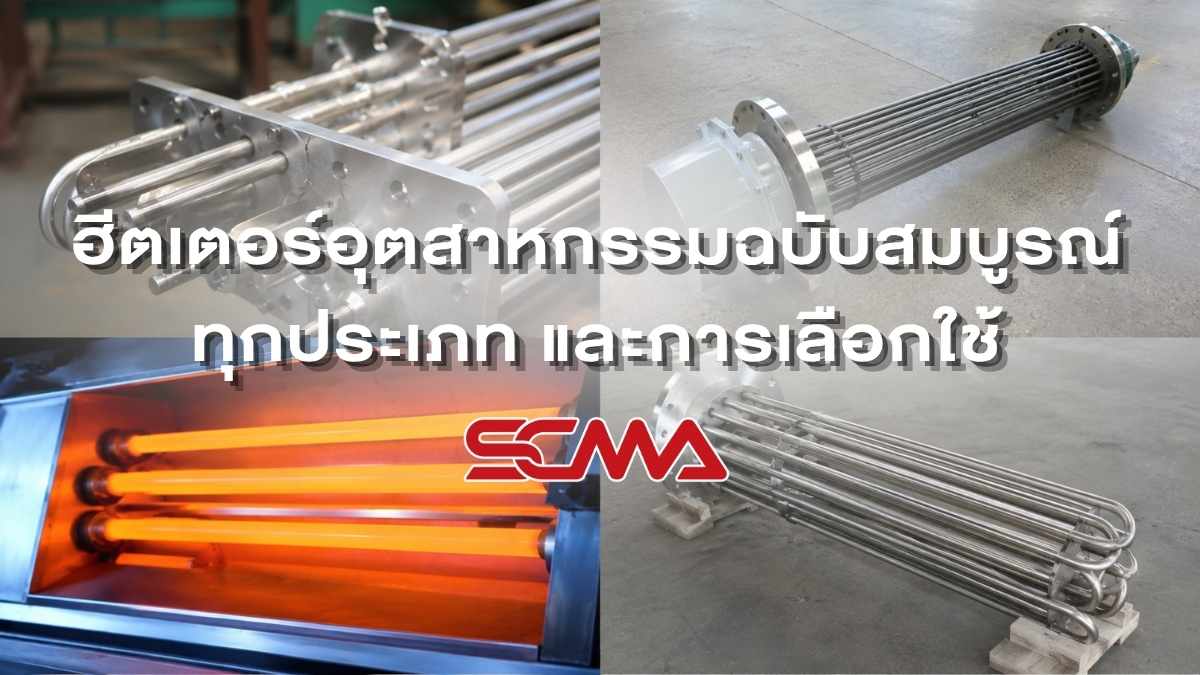
Industrial heaters are what you're looking for to solve heating issues in your factory's production process, right? This article by the SCMA engineering team will take a deep dive into everything about heaters, from basic operating principles to how to select the most suitable type, to help you reduce unexpected machine downtime. If you are looking for high-standard Heating solutions, you can contact our services (SCMA Services) directly for expert consultation.
What are Industrial Heaters and How Do They Work?
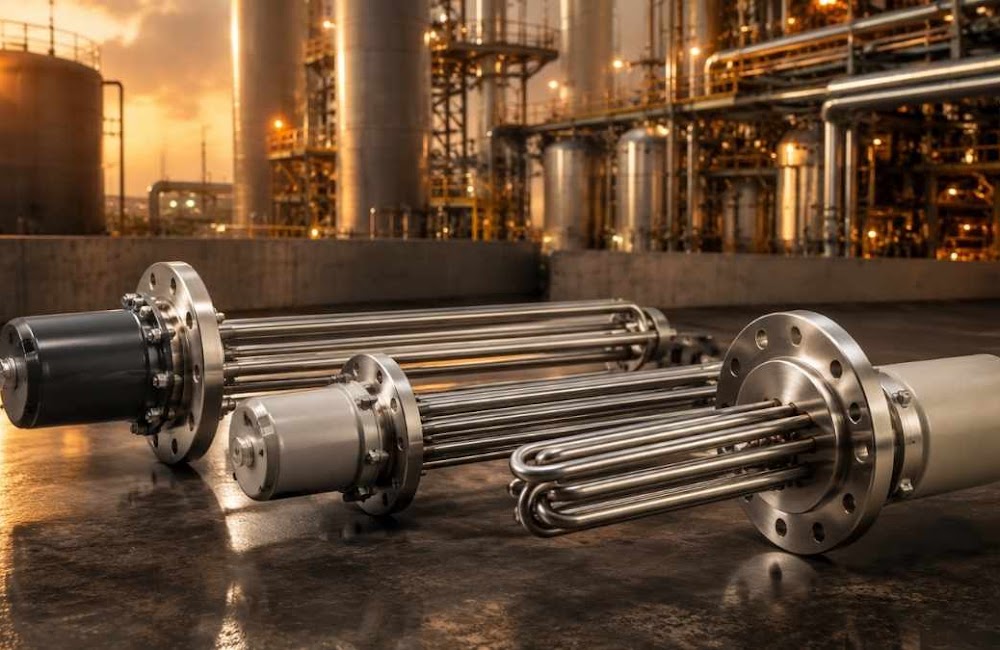
The question of what a heater is can be simply explained as an apparatus that converts electrical energy into thermal energy for various production processes. The operating principle of industrial heaters relies on the flow of electric current through resistance wire (Resistance Wire) inside the tube. When the wire heats up, it transfers heat to insulation powder and then passes it to the outer material surface for use. The difference between a general Heater and one used in factories is that industrial models are designed to withstand harsh environments, support continuous 24-hour operation, and utilize materials with high chemical corrosion resistance (the English term for heater is Heater).
Get to Know Various Types of Industrial Heaters That Are Popularly Used
Selecting the right type of heating equipment can significantly reduce energy loss in production lines. Let's get acquainted with electric heaters of various types that engineers commonly use to meet manufacturing process requirements.
Cartridge Heater (Tube Heater)
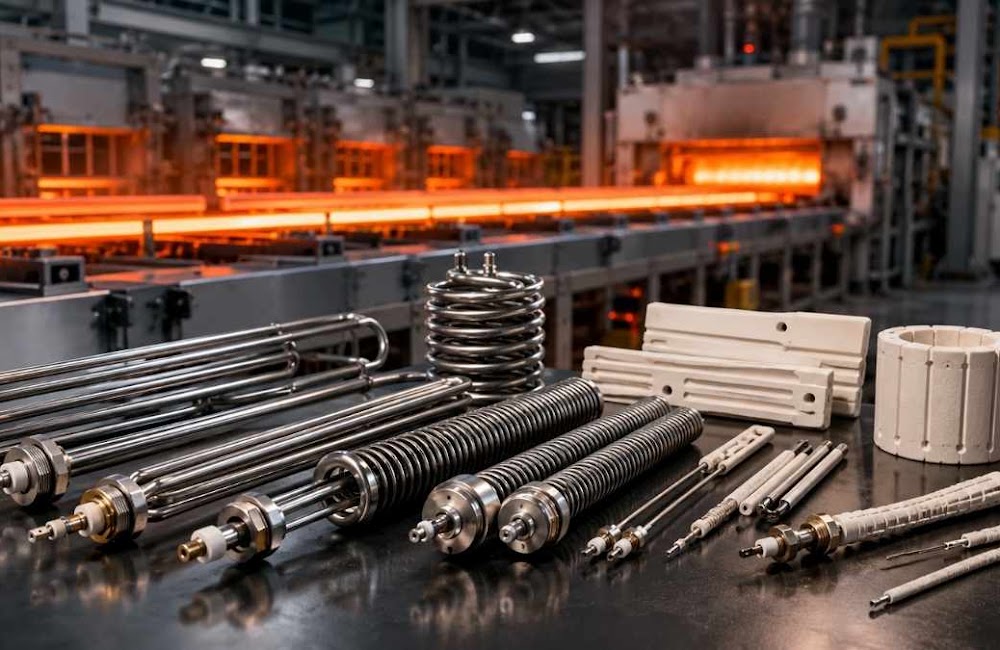
Regarding the question of what a cartridge is, in engineering terms, it refers to a cylindrical heater designed to fit into metal mold holes. The Cartridge Heater is one of the top choices for the plastic industry because it can provide high heat quickly within limited space. You can learn more from our article What is a Cartridge Heater?
Tubular & Finned Heaters
The tubular heater is the basic model that can be bent into U-shapes or circles as needed. The finned heater involves rolling stainless steel sheets around a tube to increase surface area, which greatly enhances heat dissipation to air. This makes it suitable for use in ovens or hot air cabinets in various industries.
Immersion Heater (Boiler Heater)
If you are wondering what a heater is in the context of heating chemicals, an immersion heater is your answer. This equipment is designed to be immersed directly into liquids via flanges, achieving maximum heat transfer efficiency. It is commonly used in food industries, oil warming, or metal plating tanks.
Strip Heater (Heater Plate)
This piece of equipment may also be referred to as a heater plate or strip heater. It has a flat and thin profile suitable for attaching to the smooth surface of tanks or molds, ensuring even heat distribution. Installation is easy by simply screwing the heating strip onto the target workpiece.
Band Heater (Wrap-Around Heater)
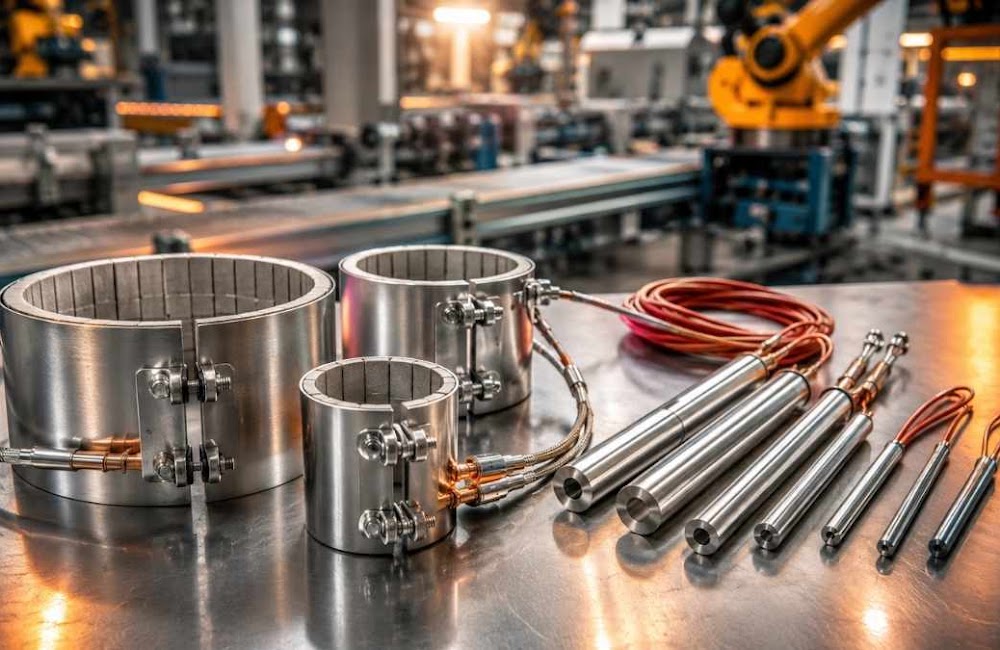
This type of heater is rolled into circles to wrap around plastic liquid conveying pipes or injection molding barrels, maintaining material temperature and preventing solidification during transportation. It is a heater that plays an important role in ensuring the quality of plastic packaging products.
Infrared Heater (IR Heater)
The working principle of infrared heaters differs from other models as they use electromagnetic radiation to directly transmit heat to workpieces without relying on air as a medium. This makes them ideal for automotive paint curing or fabric screen printing applications that require rapid penetration of heat into materials.
Which Industries Are Suitable for Each Type of Heater?
Making the right equipment match with the environment is at the heart of safety and value. The SCMA engineering team has categorized the industrial heater applications to give you a clearer picture as follows:
Heating Liquids: Chemical and Food Industries
The work of boiling or warming liquids requires an immersion heater (Immersion Heater), which must pay special attention to the material of the tube. If used in the food industry, stainless steel 316L (Food Grade) should be selected; if used for boiling corrosive chemicals, Teflon (Teflon) or titanium tubes should be chosen to prevent corrosion damage.
Heating Air: Paint Drying and Dehumidification Work
For hot air ovens, industrial furnaces, or HVAC systems, engineers will consider using finned heaters (Finned Heater). Metal fins help draw heat from the tube to quickly disperse it into passing air, preventing wire core breakage due to excess heat accumulation.
Heating Solids: Plastic and Die Industries
In metal forming or plastic injection work, heat transfer requires direct contact. Engineers use cartridge heaters (Cartridge Heater) embedded in die holes or apply sheets heaters on the outside to stabilize the temperature of the dies, resulting in perfect molded parts.
Comparison Table for Different Types of Heaters Usage
| Type of Heater | Heat Transfer Characteristics | Examples of Industrial Applications |
| Cartridge Heaters (Cartridge) | Contact with solids internally | Embedded in steel dies, plastic bag sealing machines |
| Finned Heaters (Finned) | Distributes to air | Hot air ovens, dehumidifiers, duct systems (Duct) |
| Immersion Heaters (Immersion) | Direct transfer into liquids | Boiling water in steam boilers, warming oil tanks, chemical baths |
| Skin Heaters (Strip) | Contact with external surfaces | Attached to flanges of steel plates, smooth plate rolling machines |
| Band Heaters (Band) | Circumferential contact around cylindrical tubes | Plastic injection barrels, liquid resin conveying pipes |
How to Choose the Right Industrial Heater for Your Work
Properly considering the specifications of an industrial heater can significantly extend the lifespan of your machinery. The first step is to analyze the job site characteristics, whether it involves heating liquids, air, or solids. Then calculate the power (Watt) required by the system based on the volume of material and the time needed to reach the target temperature. Material selection is also crucial; copper tubing conducts heat well but is not resistant to chemicals, while stainless steel offers better corrosion resistance. You can study Industrial Heating from International Chemical Engineering Principles for evaluation purposes. Lastly, don't forget to check your factory's electrical system to see if it supports electric heaters of 220V single-phase or 380V three-phase configurations to order the correct specifications.
Key Factors Affecting Custom-Made Heater Prices
Many factories have machinery designed specifically for their needs, making it difficult to find standard replacement parts. Therefore, custom-made heater services are a cost-effective solution. The main factors affecting the estimated price include:
- Type and Size of Heater: Complex shapes with multiple bends or special long sizes will have higher production costs than standard-shaped heaters.
- Material Used (Material): Special grade stainless steel (SUS316L) or high-temperature resistant alloy tubing (Incoloy) will be more expensive than regular stainless steel or copper tubing.
- Wattage and Additional Special Features: Adding embedded temperature sensors (Thermocouple) or manufacturing explosion-proof flange boxes will affect the price.
- Quantity Ordered: Ordering a large number of Heaters can reduce average costs per unit, allowing procurement departments to get more economical prices than ordering just one piece.
What information should be prepared for the manufacturer when ordering custom heaters?
To get an industrial heater with accurate specifications and fit perfectly into existing machinery, you should prepare basic information for the heater manufacturing plant to evaluate pricing before starting work as follows:
- Drawing or desired size: Specify width, length, diameter (Diameter) or detailed dimensions of the installation thread connector.
- Powder rating (W) and voltage (V): Please provide specifications for the existing electric heater, such as 2000W 220V or 5000W 380V, so that engineers can wind resistance wire correctly.
- Type of use and desired temperature: Inform us about what type of liquid you will heat or the highest air temperature in degrees Celsius for drying purposes.
- Sample photos (if available): Sending a photo of the damaged part along with wire connection points can help our expert team recommend additional solutions. You can consult custom manufacturing work through the SCMA Custom Made Heater service immediately.
Which Factory or Heater Store Should You Choose? Checklist to Consider
Selecting a reliable heater manufacturer is crucial to ensure you receive high-quality products and long-term maintenance services. Here's the checklist before making your purchase decision.
- The experience and expertise of the manufacturer: You should consider companies with a long history in manufacturing, equipped with an engineering team dedicated to system management.
- The quality of materials used and production standards: Check if the supplier uses standard heating wire and high-temperature insulating powder (MgO) to prevent electrical leakage accidents.
- Consultation and design services: A great supplier should be able to assess heat loss, recommend energy cost reduction measures, or calculate wattage accurately for customers.
- Warranty conditions and after-sales service: There should be clear warranty terms along with the ability to send a technician team on-site in case of system malfunctions.
- Reviews from industry peers: Verify credibility from leading organizations that have used their services, reinforcing confidence in the heating solutions you will implement in your production line.
Summary
In summary, achieving maximum efficiency with industrial heaters requires a proper understanding of heater types, pipe materials, and careful electrical power calculations. Accurate specification selection can extend equipment lifespan while reducing high electricity costs. If your organization is looking for an engineering consultancy partner, the SCMA team is ready to advise you in enhancing stability in your factory.
If you want to buy, SCMA is available for purchase today!
An accurate Heating system is a key factor in determining the perfection of industrial production processes. If your factory needs to upgrade industrial heaters or is looking for an integrated automation solution, please visit our range of global measuring instruments and sensors, or contact the engineering team through the main website SCMA. We are ready to deliver internationally certified technology to drive your business forward.
Frequently Asked Questions
How do heaters work in industrial systems?
Heaters operate by converting electrical current flowing through resistance wires inside the tube into heat. The heat is then transferred through insulation material to the outer metal surface, where it is transmitted to the target object, air, or liquid.
Why do heaters fail often? What are the causes?
The main cause is over-calculating wattage leading to insufficient heat dissipation. Allowing water to dry out until the tube burns (in submerged heater models) or having thick calcium deposits that act as thermal insulation inside.
What types of applications are suitable for plate heaters?
Suitable for installation on smooth surface workpieces, such as plastic bag sealing machines, industrial mold plates, to evenly distribute heat across the entire plate.
Can we order 380V heaters?
The factory can produce custom-made 380V heater specifications. Using three-phase (380V) power in industry helps maintain balance and efficiently distribute electrical load, especially when using high-wattage equipment.
How to check if a heater has leakage? How is it done?
Maintenance technicians can use a multimeter (Multimeter) to measure resistance (Ohm) between the power terminals and the metal casing of the heater tube. If the display shows low resistance, it indicates that the internal insulation is damaged and there is electrical leakage.