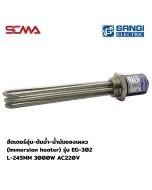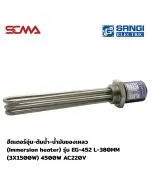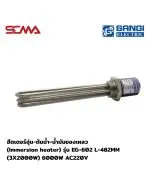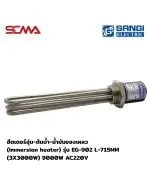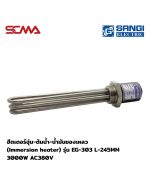
Immersion Water Heater is the equipment you are considering to solve the heating problem of liquids in an industrial plant, correct? This article will take you through every aspect of Immersion Water Heaters for maximum safety. Understanding the various types of Immersion Heaters will help you apply them correctly and practically reduce unexpected machine downtime. If you need consultation to design a heating system, you can contact our services (SCMA) immediately.
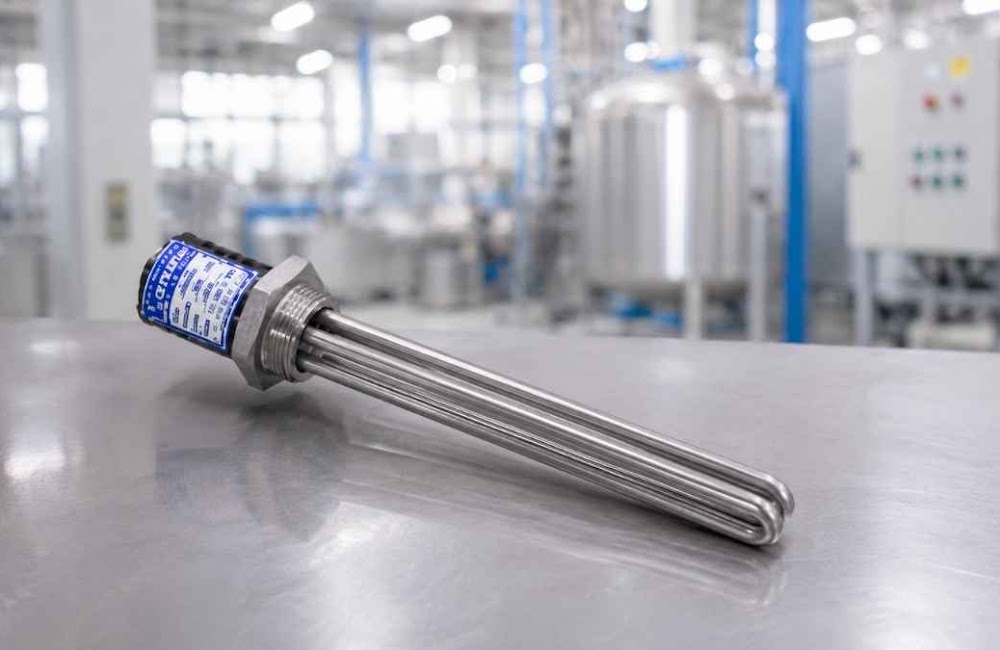
What is an Immersion Heater (Immersion Water Heater) and how does it work?
For the question of what an Immersion Heater is, in engineering terms, this piece of equipment is a heat generator designed to come into direct contact with liquids. The principle of operation of an Immersion Heater relies on electric current flowing through resistance wire inside a metal tube; electrical energy is converted into thermal energy and then transferred out to the surrounding liquid. Key components include an outer metal tube, high-temperature insulation powder, and heating coils. The most distinct difference compared to other types of Heaters is that Immersion Heaters have a rapid heat transfer rate and minimal energy loss because all the heat is directly transmitted into the liquid (you can learn more about the technology from an international source on Immersion Heaters).
How many types of immersion heaters are there? Choose the right one for your application
Selecting the type of immersion heater that matches the characteristics of the tank and production process is crucial. Our engineering team has categorized common types of Immersion Heaters found in factories as follows:
Screw Plug Immersion Heaters
These are suitable for small to medium-sized tanks. Installation is easy, requiring only a screw connection with the tank or oil drum flange. This type of water heater can handle high pressure and is ideal for applications where installation space is limited.
Flange Immersion Heaters
Designed to accommodate very high wattage, these are suitable for large tanks in heavy industries. Installation of a Heater Immersion with flanges requires bolts to secure the metal flange to the tank wall, providing extremely high durability.
Single Pipe or Rod-Type Immersion Heaters (Over-the-Side Immersion Heaters)
This is an Immersion Water Heater designed to extend over the side of a tank into the liquid. It's ideal for tanks or dipping vats where side or bottom holes cannot be drilled. A major advantage is that maintenance personnel can easily remove and clean it.
Chemical Boiling Immersion Heaters (Glass Quartz / Titanium Tubing)
If heating corrosive chemicals, using ordinary metal tubing may not suffice. Engineers recommend using immersion heaters with glass quartz or titanium tubing to prevent chemical reactions from damaging the equipment.
What Should You Consider When Buying an Immersion Heater?
To ensure that your heating system operates efficiently and provides a good return on investment, specifying the Immersion Heater must take into account four environmental factors as follows:
Type of Liquid to be Heated (Water, Oil, Chemicals)
You need to clearly specify what liquid is in your system. The chemical properties of these substances will dictate that we choose the outer tube material of the Immersion Heater to have the appropriate corrosion resistance.
Required Operating Temperature
Knowing the maximum target temperature helps engineers accurately calculate energy usage, and also allows for designing sensor systems to work in tandem with the Water Heater to prevent overheating issues.
Tank or Container Size and Shape
The volume of liquid is directly related to the power required. The shape of the tank also determines the immersion length of the Heater Immersion to ensure that heat distributes evenly throughout the container.
Adequate Wattage (Watt Density)
Selecting the appropriate wattage (Watt Density) must balance with the type of liquid. If too high a watt per square centimeter is used for viscous liquids like oil, it can easily cause surface Immersion Heaters to burn out.
Watt Calculation Formula for Water and Liquid Heaters
Accurate electrical energy calculation helps prevent insufficient heating or excessive power consumption. Our engineering team has provided a basic calculation principle for immersion heaters.
- Calculate the volume of liquid in liters (L) or weigh it in kilograms (kg)
- Determine the temperature difference ($\Delta T$) by subtracting the initial temperature from the target temperature
- Specify the time required for the water heater to reach the target temperature (in hours)
- Use the basic formula: $kW = \frac{V \times \Delta T}{860 \times t}$ (for general water) to find the kilowatt value of the Immersion Heater
- A safety factor of approximately 20-30% should be added to compensate for heat loss to the external environment
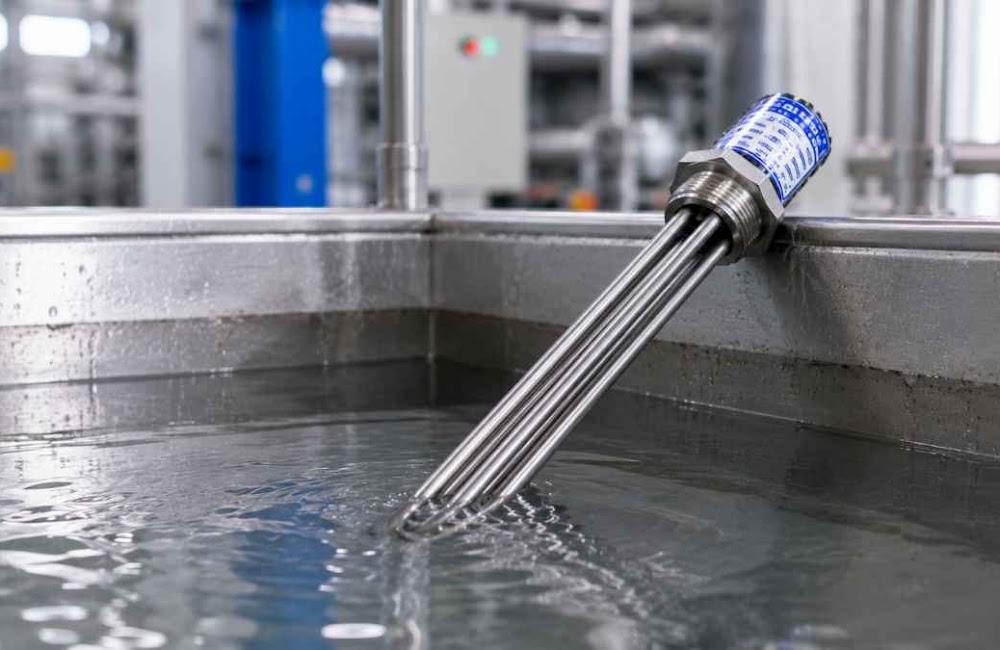
How Important Are the Materials Used in Producing Heaters? (Copper, SUS304, SUS316L, Incoloy)
The material of the tubing is the first line of defense against environmental conditions. If incorrect materials are chosen, immersion heaters can deteriorate quickly. Copper tubing is suitable for clean water applications due to its excellent heat conductivity. Stainless steel (SUS304, SUS316L) tubes offer superior corrosion resistance and are commonly used in the food industry. For high-temperature applications, choosing Incoloy tubing will maximize the lifespan of Immersion Heaters. See the following comparison table.
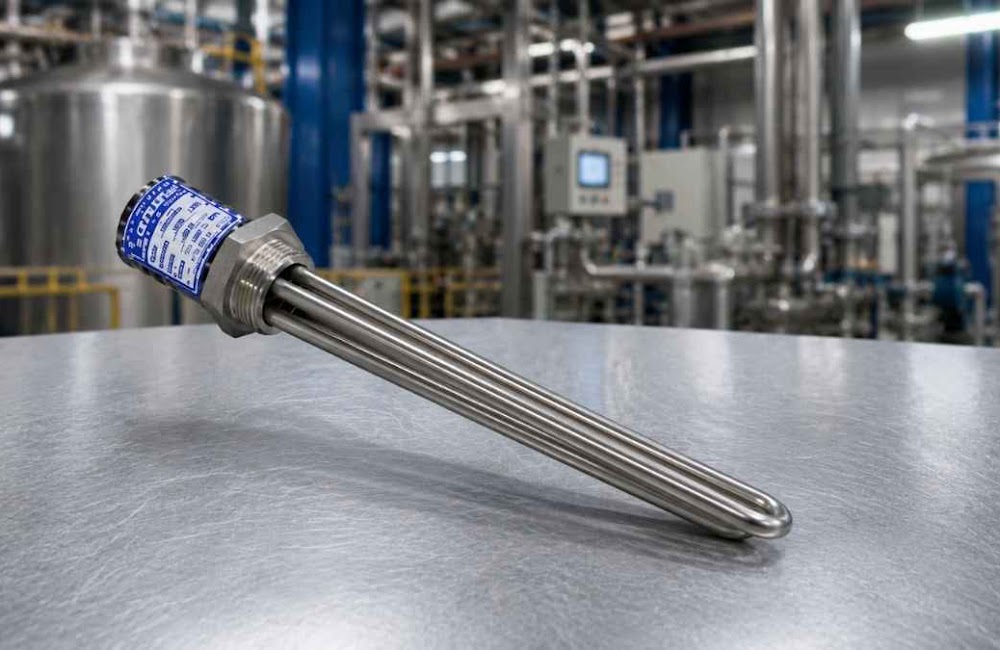
Caution in Installing and Using Immersion Water Heaters
Improper installation is one of the top causes for equipment damage. For maximum safety when using immersion water heaters, please follow these engineering guidelines:
- The liquid level must always cover the heating element: If the water level drops below the heating zone (Heating Zone), the Heater Immersion tube will accumulate heat and burn through within minutes.
- Installing a Temperature Control System (Thermostat): Connect the equipment to a temperature control system (Thermostat) to accurately cut off power when the desired temperature is reached.
- Electrical safety and grounding: When installing an Immersion Water Heater, proper grounding must be ensured to prevent electrical leakage hazards into the water tank.
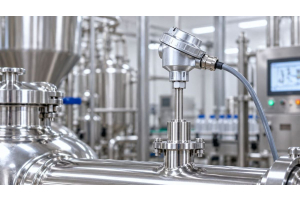
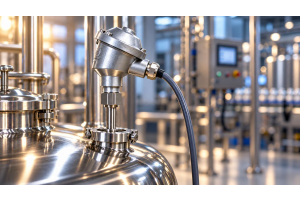
- Using with sensors: In industrial systems, install a liquid level detector or study about Temperature Sensor in Industry to multiply safety levels.
Common Issues and Initial Fixes
During the production process, factories may encounter heating system issues. The SCMA team has compiled common problems with immersion water heaters, along with solutions:
- The heater is not getting hot or malfunctioning: Check the power supply and circuit breaker; if the electrical system is normal, use a multimeter to measure the resistance (Ohm) of the Immersion Heater. If no reading appears, it indicates that the coil has been damaged.
- Shortened lifespan: This issue arises from setting an inappropriate Watt Density relative to fluid viscosity. Consult the manufacturer for reducing wattage per square centimeter in future orders.
- Lime scale buildup on the heater: Lime acts as insulation, making water heating more difficult over time. Regularly remove and clean lime deposits from the equipment at least twice a year.
Summary
In summary, selecting the Immersion Heater for maximum efficiency requires considering the type of pipe material, power calculation, and safe installation. If you want your Immersion Heater heating process to run smoothly, SCMA's engineering team is ready to offer custom-made Boiler Heaters solutions and consultation services for the success of your factory.
If you wish to purchase, you can buy from SCMA today!
Standard heating technology is at the heart of maintaining uninterrupted production capacity. If you are looking for Immersion Heaters, temperature control equipment, or industrial level Immersion Heater parts, you can browse our SCMA Measurement and Control Tools Products Collection or contact us directly on the main website SCMA. We are ready to deliver the most accurate and durable equipment to meet all your business needs.
Frequently Asked Questions
About how many years is the lifespan of a liquid immersion heater?
Average lifespan ranges from 1-3 years, depending on the concentration of the solution, regular cleaning of scale buildup, and maintenance to prevent dry-out and overheating of pipes.
Can an electric water heater be used with oil?
This is possible but requires ordering a specification with a lower Watt Density (watts per square centimeter) than the standard water heater model to prevent the oil from burning onto the surface of the heating element.
If the heater's cord is too short, can it be extended?
It is not recommended to cut and splice wires near high-temperature areas. The safest approach would be to inform the manufacturer to increase the length of heat-resistant cords from the factory during the ordering process.
Why does the breaker trip immediately when turning on the heater?
This issue usually occurs due to internal insulation damage or deterioration in the heater, causing electrical leakage and contact with metal parts. The circuit breaker then acts to cut off the current for safety reasons.
Can an immersion heater be bent into other shapes?
Bending can be done into a U-shape, circular shape, or along the edge of a tank as needed; however, this must be carried out by a professional technician during production in the factory. Bending should never be attempted on-site.