Factory Heater or Industrial Heater, are you considering this equipment to enhance the efficiency of your business production process? In this article, SCMA's engineering team will delve into all the details about Heaters, from commonly used types to manufacturing techniques, so that you can get the most cost-effective and safe Heating solution. If you are looking for experts to help design your heating system, you can always contact Our Services (SCMA).
What is an Industrial Heater? And Why Is It Important in a Factory?
The question of what a heater is can be explained as equipment that converts electrical energy into thermal energy by passing electric current through resistance wires inside the tube. When the wire heats up, heat is dispersed to external materials for use. The role of heaters in factories is extremely important, whether it's melting plastic, drying parts, or sterilizing food industry products. The main difference between factory heaters and home heaters is that industrial models are designed to be durable for heavy-duty work (Heavy Duty), can operate continuously 24 hours a day, and use materials that strictly resist chemical corrosion (Heater in English).
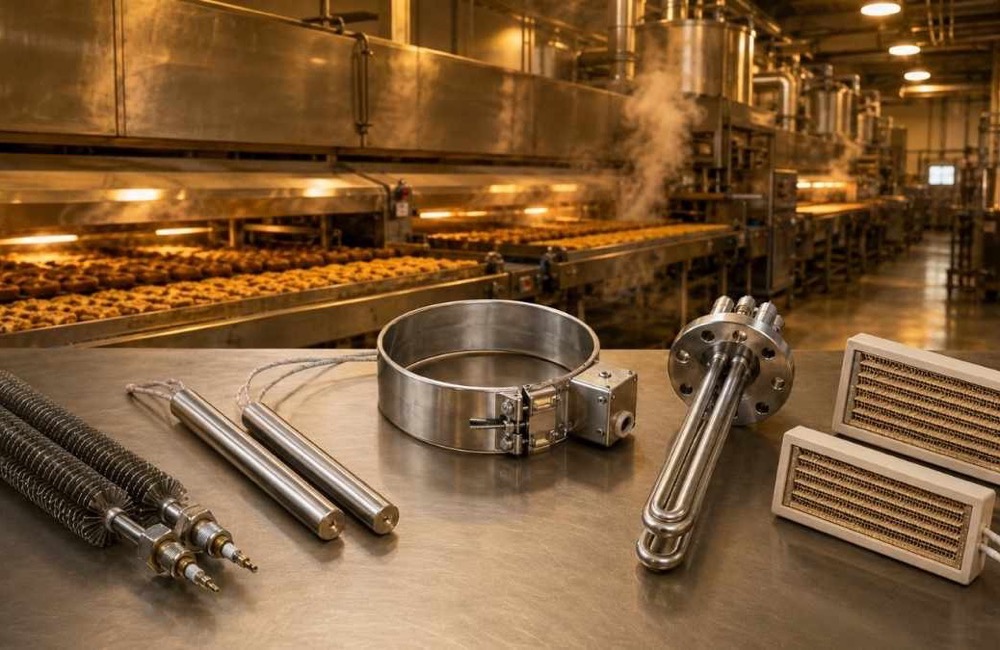
Get to Know Various Types of Industrial Heaters
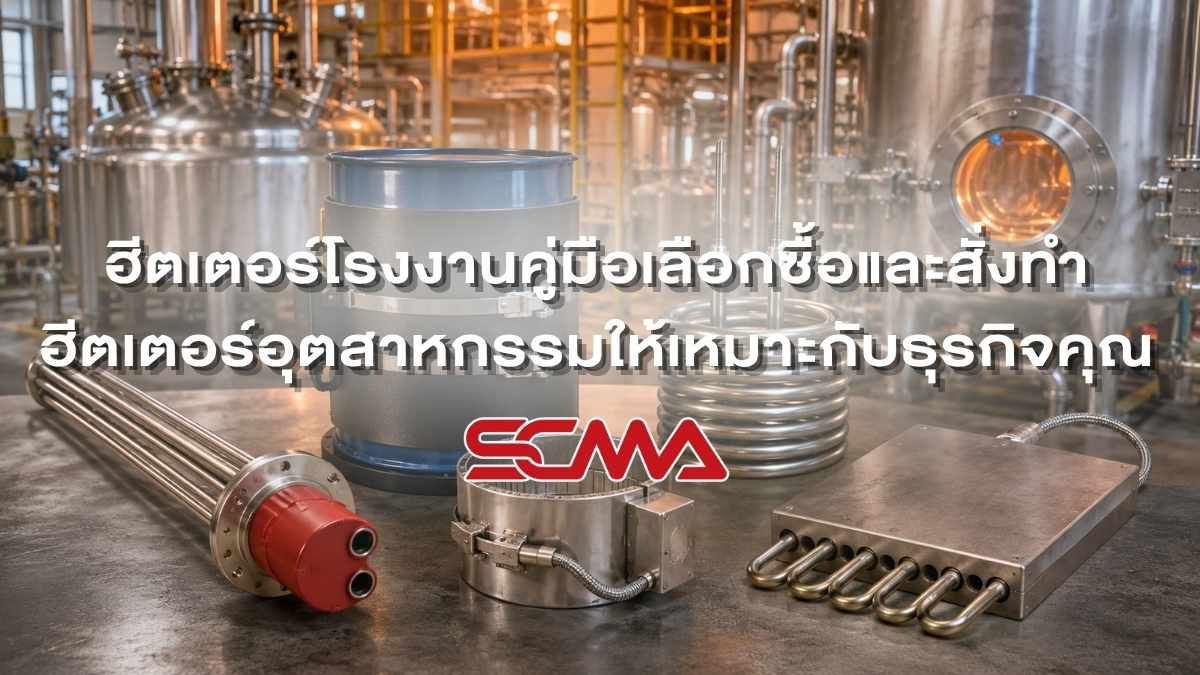
Selecting the right electric heater for your specific application can save a lot on electricity costs and extend the lifespan of machinery. The team recommends the following common types of heating equipment found in factories:
Finned Heater for Hot Air Applications
This is a cylindrical tube heater with thin stainless steel fins wrapped around it to increase surface area contact. These fins help quickly draw heat from the tube and disperse it into the air. They are commonly used in industrial ovens, hot air cabinets, or dehumidifiers.
Immersion Heater for Heating Liquids
If you need a liquid heater to heat water or chemicals, this is your best option. Immersion heaters are designed to be screwed directly into liquids through threads or flanges, providing the highest efficiency in heat transfer. They are commonly used with steam boilers or metal plating tanks.
Band Heater for Plastic Injection Molding Machines
This type of heater is designed as a ring that wraps around cylindrical tubes to provide external heating to melt plastic pellets inside the tube into liquid form. It is an essential component in injection molding machines and plastic bag extrusion machines.
Cartridge Heater for Dies
The question "What is Cartridge? " in engineering refers to a cylindrical heater designed specifically to fit into holes of flanges or metal dies. Cartridge Heaters provide high and quick heat energy, commonly embedded in bag sealing machines or metal die blocks.
Infrared Heater for Paint Baking and Drying
This type of heater does not use air conduction to transfer heat but instead uses direct electromagnetic radiation towards the target object, similar to sunlight. It is ideal for applications requiring high penetration heat such as automotive paint drying or fabric screen printing.
Strip Heater and Cable Heater
Heater Plate or strip heater is used to adhere to smooth surfaces to distribute heat, while cable heater or wire heater is a flexible insulated heating wire wrapped around tubes to prevent liquids inside from freezing at low temperatures.
Other Types and Special Applications
In addition to the main types mentioned above, there are aluminum cast heaters, titanium heaters, or Teflon heaters that are specially made to handle highly corrosive chemicals. You can read more about types of industrial heaters.
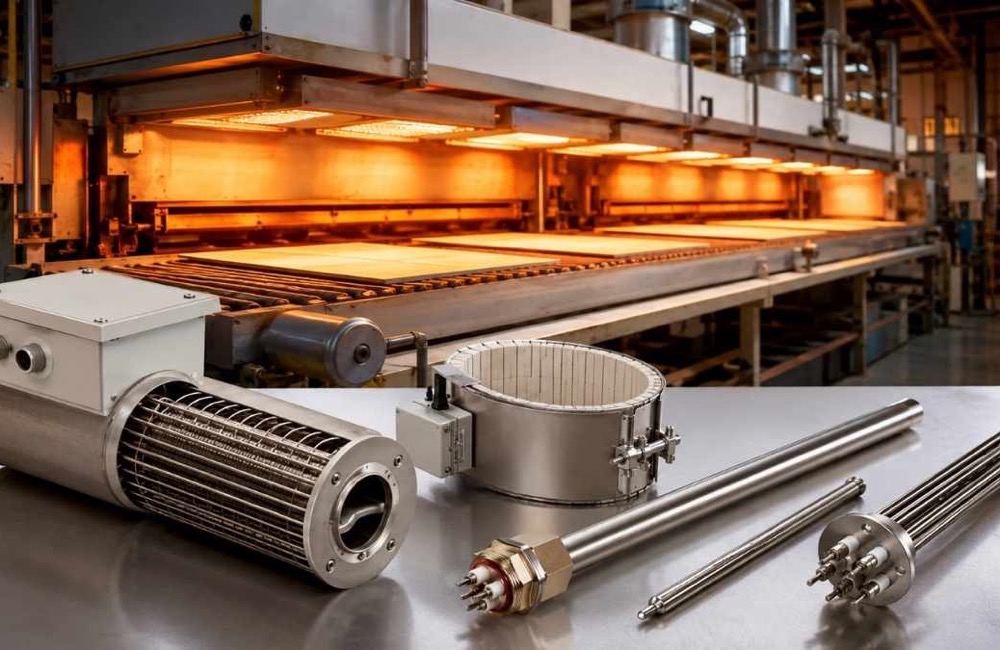
How to Choose the Right Heater for Your Industrial Application
Selecting an industrial heater requires considering engineering constraints. The SCMA team has a crucial checklist of four points to help you make accurate purchasing decisions.
- Select based on target material type: Consider whether you need to heat liquids (use immersion types), air (use fin types), or solids (use rod or plate heaters).
- Calculate the appropriate wattage: This must be calculated from the volume of the workpiece and the desired heating time. If the wattage is too high, the heater coil will burn out quickly; if it's too low, it won't reach the target temperature. You can refer to knowledge on this topic in the Industrial Heating article in ScienceDirect.
- Installation environment: If used in areas with flammable vapors or easily ignitable dust, choose an explosion-proof (Explosion Proof) model for safety.
- Compare the pros and cons of materials: Copper tubing conducts heat well but is prone to corrosion, while stainless steel (SUS 304, 316L) resists corrosion excellently but may be more expensive.
Factors to Consider Before Purchasing a Heater
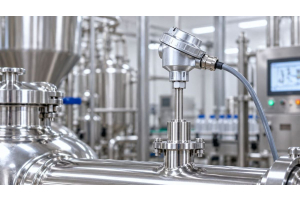
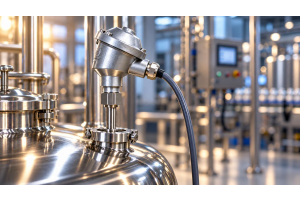
Once you know the type you need, before placing an order or sending a quote to the factory, you must first evaluate safety standards. A good factory heater should have quality certification (Certification) confirming that the internal insulation can prevent electrical leakage into machinery. Next is energy efficiency; high-quality heaters lose very little heat to the atmosphere, which benefits plant electricity costs. Additionally, you need to check if your Heating system supports installation with temperature sensors such asthermocouples or RTD devices, for fully automatic heat control.
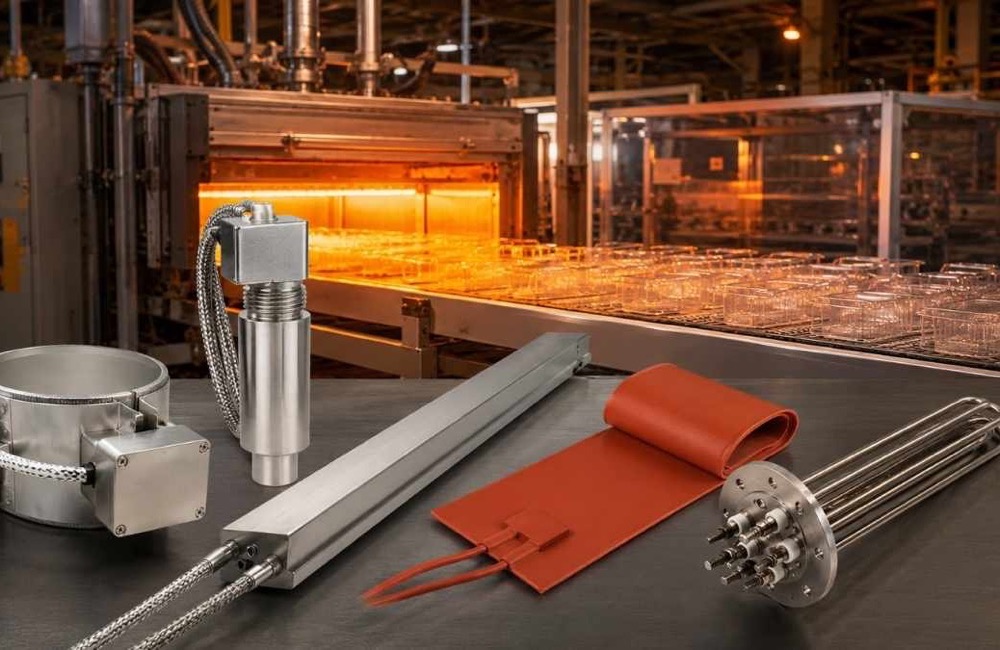
What Information Should Be Prepared for Custom Heater Orders?
In the case where your machinery is a special model, ordering custom-made heaters is the best solution. The information you should prepare for the manufacturer includes:
- Physical size data: Width, length, diameter (Diameter) and pitch of bolt holes used to secure flanges.
- Electrical data: Specify power consumption (Wattage) and voltage (Voltage), such as factory electricity at 220V (1 Phase) or 380V (3 Phase).
- Drawing or sample part: Sending a drawing or sending the old heater that is broken to the manufacturer for reference will help reduce production errors by 100%.
- Nature of work and target temperature: Inform the manufacturer about what type of liquid you intend to heat, or what maximum temperature is required so that engineers can select the correct grade of material tubing.
What Factors Affect Industrial Heater Prices? Including Budget Estimation Methods
The price of industrial heaters varies greatly from hundreds to tens of thousands of baht. The main factor driving up prices is 'material'; if you choose Incoloy or titanium tubing, it will be more expensive than standard stainless steel. Another factor is the complexity of shape; bending at multiple angles or adding fins for heat dissipation will increase labor and production costs. For custom work (Custom), prices are higher than standard heaters in the market because manufacturers need to set up machines specifically to produce unique parts for you. If your organization needs to purchase in large quantities, requesting quotes for comparison and negotiating with heater suppliers will help save procurement budget.
Summary
In summary, choosing an industrial heater that meets standards requires understanding what a Heater is and its engineering differences. Whether you are looking for fins heaters for ovens or Cartridge Heaters for molds, having expert advice will help your production process proceed smoothly. The SCMA team is happy to provide guidance in calculating and designing systems that meet the needs of your business.
How to Choose Reliable and Standard Heater Manufacturers and Suppliers
Selecting a trustworthy partner or factory for custom heater manufacturing is crucial for business operations. You should check the company's work experience, read past reviews, and inquire about warranty conditions and after-sales service. The most important thing is to ask how quickly the company can send an engineering team to assess on-site situations. If you are looking for a high-quality industrial heater supplier at an international level, there’s no need to waste time searching for 'local heater stores'. SCMA's expert team is ready to provide free consultation and can offer your factory the most cost-effective quotation. You can visit our website now to browse all SCMA measuring tool products.
Frequently Asked Questions
How do industrial heaters work?
Their operation involves converting electrical energy flowing through resistance wire into heat, which is then transmitted through internal insulation material to spread out through the stainless steel external pipe for use.
What materials should be chosen for heater tubes to ensure durability?
This depends on the environment. For clean water heating, copper tubing can be used; if it comes in contact with food, 316L stainless steel is recommended; and for highly corrosive chemicals, PTFE or titanium tubing should be selected.
What are the main reasons for frequent heater failures?
This usually results from an excessively high watt density (Watt Density) design that overloads the cooling system, or allowing submerged heaters to operate when water levels drop below heating lines.
How do 220V and 380V heaters differ?
The 220V model is used for single-phase electrical systems commonly found everywhere, while the 380V model is designed for three-phase industrial electrical systems that better distribute high-power heater loads.
What benefits does using a thermocouple with a heater provide?
A thermocouple acts as a temperature sensor, sending signals to the controller (Controller) to cut or supply power to the heater. This helps maintain constant temperatures and prevent overheating fires.