Have you ever encountered problems with coils in your electrical system malfunctioning, causing production lines to come to a halt? Having an Inductance Meter, or a precise inductance measuring instrument, is crucial for preventing such issues. SCMA offers consultation services along with the sale of comprehensive electrical measurement tools. This article will delve into how these meters work and provide a maintenance checklist so you can choose the best LCR Meter to meet your actual needs.
What is an Inductance Meter?
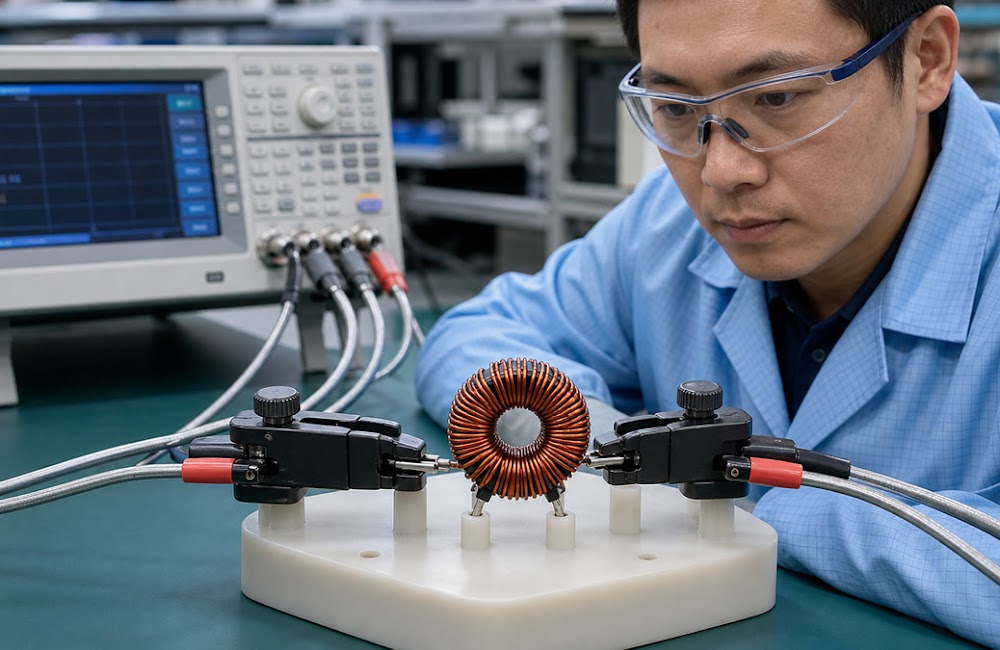
An Inductance Meter is a specialized electrical measuring tool designed specifically for measuring the inductance (L) of coil-type components (inductors). Currently, this device has evolved into the form of an LCR Meter, which can measure basic electronic components in a 3-in-1 manner: resistance (R), capacitance (C), and inductance (L) all within one unit.
How an Inductance Meter Works
Based on the experience of the SCMA engineering team, understanding how an Inductance Meter works will help users interpret readings more accurately. The LCR meter has basic processing steps as follows:
Frequency Signal Generation
The device starts by sending alternating current (AC) signals into the inductive component being tested. Users can set the frequency range of the inductance meter to match the specifications of different types of electronic components.
Voltage and Current Measurement
After signal generation, internal sensors within the Inductance Meter measure voltage across the coil, current flowing through the circuit, as well as detecting phase angles between voltage and current in detail.
Calculation of Inductance Value
The processing system analyzes voltage, current, and phase angle data to calculate impedance (Impedance) according to the principles of LCR Meters. Then it converts mathematical equations into inductance (L) values displayed clearly on the screen.
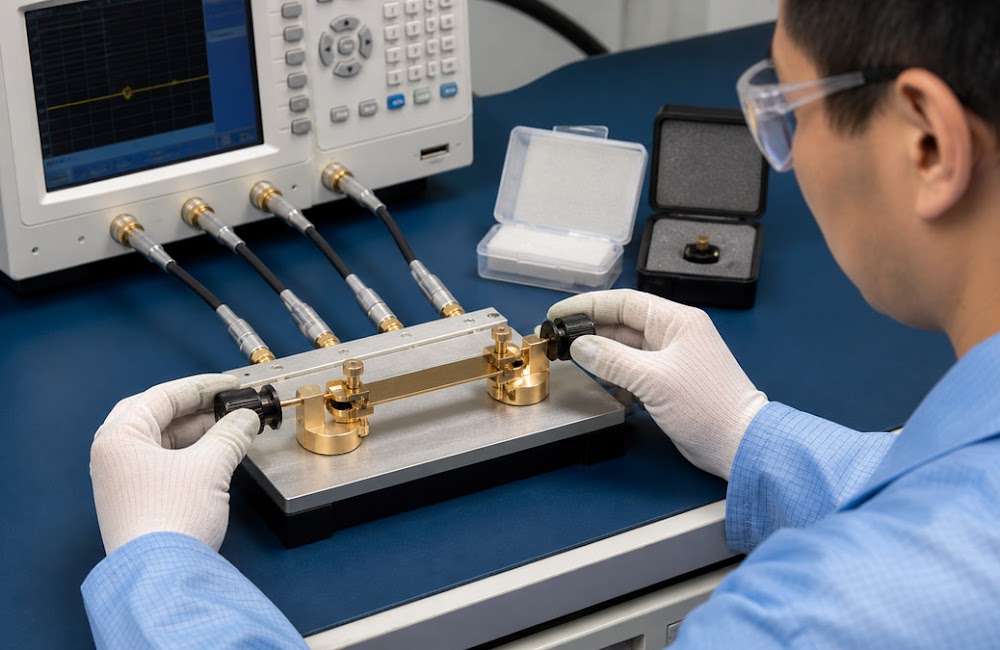
How many types of Inductance Meter are there?
Selecting the appropriate Inductance Meter for your working environment is crucial. Currently, in the market, L meters are primarily categorized into two main types to cater to different usage scenarios.
Handheld Type
The portable inductance meter is designed to be lightweight and compact, operating on battery power, making it ideal for field maintenance work, external machinery inspection, as well as initial circuit board testing.
Benchtop Type
The benchtop meter is a large-scale measuring instrument offering high precision at 6 digits or more. It is suitable for use in laboratories (Lab), research and development departments (R&D), and industrial production lines requiring the highest accuracy.
Maintenance of Inductance Meter
To ensure that the Inductance Meter has a long service life and maintains accuracy, the technical team from SCMA recommends the following standard maintenance checklist for electrical measuring instruments:
Check the Condition Before Use
Before operating the inductance meter, the operator must check the integrity of the display screen, observe whether the test leads are loose or bent, and inspect the Test Leads to prevent any breaks that could be dangerous.
Proper Care for Test Leads
The test leads are fragile components; therefore, do not pull them forcefully. Do not coil the test leads around the inductance meter under any circumstances. Such actions can cause internal copper wires to break or bend, leading to severe measurement errors.
Store in an Appropriate Environment
After use, store the L-meter in a dedicated carrying case or shockproof box. Avoid placing the instrument in areas with extremely high temperatures, high humidity, or dense dust to prevent damage to internal circuit boards.
Avoid Areas With Strong Magnetic Fields
The Inductance Meter should be used and stored away from large motors or high-capacity transformers. Exposure to strong magnetic fields can interfere with the processing system, causing measurement inaccuracies in inductance readings.
Calibration of the Instrument
To ensure that the measuring instrument remains up to industrial standards, users should send the inductance meter for calibration at a service center annually. This step guarantees that measured parameters are highly reliable.
Usage of Inductance Meter
The primary goal in using the Inductance Meter in industry is to check the electrical properties of passive components, to evaluate system performance. The application methods are as follows:
Metering Inductance (L)
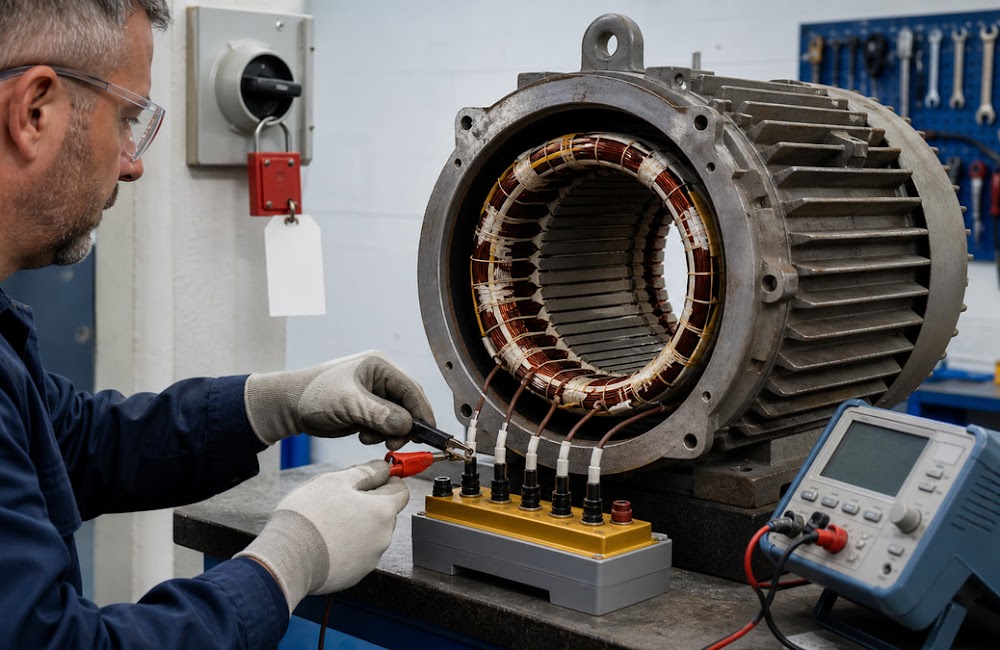
Engineers use this tool to measure the inductance value of motor windings and verify the specifications of transformers to ensure they meet the required standards before being integrated into the main control system.
Measuring Additional Parameters (C with R)
With the features of an LCR Meter, users can switch modes to measure capacitance in capacitors and resistance in resistors, helping to quickly complete electronic circuit testing with just one tool.
Checking for Integrity to Find Defects
In maintenance work, the inductance meter is a crucial aid in identifying problem areas on circuit boards. Technicians can use it to check for short-circuited windings or broken wires, as well as detect components with deteriorated parameters.
Why Use an Inductance Meter
The use of the Inductance Meter is essential for electronic testing due to its high precision in analyzing inductance values, preventing serious errors in control systems. The group of LCR Meters also offers high versatility, supporting measurements of both L, C, and R values, covering all needs of modern engineers.
How to Choose an Inductance Meter
Investing in an Inductance Meter from a trusted distributor like SCMA requires users to consider specifications that align with actual job requirements. The following checklist of features should be taken into account:
- Test Frequency Range: Choose a model that covers the operating frequency range of the equipment, as frequency directly affects measurement values, according to experts in complex inductance measurements.
- Select the Type to Match the Job: Choose between a Handheld model for portable field inspections or a Benchtop model for high-precision lab use requiring 6-digit accuracy.
- Supported Parameters: Ensure that the LCR meter can measure basic parameters such as L, C, R comprehensively and also supports deeper parameter measurements like Q (Quality Factor) or D (Dissipation Factor).
- Necessary Additional Functions: Select a model with zero calibration functionality to eliminate measurement line errors and support series/parallel circuit testing modes for thorough analysis.
Caution When Using Inductance Meter
Although the Inductance Meter is a modern tool, users must strictly adhere to electrical safety principles. The SCMA team summarizes important precautions to prevent damage to equipment as follows:
- Discharge before measuring: It is essential to ensure that capacitors or coils in the circuit have been fully discharged (discharged) before connecting the measurement leads, preventing sudden current surges from damaging the main board of the LCR Meter.
- Disconnect power source from the circuit: Do not measure components while the circuit still has electricity flowing through it under any circumstances, as this will immediately damage the measuring instrument.
- Clean contact points: Before measuring electronic parts, clean the component leads to remove oxide, rust, or surface coatings to reduce hidden resistance that affects accuracy.
- Set frequency correctly: Incorrectly selecting test frequencies can result in misleading inductance values. Users must study the manual of each part and set the correct frequency on the L meter for accurate readings.
Summary
In summary, Inductance Meter, or an LCR meter, is a crucial tool that engineers cannot do without when checking the performance of inductors. If you are looking for precise measurement solutions, company SCMA is happy to be your partner and provide consultation on our services to enhance the reliability of your production line.
If you want to buy an Inductance Meter, SCMA has it available today!
Selecting high-quality measuring tools is a worthwhile investment for preventing long-term machine downtime. If you need to purchase an Inductance Meter that meets industrial requirements, you can browse our full range of products immediately. SCMA is ready to deliver premium LCR Meters with comprehensive after-sales service.
Frequently Asked Questions
What can an Inductance Meter measure?
This tool is primarily designed to measure the inductance (L) of coils, and it can also measure capacitance (C) and resistance (R) in models that are LCR Meters.
Does test frequency affect measurement accuracy?
It has a significant impact. Choosing an incorrect frequency range compared to the electrical properties of the component will cause the displayed inductance value to be inaccurate.
What is the difference between portable and benchtop models?
The portable model emphasizes mobility for field maintenance work, while the benchtop model offers extremely high precision at laboratory levels, suitable for deep research work.
How often should calibration be performed on measuring instruments?
Engineers should send measuring tools to a center for calibration (Calibration) at least once a year to maintain accuracy standards according to ISO quality system requirements.
Which model of Inductance Meter is recommended?
Select a reputable brand that supports frequency ranges appropriate for the task, and SCMA has a team of expert engineers ready to provide consultation to choose the most cost-effective model.