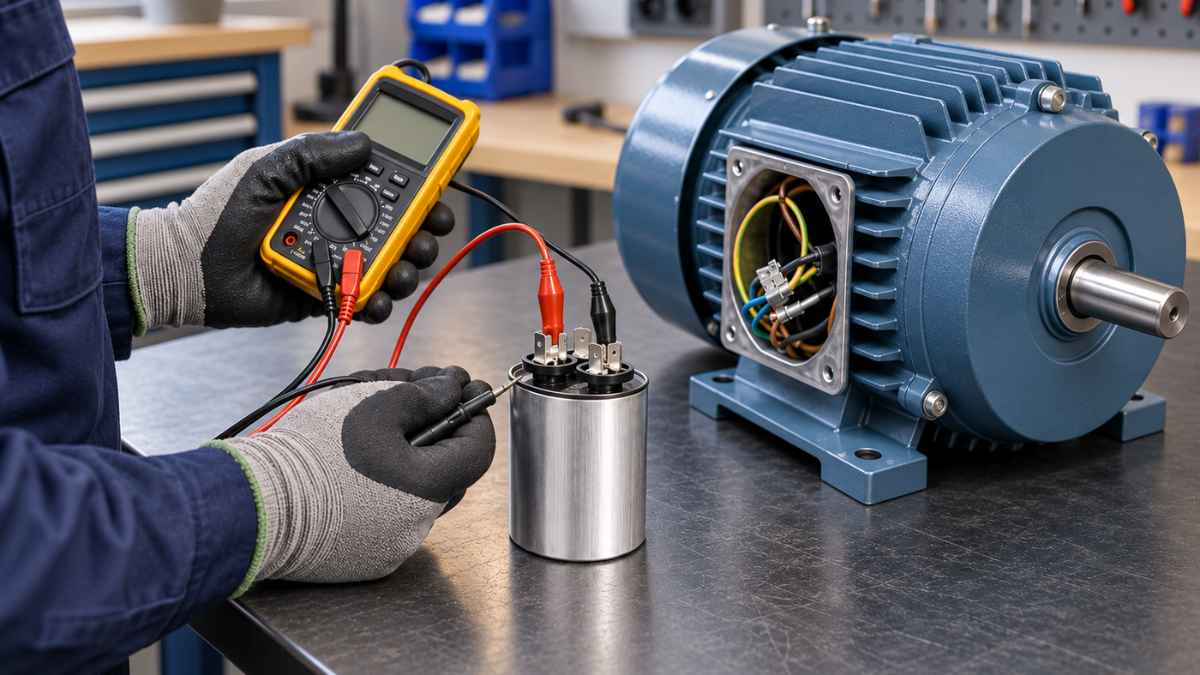
Have you encountered unexpected production line downtime due to capacitor degradation in circuits? Capacitance Meter, or an electrical capacitance measuring device, is a crucial tool that can help solve this issue. SCMA, as a technical partner, offers global solutions with LCR Meters. This article will take you through the working principles, maintenance checklists, and purchasing guidelines to enhance your industrial plant's efficiency.
What is a Capacitance Meter?
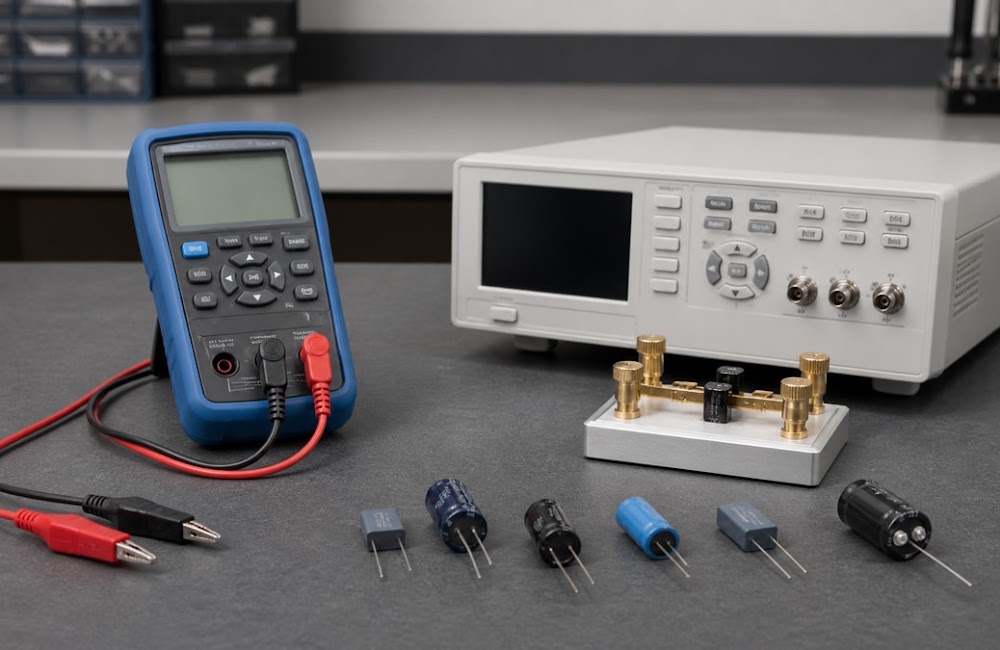
A Capacitance Meter, or an electrical capacitance measuring device, is a specialized tool used to measure the ability of capacitors to store electric charge (capacitance) with standard units in farads (F). Such tools are commonly found as additional functions in leading electronic measurement devices like electrical and electronics measuring instruments from SCMA, designed for high-precision analysis tasks.
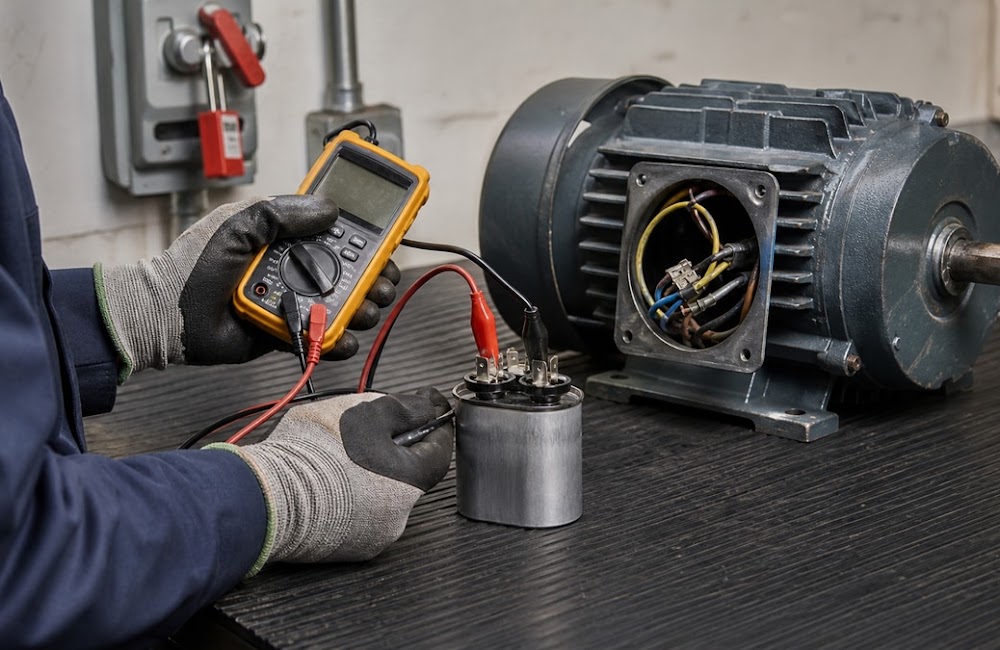
How a Capacitance Meter Works
Understanding the working principle of a Capacitance Meter enables engineers to quickly assess circuit abnormalities. This process relies on measuring the electrical reaction occurring within the capacitor.
Sending Test Signals
The device initiates the process by sending an alternating current (AC Signal) along with voltage into the target capacitor Insight on how it works. It explains that setting the correct frequency directly impacts measurement accuracy.
Metering Electrical Response
When the signal is sent in, electrical current flows through the capacitor at varying amounts. The amount of this current varies according to the capacitance (C) within the structure. Measuring this rate of flow is a critical indicator of electronic equipment condition.
Calculation and Processing
The internal microprocessor analyzes the ratio between voltage and changing current in detail. The system converts raw data through specific algorithms to produce numerical values representing capacitance that engineers can read immediately.
Factors Affecting Accuracy
Measured values are directly related to physical structure, which can be calculated using the equation $C = \epsilon \frac{A}{d}$ with variables including $A$ (surface area of conductive plates) and $d$ (distance between plates), along with the type of insulating material used.
How many types of Capacitance Meter are there?
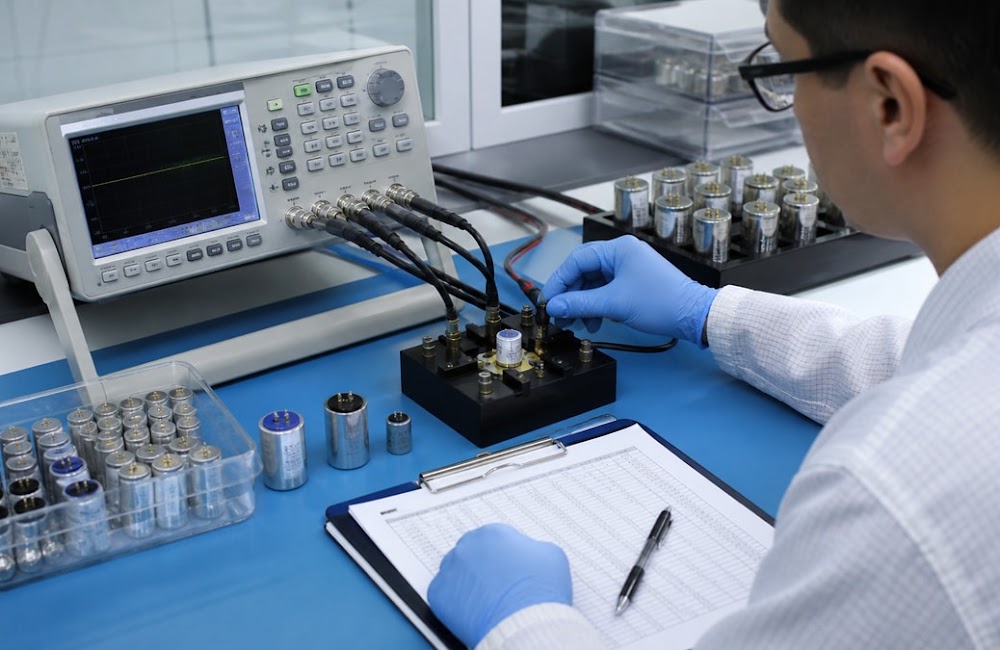
This type of equipment is designed to accommodate different working environments. Choosing the right Capacitance Meter directly affects the efficiency of on-site work.
Handheld Type
This type stands out for its compactness, suitable for maintenance teams that need to go on-site for real inspections. The built-in battery allows for quick and safe analysis of production line machinery problems.
Benchtop Type
Designed for laboratory work requiring the highest level of precision, this type supports a wide range of frequency settings. According to SCMA engineer experience, it is ideal for research and electronic component sorting tasks.
Maintenance of Capacitance Meter
Creating a maintenance checklist for the Capacitance Meter is an important step that helps extend its lifespan. Proper care prevents long-term errors in electrical measurement.
Clean Regularly
Use a soft, damp cloth to clean the exterior of the device. Special attention should be given to the terminals (Terminals), which must be free from dust or dirt to prevent hidden resistance that causes inaccuracies.
Proper Battery Management
In cases where portable measuring devices are not used for long periods, batteries should always be removed. Neglecting this step may lead to acid leakage, which can damage the internal microprocessor circuit board permanently.
Store in an Appropriate Environment
Electronic equipment is sensitive to environmental conditions and should be stored in a dry area with normal room temperature. Avoid direct sunlight exposure as it helps protect the display screen and external plastic parts from cracking.
Avoid Shock and Impact
Drops or severe vibrations can damage internal processing systems. Users should always use wrist straps or store the device in shockproof cases to maintain sensor integrity for continued operation.
Send for Calibration Periodically
Internal components degrade over time, and sending the equipment back for calibration (Calibration) at a service center ensures accuracy. The company homepage of SCMA provides contact information for engineers to manage calibration according to standards.
Usage of Capacitance Meter
The functionality of the Capacitance Meter covers everything from circuit assembly to preventive maintenance. Proper use of this tool helps reduce waste rates in factories significantly.
Checking for Component Degradation
Maintenance teams use this equipment to measure whether capacitors can still accumulate electrical charge at their original capacity. Early detection of leakage helps prevent abnormal machine operation issues.
Sorting Capacitance Values Before Assembly
Before assembling electronic components into circuits, measuring capacitance (C) confirms that the product specifications meet standards. Precise sorting prevents damage during final production processes.
Analyzing Problems on Circuit Boards
When control system abnormalities occur, engineers can systematically check components on circuit boards (PCBs) to find defects. Systematic analysis with reliable tools significantly reduces repair time and saves costs.
Advantages of Capacitance Meter
The key advantage of the Capacitance Meter (including SCMA's LCR meter group) is its high accuracy in analyzing capacitors within circuits. Comprehensive design covering all parameters meets both field work requirements for flexibility and laboratory work needs for maximum precision.
How to Choose a Capacitance Meter
Making an informed decision when purchasing a Capacitance Meter requires considering engineering specifications primarily. Careful comparison of the specs helps you get a tool that can handle all scenarios.
- Measurement Range: Ensure the device covers all capacitance values in your operational process comprehensively.
- Resolution: Choose screen resolution that corresponds to the accuracy level required for inspecting workpieces.
- Accuracy: Industrial-grade equipment must have the lowest possible deviation for maximum safety.
- Additional Features: Supporting resistance or inductance measurements enhances versatility in operation.
- Aftersales Service: It is advisable to purchase from a representative that provides calibration service for all types of measuring instruments for long-term assurance.
Causes of Capacitor Degradation
Understanding the factors that cause capacitor degradation helps in effectively planning maintenance with a Capacitance Meter. Engineers can prevent problems ahead by observing these risks.
- Cumulative Heat Temperature: Excessive heat beyond standard levels rapidly deteriorates internal insulation.
- Surge Voltage: Overcurrent creates severe damage to the structure of conductive plates.
- Aging: Internal electrolyte dries out over normal system operation time.
- Humidity in System: Excessively humid environments cause oxidation reactions at terminals leading to rust formation.
Summary
The Capacitance Meter is an indispensable tool for analyzing the integrity of capacitors in the industrial sector. Proper maintenance coupled with selecting standard equipment positively impacts production stability. SCMA Company offers comprehensive automation solutions and calibration services to support your success.
If you want to buy a Capacitance Meter, SCMA is available today!
This article reflects the commitment to delivering reliable engineering knowledge as a guide for solving real-world problems based on high-quality communication principles. If you are looking for a Capacitance Meter, our team of experts at SCMA is ready to provide design solution consultations, along with fast and goal-oriented after-sales services that truly meet your production objectives.
Frequently Asked Questions
Can a Capacitance Meter measure component values while they are still in the circuit?
The most accurate measurement should always be done by removing the components from the circuit first. Measuring while it is still in the circuit may cause electrical current to flow through other paths, leading to inaccurate readings.
Why is the unit Farad important?
The Farad is a standard unit that indicates the amount of electric charge an apparatus can store. Comparing sub-units like microfarads (µF) is essential for electronic work.
How does an LCR meter differ from a general capacitance meter?
An LCR meter can evaluate parameters comprehensively, including resistance (R), inductance (L), and capacitance (C) all within one device.
What should I do if the display shows unstable numbers?
The user should check for any dirt or debris on the probe tips. Replacing with a new set of probes immediately reduces hidden resistance issues.
Does SCMA offer calibration services for expired warranty equipment?
Our engineering team is ready to handle industrial measurement tool calibration systems for all models. We provide inspection and adjustment services to extend the lifespan of your equipment as much as possible.