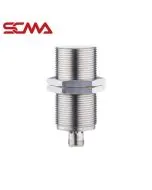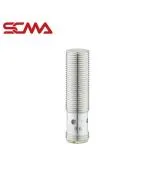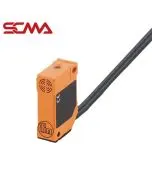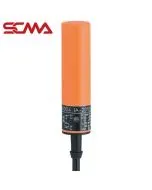
Are you struggling with machinery downtime due to faulty object detection? This article delves into how to select the right Proximity Sensor for your industrial application to address the issue precisely. As experts in measurement tool solutions, SCMA is ready to provide consultation and supply high-quality equipment, enabling readers to learn a detailed checklist for selecting proximity sensors to confidently improve production efficiency.
What is a Proximity Sensor?

A Proximity Sensor (proximity sensor) is a non-contact object detection sensor that works without directly touching the target object, signaling when an object enters its predefined range for further processing. This type of equipment is crucial for counting workpieces, switching on/off switches, or safety systems in industrial plants.
How Many Types of Proximity Sensors Are There?
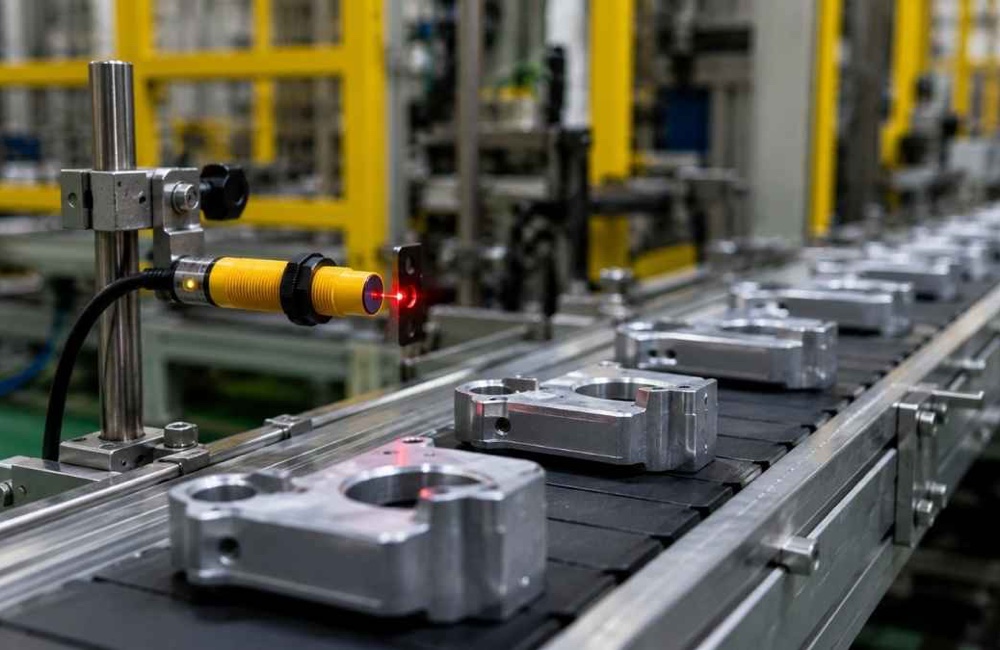
Based on the experience of the SCMA engineering team, the classification of Proximity Sensors primarily relies on their operating principles. This equipment is divided into five main types according to international standards.
- Inductive Proximity Sensor: Utilizes an electromagnetic field for operation and can detect only metallic objects. It is commonly used in manufacturing industries, conveyor belts, and for detecting the position of mechanical parts.
- Capacitive Proximity Sensor: Works on the principle of changing electrostatic fields and can detect targets including metals, non-metals, wood, plastic, glass, water, and even dust. Suitable for checking liquid levels in tanks or monitoring packaging quantities.
- Magnetic Proximity Sensor: Detects moving magnetic fields through the use of a reed switch (Reed Switch). Ideal for detecting piston positions in pneumatic cylinders (Pneumatic Cylinder) or as safety door sensors.
- Optical/Infrared Proximity Sensor: Operates by emitting an infrared beam towards the target and calculating distance from reflected light. Can detect various types of objects depending on the color of the workpiece, including high-speed object detection.
- Ultrasonic Proximity Sensor: Sends out high-frequency sound waves to measure reflection time. Capable of detecting all types of objects, whether solid, liquid, or transparent. Commonly used as distance measurement and water level sensors.
How to Choose a Proximity Sensor
How to Choose a Proximity Sensor for optimal performance, one must consider the environmental factors and characteristics of the workpiece primarily. The team recommends a checklist of 6 important steps to help engineers make the right decision when selecting equipment as follows:
1. Selecting the Type of Sensor
The first step is to evaluate what type of material the target workpiece is made from. If you need to detect only metal parts, choose an Inductive Type for maximum accuracy. Conversely, if the workplace needs to detect plastic, glass, or liquids, switching to a Capacitive Type will better meet the requirements.
2. Selecting Detection Range
The working range is a crucial variable that depends on the size of the sensor head and the characteristics of the target. Engineers should calculate the detection range with some margin to prevent impact damage to the equipment. For example, if the workpiece is 5 millimeters away, consider selecting a model with an 8-10 millimeter detection range for safety.
3. Sensor Head Mounting Style
The flat head (Shielded / Flush) style is surrounded by metal and can be embedded into steel immediately without disturbing the magnetic field, suitable for limited spaces. The protruding head (Non-Shielded / Non-Flush) style detects targets from a greater distance but requires space around the sensor head to prevent signal interference.
4. Output Signal (NPN or PNP)
Selecting the output signal must be based primarily on the controller or PLC system in use. The PNP type supplies positive (+) power when detecting a target, which is the standard preferred in Europe and Thailand. The NPN type supplies negative (-) power upon operation, commonly found in machinery from Japan.
5. Contact Form (NO or NC)
The NO (Normally Open) contact form does not output signal until it detects a workpiece, then changes to ON status. For the NC (Normally Closed) contact form, there is continuous signal output until the sensor finds a target and switches off.
6. Power Supply and Size
The user must check that the operating voltage matches the equipment specifications, such as 12-24 VDC or 90-250 VAC to prevent electrical damage. Consider screw sizes like M8, M12, M18, or square shapes in line with available space on machinery for ease of maintenance.
Maintaining Proximity Sensor
Proper maintenance will extend the lifespan of the equipment and prevent machine downtime caused by faulty object detection. The guidelines recommended by the repair and maintenance engineering team consist of three main points.
1. Cleaning Steps for the Sensor Head
The system operator should regularly clean the sensor head area with a damp cloth or alcohol to remove dust, oil stains, or debris that may obstruct detection. A critical precaution is never to use thinner or corrosive chemicals as these can damage the plastic parts of the sensor.
2. Checking Distance and Calibration
Mechanical vibrations may cause the sensor position to shift from its original setting. Technicians must ensure that the distance between the device and target remains within the specified range at all times. Regularly check for any kinks, breaks, or loose connections in the wiring, and test the output voltage with a multimeter to confirm operational status.
3. Protection from External Factors
If the work area experiences high vibrations, install vibration dampening material to prevent sensor movement. For areas with extreme heat or strong electromagnetic fields, choose models that are specially durable. Considering the installation of a metal guard (Guard) will effectively protect against direct impact damage.
Using Proximity Sensor
The Proximity Sensor plays a crucial role in enhancing the efficiency of automated systems in industrial plants. Its application can be categorized as follows:
1. Application of Inductive Proximity Sensor

The inductive proximity sensor is designed specifically to detect metallic workpieces. In factories, it is used to count metal pieces on production conveyors. A popular application is to use it for detecting the movement position of heavy machinery parts to control operational timing.
2. Application of Capacitive Proximity Sensor
The highlight of this type of sensor is its ability to detect materials such as metals, non-metals, plastics, glass, water, and granular materials. The food and beverage industry often uses it to check liquid levels in storage tanks and accurately verify the presence of products inside sealed packaging.
3. Application of Ultrasonic Proximity Sensor
The use of sound wave reflection allows this type of sensor to detect targets at longer distances than other types. Engineers apply it for measuring the distance of workpieces with complex shapes, as well as detecting transparent objects like glass sheets or clear film where light-based sensors perform poorly.
Advantages of Using Proximity Sensor in Automated Systems
Selecting proximity sensors for conveyor systems clearly reduces machine wear and tear since they operate without direct contact with workpieces. These devices are highly durable under harsh industrial plant conditions, making the investment in appropriate equipment a cost-effective long-term maintenance solution for operators. For more comprehensive understanding of how these sensors work, you can study industrial sensor information.
Caution When Installing Proximity Sensor
Even though you know the correct way to choose a Proximity Sensor, incorrect installation can cause system processing issues. The SCMA team has important cautions for technicians as follows:
- Avoid installing non-shielded equipment too close to side metal, as it may cause interference with object detection signals.
- Prevent electromagnetic interference by avoiding running sensor signal wires alongside high-power electrical cables.
- Carefully check the output wiring manual against the PLC specifications to prevent short circuits.
Summary
The correct way to choose a Proximity Sensor starts with thoroughly analyzing material type, detection range, and machine's electrical system. Regular maintenance will help prevent downtime in production lines sustainably. If your factory is looking for experts to design an automatic system, we are ready to offer design and installation services that comprehensively manage measuring tools for you.
If you want to buy a Proximity Sensor, SCMA is available today!
Investing in standard industrial sensors is crucial for improving factory production quality. SCMA is the representative of leading global brands like ifm, with an engineering team ready to advise on the correct way to choose a Proximity Sensor. Customers can view a comprehensive measuring tool catalog, or start ordering proximity sensors online designed specifically to solve your on-site problems immediately.
Frequently Asked Questions
Can a Proximity Sensor detect objects through walls?
The Capacitive type can detect objects through thin non-metallic materials such as plastic or thick paper, but it cannot detect through thick walls.
What is the lifespan of a Proximity Sensor?
Since it operates without touching the workpiece, there are no mechanical parts that wear out. If used in normal environments, it can have a long service life of several years.
Can a PNP type sensor be connected to an NPN system directly?
In general, direct connection is not possible due to different power supply circuits; additional equipment such as relays must be used to compensate and convert the signal before entering the PLC.
What factors can cause detection range to shorten?
The type of metal has a significant impact; steel will have the longest detection distance, while aluminum or copper will reduce the detection range according to the material's multiplier value.
Can multiple sensors be installed close together?
This is possible but must maintain spacing as specified by the manufacturer’s manual to prevent mutual interference signals that can cause malfunction.