Is safely measuring high voltage a challenge for engineers? This article will take you through a detailed introduction to High Voltage Probe and High Voltage Differential Probe. SCMA, as an expert in measuring instruments, is ready to provide advice and distribute high-quality equipment. Readers will gain knowledge from the working principles to how to select them to prevent electric shock hazards effectively.
What is a High Voltage Probe?
High Voltage Probe, or high voltage voltage probe, is an important device designed to work with a multimeter, allowing workers to safely measure high voltage levels in kilovolts. In addition, there is the High Voltage Differential Probe which can effectively separate noise signals. SCMA is a distributor of these electrical measuring instruments to enhance safety in industrial factories.
Working Principle of High Voltage Probe
The basic working principle of High Voltage Probe uses a voltage divider circuit, employing high megaohm resistors to reduce kilovolt-level voltages to a safe level. The reduced current is then sent to the measuring instrument for processing. If it is a High Voltage Differential Probe, a differential signal amplification circuit is added to effectively eliminate common-mode noise signals.
How Many Types of High Voltage Probes Are There?
High voltage detection and measurement devices are divided into different types according to the method of accessing the working area. Choosing the appropriate High Voltage Differential Probe or other types of probes can greatly enhance the safety of the engineering team.
Contact Type
This type of probe requires the user to directly touch the wire or conductive point with the probe tip to read the voltage value. The design therefore emphasizes a specially thick insulating handle to prevent electric leakage. If measuring the potential difference between two points with high voltage, the SCMA engineering team recommends considering the use of High Voltage Differential Probe for maximum safety.
Non-Contact Type
This type of device operates by detecting the electromagnetic field emitted from high voltage wires. Operators can check the electrical status remotely without touching the wires. Using this type of probe in conjunction with High Voltage Differential Probe during in-depth analysis will help achieve the most complete safety system.
High Voltage Probe Maintenance
Proper maintenance of high voltage measuring instruments is absolutely something that should never be neglected, whether it is a standard probe or High Voltage Differential Probe. Users must regularly inspect the condition of the instrument according to the following checklist to extend its lifespan.
Cleaning and Storage
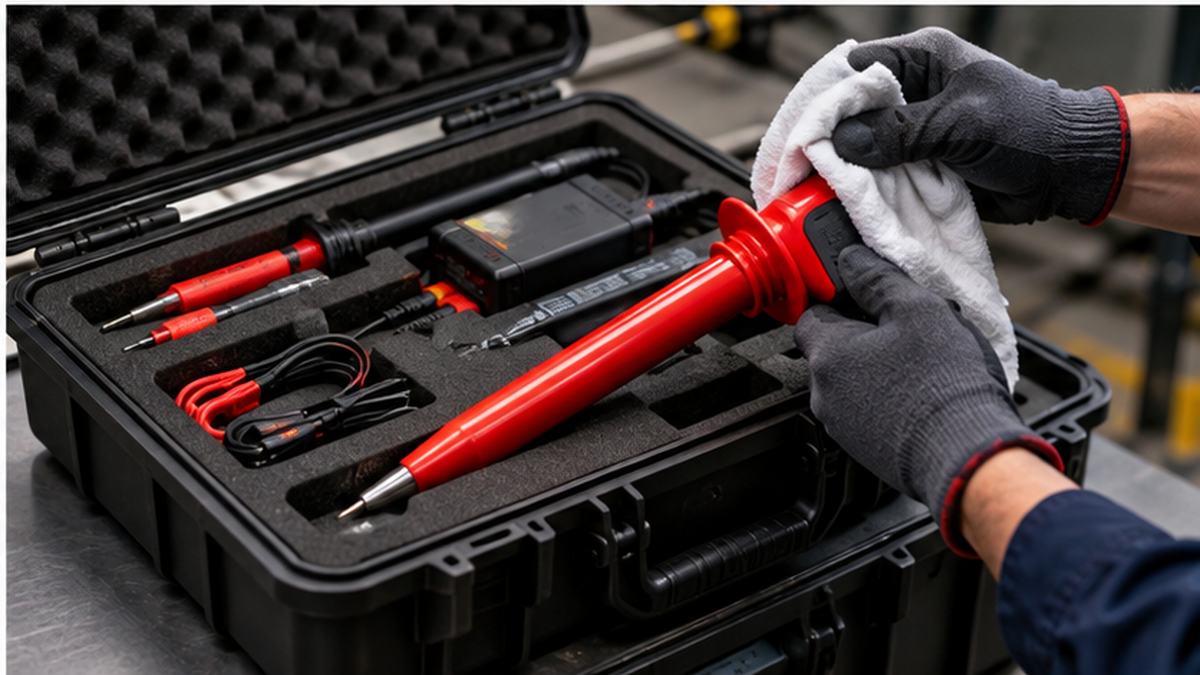
Users must clean the handle and signal cable with a dry cloth or slightly damp cloth. Avoid using harsh chemicals that may damage the insulation surface. After that, the High Voltage Differential Probe or other types of probes should be stored in a completely dry anti-shock bag to prevent moisture accumulation.
Inspection Before and After Use
According to the experience of the SCMA engineering team, the first step before using the instrument is to look for cracks, breaks, or oil stains on the probe tip. The ground wire must be in good condition with no rust. If any abnormalities are found on the High Voltage Differential Probe, use should be immediately suspended to prevent danger.
Calibration and Preventive Maintenance
All types of measuring instruments may experience drift over time. Therefore, operators must send the equipment for calibration (Calibration) to a standard laboratory at least once a year. Calibrating the High Voltage Differential Probe according to the scheduled time will help confirm measurement accuracy to ensure confidence in field work.
High Voltage Probe Usage
Working with electrical systems in industrial factories requires high-standard equipment. Applying voltage probes, including High Voltage Differential Probe, helps ensure smooth maintenance processes.
Checking Voltage Levels in Control Panels
Technicians can use the probe to measure voltage inside the control panels of automated machinery or the main power distribution systems of factories. Knowing the actual voltage value helps assess the situation accurately. In complex systems, using High Voltage Differential Probe makes phase-to-phase voltage measurement easier.
Preventing Hazards During Maintenance
Before starting any machine repair work, the team must ensure that there is no residual electrical charge in the system. Using the probe to detect current is a standard procedure that must never be skipped. If any abnormalities are found, in-depth analysis using High Voltage Differential Probe helps accurately identify the problem location.
Working with Oscilloscopes
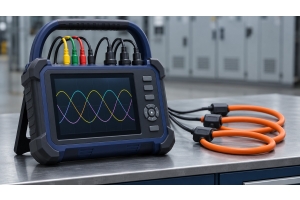
During the analysis of electrical signal waveforms, engineers need to connect the probe to an oscilloscope to observe voltage abnormalities. Using High Voltage Differential Probe helps attenuate the signal safely for the oscilloscope and provides a clear waveform image without ground loop interference signals.
Advantages of High Voltage Probe
High Voltage Probes from SCMA are designed to meet the needs of real-world field workers, both the High Voltage Differential Probe and standard probes have many interesting features
Enhance Maximum Safety
The most important advantage is helping to maintain a safe distance between workers and high-voltage power sources, especially the non-contact models can drastically reduce the risk of direct contact. Choosing the right tools including the High Voltage Differential Probe is an investment in the lives of the team
Supports a Wide Measurement Range
High-quality probes can adjust the measurement range to cover both low voltage and kilovolt high voltage in one device, eliminating the need to carry multiple devices. This feature is found in new High Voltage Differential Probe models, which are highly flexible and responsive to measurements in various environments
Has a Pre-Use Readiness Check System
Many models come with a Self-Test function to allow users to test the integrity of the internal circuit before actual work. This system acts as a shield against device-related errors. When used together with a high-standard High Voltage Differential Probe, it further increases confidence in measuring dangerous voltages
Lightweight and Easy to Carry
Field measurement tools must be compact and lightweight to avoid burdening technicians. The material used for the handle is a special polymer insulation that is strong yet light. Carrying the probe or High Voltage Differential Probe in a tool bag is convenient and ready for immediate use
How to Choose a High Voltage Probe
Investing in high voltage measurement equipment requires considering multiple factors to ensure the most cost-effective and safe tool for the engineering team. When selecting a High Voltage Probe or High Voltage Differential Probe, the following considerations apply:
- Voltage Range: Assess whether the work site requires measuring AC or DC voltage up to how many kilovolts (kV) to select a model that can handle it sufficiently
- Device Compatibility: Check the input resistance of the digital multimeter to ensure it can work accurately with the probe or High Voltage Differential Probe
- Safety Standards: Check the certificate or insulation material of the handle to fully prevent electric leakage during work. Read more information from High Voltage Probes Blog
- Worksite Usage Characteristics: Choose between direct contact type for numerical measurement or non-contact type for preliminary status inspection
- After-sales Service: It is recommended to purchase from a reliable distributor such as SCMA, which offers comprehensive services. You can view the products at High Voltage Detectors
SCMA Expert Calibration and Maintenance Services
In one of our case studies, having a good measuring instrument but lacking maintenance could lead to serious damage to the production system. SCMA therefore offers a comprehensive service to maintain all types of High Voltage Probe so they are always ready for use.
- Dedicated Engineering Team: We have experts ready to advise you on selecting the appropriate High Voltage Differential Probe for your specific application
- Service Ecosystem: We provide calibration services according to international standards to extend the life of your equipment. View our services at SCMA Services
- Integrated Solutions: In addition to selling instruments, we can design an electrical safety system that fits your production process. Visit All SCMA Products
- Fast Service Response: We have branches located in the EEC area, including northern industrial parks, allowing us to quickly reach our customers' work sites
Summary
High Voltage Probe is an essential device for safely working with high voltage electrical systems, whether they are contact or non-contact types, including High Voltage Differential Probe, all of which serve to protect technicians from hazards. If your business is looking for high-quality measuring instruments with comprehensive calibration services, SCMA Co., Ltd. (SCMA) is ready to be your technical partner.
Interested in purchasing or consulting via LINE Official: @SCMA
If you want to buy a High Voltage Probe, you can buy it from SCMA today!
Purchasing a high voltage measuring instrument is not just about finding a cheap device, but it is an investment in the safety and efficiency of your factory. SCMA is an official distributor of High Voltage Probe from world-leading brands. We have a team of engineers ready to advise you on selecting High Voltage Differential Probe, as well as providing professional calibration services. Contact us through SCMA's official website
Frequently Asked Questions
Can a high voltage probe be used to measure current?
No. This type of probe is designed only to attenuate and measure voltage. If you need to measure current, you must use a clamp meter or specialized equipment.
What is the average lifespan of a probe?
The lifespan depends mainly on storage conditions and frequency of use. If properly maintained and regularly calibrated, the device can be used for many years.
Why must electrical measuring devices be calibrated every year?
Circuits or internal resistors in the device may degrade over time. Calibration confirms the accuracy of the readings so users can correctly assess safety.
Can a non-contact probe detect electric fields through insulation?
It can detect electric fields through general insulation. The detection range depends on the thickness of the insulation or the voltage level flowing through the wire.
How does a Differential probe differ from a standard probe?
A Differential probe is designed to measure the potential difference between two points that are not referenced to ground. It eliminates common-mode noise, resulting in more accurate measurements than a standard probe.