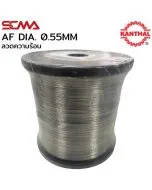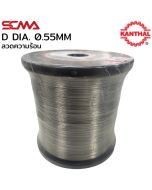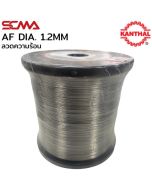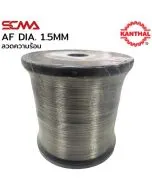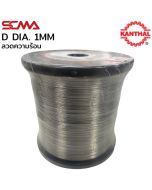
Heating wire is a crucial component that enables heaters to operate efficiently, whether it's for industrial heating applications such as baking, boiling, melting or even household appliances like irons and kettles. SCMA, the leader in thermal control equipment and automation, specializes in designing and distributing high-quality heating wires to meet diverse customer needs.
What is Heating Wire? What are its Main Functions?
Heating wire (Heating Wire) is an electrical conductor with high resistance properties. When electricity flows through it, heat is generated in the wire, which can be utilized for heating or providing thermal energy to various objects. It's also known as a heater wire.
Main Functions of Heating Wire
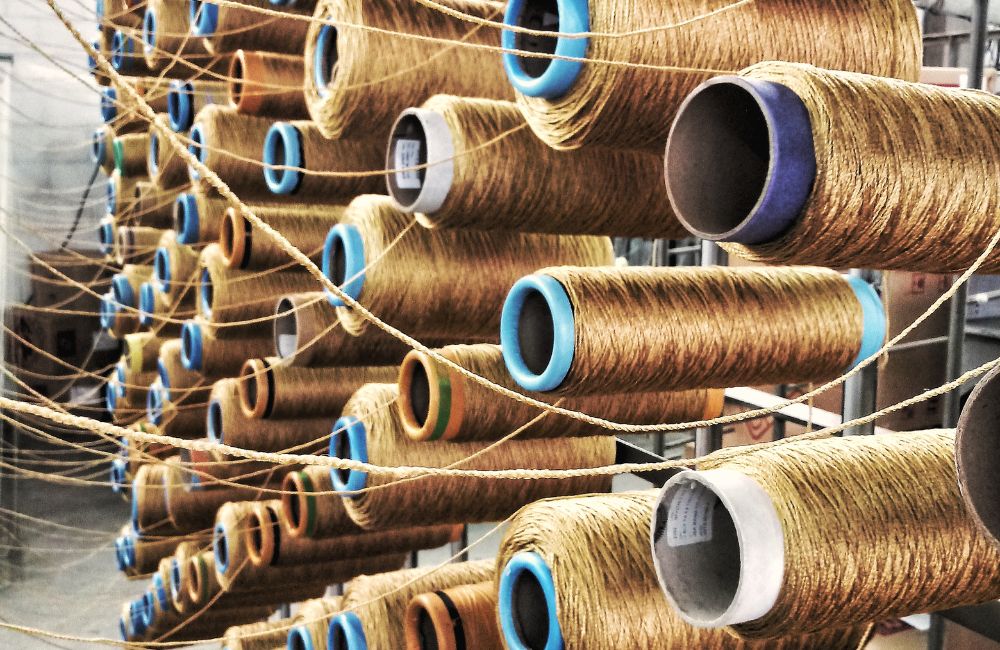
The primary function of heating wire is to convert electrical energy into thermal energy, allowing for precise temperature control. Therefore, it's a critical component in various types of heaters such as coil heaters used in water kettles, hot water dispensers, food ovens, or high-temperature applications like furnaces, kilns, and metal plating equipment.
What are the steps involved in designing heating wire?
When designing heating wire, or Heating Wire, there are several factors to consider such as material, size, shape, power requirements, and coil placement to ensure suitability for use. The main steps include:
- Determine the characteristics of the heater wire - Consider the form, size, installation area, and desired temperature range to design appropriate coils and insulation.
- Calculate energy requirements - Compute the electrical power and voltage needed for the heater wire to achieve the intended heat output.
- Select type and brand of heating wire - There are various types such as nichrome wire, chromel wire, each with different properties that must be chosen to suit the application.
- Calculate resistance (Rt) and (R20) - Use engineering formulas to determine the wire's resistance at operating temperature and room temperature.
- Calculate the length of heating wire needed (L) - From the data on resistance and cross-sectional area of the wire, determine the total length required for winding.
- Select wire size from (R20) and (L) values - Compare data with manufacturer specifications to choose a wire of appropriate size and length.
- Check surface heat load - Calculate the power density per area of the coil to ensure that excessive heating does not occur.
Selecting the Right Type of Heating Wire for Your Application
There are several types of heating wire available, each with its own advantages and disadvantages suitable for different applications. Commonly used heating wires include:
- Nickel-Chrome Wire - Can withstand temperatures up to 1,200°C with good corrosion resistance, suitable for general use but at a higher cost.
- Iron-Chrome Wire - Capable of enduring temperatures up to 1,400°C with high strength, ideal for heavy-duty work but less resistant to corrosion.
- Nickel-Iron Wire - Used in applications below 600°C, cost-effective but with a shorter lifespan.
In addition to the type of wire, considerations such as size, length, and surface coating also affect heating efficiency, durability, and cost.
What factors should be considered when selecting the size of heating wire?
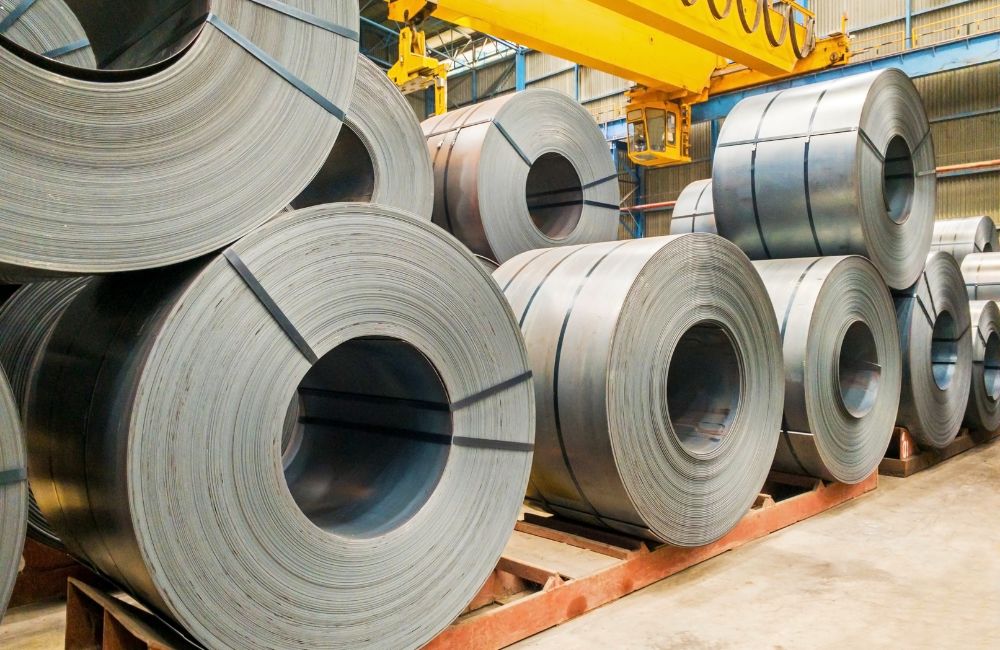
Selecting the appropriate size of heating wire is a crucial factor in ensuring that the heater operates efficiently and has a long lifespan. The following considerations must be taken into account:
- Electric power supplied to the wire - It is necessary to choose a wire with an appropriate cross-sectional area and length so that it can handle the current properly, not too hot or cold.
- Resistance value - Each type of heating wire has a different electrical resistance per unit length. It must be selected to suit the voltage being used.
- Surface area - A larger diameter wire will dissipate heat better but will also take up more space in winding, which needs to be considered with respect to the size of the heater.
- Operating temperature - At high temperatures, heating wires expand, causing changes in resistance. This must be accounted for in calculations.
Then all the information is compared against standard tables of each wire type to select the best fitting size. If it's too small, the wire will wear out quickly; if it's too large, it would be wasteful.
Steps for Calculating Heater Wire Size Selection
Designing heating wire requires electrical engineering calculations to obtain a heater coil with appropriate power, voltage, and temperature for the job. The calculation steps can be summarized as follows:
- Determine the desired power (P) and voltage (V), such as a 1,000W heater at 220V.
- Calculate the resistance of the wire (R) at operating temperature and room temperature using the formula V^2/P.
- Calculate the length of wire needed (L) based on specific resistance and cross-sectional area of the wire.
- Select a wire size with a resistance per unit length close to the calculated value, referring to the manufacturer's data table.
- Calculate the power density per surface area of the coil to ensure it stays within an appropriate range and does not overheat excessively.
In reality, calculations may be more complex as other variables must also be considered, such as the shape of the coil, insulation material, thermal conductivity coefficient, along with simulation testing for performance evaluation.
What are the benefits of heating wire?
Heating wire is a highly useful device in everyday life and industrial applications, including:
- Used in household appliances such as water kettles, electric kettles, hot water dispensers, irons, hair dryers, making various activities more convenient and comfortable.
- Used in medical equipment such as sterilizers, dental drying devices, ensuring that tools are sterile and ready for use.
- Used in temperature control equipment of industrial machinery, enhancing production efficiency, maintaining product quality consistency, and reducing costs.
- Used in industries requiring high heat such as metal melting, workpiece annealing, ceramic firing, enabling the creation of high-quality durable products.
- Used in infrared heating systems that provide warmth through radiation, allowing for rapid and deep penetration into objects compared to other types of heat.
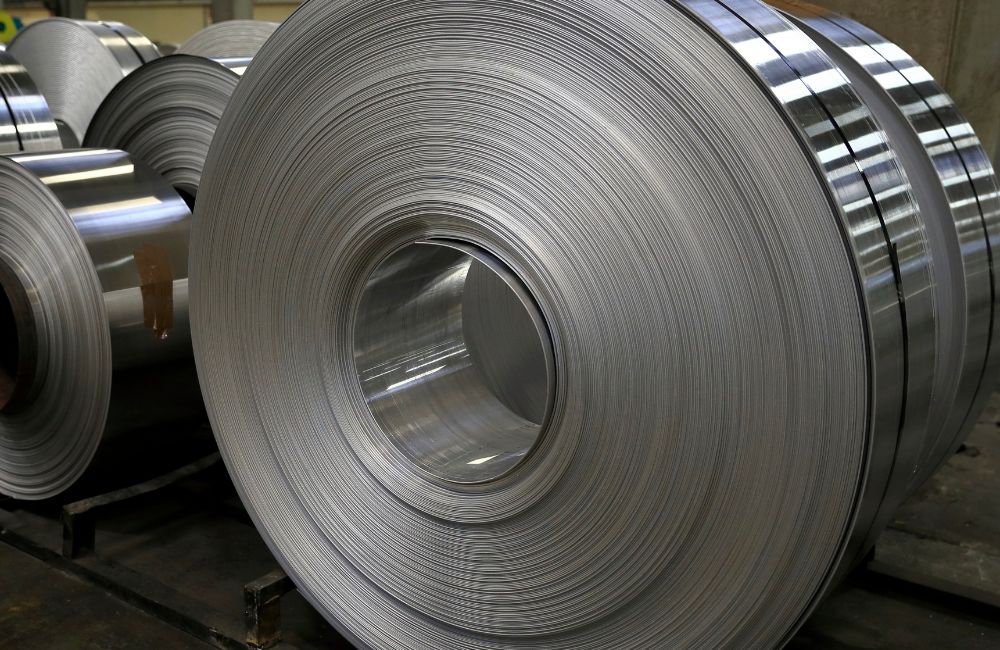
Interested in Heating Wire? You Can Buy from SCMA Today!
If you are looking for high-quality heating wire for various applications, whether it be industrial or household use,SCMA is here to assist you. With our experience and expertise, we are dedicated to selecting heating wire from leading manufacturers, including high-quality nichrome and chrome steel wires that are durable and long-lasting. We also provide consultation services for choosing the right wire for your specific needs.
Just let us know your requirements, our team of expert engineers will help design and select heating wire to meet your specifications, whether it's small heaters or heavy-duty high-temperature wires. Heating Wire from SCMA can meet all your needs with competitive prices and nationwide delivery services that are convenient and fast.
For orders or further inquiries, you can contact us through various channels such as phone, email, LINE, or visit our office to talk to us. We are happy to serve all customers with enthusiasm.
Summary
Heating Wire is an important component in daily life and various industrial applications, responsible for converting electrical energy into thermal energy. This requires precise design and calculation, as well as the selection of appropriate types and sizes of wire to achieve optimal heating efficiency, safety, and cost-effectiveness. SCMA is here to assist you with quality products and impressive services.
Frequently Asked Questions
What is heating wire?
Heating wire is an electrical conductor with high resistance. When electric current flows through it, heat is generated which can be used to warm various objects.
What is a heater?
A heater is a device used for heating that relies on the operation of heating wire as its main component, such as water heaters, kettles, irons, etc.
What are the properties of heating wire?
There are various types of heating wires, but all have key properties including high electrical resistance, high heat tolerance, corrosion resistance, long service life, and flexibility to bend into different shapes.
What is a heater?
A heater is a heating device that uses heating wire as an important component to convert electrical energy into heat. Heaters come in various forms, such as rod heaters and coil heaters, commonly used in industrial machinery, heating systems, and general household appliances.