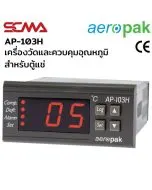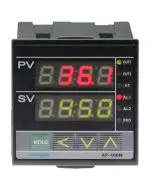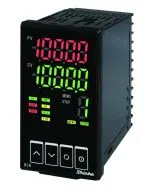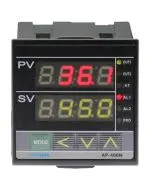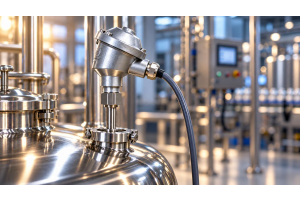

In the world of modern industry, temperature and humidity controllers are crucial tools. Whether it's in production, product storage, or even maintaining environmental conditions within a factory, if you're looking for equipment to control these climate factors, we recommend considering "Temperature and Humidity Controllers" from SCMA, which is a leading provider of advanced automation and sensor solutions, offering comprehensive consultation and services.

What is a Temperature and Humidity Controller?
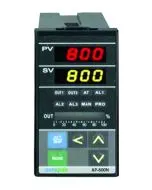
A temperature and humidity controller (Temperature and Humidity Controller) is an apparatus used to measure, control, and maintain the desired levels of air temperature and humidity. It is commonly used in control cabinets, storage rooms, or production lines across various industries such as food, pharmaceuticals, electronics, etc.
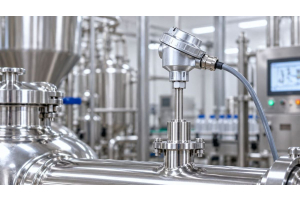
A temperature and humidity control cabinet consists of sensors for measuring environmental conditions, a control circuit set to process data and send control signals, and heating/cooling units or fans that adjust the temperature and humidity levels according to preset values.
How a Temperature and Humidity Controller Works
The operation of the temperature and humidity controller measures the temperature and humidity in the area where the sensor is installed. The signal received is converted and sent to the control unit for processing. If the measured value does not meet the set conditions, the system will instruct heating, cooling, or fan equipment to operate until the desired values are achieved. This operational cycle repeats continuously to maintain a stable environment.
Sensors used in temperature and humidity control cabinets come in various types, each based on different principles of operation:
1. How a Resistive Temperature and Humidity Controller Works
Resistive sensors (Resistive Sensor) rely on changes in the resistance value of the detection material when temperature or humidity changes. Common materials used are metal wire coils for temperature sensors, and polymers for humidity sensors. These changing resistance values are converted into electrical voltage signals for further processing.
2. How a Capacitive Temperature and Humidity Controller Works
Capacitive sensors (Capacitive Sensor) rely on changes in the capacitance value when relative humidity around them changes, often due to variations in the dielectric constant of materials. As capacitance values change, corresponding electrical signals are generated and adjusted to an appropriate level before being sent to control circuits.
3. How an Electronic Temperature and Humidity Controller Works
Electronic sensors (Electronic Sensor) typically use microchips or small integrated circuits designed specifically for measuring temperature or humidity. The circuit is calibrated according to environmental conditions, then converted into usable output signals such as voltage, current, frequency, or digital codes. These controllers are compact and provide high accuracy with minimal circuitry.
Benefits of Temperature and Humidity Controllers
Temperature and humidity control cabinets help maintain a consistent environment, which is crucial in many aspects, including:
- Preserving the quality of products such as food, medicine, chemicals to ensure durability and safety
- Preventing the growth of mold, bacteria, or unwanted reactions
- Creating an appropriate working environment for machinery and equipment
- Caring for the health of employees working in controlled areas
- Saving energy through precise and efficient control
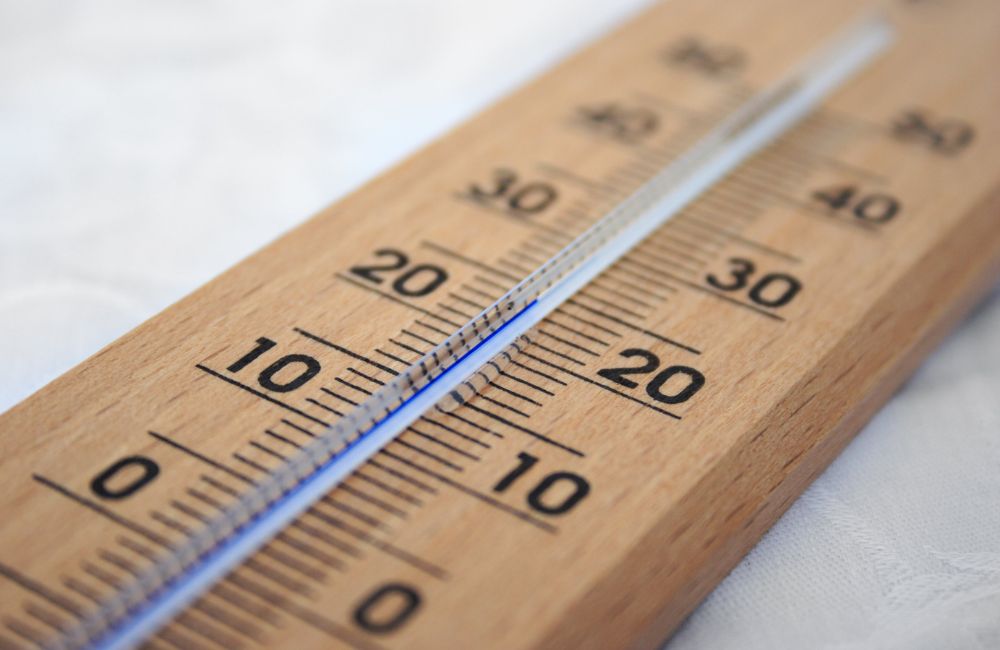
What are the features of a temperature and humidity controller?
A temperature and humidity controller typically has the following characteristics:
- Display real-time temperature and relative humidity values on a display screen
- Set operating parameters and alarms using button or touch system
- Have a wide measurement range, generally measuring temperature from -40 to 100 degrees Celsius and relative humidity from 0-100%
- High accuracy in measurements, with possible errors of ±0.5°C for temperature and ±2%RH for humidity
- Connect and communicate with external devices through RS-485 ports, USB or WiFi/Ethernet networks
- Have a backup power system and data logging to prevent loss when the power goes out
- Made from high-quality materials, durable, suitable for long-term use in various environments
What are the types of temperature and humidity controllers?
Temperature and humidity controllers can be broadly classified into two main types based on system complexity, namely
- Basic Type - Features basic functions such as displaying values, setting operational parameters, and sending control signals to devices. Easy to use and not too expensive, suitable for general applications that are not overly complex.
- Smart Type - Utilizes modern digital systems emphasizing accuracy in measurement and processing. Comes with a color display, touch buttons, and diverse menu options for user convenience. Supports connectivity through various ports or network systems. Can set up program sequences and conditions independently. Suitable for applications requiring high precision, data linkage, or customized control methods to fit the environment.
Where should temperature and humidity sensors be installed?
Choosing the right installation location is crucial to obtain accurate and true-to-reality data, which involves considering the following:
- Install away from direct heat or cold sources
- Choose an area with good air circulation and not overly humid
- Avoid direct sunlight or rain exposure
Direct sun or rain
- Install at an appropriate height, generally no less than 1.5 meters above the ground.
- In large rooms, distribute sensors in various locations and use average values for control purposes.
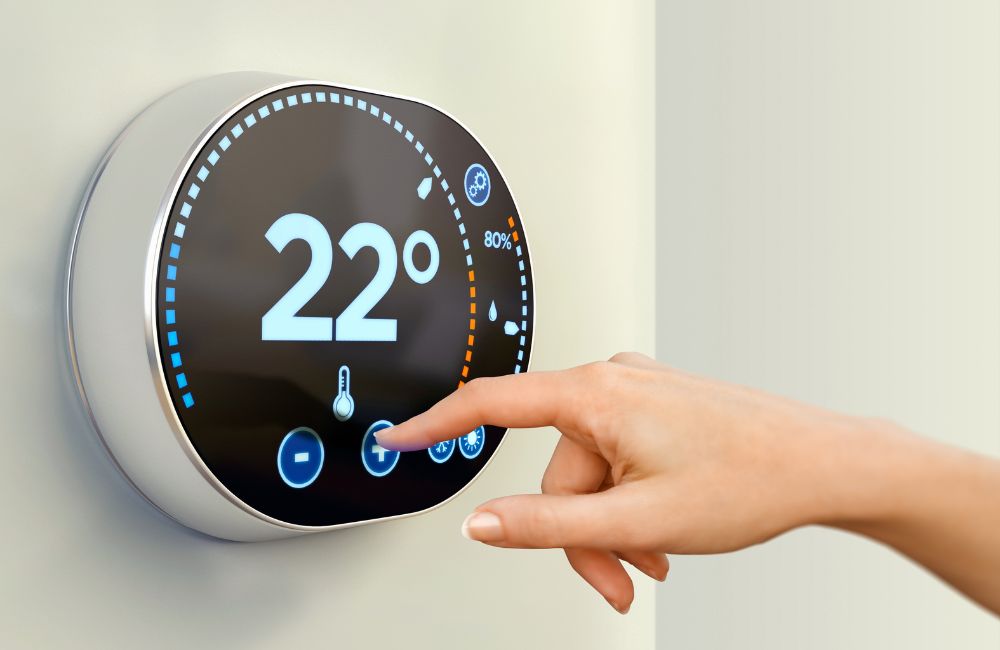
What Should You Consider When Choosing a Temperature and Humidity Controller?
When selecting a temperature and humidity control cabinet, the following factors should be considered:
- The range of temperatures and humidity levels to measure and control must fall within the operating range of the equipment.
- Measurement accuracy and resolution must be sufficient for the intended use.
- The functionality should cover all requirements, such as displaying values, data logging, communicating with other devices, etc.
- A variety of accessories or spare parts should be available to adjust the system appropriately.
- The size and shape of the equipment must fit the installation space, making it convenient for use and maintenance.
- Costs including installation, operation, and maintenance expenses should be reasonable and cost-effective.
SCMA is ready to provide consultation and services for Temperature and Humidity Controllers today!
SCMA is prepared to be your consultant and service provider for Temperature and Humidity Controllers, offering comprehensive services from planning to system design, procurement of high-quality equipment, installation, testing, and maintenance. We have a team of experienced engineers ready to provide advice tailored to your needs and environment for maximum efficiency. Additionally, we offer quick and efficient after-sales service capable of addressing issues directly. If you are interested in Temperature and Humidity Controllers, please contact us immediately for any inquiries. We are ready to answer all your questions and provide full service.
Summary
Temperature and Humidity Controllers are crucial equipment in today's industrial era, essential for maintaining product quality, creating safe environments, and enhancing production efficiency. Choosing the right and high-quality tools is therefore imperative. If you are looking for reliable Temperature and Humidity Controllers, SCMA is the best solution. With comprehensive consultation services, high-quality equipment, and professional teams, we are ready to support you at every step to meet your needs precisely.
Frequently Asked Questions
What is an RH Cabinet?
An RH cabinet, or Relative Humidity Control Cabinet, is a cabinet used to maintain constant relative humidity levels inside the cabinet to preserve product quality that requires appropriate moisture levels, such as food, medicine, cosmetics, etc. The RH cabinet has an automatic humidity and temperature control system.
What are the 3 types of temperature control tools?
- Thermometer - used to measure temperature
- Thermostat - used to maintain a constant temperature at the set value
- Temperature Sensor - used to detect temperature and send data to the control system
How many types of temperature control tools are there? What are they?
Temperature control tools can be broadly categorized into two main types:
- Manual - requires manual setting and adjustment of temperature, such as a thermometer
- Automatic - sets the temperature in advance and then automatically controls the temperature, such as a thermostat
What should the relative humidity level be in a refrigerator?
The appropriate relative humidity level for a refrigerator is generally around 40-60%, but it also depends on the type of food, such as:
- Leafy vegetables and fruits should have a humidity level of 90-95%
- Meat should have a humidity level of 80-85%
- Dry food and grains should have a humidity level below 60%. If the humidity is too low or high, it may cause food to spoil faster, such as mold growth or deterioration.