Is your factory's electrical system experiencing frequent power outages, voltage fluctuations, or electronic device failures? These issues are caused by invisible frequency waveform abnormalities. Using a Harmonic Analyzer to inspect electrical quality is therefore essential. SCMA's service is ready to provide consultation and distribute international standard electrical measuring equipment. This article will guide you through understanding the working principles, checklist purchasing methods, and proper maintenance approaches to extend the lifespan of your machinery effectively.

What is a Harmonic Analyzer?
Harmonic Analyzer is an important device in the group of Power Meters distributed by SCMA. It measures the total harmonic distortion (Total Harmonic Distortion or THD) in the electrical system. This tool helps engineers accurately analyze abnormalities in electrical system quality. Knowing the real cause helps to design targeted solutions, preventing long-term damage to machinery.

How the Harmonic Analyzer Works
The operation of this type of measuring instrument relies on receiving distorted electrical waveform signals, then processing the data mathematically using the Fourier Transform principle. The main process is as follows:
Signal Reception and Conversion (Sampling & Digitization)
The device starts by measuring the voltage waveform and the current flowing in the system. Then the system converts the received analog signal into a digital signal. This process requires a high-precision processing device to ensure that important signal data is not lost during transmission.
Mathematical Analysis (Fourier Analysis)
The digital data obtained will be processed using Fourier transformation to separate frequency components. The system will analyze and compare the fundamental frequency with the next harmonic frequency. This analysis helps clearly reveal hidden abnormalities in electrical system quality.
Distortion Calculation (THD)
Once each harmonic order is separated, the device will use the obtained values to calculate the total distortion or THD. This step evaluates the overall extent to which the electrical system is distorted from the standard. If the numerical value exceeds the limit, engineers must quickly find a solution to prevent damage to the production line.
Measurement Display
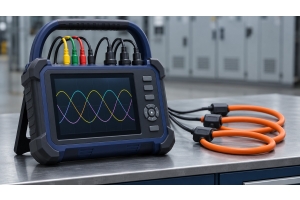
All calculation results will be sent to the device's screen in an orderly and clear manner. Users can read various parameters such as current, voltage, THD value, as well as different harmonic orders in real-time, enabling timely decision-making to choose the appropriate on-site problem-solving method.

How many types of harmonic analyzers are there?
Selecting measurement devices must be considered based on the main objective of the task. In general, the instruments distributed by SCMA Co., Ltd. (SCMA) can be divided into 2 main types according to their operating characteristics as follows:
Electric Power Meters
This type of device focuses on measuring basic electrical energy values together with the evaluation and analysis of total harmonic distortion (%THD). It is suitable for overall power quality monitoring in factories. Its usage is convenient and helps maintenance teams quickly obtain preliminary status information of the system.
Spectrum Analyzers
If you need to analyze complex and in-depth problems, Spectrum Analyzers are the precise solution. This type of instrument is used to analyze the frequency component details of the signal, helping engineers delve into each harmonic order (Individual Harmonic) to accurately identify the source of interference signals.
Maintenance of Harmonic Analyzer
IEEE 519 is used to evaluate harmonic levels in electrical systems at the point of common coupling (Point of Common Coupling or PCC). For maintenance and calibration of the harmonic analyzer, adhere to the manufacturer's specifications and the accuracy requirements of the task. The main guidelines to extend the lifespan are as follows:
Proper External Cleaning
Users should use a dry cloth or a slightly damp cloth to gently wipe the device body and display screen. Never use corrosive chemicals at all costs to prevent scratches. Maintaining the external condition in good condition helps the tool be ready for professional work in any environment.
Inspection of Measurement Cables and Probes
Clamp cables and electrical probes are parts that directly contact the current, so it is necessary to regularly check for cracks or rust. If any damage is found, replace the parts immediately. Using damaged equipment can cause danger and create frequency reading errors.
Battery Management When Not in Use
If the tool is not used for a long period of time, always remove the battery from the device. Doing this helps prevent battery degradation, prevents chemical leakage that may damage the internal circuit board, which is a basic method of maintaining test equipment for long-term use.
Settings and Calibration
Electronic devices may experience changes in measured values after prolonged use. Calibration should be performed according to the schedule specified by the manufacturer's guidelines, usage conditions, and system quality requirements. Calibration results show deviation and uncertainty values, while adjustments should be made as needed.
Storage in Appropriate Environment
The storage location for measuring instruments should be a dry area with appropriate temperature, free from moisture and dust accumulation. Users should avoid placing the equipment near areas with strong magnetic fields or vibrations to maintain the accuracy of the internal signal sensor.
Application of Harmonics Analyser
Harmonics Analyser is applied to inspect, evaluate, and record noise signals in the electrical system of industrial factories, with the main application approaches as follows
Analysis of Power Quality Issues
Engineers use this tool to inspect and distinguish the distortion values (Total Harmonic Distortion) in both voltage and current. Knowing these in-depth details helps prevent damage to electronic devices in the factory. Detecting problems early significantly extends the lifespan of machinery.
Analysis of Electrical Energy Parameters
Along with detecting noise waves, the device measures and records important basic parameters such as voltage (V), current (A), power (kW), and power factor. These data are essential for evaluating the overall energy efficiency of the organization.
Real-time Abnormality Monitoring
The status monitoring function allows the maintenance team to detect abnormal events in the system immediately, whether it be voltage drop, overvoltage, voltage surge, or voltage imbalance. Close monitoring reduces the risk of sudden production line stoppages.
Planning for Prevention and Problem Solving
The measured power quality data is used to design appropriate protection systems, such as selecting harmonic filters that match the problem. Engineering-based solutions help save budgets and resolve electrical issues thoroughly and accurately.
Advantages of the Harmonics Analyser
Devices from SCMA stand out in high accuracy for evaluating power quality issues. The device can measure Total Harmonic Distortion (THD) and deeply distinguish each harmonic order. It supports real-time simultaneous display of measurement results and phase diagram visuals, allowing engineers to diagnose noise signals and identify correction points quickly.
How to Choose a Harmonic Analyzer
When making an investment decision to purchase electrical measurement instruments that provide value and meet real usage needs in industrial factories, managers and engineers should consider important selection criteria according to the following checklist.
- Measurement Capability (Harmonic Measurement): The specification must indicate the ability to measure total THD and individually view detailed values of each harmonic order.
- Measurement Range and Parameters: Consider the measurement range of current and voltage, especially the size of the clamp (Clamp) that must support the maximum current of your factory equipment.
- Support for Various Electrical Systems: The device must be usable with both single-phase and three-phase electrical systems for flexibility in field inspections.
- Data Logging: Choose a model with built-in memory or support for SD Card to record data for long-term analysis without needing to connect to a computer constantly.
- Clarity of Display: The screen must be able to display waveforms (Waveform) and phase diagrams (Phase Diagram) to immediately assess electric power quality.
- Safety in Use: The device must meet electrical safety standards such as IEC 61010 and have safety ratings of CAT III or CAT IV according to voltage levels.
Solutions and System Design by SCMA
If you find complexity in selecting the right equipment model for your existing electrical system, SCMA has a team of engineers ready to provide consultation and present integrated measurement solutions. We are ready to support your organization with professional-level practices.
- Analyze Real-Field Problems: The team visits the site to investigate electricity usage behavior to identify the source of harmonic signals in the production line.
- Select Targeted Technology: Present harmonic analyzers from leading global brands that are suitable for your budget and match the factory size.
- Testing and Calibration Services: We have service centers to maintain and set the accuracy of the equipment according to international standards consistently.
- Comprehensive After-Sales Service: Our expert technical team is ready to assist with installation, training on usage, and maintenance throughout the equipment's lifespan.
Summary
Machine damage problems can be reduced if we understand the importance of maintaining electrical system quality. Having an effective harmonic analyzer helps engineering teams detect interference signals and address issues promptly. If your factory wants to improve energy stability contact SCMA for consultation. We are ready to be your partner that drives your success.
Interested in purchasing or consulting via LINE Official: @SCMA
If you want to buy a harmonic analyzer, you can buy it from SCMA today!
Accessing accurate technical information through a search engine (SEO) helps engineers quickly find solutions to electrical quality problems. As a leader in industrial technology, SCMA has gathered leading equipment at our full product page. We are ready to deliver harmonic analyzers and reliable services to help you focus fully on expanding your core business without worrying about the electrical system.
Frequently Asked Questions
1. What is THD?
THD stands for Total Harmonic Distortion, which is a percentage value indicating the total distortion of an electrical signal deviating from normal. If this value is high, it indicates that the electrical quality is having problems.
2. What causes harmonics in factories?
Mostly caused by the use of electronic devices of the Non-linear load type, such as current transformers, variable speed drive motor sets (VSD), as well as LED bulbs.
3. How do harmonics affect machinery?
Interference signals cause motors and transformers to accumulate higher than normal heat, resulting in a shorter lifespan, rapid degradation of electrical insulation, and breakers tripping without cause.
4. How often should measuring instruments be calibrated?
Determine the calibration cycle according to the manufacturer's recommendations, frequency and usage conditions, calibration history, and the organization's quality system requirements.
5. Which industries are SCMA devices suitable for?
Our solutions are suitable for factories of all sizes, especially the automotive, electronics, and factories that need to control the stability of high-precision machinery.