FRL Units are crucial equipment that protect machinery from moisture and contaminants in the compressed air system. Maintenance technicians looking for an air regulator, or a regulator valve, including SMC regulator can immediately purchase high-quality spare parts from SCMA. We offer an online ordering system with an engineering team for fast delivery, allowing you to continue assembly and operation without delay.
What are FRL Units? The First Line of Defense in Pneumatic Systems
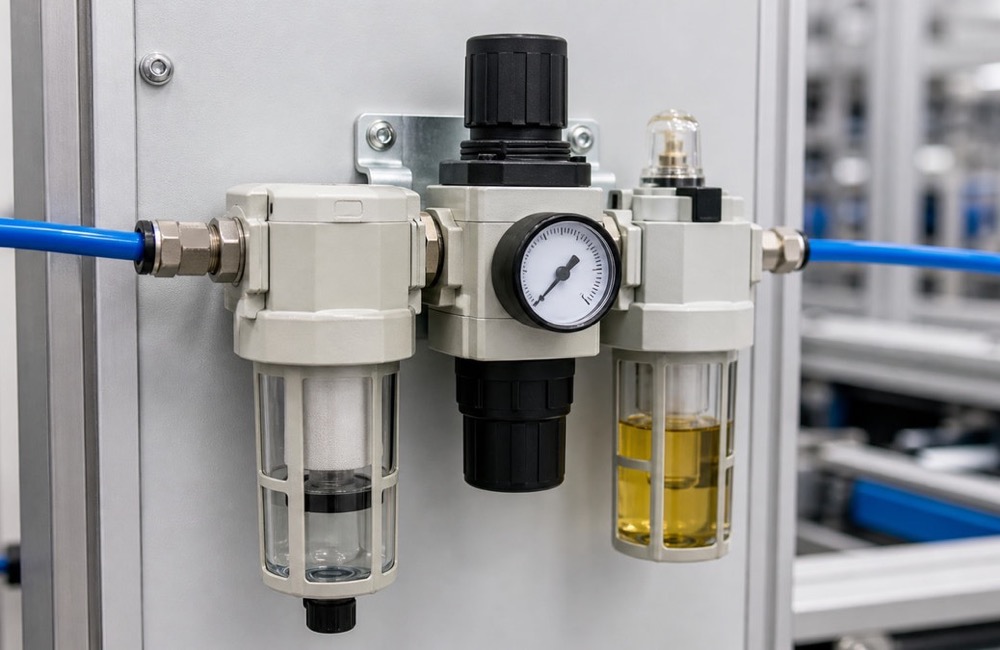
FRL Units are a set of equipment installed to improve the quality of compressed air before it is fed into the main machinery. This name is an acronym for three components: Filter, which filters the air; air regulator, or pressure regulator; and Lubricator, which dispenses lubricating oil. These three pieces work together to clean the compressed air directly from the factory's air compressor by capturing dust particles, removing water, maintaining a constant pressure level, and dispensing an oil mist to coat rubber seals inside the cylinders. Installing standardized equipment is like putting an air filter on machinery, preventing damage before contaminants can enter and destroy expensive solenoid valves.
How Many Types of Filters Are There and How to Choose the Right Fineness?
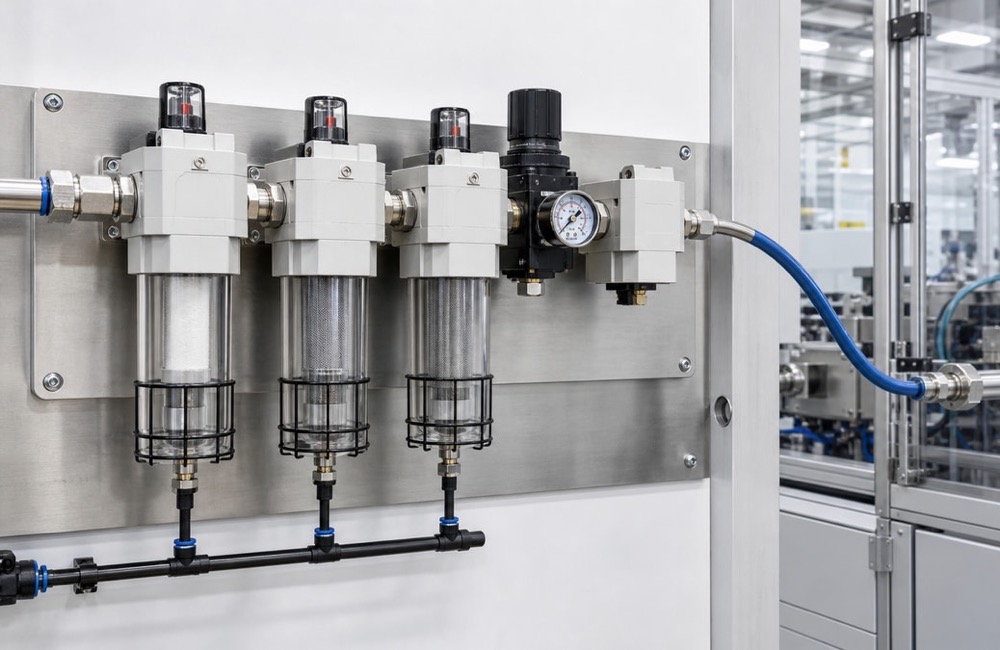
The engineering team must assess the working environment before deciding to purchase FRL Units that are compatible with the machinery system. Understanding how many types of filters there are helps field technicians capture contaminants most efficiently.
Standard Filter - Standard Filters for General Use
Many maintenance workers often ask about how many types of filters there are in an industrial compressed air system. The first type is a Standard Filter with fineness ranging from 40 microns down to 5 microns. This filter level is suitable for capturing general dust and water droplets found on production lines. Using a regulator alongside the standard filter greatly reduces accumulated moisture.
Mist Separator - For Filtering Oil Mist
The second type is the Mist Separator, designed to filter contaminants as fine as 0.3 microns. This filter effectively captures thin oil mist mixed with compressed air. Technicians should install an air regulator after this filter to stabilize pressure, ensuring that machines receive clean air free from oil residue, preventing valve malfunction.
Micro Mist Separator - Industrial Food Grade Clean Air
The final type is the Micro Mist Separator with the highest fineness level of 0.01 microns. This equipment meets the needs of food factories or electronics industries requiring pure compressed air. Engineers must install this filter set in conjunction with a regulator smc to ensure optimal system performance. Investing in high-fineness filters helps prevent chemical contamination of products decisively.
What is a regulator and what does it do in an air system?
Recent engineering graduates often seek information on what a regulator is when starting to design automatic air systems. The engineering answer is that it's a pressure-reducing valve designed to control the air pressure within FRL Units to suit each machine. The next question is what does a regulator do in the actual production line operation? Its main function is to reduce high-pressure fluctuations at the input to a steady constant output before sending it to the next air regulator. Internally, it uses diaphragms and pressure springs to prevent sudden pressure spikes that could damage air cylinder seals.
Get to know regulators (air regulators) and units of air pressure
Setting up a regulator or air regulator on the job requires an understanding of engineering units. Field technicians must be trained to read pressure gauge dials accurately to set up FRL Units correctly. The three main standards for measuring air pressure in Thai factories are Bar, MPa, and psi. Most regulator smc gauges display dual scales for easy reading. Engineers must set the air pressure within the operating pressure range as specified by the manual. Do not turn the regulator screw all the way to prevent spring binding.
Worksite Issues When There Is No Air Regulator or Incorrect Specification is Chosen
Omitting the design of an air regulator in a circuit is the beginning of massive damage. Maintenance technicians must understand these issues to plan for proper handling.
- The classic symptom of machinery malfunction is the air cylinder hitting the workpiece with excessive force beyond specifications.
- The main cause stems from not installing an air regulator to control specific point pressure, allowing pump pressure to directly impact valves.
- The next issue arises when selecting a filter set that is too small, causing blockage of the unit's air pressure.
- Allowing water to accumulate in the regulator reservoir without draining it leads to water flooding into the pneumatic system and causing rust.
Spec Comparison Between SMC Regulators and Leading Brands to Reduce Downtime
Japanese factories in Thailand commonly use well-known brands like SMC regulators. Procurement teams must quickly find replacements when parts become obsolete.
- Engineers can opt for European or Asian brand parts as substitutes for the original air regulator.
- Mechanics need to match the port thread connections in size to prevent the air regulator from leaking.
- Users can remove the old set, make minor flange attachment changes, and install a new one immediately.
- Cross-brand specification comparison helps reduce downtime without waiting weeks for an regulator to be ordered from abroad.
How to Maintain FRL Units to Extend Equipment Lifespan
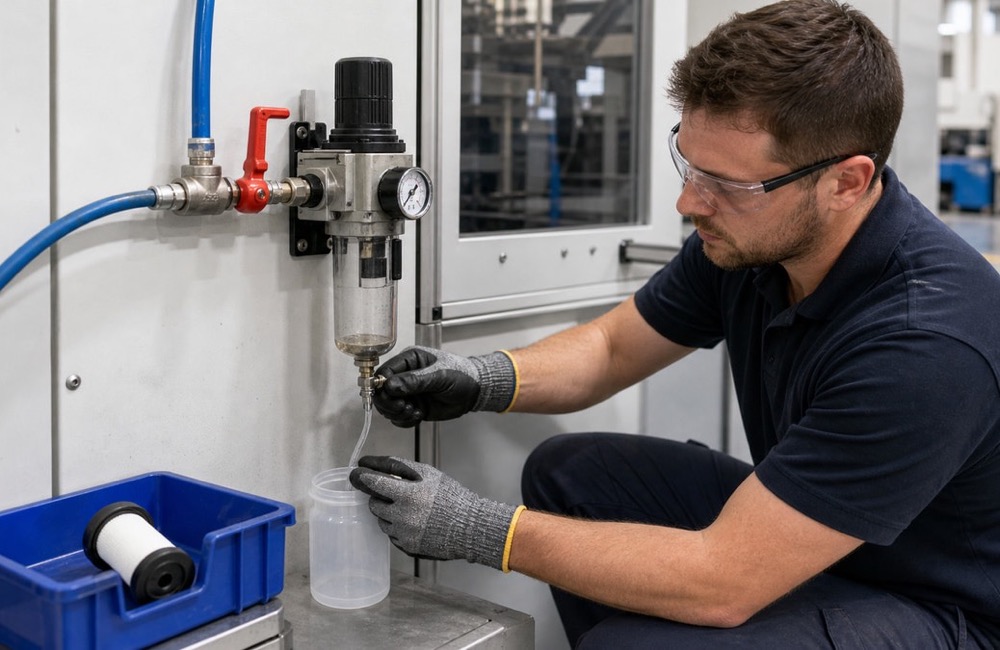
Maintaining FRL Units regularly helps extend the lifespan of equipment across the entire production line. The maintenance team should strictly adhere to PM standards to reduce machine downtime issues.
Dewatering from Filter Drains
Maintaining air quality improvement units or regulators is quite simple in a manufacturing setting. Technicians start by regularly draining water from the filter bowl every morning before starting up equipment. You can choose to use an automatic drain-type air regulator to reduce the workload of technicians. The water drained out helps prevent rust formation inside your regulator.
Checking Air Filter Condition
The internal air filter has a limited lifespan based on the dust and smoke conditions at the work site. If technicians notice that the filter turns dark, they should prepare to order spare parts for regulator smc. A drop in the pressure gauge of the air unit is a warning sign that the filter is heavily clogged. The team should remove and clean or replace the air filter to maintain airflow.
Tuning Oil Lubricator Settings
The oil reservoir in the Lubricator must always be filled with pneumatic lubricating oil. Engineers need to consider how many types of filters require lubrication within the circuit. Technicians must adjust the rate of oil dripping to match the volume of air used by machinery. Accurate settings help prevent issues such as excess oil causing parts to be rejected by QC.
Summary
Selecting FRL Units of industrial grade helps to decisively stop moisture damage to machinery. Technicians who understand what a regulator is can accurately adjust an air regulator. SCMA has an online engineering team ready to help you compare specifications of regulator smc, with express delivery straight to your factory.
If you want to buy, SCMA is available for purchase today!
Air filter rupture, severe air leakage, machinery must stop working immediately. SCMA understands this situation well, so we offer online spare part specification comparison service for FRL Units free of charge for consultation. You can take a picture of the Nameplate of the air filter set or the regulator, and send it to our Line Official account. Our engineering team will assess port size and air pressure units to compare quality products specifications for you. Order from SCMA, finish work faster than ever before as we have stock of air regulator with express delivery straight to your factory. You can send a request via our Line Official account, no need to wait for technician inspection.
Frequently Asked Questions (FAQ)
Q1: Do FRL Units Always Require an Oil Lubricator?
No, new valve and air cylinder models are designed as oil-free systems that do not require additional lubrication. Adding oil may wash out the factory grease causing equipment to wear out faster. Engineers can opt for just a dual filter with air regulator.
Q2: Why Does the Water Bowl (Bowl) Fill Up Quickly?
The main cause is usually due to problems with the air dryer in the compressor room or improper installation of the main air line causing water to fall at the point of use regulator. SCMA recommends switching to an Auto Drain bowl to prevent water overflow into machinery.
Q3: Why Doesn't Setting Air Pressure Work on the Air Regulator? Turning the Adjustment Knob Has No Effect?
This issue can occur in two cases. The first is that the upstream air pressure unit is lower than the set value, and the second is that the internal diaphragm of the regulator has worn out from long use. In this case, new parts must be replaced immediately.
Q4: How Much Is 1 MPa of Air Pressure in Bar?
In practice, we use a quick conversion formula where 1 MPa equals 10 Bar or approximately 145 psi. Understanding the units helps technicians set regulator smc gauge settings correctly without damaging equipment.
Q5: How Long Does It Take for SCMA to Evaluate Specs When Sending Photos of Old Regulator SMC?
We provide a quick evaluation during business hours. Just send clear photos of the nameplate along with the size of the air line threads you are using, and our SCMA engineering team will offer 100% compatible replacement parts specifications for immediate shipment.