Finger Valve is an equipment that helps meet your pneumatic system control needs, right? If you are looking for in-depth knowledge about this valve, our article will guide you through the structure of joint connections, material selection such as aluminum, and application with detection devices like photoelectric sensor to help you make the most cost-effective purchase. You can get professional advice from our SCMA system design and consultation services immediately.
What is a Finger Valve? What does it do in pneumatic systems?
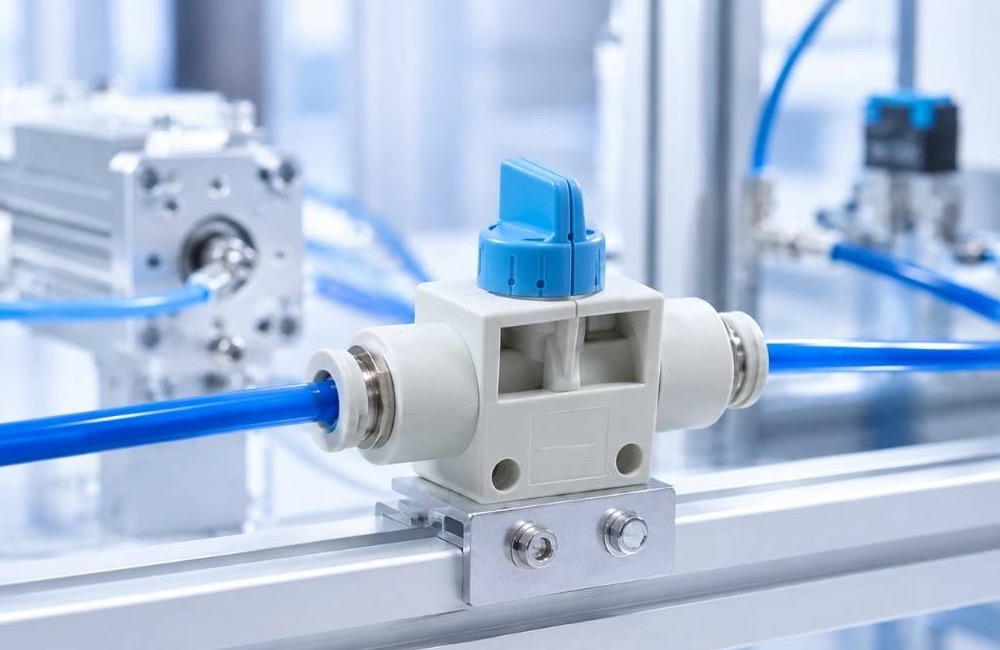
Understanding the basics of Finger Valve, or hand valve, is crucial for designing pneumatic systems. This equipment controls the direction of compressed air flow by manually turning or twisting to open and close quickly. Its standout advantage is ease of use without complexity, making it ideal for point-specific control in machinery. We find these devices installed at various joint connections along the air tubing on production lines. Using valves with an aluminum body enhances durability under pressure significantly. Installing them alongside a photoelectric sensor on the line allows operators to quickly stop or release air for safety checks during workpiece inspection.
The Basic Working Principle of Finger Valve
The internal mechanism of the Finger Valve relies on a carefully designed structure to handle high-pressure compressed air. The internal structure consists of a valve stem, rubber seals, and return springs, which are tightly assembled together like a leak-proof joint. The clear difference between the Manual Poppet Type valve that uses plunger actuation and the Toggle Type is in how the user applies force to operate it. Opening and closing the valve to control air pressure can be done by moving a lever or turning a knob. The lightweight aluminum housing makes mounting easy. Using an air system with signals from a photoelectric sensor allows users to know the machine's status, enabling them to turn the valve accurately and precisely. You can compare this mechanical actuation mechanism directly with the working principle of solenoid valves.
How many types of Finger Valves are commonly used?
The classification of valves is primarily based on the number of ports for operation. Correctly selecting the joint is crucial for assembly with the factory piping system.
2-Port Valve (For On/Off Operation)
This type acts as a mechanical switch to allow air flow through or completely block airflow. Some models use a steel ball internally to reinforce the sealing and prevent leakage. This equipment is suitable for connecting the main compressed air system to small machinery or blow guns.
3-Port Valve (For Bleeding Off Residual Pressure)
The special feature of the 3-port model is its ability to vent residual compressed air in the system to atmosphere. Venting helps reduce the danger of spring-loaded pistons or mechanisms with a coil spring inside from snapping back. This valve type is a safety standard that every pneumatic systems engineer recommends installing.
5-Port Valve (For Controlling Cylinders)
The 5-port device is used to directly control the bi-directional operation of cylinders (Double Acting) by switching air flow direction, causing the piston rod to extend or retract with air pressure. This system no longer relies on internal coil springs for return force, allowing us to control movement accurately.
Selecting Based on Connection Type (Port Size)
The port size directly affects the volume of compressed air flow into the end equipment. Using quick-connect fittings makes connecting polyurethane or silicone tube hoses easy. You should consider matching thread sizes to industrial pneumatic pipe standards to avoid airflow blockages.
How to Read Codes and Select the Right Model of Finger Valve SMC
A leading brand in the market like SMC has a widely popular VHK series. Understanding product codes will help you order equipment for your circuit without errors.
- Decoding Common VHK Series Model Numbers: The code VHK is followed by numbers indicating the number of ports, such as VHK2 means a two-port model. Letters following indicate the size of the joint used to connect air lines into the system.
- Comparing Features of VHK2 and VHK3: The color of the knob helps users immediately distinguish between types of exhaust functions. Gray or black knobs indicate different functionalities depending on whether your system connects to an ejector for air exhaust.
- Materials Suitable for Different Applications: Standard models are mostly made from impact-resistant engineering plastic or use aluminum. If used in environments with oil mist, consider using a special model with a rubber pad to prevent degradation.
Factors to Consider Before Buying Finger Valve
Selecting pneumatic equipment requires considering several engineering factors. The SCMA team summarizes an important checklist for you to consider specifications before ordering as follows:
- Maximum Operating Pressure: Always check the air pressure in your factory's system. Valves that meet standards will have a robust end cap or end cap resistant to high-pressure impact.
- Fluid Temperature and Environmental Conditions: High-temperature environments may cause rubber seals to degrade faster than usual. You should use it with a square tube stainless steel structure for mounting to avoid heat transfer to the plastic valve body.
- Air Pipe Size and Required Flow Rate: The flow rate must be sufficient to drive end devices. Connections at the joint points must fit tightly without creating air pressure bottlenecks.
- Compatibility with Other Equipment in the System: The valve you choose must work harmoniously with detection equipment such as a photoelectric sensor or air filter sets in production systems smoothly.
Initial Installation and Maintenance of Finger Valve
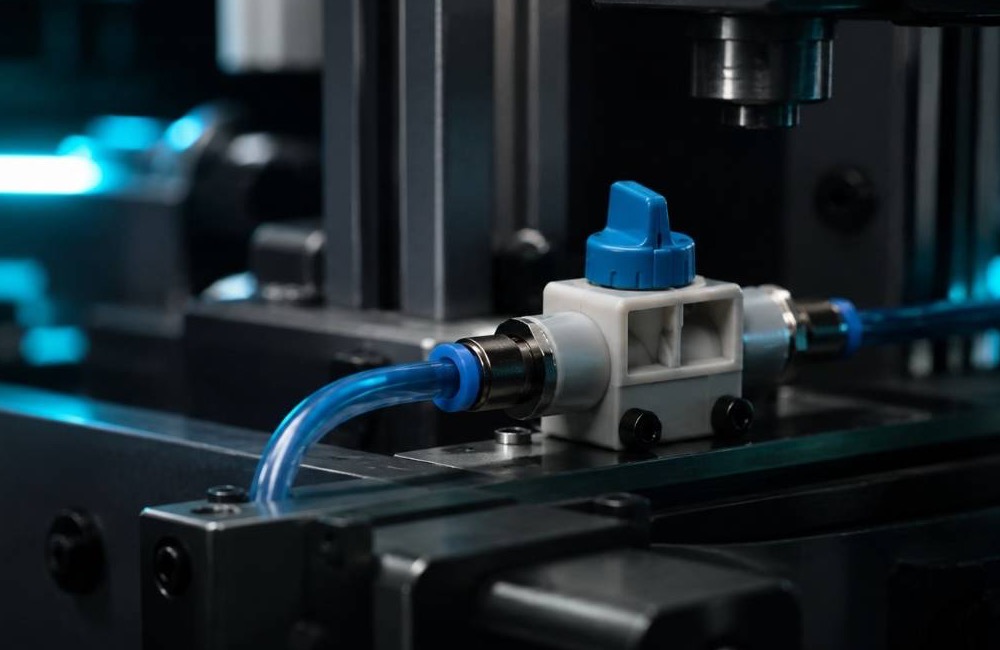
Proper installation will help extend the lifespan of your equipment. Maintaining the return spring coil, or spring coil, is one of the steps that should not be overlooked.
Correct and Safe Installation Steps
Before starting the installation, you must cut off the main air supply to release all pressure from the system. When connecting the air line to the valve's joint, push it in fully to prevent air leaks. Afterward, slowly introduce air into the system to check for proper operation before turning on the machinery.
Installation Precautions to Extend Lifespan
Avoid installing valves in areas with dense metal dust as these particles can accumulate and cause scratches on rubber seals or aluminum parts, leading to air leaks. If installation is necessary in poor conditions, consider enclosing the equipment in a control cabinet.
Examples of Applying Finger Valve in Industrial Work
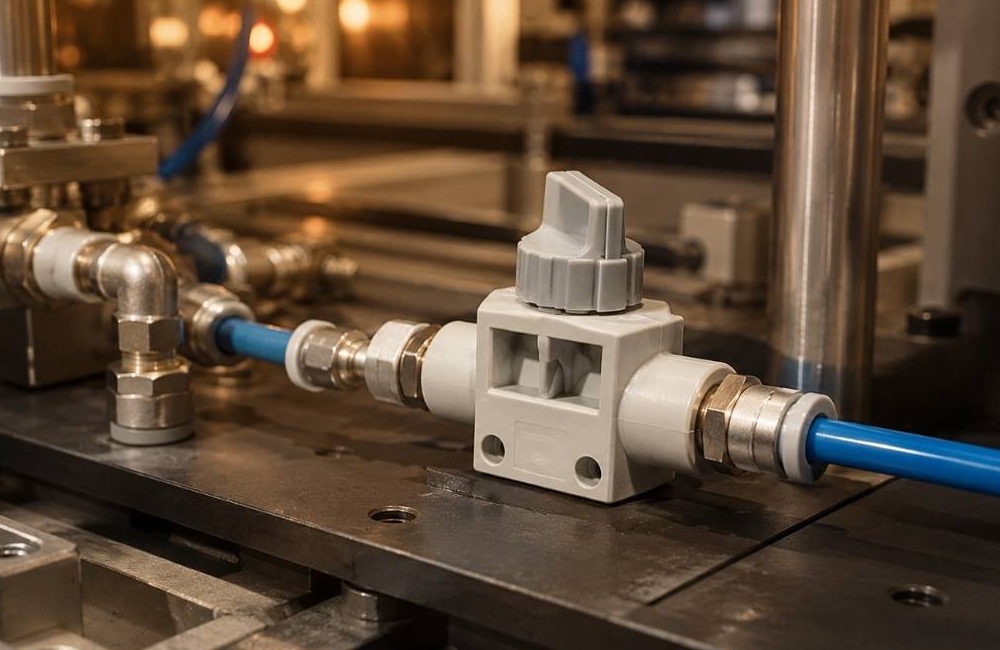
The application of hand-operated valves is widespread in industrial plants. We will provide examples of integrating them with aluminum structural components of machinery to give a clear overview.
- Controlling Small Actuators: The valve opens the air flow to push parts into designated positions, which may use a photoelectric sensor as an alert signal for workers to manually operate the valve.
- Use in Emergency Stop Systems: A three-port valve is suitable for quickly releasing compressed air, immediately stopping drive mechanisms with coil spring when unexpected events occur for safety reasons.
- Controlling Suction Cup Operations in Robotic Arms: Operators can manually open and close the valve to create a vacuum that allows the suction cup to precisely pick up and release parts at assembly stations with their hands.
Summary
Finger Valve is a small component that can make a huge difference in the safety of pneumatic systems. Choosing the correct joint, as well as maintaining parts such as coil springs, will help ensure smooth operation without any issues. If you need an expert to design your system for maximum efficiency, you can contact SCMA Co., Ltd. right away.
If you want to purchase, SCMA is available today!
Purchasing high-quality Finger Valve from a reliable distributor is the starting point of a stable production system. SCMA offers durable product supply services for joints joint, along with a professional team of engineers who provide consultation on usage in conjunction with detection devices such as photoelectric sensor. You can explore our catalog to upgrade your factory's efficiency at SCMA’s full product catalog.
Frequently Asked Questions
How do Finger Valve and Solenoid Valve differ?
The finger valve relies on manual force to turn or move for opening and closing air flow, whereas Solenoid Valve uses electrical current to operate the magnetic coil to automatically change the direction of airflow.
What is the symbol for a 3-port valve?
The symbol is depicted as two rectangular frames with arrows indicating the direction of air in and out. You can refer to Poppet Type Finger Lever Valve for additional symbols.
How long is the lifespan of a manually operated valve?
A standard brand like SMC can operate for tens of thousands of turns if you maintain clean, dry compressed air free from moisture or dust.
Can this type of valve control water?
The majority of standard models are designed only for compressed air. If you need to control a liquid such as water, it's recommended to choose a model with specified sealing material that is specifically resistant to water.
How do I repair when there is an air leak?
Initially check the air line connections; if they are tight but still leaking through the exhaust port, it indicates internal rubber seals have deteriorated. It's most cost-effective to replace the valve entirely.