Are you facing production line disruptions because you can't control the direction of compressed air flow? SCMA is ready to deliver Directional Control Valve and Directional Valve industrial-grade solutions specifically designed to solve on-site problems. This article helps you understand how to select directional control valves and control valves appropriately for your machinery to enhance efficiency in pneumatic systems and reduce installation error risks.
What is a Directional Control Valve?
Directional Control Valve (DCV) or directional control valve functions to determine the path of compressed air flow according to the desired direction to command equipment operation (Actuator), such as moving a piston in or out as per design. This component serves to switch and route pneumatic air paths with high precision within the system. Technicians generally refer to it by different names based on its usage, such as Pneumatic Solenoid Valve or electric valve.
Types of Directional Control Valve
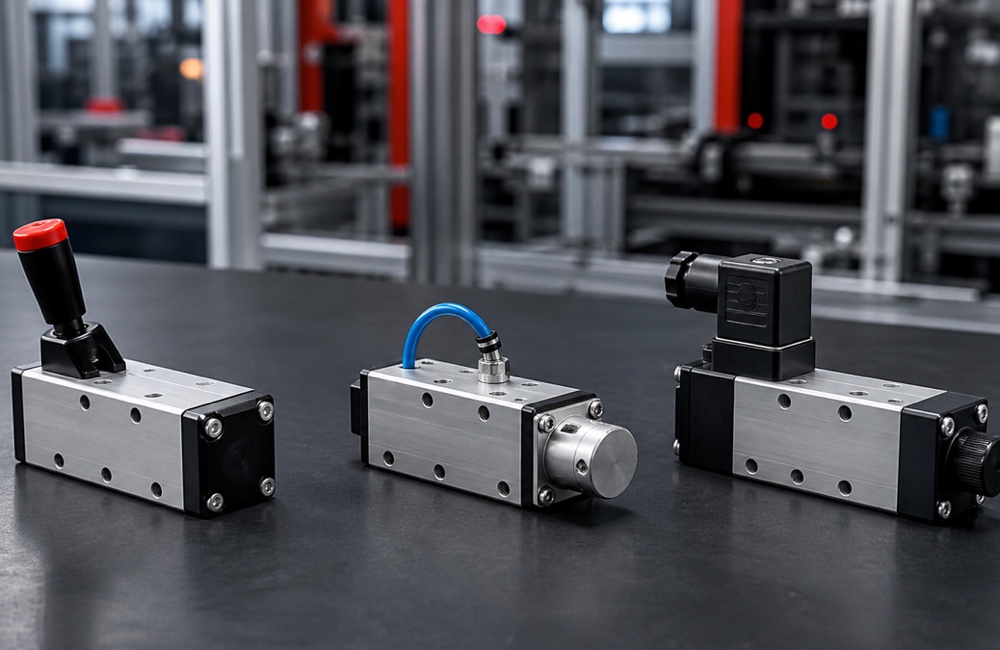
Selecting pneumatic valves must consider the method of operation to match with the existing control system used in the factory. It is divided into three main types according to the characteristics of controlling the position of Spool as follows:
Manual Directional Control Valve
This type of valve uses human force to change the direction of air through external control devices such as foot pedal switches, toggle actuators, or push buttons. Suitable for machinery that requires manual control for safety during operation, such as metal stamping machines or workpiece cutting machines. Pneumatic valves in a manual format are renowned for their durability and do not rely on electrical systems.
Air Piloted Directional Control Valve
This type of valve operates by using air pressure from outside to push the Spool inside to change the direction of airflow instead of using electricity or human force. Using air control helps reduce the risk of sparks in explosive areas excellently. Engineers prefer to use it in systems that require high safety and continuous operation for long periods without heat accumulation in the device.
Solenoid Directional Control Valve
Solenoid valves are the most popular in automotive parts and electronics industries because they operate through an electric coil receiving signals directly from PLC, enabling automatic systems to work quickly and accurately. The valve comes in both single and double solenoid types depending on the functions designed for the control system.
Basic Components of Directional Control Valve
Understanding the internal components of a Directional Valve helps maintenance engineers diagnose issues and select replacement parts more accurately and quickly. The main components of a directional control valve that should be known are as follows:
- Housing (Body): The primary structure that houses all the internal mechanisms.
- Ports: Connection ports for fitting compressed air lines (Fitting) to supply and exhaust air according to designated positions.
- Spool: An internal sliding shaft that switches the direction of airflow based on commands.
- Spring: A component that pushes the Spool back to its initial position when there is no external stimulus.
- Actuator: The device used to change the position of the Spool, such as a solenoid coil, lever, or button.
- Connector: Electrical signal ports that communicate with the controller set.
Types of Directional Control Valve: NO and NC
The normal position of the valve affects system safety in emergencies such as power failure or air loss. Users should study symbolic representations of pneumatic valves to select the appropriate type for their machinery conditions.
Normally Open (NO) Position
From the symbolic representation of pneumatic valves, it can be observed that air can flow through the valve to the working device immediately even without electrical signals being sent to the solenoid coil. The Spool remains open for airflow until an operation command is given, suitable for systems requiring a piston to remain in a designated position for safety.
Normally Closed (NC) Position
In this mode, air cannot flow through the valve unless there is electrical or pneumatic pressure to activate the Spool's position. The system remains idle until an operation command is received. It is commonly used in systems requiring maximum safety to prevent unintended movement of machinery during maintenance.
How a Directional Control Valve Works
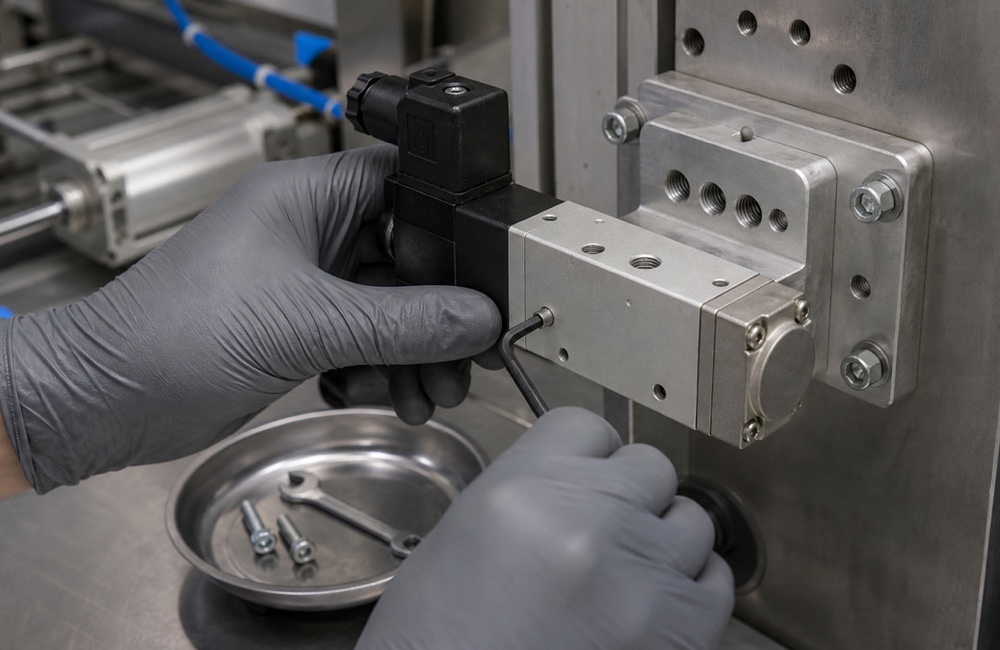
The operation of a Control Valve starts from its normal position and changes status according to received stimuli, which can be explained through an example of how an NC valve works.
Initial Position
When compressed air is fed into the input port, the spool pushed by the spring blocks the airflow to other ports. The air remains inside the valve without pressure being applied to subsequent equipment, keeping the pneumatic system in a ready state.
Upon Activation
When electricity is supplied to the solenoid or when a control switch is pressed, the stimulus overcomes the spring force and moves the spool to a new position. This results in air channels opening up, allowing compressed air to flow through ports to cylinders or other working equipment as directed.
Returning to Original Position
The moment power signal stops being supplied or when the button is released, the internal spring pushes the spool back to its original position. Air trapped in the system is vented out through exhaust ports and blocks air intake, preparing for the next cycle of operation.
Advantages and Selection of Directional Control Valve
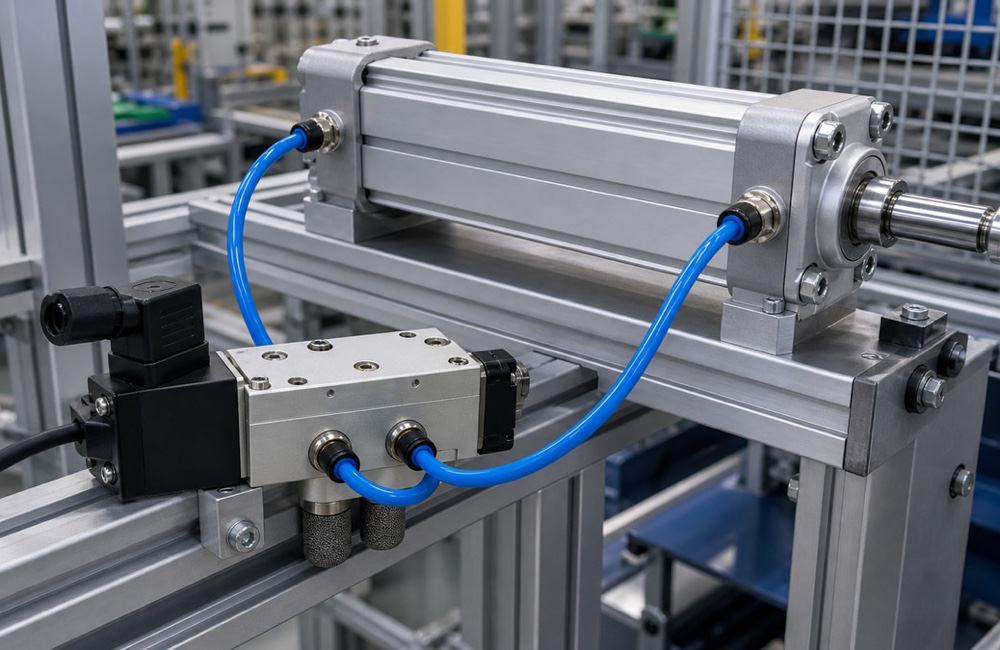
Selecting the appropriate type of valve for the working environment increases its lifespan and reduces long-term maintenance costs. The following summary information will help you make a better decision.
- Solenoid Valve: Fastest response, high accuracy, suitable for automated systems controlled by PLC
- Manual Valve: Durable and cost-effective, no need to worry about electrical circuit interruptions
- Air Piloted: Safe in explosive risk areas (Hazardous Area) as there is no electric spark ignition point
- Directional Valve: Offers a variety of port configurations for use according to system complexity
If you want to buy Directional Control Valve, SCMA is now available for purchase!
Selecting a high-quality Directional Control Valve directly impacts the stability of production lines and reduces unquantifiable downtime. SCMA is ready to provide professional technical information and reading of pneumatic valve symbols, ensuring you receive the correct product according to your specifications through our convenient and fast online system. We have a team prepared to offer expert advice on Fluid Control Valve from leading international brands.
Summary
The Directional Control Valve is crucial for commanding and controlling the movement of machinery in pneumatic systems with high precision. Understanding the working principles and types of Control Valves, both NO (Normally Open) and NC (Normally Closed), will help you maintain directional control valves correctly. Choose quality products and consult technical solutions through SCMA's online service for quick and reliable support throughout your usage.
Frequently Asked Questions
What does the 5/2 symbol on a valve mean?
This indicates a valve with 5 ports and operates in 2 positions, commonly used to control double-acting cylinders (Double Acting Cylinder).
How do Solenoid valves differ from Air Piloted valves?
Solenoid valves use electricity through coils for operation, while Air Piloted valves use air pressure to change the spool position, which is safer in explosive environments.
Why does air leak continuously at the exhaust port?
The main cause is usually worn-out internal spools or deteriorated seals allowing air to bypass, or debris blocking valve closure.
How can you tell if a valve is normally open or closed?
You can check from the symbols on the valve body by observing which chamber connects to the supply port in an unactuated state.
What size of directional control valve should be selected?
The selection depends on the air flow rate required by the cylinder and the size of the air line used, to prevent pressure drop issues within the system.