Unplanned downtime due to unknown causes can cause significant damage to production lines, right? Bearing condition sensors are crucial in detecting abnormalities before a crisis occurs. Based on the experience of our SCMA engineering team, we would like to present guidelines for using this equipment to extend machine lifespan. This article will delve from how it works all the way to proper selection methods.
What is a Bearing Condition Sensor?
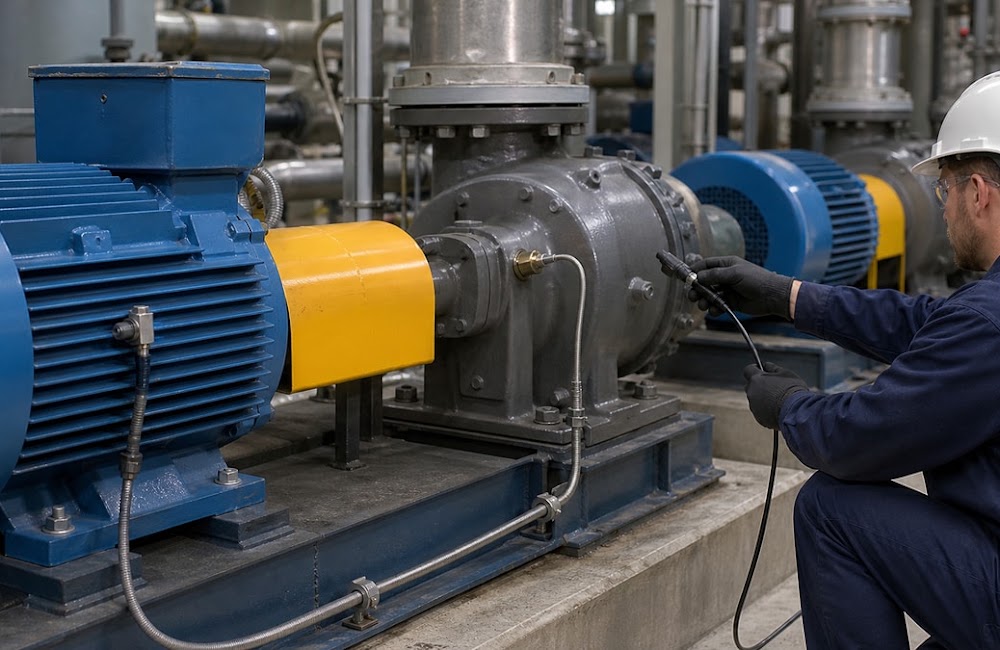
A bearing condition sensor (Bearing Condition Sensor) is an intelligent device used to measure and evaluate the status of bearings within machinery. The sensor detects abnormal signals such as vibrations or high-frequency sounds. This data is analyzed to predict wear and tear, preventing unexpected machine downtime.
How the Bearing Condition Sensor Works
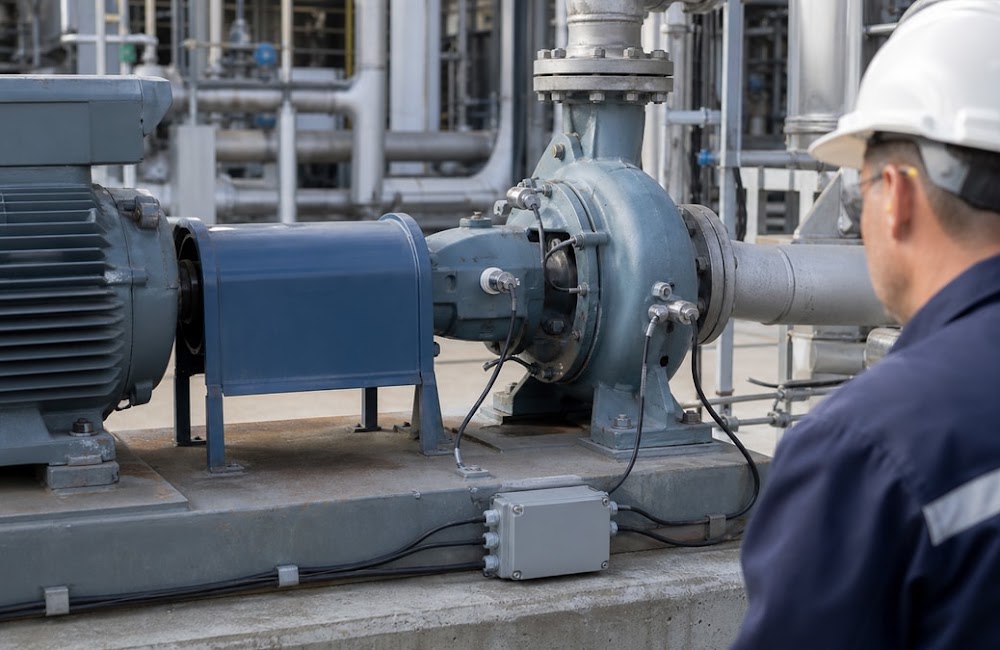
The Condition Monitoring Systems by SCMA operate by converting mechanical motion into electrical signals to assess abnormalities. This process is divided into 3 main steps for damage monitoring.
1. Data Acquisition (Measurement)
This step uses vibration sensors to detect acceleration. If the bearing starts to wear out, abnormal frequency patterns will occur. Additionally, surface temperature measurements are taken to check for issues such as dry lubrication or excessive load.
2. Signal Processing
The mechanical signals detected are transmitted through a frequency converter into speed or acceleration form. This insightful data is then analyzed using FFT Analysis techniques to accurately pinpoint the damaged area, whether it's the outer ring or rolling elements.
3. Analysis & Alarm (Notification)
All data is sent to the central system for real-time display. If vibration levels exceed predefined standards, an immediate alert signal is issued. Engineers can then promptly plan preventive maintenance.
How many types of bearing condition sensors are there?
Selecting measurement tools products that match the required parameters effectively reduces sudden machine downtime. Bearing fault detection devices are primarily divided into 4 main types.
1. Vibration Sensor
This is the most popular type due to its high efficiency in quickly detecting mechanical abnormalities. This device can accurately identify issues such as misalignment, looseness, or damage to the bearing raceway.
2. Temperature Sensor
It monitors heat accumulation caused by internal friction within machine components. An increase in temperature indicates lubricant degradation or overloading that requires urgent attention.
3. Oil Analysis Sensor
This device is designed to detect small metal particles and contaminants present in the lubricating oil. Monitoring oil quality extends bearing life while preventing severe wear in closed systems.
4. Acoustic Emission Sensor / High-Frequency Sound Measurement Sensor
It works by detecting high-frequency sound waves that are inaudible to human ears, which occur due to microscopic cracking within the metal structure. This helps maintenance teams identify damage early on.
Maintenance of Bearing Condition Sensors
To ensure the highest measurement accuracy, these devices require proper maintenance. SCMA recommends maintenance guidelines to extend the lifespan of your sensors.
1. Physical Inspection (Visual Inspection)
Operators should inspect the housing Inspection sensors for any cracks or rust buildup, and ensure that connecting wires are in perfect condition with no insulation damage to prevent signal loss issues.
2. Regular Cleaning
The installation area on the bearing housing (Bearing Housing) as well as the contact surfaces of the equipment must always be clean. Accumulation of dust or thick oil stains may act as an insulator, reducing measurement accuracy.
3. Mounting Check
It is essential to ensure that the mounting device is securely attached to the machine surface. Vibration can cause the mount to loosen or tilt from its original position, leading to inaccurate measurements.
4. Calibration
All measuring devices should be recalibrated according to the manufacturer's specified intervals. Sending tools for professional calibration helps maintain accuracy for long-term Predictive Maintenance systems.
5. Signal Validation
Engineers must verify that the central monitoring system can receive signals stably, and analysis software should accurately display Vibration Monitoring without any interfering noise.
Using Condition Monitoring Sensors for Bearings
The application of equipment for predictive maintenance helps prevent severe damage in a tangible way. The actual operational steps in the industry are as follows:
1. Sensor Installation
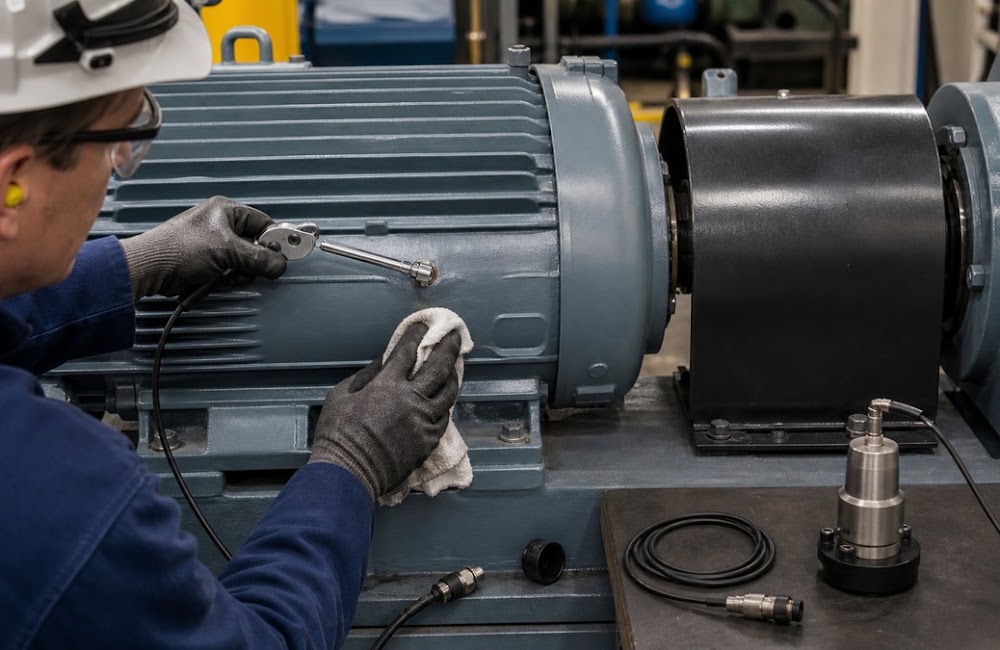
The installation of vibration sensors must be done on the bearing housing at the point closest to the load-bearing area. Secure mounting using epoxy glue or high-strength magnetic bases is necessary to prevent frequency loss during contact.
2. Data Collection
The system operates in both Online Monitoring mode, which continuously monitors real-time data 24/7 and sends it to the control center, and Offline Monitoring mode, which uses portable tools for scheduled inspections at predetermined intervals.
3. Data Analysis
The software processes and analyzes machine conditions from acceleration and velocity values. High-frequency ultrasonic signals are used to assess hidden small defects within components.
4. Alerts & Maintenance
Users set alert thresholds at Alarm and Danger levels in advance. If the system detects values exceeding standards, maintenance teams can inspect and grease or replace parts before severe damage occurs.
Benefits of Bearing Condition Sensors
Investing in condition monitoring technology yields long-term returns. There are several advantages that industrial plants will gain.
1. Early Detection of Issues
The system can detect abnormal signals before the operator notices them personally. Recognizing problems early helps reduce the chance of minor parts causing damage to the entire machinery.
2. Preventing Unplanned Downtime
Precise data allows management to plan production line stops for necessary maintenance, reducing unexpected machine failures and maintaining production targets efficiently.
3. Real-Time Measurement of Critical Values
Sensor technology acts as an ever-watchful eye on the machinery. Reporting real-time temperature levels along with vibration intensity helps engineers make immediate decisions to address situations.
4. Extending Equipment Lifespan
Tailored maintenance based on actual condition data prolongs the lifespan of various components. Knowing when additional lubrication is needed immediately reduces unnecessary wear and tear.
5. Quick and Easy Problem Analysis
In-depth insights are transformed into easily understandable graphics through analysis software. Warning signal alerts help frontline staff recognize problem severity without wasting time deciphering complex numbers.
How to Choose a Bearing Condition Sensor
Purchasing technological equipment from an expert distributor requires considering the working environment conditions in order to get tools that provide maximum machine protection. The criteria for selection are as follows:
- Parameters to be measured: Select according to purpose, such as vibration sensors for checking misalignment or temperature sensors for detecting heat accumulation issues.
- Environmental durability: Assess the on-site temperature and dust levels. Choose IP67 or higher if used in heavy-duty conditions, or Ex-proof models for hazardous areas.
- Space limitations and mounting points: Inspect the bearing housing to determine whether there is sufficient installation space. Select appropriate mounting systems such as magnetic bases or tapping screws for stability.
- Data transmission connection type: Choose wired systems for permanent PLC connections, or wireless systems for hard-to-reach areas. Support standard 4-20 mA signals.
Industries Suitable for Abnormality Detection Sensors
Condition Monitoring technology is not limited to large businesses; factories that need to maintain production stability benefit from this system.
- Automotive Industry: Requires high precision, downtime can result in significant losses. This monitoring system is an essential tool.
- Petrochemical Refineries: Large water pumps operate continuously; component failure could lead to severe danger.
- Power Plants: Wind turbines must be highly available; vibration monitoring helps prevent power outages.
- Food Industry: Conveyor belt motors need smooth operation; bearing temperature checks help prevent contamination in the production process.
Summary
Bearing condition sensors are a crucial technology for preventive maintenance to extend machine life. Using standard equipment reduces unplanned downtime clearly. SCMA is ready to be your partner, providing consultation and designing measurement tool solutions to strengthen your factory.
If you want to buy bearing condition sensors, SCMA is available today!
Solving machine breakdown issues isn't difficult with expert consultation Our Services in the form of Projects & Solutions. We have a team of engineers ready to assess on-site and install the most accurate bearing condition sensors for you. Interested in enhancing production efficiency? Contact SCMA immediately.
Frequently Asked Questions
Is wireless vibration sensor better than wired?
The wireless type is easy to install, saving time on wiring. However, the wired type provides more stable signal transmission into the PLC cabinet. The choice depends on site space limitations.
How often should sensors be calibrated?
We recommend sending tools for calibration every 1 year or as per ISO standards in each factory to maintain system accuracy.
What causes abnormal bearing temperature rise?
This issue arises from insufficient lubrication, degraded grease, or excessive load beyond the machine's design capacity.
Does SCMA offer installation services for machinery condition monitoring systems?
We have a team of technical technicians and expert engineers ready to provide comprehensive service including solution design, installation, and user training.
What is the best way to install sensors on bearing housings?
The stud mount method provides the most accurate frequency transmission. Next would be using high-quality epoxy adhesive.