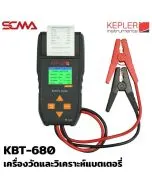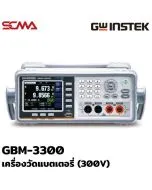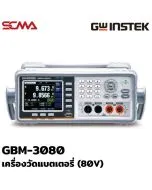

A battery tester is a crucial device for anyone who needs to check the condition and performance of various types of batteries. This article will provide information about battery testers, their types, how they work, usage methods, as well as factors to consider when purchasing.
What is a Battery Tester?

A battery tester (Battery Tester) is an electronic device used to measure and evaluate the status of various types of batteries. It measures important values such as voltage, remaining charge capacity, and energy storage capability. Additionally, it helps identify potential defects that may affect performance and safety during use, allowing users to assess whether a battery is still in good condition or needs replacement.
Battery Tester Types
Battery Checkers come in various types, each designed to suit different kinds and sizes of batteries, from small household batteries to large ones like automotive battery testers. Choosing the right tester ensures accurate and safe battery condition checks.
Electronic Battery Testers
Electronic battery checkers use digital technology to measure remaining capacity of batteries, featuring an easy-to-read LCD display such as color bars or graphs. This allows users to quickly read and analyze test results through a user-friendly interface.
Multifunction Battery Testers
Household battery testers are designed for cylindrical rechargeable batteries such as AA, AAA, and 9V PP3. They support various types of batteries from alkaline to nickel-cadmium and lithium-ion, covering everyday use batteries.
Home Battery Testers
Multifunction testers accommodate a wide range of battery sizes with high flexibility, testing from small button cell batteries to large industrial and automotive batteries. Ideal for those needing to test multiple types of batteries.
Automotive Battery Testers
Car battery testers are specifically designed for lead-acid batteries, connecting to vehicle batteries to display condition, status, and voltage information. They are crucial due to the high current required to start a car, necessitating compatible testers with lead-acid batteries for safe testing.
How a Battery Tester Works

A battery tester operates on a simple principle by sending short pulses of energy into the battery and analyzing the battery's response to those pulses, in order to assess the state of health (SOH) and calculate the remaining starting power. In reality, the device does not directly measure the cold cranking current but uses an algorithm to compute the condition of the battery. Therefore, selecting the correct technology before testing is crucial so that the tester's algorithm can accurately interpret the battery’s response.
How Do You Use a Battery Tester?

Using a battery tester typically involves just a few steps. Start by connecting the clips or test leads to the battery terminals, then press the button or switch to start the test and wait for just a few seconds to see the results that indicate the condition of the battery. However, detailed usage methods depend on the type of battery, connected electrical system, and model of tester used. Some models may require removing the battery from the vehicle before testing, while others might have different limitations. It is important to thoroughly study the user manuals for the battery, tester, and vehicle (or other systems) before testing or removing the battery for safety and accuracy.
What factors should be considered when selecting a battery tester?
Choosing the right battery analyzer depends on several factors. The most important thing is to ensure that the tester you choose can work with the type of batteries you want to test. The suitability of the tester depends on your specific needs, so thorough research should be conducted before making a decision. Key factors to consider include:
- Compatibility with battery types - Ensure that the tester supports the type of batteries you want to test, whether it's automotive batteries, household batteries, or industrial batteries.
- Price and budget - Compare prices with the features of the tester and evaluate its value based on actual usage. A more expensive tester may have complex functions but might not be necessary for general use.
- Brand and reliability - Choose a reputable brand that is recognized in the industry, which often comes with good warranties and reliable technical support.
- Special features and additional capabilities - Consider special functions that may be beneficial, such as smartphone connectivity, data logging capability, or vehicle charging system testing to fully meet your usage requirements.
If you are interested in battery testers, you can now purchase from SCMA!
SCMA is a leading distributor of high-quality battery testers suitable for both professional and general use. We offer various models of battery current meters selected from top brands worldwide, along with expert consultation services to help you choose the right tester for your needs. Additionally, we provide comprehensive after-sales service and reliable product warranties.
Summary
A battery analyzer is a crucial tool for checking and maintaining various types of batteries, whether they are car batteries, mobile phone batteries, or household batteries. Using a battery current meter helps determine the condition and performance of the battery, leading to appropriate use and extending its lifespan.
Choosing the right battery tester depends on the type of battery you want to test and your usage requirements. SCMA is ready to provideservices and advice in selecting the appropriate battery meter for your needs, with high-quality products from top brands and comprehensive after-sales service. This ensures that you will have the best experience using battery meters from SCMA.
Frequently Asked Questions
What is a Battery Level Meter?
A battery level meter, also known as a Battery Level Meter, is an instrument used to measure the remaining charge or voltage in a battery. This type of meter can display results in numerical form, percentage, or symbols indicating whether the battery status is full, medium, or low. Battery level meters are usually small and portable, easy to use for checking battery charge levels in everyday life.
What should be the standard CCA value for a new battery?
CCA (Cold Cranking Amps) indicates the ability of a battery to deliver current under low-temperature conditions. The standard CCA value for a new battery varies depending on the type and size of the vehicle, generally:
- Small passenger cars: 350-450 CCA
- Medium-sized passenger cars: 400-550 CCA
- Large passenger cars: 450-650 CCA
- Pickup trucks and SUVs: 550-750 CCA
- Diesel vehicles and heavy-duty vehicles: 650-900 CCA
How to check a battery?
There are several ways to check a battery, as follows:
- Visual Inspection - Check the external condition of the battery for swelling, cracks, or dirt on the terminals.
- Voltage Measurement - Use a voltmeter or battery tester to measure the voltage of the battery. A well-conditioned car battery at 12V should have approximately 12.6-12.8V when not in use.
- Load Testing - Use an ammeter or a battery tester with load to simulate real usage conditions and measure the voltage drop.
- Specific Gravity Test - For maintenance-free batteries, use a hydrometer to measure the specific gravity of the acid in the battery.
- Electronic Battery Tester - Modern testers can comprehensively and accurately analyze the condition of the battery.
What are the testing standards for batteries?
There are several accepted industry battery testing standards, including:
- SAE J537 - Society of Automotive Engineers standard for automotive battery testing
- DIN 43539 - German standard for battery capacity and performance testing
- IEC 60095 - International standard for automotive starting batteries
- JIS D5301 - Japanese standard for automotive battery testing
- EN 50342 - European standard for lead-acid batteries
- IEEE 1188 - Standard for testing valve-regulated lead acid (VRLA) lead-acid batteries
- BCI (Battery Council International) - Standards set by the Battery Council International