
What is a Wind Speed Meter? How Many Types Are There and What Are Its Benefits?
A wind speed meter, or anemometer, is a scientific tool that plays a more significant role in our daily lives than one might think. From the weather forecasts we follow every morning to assessing the potential of wind energy for the future of the world, SCMA would like to present comprehensive knowledge about this unique measuring instrument to help you understand its working principles, various types, and diverse applications.

What is a Wind Speed Meter?
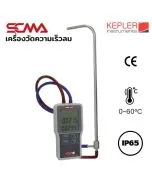
A wind speed meter, or Anemometer, is a scientific tool used to measure the speed and direction of wind or gases or other air flows. It is an essential instrument in various fields including meteorology, environmental monitoring, HVAC (heating, ventilation, and air conditioning) system analysis, and wind energy production. Wind speed meters can be mechanical or electronic and come in many types, each with its own advantages and disadvantages. In the current era, these technologies have evolved into digital systems that offer high accuracy and continuous data logging, making trend analysis and forecasting more efficient.
How does an Anemometer work?
Most anemometers operate by utilizing the force of wind acting on a surface, such as cups or blades, or using high-frequency sound waves. When wind blows over these moving parts, it causes them to spin or move, and internal systems calculate and display the wind speed in various units, such as meters per second, kilometers per hour, miles per hour, and knots.
Basic working principle of an Anemometer relies on converting the kinetic energy of wind into measurable signals. In mechanical types, sensors detect the rotation of cups or blades and convert it to electrical signals. Electronic models use more complex physical principles, such as measuring changes in resistance of a heated wire when wind blows across it, or measuring differences in travel time for sound waves traveling in different directions. The accuracy of measurement depends on the quality of the sensor, proper calibration, and environmental conditions during use. High-quality anemometers can measure wind speeds from 0.1 meters per second up to over 100 meters per second.
How many types of wind speed meters are there?
Wind speed meter comes in various types designed to meet specific application needs. Each type has its own strengths and limitations, and choosing the right one can help achieve accurate measurements that match user requirements. The following are the main types of wind speed meters commonly used today.
Paddle Wheel Anemometer
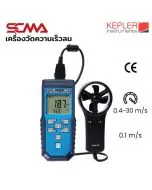
A paddle wheel anemometer consists of a rotor or blade attached to a vertical shaft. The rotor or blades align with the wind, and the speed or angle of rotation provides measurements for both wind speed and direction. When the wind blows, the rotor or blades align themselves according to the wind's direction, measuring the rotational speed or angle to determine wind speed and direction.
The main advantage of a paddle wheel anemometer is that it provides both wind speed and direction data. It is suitable for use both indoors and outdoors and can be portable with compact sizes. To get accurate readings, the wind speed meter must be positioned parallel to the wind's direction. When the wind rotates the blades, the number of rotations is calculated as wind speed.
The disadvantage is that it may cause errors from turbulent or variable winds and requires proper positioning for accurate readings. Paddle wheel anemometers are suitable for general use both indoors and outdoors or for measuring moderate wind speeds.

Hot Wire Anemometer
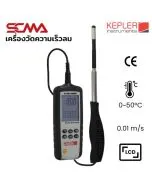
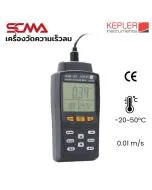
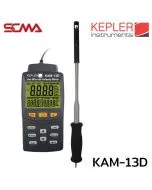
A hot wire anemometer consists of a very fine wire heated to a constant temperature. The cooling effect of the wind passing through the wire is used for measurement. When the wind blows, it cools down the hot wire, changing its resistance. By measuring this change in resistance, wind speed can be determined.
The highlight is its high sensitivity and accuracy for low wind speeds, making it suitable for laboratory use and research. It can measure both laminar and turbulent air flow. The Hotwire Anemometer is ideal for measuring low wind speeds due to its quick response and high precision.
The downside is that it is fragile and delicate, unsuitable for high wind speeds, sensitive to environmental conditions, and requires careful calibration. This type of anemometer sensor is quite fragile and should be used with caution.
Cup Anemometer
A cup anemometer consists of three or more half-cups mounted on a horizontal axis. The cups rotate when they encounter wind, and the rotation speed varies directly with wind speed. The principle works by capturing wind force to make them spin; measuring this spinning uses sensors or mechanical linkage to indicate air volume.
The advantages include a simple design, robustness, reliability, suitability for various wind measurements, and usability in rugged environments. The Cup Anemometer is suitable for outdoor use or measuring storm wind speeds; it is installed on a pole to capture the wind effectively.
The disadvantage is that it tends to underestimate light winds due to inertia effects, and cup design may cause drag affecting accuracy. The Cup Anemometer has more resistance, which makes it less accurate than other types of anemometers.
Hotwire Anemometer
The Hotwire Anemometer relies on the principle that wind cools objects as it passes over them. This type uses a thin wire heated to a temperature higher than the surrounding air; when wind blows across the wire, the system calculates wind speed from the energy required to maintain constant wire temperature. The stronger the wind, the more energy is needed to compensate.
The hotwire anemometer is highly sensitive and suitable for measuring low wind speeds. It offers fast response times and high accuracy, though it is relatively fragile and requires careful handling during use.
Pitot Tube Anemometer
The pitot tube anemometer is ideal for measuring air and gas pressure and flow in pipes. Its operation relies on the measurement of both static and dynamic pressures; when wind passes through a pipe, it generates pressure that can be calculated as wind speed. This type of anemometer offers high accuracy and is suitable for use in various duct systems.
The ultrasonic anemometer uses high-frequency sound waves to measure wind speed by timing the travel time between a transmitter-receiver pair. The measurement results can indicate wind speed in one, two, or three dimensions with very high resolution. Due to its lack of moving parts, this type of anemometer is well-suited for long-term use, such as at weather stations or on buoys measuring atmospheric conditions where environmental factors may affect other types of anemometers.

What are the benefits of an Anemometer?
An anemometer is a highly useful tool in various industries and applications, providing critical information for decision-making, planning, and quality control. The primary benefits of an anemometer include:
- Weather Forecasting and Meteorology
- Helps create accurate weather forecasting models by providing real-time wind speed and direction data.
- Used to track and predict the paths of storms, typhoons, and other atmospheric systems.
- Supports early natural disaster warnings, helping reduce damage to life and property.
- Wind Energy Assessment and Production
- Analyzes the potential of areas for wind turbine installation by measuring average annual wind speed.
- Helps determine optimal positioning and height for wind turbine installations.
- Monitors the performance of wind farms and predicts energy output.
- Airplane Safety and Transportation
- Provides wind condition data at airports for takeoff and landing decisions.
- Helps pilots calculate fuel-efficient and safe flight paths.
- Used to control the operations of ships and maritime transportation.
- Environmental Monitoring and Control
- Measures the dispersion of air pollutants and chemicals in the atmosphere.
- Evaluates air quality in industrial areas and communities.
- Helps design appropriate ventilation systems for factories and buildings.
- Use in HVAC Systems and Buildings
- Checks the efficiency of air conditioning and ventilation systems.
- Helps balance airflow in buildings for comfort and energy savings.
- Used to test and certify clean room and laboratory standards.
How to Use a Wind Speed Meter
Using an anemometer correctly is crucial for obtaining accurate and reliable measurement results. Users should understand the basic steps and follow them strictly to ensure that the tool operates at maximum efficiency and has a long service life.
- Select the appropriate type of meter - Consider the nature of the work and the environment in which it will be used, such as using a cup anemometer for outdoor measurements, a vane anemometer for general purposes, or a hot-wire anemometer for high-precision requirements.
- Set up the device in an open area - Place the meter at least ten times its height away from any obstructions. Avoid measuring near buildings, trees, or structures that may cause wind turbulence.
- Turn on the device and check operation - Check the battery, calibrate if necessary, and select the desired measurement units. Wait for the device to reach operational readiness as per the manual.
- Hold the meter in the correct position - Aim the sensor towards the wind direction, hold it steadily and perpendicular to the ground. Avoid blocking the wind with your hand or body.
- Read and record the values - Wait for the displayed value to stabilize or use the averaging function. Record both wind speed, direction, time, and environmental conditions during measurement.
- Measure CFM/CMM values for duct systems - Input the cross-sectional area of the duct, measure wind speed at various points according to standards. The device will automatically calculate volumetric flow rate.
- Maintain after use - Clean the sensor, store in a protective case, turn off to save battery, and check readiness before next use.
The Importance of Calibrating Anemometers?
Calibrating an anemometer is a crucial process for ensuring the accuracy and reliability of measurement results. Since all measuring instruments experience increasing errors over time, calibration helps verify and correct the precision to meet specified standards.
- Maintain Measurement Accuracy - Calibration checks that the measuring device continues to provide accurate readings according to international standards, preventing errors that could affect critical decisions such as weather forecasting or building safety assessments.
- Comply with Standards and Regulations - Many industries require periodic calibration of measuring instruments to comply with standards like ISO, NIST or various safety requirements.
- Reduce Risk and Damage - Inaccurate measurements can lead to incorrect decisions such as miscalculating wind energy potential or designing inappropriate ventilation systems, which may result in financial loss or safety issues.
- Extend the Lifespan of Equipment - The calibration process includes a general inspection of the equipment, helping to identify problems before they become serious damage, allowing timely maintenance.
- Build Confidence in Data - Calibration certificates serve as evidence that the instrument has been verified by a certified agency, building confidence among users and stakeholders regarding the accuracy of data.
Guidelines for Using an Anemometer
Using an anemometer correctly not only helps achieve accurate measurement results but also extends the lifespan of the tool. Users should study the user manual thoroughly and strictly follow the manufacturer's instructions, especially in maintaining the sensor part which is delicate and crucial for measurements. Additionally, choosing the appropriate measuring instrument based on job characteristics is important, such as using a hot-wire anemometer for light wind measurement areas and cup or vane types for outdoor windy conditions. Storing the device in an appropriate environment without high humidity or extreme temperatures helps maintain its performance efficiency throughout its lifespan.
How to Maintain an Anemometer
Regular maintenance of the anemometer is a crucial factor in ensuring that the tool operates efficiently and has a long lifespan. Good maintenance helps reduce repair costs and calibration expenses, as well as prevent measurement errors which may affect performance.
- Prevent Impact and Physical Damage - The sensor head is the most delicate part; it should be stored in a shockproof box every time, avoiding places where it might fall or get bumped.
- Clean the Sensor Regularly - Use a soft-bristled brush or air blower to clean dust off the blades or cups; do not use harsh chemicals that may deteriorate plastic or metal.
- Store in an Appropriate Environment - Store the device in a dry, room-temperature area; avoid high humidity that may damage electronic circuits. Include silica gel in the storage box to absorb moisture.
- Check Batteries and Electrical System - Remove batteries when not in use for extended periods; check battery terminals for corrosion, and use high-quality batteries to prevent leakage.
- Follow Maintenance Schedule - Send the device for calibration at specified intervals (typically once every 1-2 years); check moving parts to ensure smooth operation.
How to Choose an Anemometer
Choosing the right anemometer depends on several factors, including usage characteristics, environmental conditions, and required accuracy. Users should consider a measurement range that covers their needs, display resolution, and special features such as data logging, averaging calculations, or computer connectivity. Additionally, it is advisable to choose devices with calibration certificates from reputable organizations, good warranties and after-sales services, and easily obtainable spare parts. Investing in high-quality anemometers may be more expensive initially but offers long-term value through higher accuracy and greater durability.
Want to Buy an Anemometer? SCMA is Ready to Serve You Today!
SCMA is a leading provider of high-quality measurement tools, offering consultation on selecting the right anemometers that meet your needs. We offer various types of anemometers from top brands, complete with certification and reliable warranties. Our team of experts provides advice both before and after sales, including calibration services according to international standards. SCMA is committed to being the best partner for providing quality measurement tools that meet the demands of every industry.
Summary
An anemometer is a crucial tool in today's era where weather data and air flow information impact daily life and business, from weather forecasting to clean energy production, to indoor air quality control. Choosing the right device, using it correctly, and maintaining it well will help ensure accurate and reliable data. SCMA is ready to advise and supply high-quality anemometers with comprehensive after-sales services to ensure you receive tools that meet your needs and offer long-term value.Contact SCMA today for more information
Frequently Asked Questions
What is an Anemometer?
An anemometer, or wind speed meter, is a tool used to measure the speed and direction of air or gas movement by converting the movement of wind into readable numerical values. There are various types ranging from mechanical models like spinning cups to electronic ones using ultrasonic technology. They are widely used in meteorology, energy industries, and for air quality control.
What device is used to measure wind direction?
Wind direction can be measured with a vane anemometer which not only measures speed but also indicates the direction of the wind, or a wind vane specifically designed for indicating wind direction. The vane rotates to point in the direction from which the wind is blowing. Modern models often combine both functions into one device, displaying results as degrees or compass directions.
What is a Vane Anemometer?
A vane anemometer is a type that features small turbine-like blades attached to the handle end. When wind passes through, it causes the blades to spin; the speed of rotation is converted into wind speed and displayed on a digital screen. It's suitable for general indoor and outdoor measurements, portable, accurate in moderate wind speeds, and some models can also measure wind direction.
How many types of anemometers are there?
There are several main types of anemometers including cup (Cup) which uses spinning cups for speed measurement, suitable for permanent installation; vane (Vane) with rotating blades for general use; hot wire (Hot Wire) measuring heat dissipation for detailed measurements; ultrasonic (Ultrasonic) using sound waves, durable without moving parts; and pitot tube (Pitot Tube) specifically for pipe measurements.