
Is your factory's air duct system facing issues with inconsistent airflow or excessive energy consumption? Selecting the right Air Velocity Sensor is crucial in addressing these problems. As a technically proficient partner, SCMA invites you to learn about how these sensors work, how to choose them, and how to maintain them, ensuring that your production process runs accurately and reduces downtime.
What is an Air Velocity / Flow Sensor?
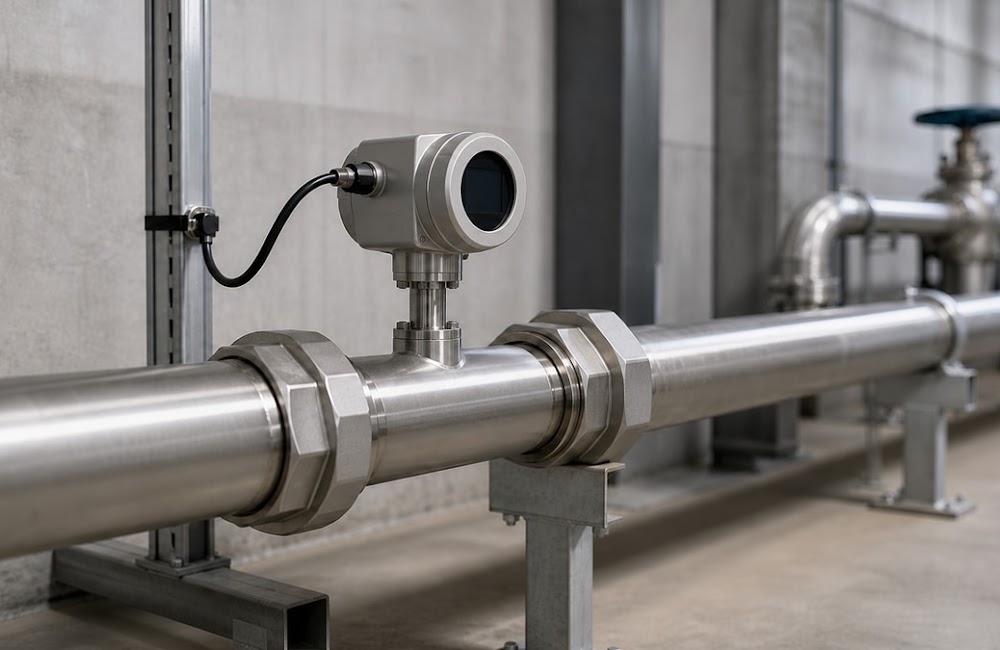
An air velocity or flow sensor (Air Velocity / Flow Sensor) is a critical device that measures the speed, rate of flow, or volume of air and gases moving through duct systems. In industry, this equipment is often referred to as an airflow meter, with data from these sensors used to control production processes for maximum stability.
How Air Flow Sensors in Pipes Work
Based on the experience of the SCMA engineering team, air flow sensors sold in the industry are primarily categorized into three main types to cater to different usage scenarios as follows:
Thermal/Hot-Wire Anemometer Type
This type works by using a heated wire that is supplied with electricity to maintain a higher temperature than the air inside the pipe. When airflow passes through, the wire is cooled down and the internal circuit processes the electrical current needed to keep the original heat level constant, converting this data into highly accurate wind speed measurements.
Differential Pressure / Pitot Tube Type
This type of equipment measures the difference between total pressure and static pressure within the pipe system. The resulting differential is then used in mathematical equations to efficiently calculate flow rate and air velocity.
Ultrasonic Flow Meter Type
This uses ultrasonic technology to measure wind speed by calculating the speed of sound waves traveling with and against the direction of airflow, providing quick and accurate results.
How many types of air flow sensors are there?
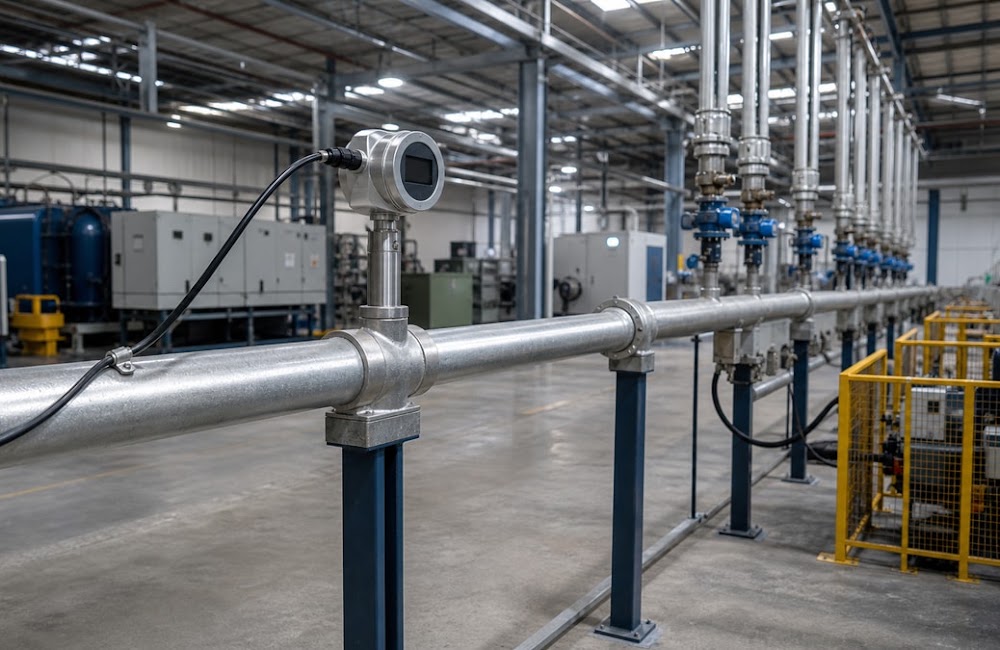
Air Flow Meter, commonly installed in industrial and HVAC systems, can be categorized into four main types based on their structure and application methods.
Hot Wire Type
Makes measurements by utilizing the principle of heat change from a coil. It stands out for its extremely high accuracy, making it ideal for measuring air or gas flow rates at low to moderate speeds.
Paddle Wheel Type
Operates using a rotating paddle wheel driven by airflow through the pipe. This type is easy to use and cost-effective, suitable for general exhaust duct installations that do not require complex setup configurations.
Mass Heat Type
Directly measures mass flow (Mass Flow) without relying on additional temperature or pressure compensation calculations. This model excels in compressed air applications as well as industrial pipeline gas systems.
Differential Pressure Type
Uses the principle of differential pressure measurement, such as using a Pitot Tube, which performs well in applications requiring large volumes of airflow, large pipes, or extremely high-speed air currents.
Maintenance of Airflow Measurement Sensors (Anemometer)
Maintaining an airflow measurement sensor focuses on cleaning the measuring head to prevent dust accumulation, as well as checking the installation point for stability to extend its lifespan and prevent errors. The key steps are as follows:
Cleaning the Measuring Head
Dust and dirt on the sensor's head can cause reading inaccuracies. Users should regularly clean the measuring head carefully with a soft cloth dampened in mild cleaning solution.
Checking for Leaks and Connections
The seals and pipe connections around the installation area of the sensor should be checked periodically to find any air leaks or loosening of bolts caused by machine vibrations during operation.
Installing a Filter to Remove Contaminants
If there is oil mist or dense dust in the airflow, an air preparation unit (filter) should be installed before reaching the sensor position to protect internal components from moisture and contaminants that could cause damage.
Calibration
To maintain the highest accuracy standards during production processes, the airflow measurement sensors should be sent for calibration at certified service centers according to specified intervals. The engineering team recommends performing this at least once a year.
Using Air Flow Sensors in Ducts
The use of air flow sensors in ducts is crucial for maintaining standard ventilation systems. SCMA offers sensors suitable for various applications as follows:
Air Velocity Sensors
These are commonly used to measure air speed and circulation, utilizing the principle of pressure measurement or temperature changes. This type is designed to check ventilation efficiency and control gas direction in duct systems.
Mass Air Flow Sensor
This sensor evaluates the total volume and temperature of air, sending data for further processing. It is often installed in large industrial engine exhaust systems or machinery ducts.
Ultrasonic Flow Meters
These use sound waves to measure travel time through air in pipes. They can be installed externally without damaging the pipe structure, allowing for measurement.
Benefits of Air Flow Sensors in Ducts
Selecting SCMA's air flow sensors (Flow Sensor) for industrial use helps factories accurately analyze energy costs per unit. These devices help detect compressed air leaks, leading to coordinated pump operation control, reducing energy loss, real-time system monitoring, and sustainable process quality improvement.
How to Choose a Duct Airflow Sensor
When selecting a duct airflow sensor that meets the needs of your application, it is important to consider the type of air, pipe size, and surrounding environment. There are five main factors to consider:
- Sensor Type: If there is dust, humidity, or high-speed air in the duct, a Pitot Tube should be selected; for HVAC ducts that require precision, a Thermal Mass sensor should be used.
- Measuring Range: Calculate the flow rate from wind speed multiplied by the cross-sectional area of the pipe to select a model that covers the highest velocity range in your system.
- Environment: For hot air ducts, choose a stainless steel probe that can withstand high temperatures; if there are chemicals present, opt for a corrosion-resistant model.
- Output Signal: Check whether you need to connect it with a display screen or PLC control system. Generally, a standard 4-20 mA signal should be used.
- Installation Method: Choose the one that suits your structure, such as Insertion for large pipe drilling and Inline for small pipe splicing.
Cautionary Measures When Installing Duct Airflow Sensors
To ensure optimal performance of duct airflow sensors and minimize measurement errors, installers should also take into account these precautions:
- Distance from Curves: Install the sensor in a straight section of pipe, keeping it away from bends or valves to prevent turbulent air flow.
- Airflow Direction: Always align the probe head with the airflow direction as indicated by the arrow on the device.
- Depth of Installation: For Insertion sensors, insert the measuring tip deep enough into the center of the pipe to obtain the most accurate average value.
- Avoid Vibration Points: Do not install near high-vibration motors or compressors to prevent damage to internal circuit boards.
Summary
Air Flow Sensors are crucial for maintaining the balance of ventilation systems and production processes. Understanding their types, operating principles, and maintenance methods can help reduce unexpected machine downtime. If your organization is looking for accurate measurement solutions, the engineering team from SCMA is ready to be your technical partner in designing systems that best meet your needs.
If you want to purchase an Air Flow Sensor, SCMA is now available for your purchase!
SCMA Co., Ltd. is the leading importer and distributor of measurement tools and industrial-grade air flow sensors from top global brands. We do more than just sell products; we offer comprehensive solution analysis and design services, along with an accessible calibration team and after-sales service to ensure that every investment truly enhances production efficiency.
Frequently Asked Questions
Which type of duct air flow sensor is suitable for dusty environments?
The differential pressure (Pitot Tube) sensor should be chosen as it has no delicate electronic components directly exposed to the airflow, making it highly durable in dusty conditions.
How is 4-20 mA output signal better than voltage type?
The current signal of 4-20 mA can transmit over long distances without signal loss, meeting the needs for connection with PLC systems in large factories.
Can I install air flow sensors myself?
Users can self-install basic inline models. However, for larger systems or insertion types, it is advisable to consult an engineer to calculate the correct position.
How often should air flow sensors be calibrated for accuracy?
We recommend calibrating at least once a year to compensate for drift caused by wear and tear from usage.
Does SCMA offer after-sales service when purchasing sensors?
We have a comprehensive ecosystem of services, including on-site consultation, installation services, as well as maintenance and calibration by expert technicians.
About the Author: The Automation Systems Engineering Team from SCMA With over a decade of experience leading in industrial measurement-testing equipment and sensors, the SCMA team is dedicated to sharing deep insights to help Thai factories enhance efficiency and sustainably reduce production costs.