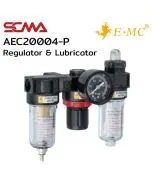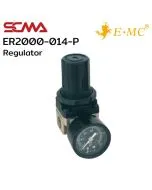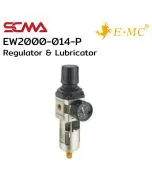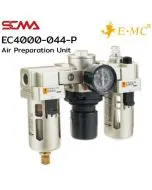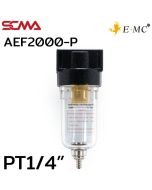
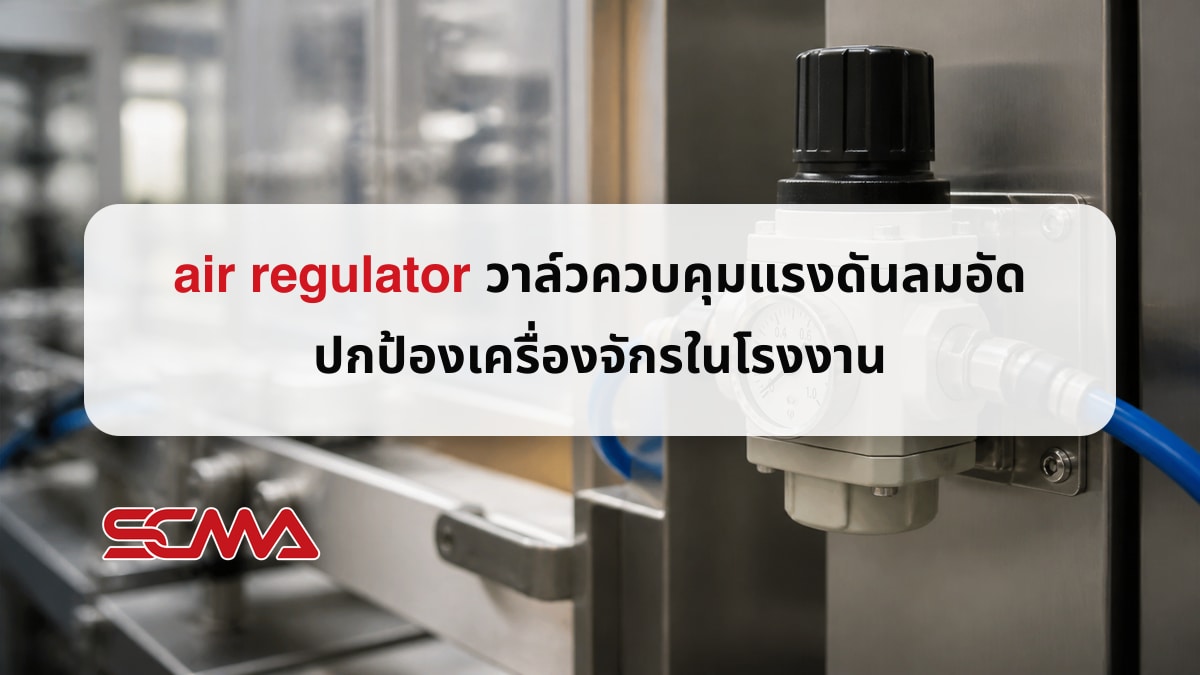
Air regulator is a device that protects the factory air system from pressure spikes that can damage components. The air filter regulator has the job of filtering dust particles while reducing air pressure to maintain stability. Using a standard regulator helps extend the lifespan of other air regulators in the production line. SCMA offers a free online spare parts specification comparison service through expert engineers, with express delivery so you can install them on-site immediately.
What is an air regulator? A crucial defense for the air system
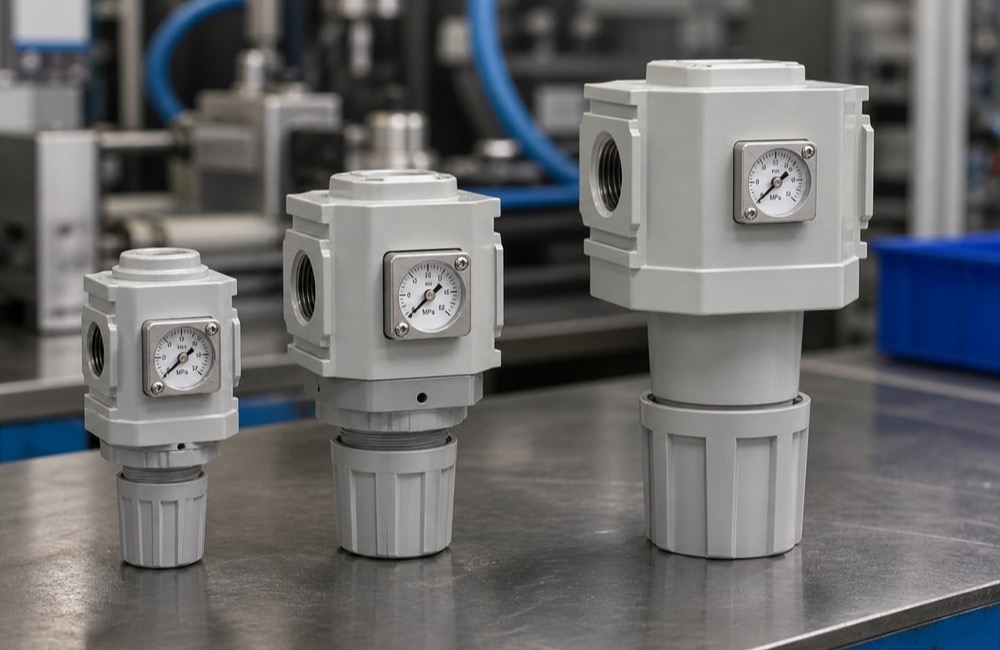
Air regulator is a valve that controls compressed air pressure. Its main function is to receive high-pressure air from the main pipe and adjust it to the desired level. This device protects all types of pneumatic equipment so they can operate safely. Installing a pressure adjustment valve helps prevent pressure surges (Pressure Surge). Excessively high air pressure may cause cylinders or expensive solenoid valves to break, damaging them. Maintenance technicians must adjust the pressure to match the specifications of the machinery to preserve the lifespan of various seals within the pneumatic system as long as possible.
How a regulator works in a pneumatic system
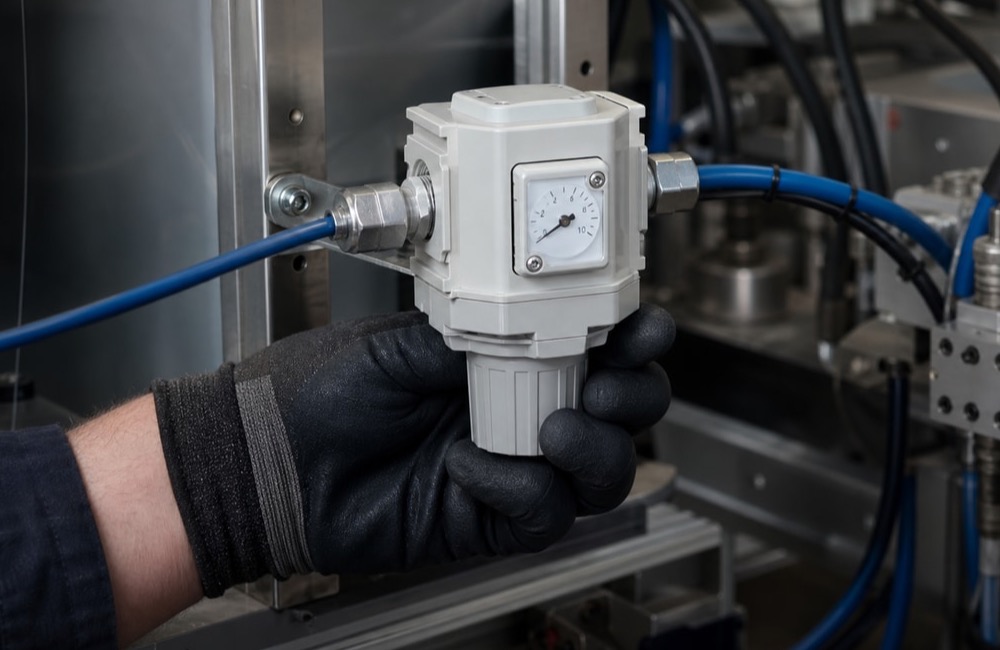
The mechanism of a regulator relies on the balance between the spring force and the internal air pressure. A pneumatic system requires high stability of airflow to maintain the speed of machinery. On-site technicians will turn the top knob to press down the spring against the diaphragm, which opens the valve to allow air flow at a set amount. The output air is kept constant all the time, even if there are fluctuations or drops in pressure from the main air pump. Using an accurate air regulator can significantly reduce losses in production lines.
The internal structure of air regulators that engineers need to know
The industrial level air regulators consist of only a few key parts, with the diaphragm being the most crucial component for sensing changes in air pressure.
- Poppet Valve (Valve Set): It functions to open and close the airflow channel according to the compression of the spring to maintain balance in internal pressure within a pneumatic system.
- Top Knob (Adjustment Knob): The pressure adjustment shaft is connected to the knob, designed for on-site technicians to easily turn and set the air regulator.
- Diaphragm: A flexible rubber sheet that receives pressure from the spring to command valve opening. It must withstand repeated movement throughout a workday.
- Housing (Body): Usually made of aluminum alloy, it is durable against high pressure and resistant to dusty or humid environments in industrial factories.
The Difference Between Air Regulators and Air Filter Sets
Many field technicians are confused between single air regulators and combined sets. Using a standalone air regulator is suitable for installation points where there is already clean, dry compressed air.
The Function of Standard Air Regulators
This type of pressure regulator focuses solely on controlling the output air pressure to remain constant. It does not have mechanisms to trap water droplets or rust from the main pipe. Engineers will choose this equipment at points where a system for drying compressed air (Air Dryer) is installed beforehand. Separating components makes maintenance of pneumatic tools easier when workspaces are not limited.
Comprehensive Protection with Air Filter Sets
If the installation point is near major machinery, engineers recommend using an air filter set that includes a water trap (Filter) for maximum safety. We call this combined unit an air filter regulator . The combination saves workspace, reduces air pipe connection points, and significantly lowers the risk of leaks at various joints.
The Classic Problem of Incorrectly Setting an Air Regulator
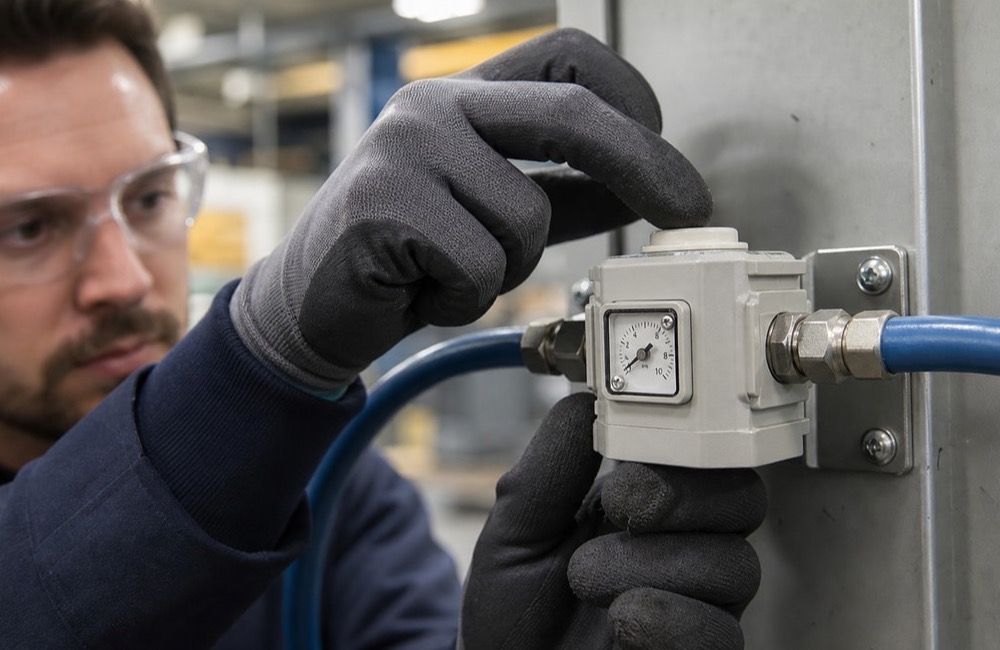
Production lines suddenly stop due to incorrect settings of the air regulator. Some technicians directly turn down the pressure to the desired value. The reading on the gauge dial becomes unstable when the machinery is in operation.
- Direct Adjustment Down (Adjust Falling): This setting causes internal mechanism discrepancies, leading the output air pressure to drop below the specifications required by pneumatic equipment.
- The Correct Way to Set Pressure: First, turn down lower than the target value and then gradually increase the pressure up to the desired level (Adjust Rising) to maintain spring tension.
- Locking the Knob Position: Once the specified pressure is reached according to the machinery manual, press the knob down to lock it in place. This prevents displacement due to vibrations during operation.
- Neglecting Gauge Readings: Technicians must observe the air regulator's pressure gauge every time after running the system at full capacity. A wildly swinging needle indicates abnormal conditions in the air lines.
List of Methods to Select Air Filter Regulator Compatible with Original Machinery
Ordering the wrong specifications for spare parts causes maintenance teams to waste time adapting air lines. Engineers must check that the air filter regulator's port size (Port Size) matches exactly with the original one.
- Flow Rate: The volume of air must be proportional to the total cylinder sizes in the circuit. Choosing a valve that is too small will cause air blockage, leading machinery to malfunction.
- Set Pressure Range: Specifications should cover all requirements. If machinery uses 5 Bar pressure, choose a model adjustable from 0.5 - 8.5 Bar.
- Filtration Degree: General pneumatic systems use filters ranging from 5 microns to 40 microns depending on the sensitivity of downstream solenoid valves to dust.
- Drain Type: There are manual (Manual) and automatic (Auto Drain) types, depending on maintenance teams' convenience for inspection rounds.
Predictive Maintenance to Extend Diaphragm Lifespan
Maintaining air regulators is straightforward. Observe the pressure gauge dial; if the needle swings abnormally, it indicates that the internal diaphragm is starting to deteriorate. Do not use thinner mixed with chemical cleaners to clean the regulator housing under any circumstances; chemicals will corrode plastic parts until they crack. If air leaks continuously from the relief port above the knob (Relief Port), it means the internal valve set does not close properly, and you should plan to replace air filter sets before machinery loses pressure.
Summary
Maintaining air regulators correctly reduces the risk of production lines stopping. On-site technicians should choose air filter regulators that match the original specifications of pneumatic equipment for maximum efficiency. If you encounter issues with air equipment deteriorating, SCMA is ready to provide free specification consultations online, allowing maintenance work to be completed faster.
If you want to buy, SCMA is available for purchase today!
Air pressure regulator failure, severe air leakage, machinery must stop working. SCMA understands this emergency situation very well. We provide a channel for you to consult and find air regulator or air filter set specifications through our online system free of charge. Take a picture of the Nameplate of the faulty equipmentand send it to our Line Official account. Our engineering team will quickly assess the thread size and pressure range, and offer you replacement air regulator quality immediately. Order from SCMA to finish work faster; we deliver urgent shipments nationwide to your factory doorstep. Once received, our technician team can install and run pneumatic equipment on-site right away without waiting for external technicians to check.
Frequently Asked Questions (FAQ)
Q1: What is an automatic relieving air pressure regulator?
This model has a mechanism that can automatically vent excess air pressure to the atmosphere when the outlet pressure exceeds the set value. It helps prevent pneumatic equipment from being damaged by excessive pressure beyond its limit. Most engineers prefer using this type of air regulator.
Q2: Why won't my air regulator adjust? I turn the adjustment knob but the gauge doesn't move.
This issue can be caused by two reasons: the incoming air pressure is too low to reach the desired setting, or the internal diaphragm of the air regulator has worn out from prolonged use. In the latter case, new replacement parts must be installed for the pneumatic system to function properly.
Q3: Can I repair an air regulator's diaphragm on-site?
We do not recommend repairing minor tears yourself. Industrial air pressure is very high, and improper repairs can lead to accidents. It’s safer to request a repair kit for air regulators from the manufacturer or replace it entirely.
Q4: Can an air filter regulator be installed in reverse?
No, you cannot do this. The housing of the air filter regulator has clear arrow symbols indicating the direction of airflow (Flow Direction). Reversing the connection of the air filter assembly will prevent air from flowing and cause immediate damage to the internal mechanism.
Q5: European brand parts are hard to find. Can I send pictures to SCMA for comparison with other brands?
Absolutely, our team of engineers at SCMA specializes in cross-brand regulator specifications comparisons. Simply send us a picture of the original specification or nameplate via Line, and we will provide replacement parts that fit perfectly into your existing flange 100%, ready for immediate installation.