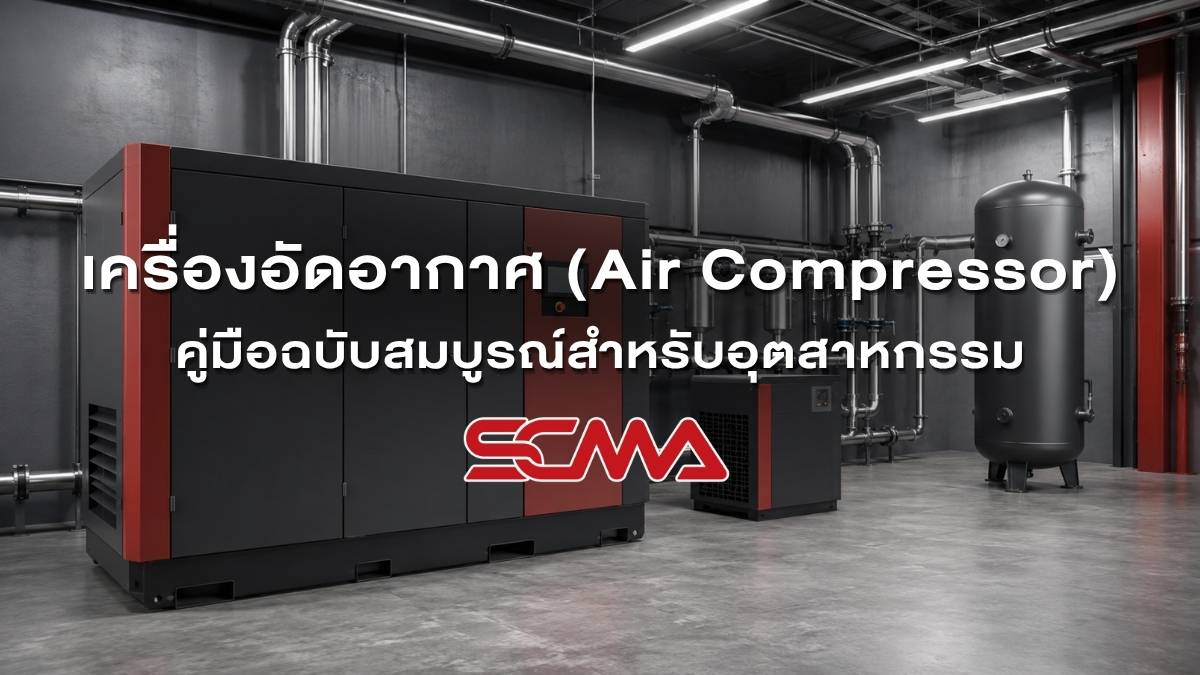
Air Compressor is what, why it's the heart of an industrial factory? If you're looking for knowledge to choose a air compressor or air screw compressor that meets your needs best, this article will take you through the detailed workings of the air compression system, so you can get the most cost-effective machinery. Along with professional advice from our SCMA System Design and Consultation Services.
What is an Air Compressor and Why Is It Important in Industrial Factories?
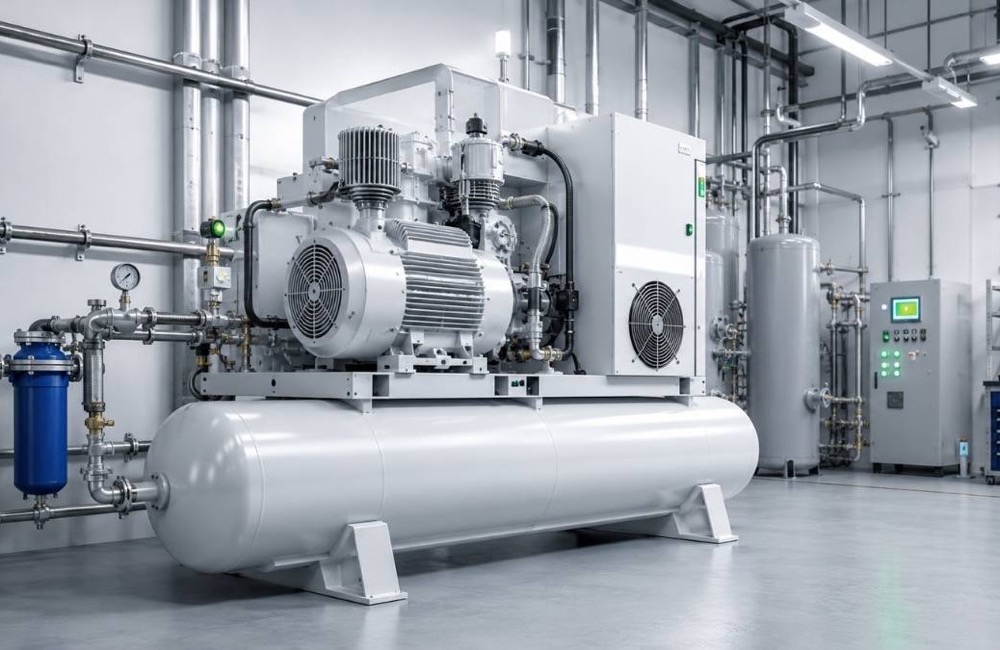
Let's start by understanding what compressors are in the context of an industrial factory. An Air Compressor is a device that converts mechanical energy into high-pressure air to drive various machinery during production processes. Having an efficient Air Compression System can significantly reduce energy costs. Many may wonder about the difference between the terms Air Compressor and air pump, in the industry we refer to these devices as the same thing. Choosing equipment that meets standards is like laying a strong foundation for your business to grow steadily.
How many types of air compressors are there? Get to know the 6 main types used
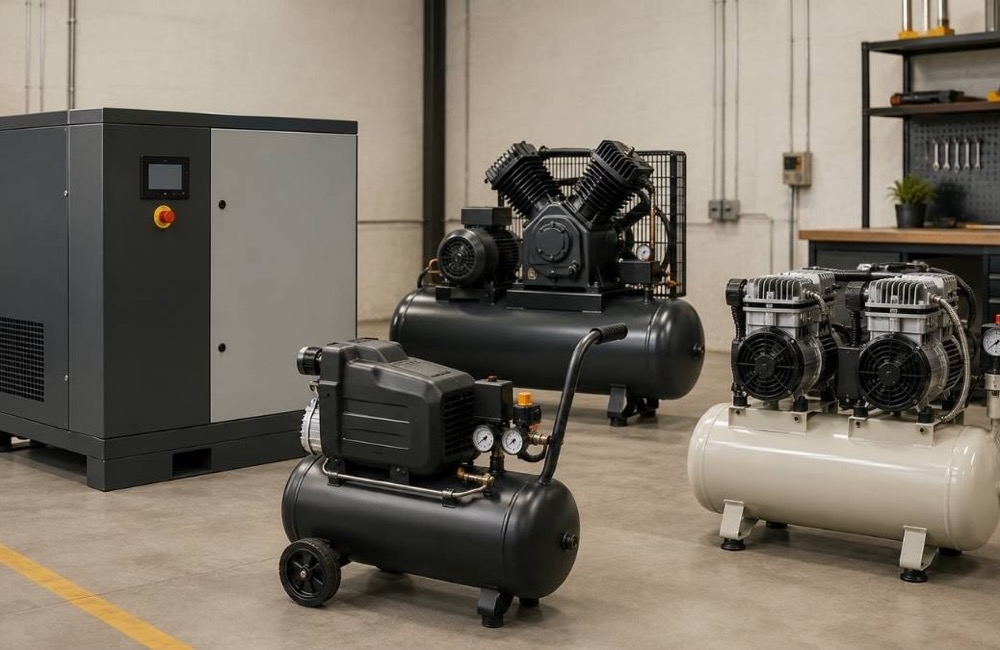
If you have a question about how many types of compressors there are, categorization can be done based on the internal compression mechanism. Understanding each type of air compressor will help you match equipment with job characteristics perfectly.
1. Piston Air Compressor (Reciprocating/Piston Compressor)
The piston system works by using up-and-down strokes to draw air into the cylinder for compression. This type of equipment is suitable for small businesses that require high pressure but do not use continuous airflow. Maintenance is slightly easier than screw air compressor due to familiar mechanical parts.
2. Screw Air Compressor (Rotary Screw Compressor)
For large factories requiring a constant supply of high volume air, screw air compressors are the best solution. The internal mechanism uses two helical screws meshing together to gently compress air. Choosing an air screw compressor helps reduce noise in work areas and provides excellent pressure stability.
3. Rotary Vane Air Compressor (Rotary Vane Compressor)
The rotary vane equipment uses the principle of swinging vanes that slide in and out along rotor grooves to reduce air volume. This mechanism is highly durable, operates quietly, making it an attractive option for systems requiring compact air compressors, providing a smooth airflow without any jerks.
4. Centrifugal Air Compressor (Centrifugal Compressor)
This is the air compressor ideal for large petrochemical industries as it uses high-speed impellers to generate kinetic energy before converting it into pressure. This dynamic equipment can supply massive volumes of oil-free air, perfectly meeting the needs of large-scale air compression systems.
5. Diaphragm Air Compressor (Diaphragm Compressor)
The diaphragm mechanism uses flexible rubber sheets moving up and down to draw in air without the air ever touching metal parts. The advantage is that it produces 100% clean compressed air, suitable for food, pharmaceutical, laboratory industries requiring oil-free air compression systems.
Special Applications: High-Pressure Air Compressors and SCBA
In addition to general industry applications, there are also special high-pressure air compressors designed for specific tasks such as filling tanks for self-contained breathing apparatus (SCBA) in firefighting. Safety is the core of these devices; users must study how many types of compressors there are to select equipment with the highest safety standards.
Diving Deep into the Differences: Piston Air Compressors vs Screw Air Compressors
The comparison between piston systems and screw air compressors is one of the most frequent questions we receive from customers. We have summarized the differences in various aspects to help you make an easier decision on which system aligns with your budget.
- In terms of design and operation: Piston systems use up-and-down strokes, causing vibrations, while a screw air compressor uses intermeshing helical screws that operate more smoothly.
- In terms of efficiency and airflow capacity: A screw air compressor can run at full capacity continuously throughout the day, whereas piston systems require downtime for cooling.
- In terms of noise level: The air screw compressor has much better sound insulation, reducing acoustic pollution in areas where employees work.
- In terms of maintenance and costs: Piston systems have a lower initial cost and easier-to-find parts, but the screw system is more economical over the long term due to energy savings in an air compression system.
How do each type of air compressor work?
The basic principle of operation for air compressors can be divided into two physical principles. The first is volumetric displacement (Positive Displacement), which draws in air and then compresses it to a smaller volume, such as piston systems or screw systems. The second is dynamic displacement (Dynamic Displacement) that uses the speed of impellers to create kinetic energy and convert it into pressure air compression. Efficient air compressor systems must work in harmony with electrical systems to control motors. You can learn more from our article Inverter is What? Understanding these mechanisms helps you choose the right air compressor for your needs.
Factors to Consider When Buying an Air Compressor
Before making a decision on purchasing major equipment for your factory, you need to carefully calculate the usage requirements. Selecting an air compressor with specifications that match your needs helps efficiently address pressure drop issues.
- Air Pressure Required (Pressure - bar/psi): Check all machines to determine what maximum air pressure they require, in order to set the size of the screw air compressor appropriately for coverage.
- Air Flow Rate (Flow Rate - CFM/l/s): The volume of air must be sufficient to supply every work station simultaneously. Choosing an air screw compressor with a suitable flow rate helps prevent overloading the machine.
- Air Quality and Importance of Air Dryer: If your products are sensitive to moisture, installing a dryer system alongside the air compressor is something that every engineer recommends.
- Size and Installation Space: Proper ventilation space must be prepared. You can study supplementary control systems from articles about PLC.
How to Measure the Efficiency of an Air Compressor?
Evaluating energy efficiency is crucial for business operations. You can assess the performance of air compression systems using internationally recognized engineering metrics.
Input (Electric Power) vs Output (Air Volume)
The comparison between the electric power drawn by the motor and the compressed air output is the most basic index. These details are available in the equipment specifications. The more air compressors produce air with less electricity, the better their efficiency.
What is Specific Power (kW/CFM)?
Specific Power indicates how many kilowatts of energy are required to produce 1 CFM of compressed air. The lower this value, the more power-efficient it is. Choosing a screw air compressor with high-efficiency motor technology can significantly reduce this number.
How to Calculate Initial Energy Costs?
The primary cost throughout the lifespan of an equipment is electricity costs, not the purchase price. You can calculate by multiplying electric power consumption with operating hours and unit rate of electricity. Studying industrial energy-saving research can guide you in improving your air compression system.
What Maintenance Should Be Done to Extend the Lifespan of an Air Compressor?
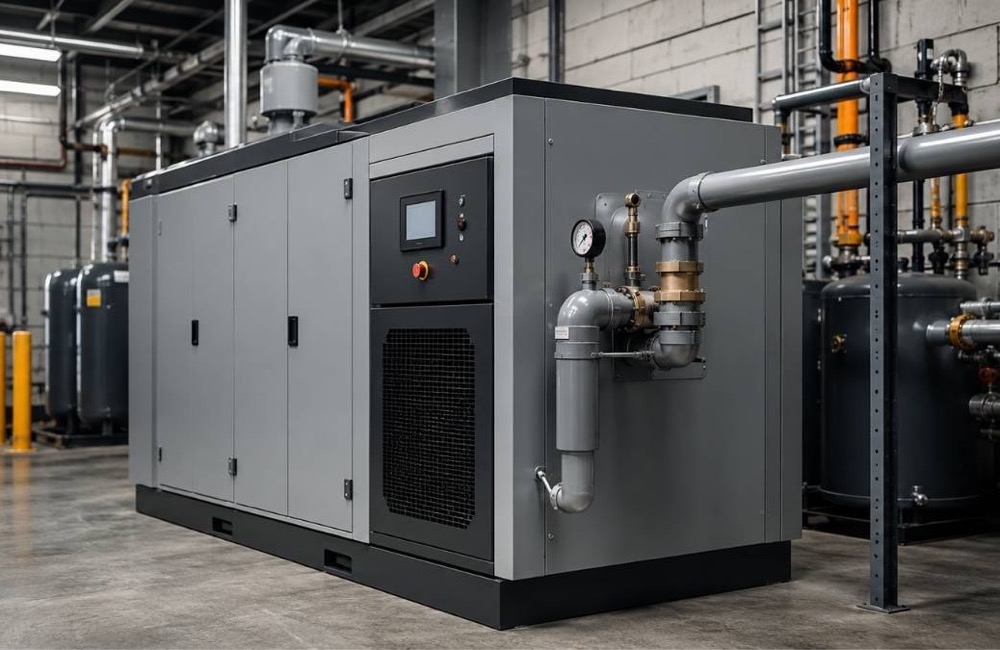
Predictive maintenance is a crucial mechanism to protect your investment. Checking for leaks at joints, draining water from storage tanks, and cleaning filters are daily tasks that operators should perform consistently. For annual maintenance, it's advisable to have skilled technicians change lubricating oil, inspect belt conditions inside the air compressor. Neglecting maintenance of air compressors can lead to increased electricity consumption and shortened lifespan. If you hear unusual noises from the motor, immediately check the air compression system to prevent further damage.
Summary
It can be concluded that air compressors are the core of driving production processes. Choosing a screw air compressor or another suitable model will help your air system operate at maximum efficiency. If you have any questions about how many types of compressors there are, or if you need to set up a new system, you can receive advice from theSCMA System Design and Consulting Services.
If you want to buy one, SCMA is now available for purchase!
The decision to invest in a high-quality air compressor is the most worthwhile investment. SCMA Co., Ltd. offers top-tier air screw compressor solutions with a close consulting engineering team. You can visit theSCMA website to view all product catalogs and contact their team for the best air compression system solution for your factory.
Frequently Asked Questions
Which industries are suitable for screw air compressors?
Suitable for medium to large-scale industrial plants that require a continuous supply of compressed air 24 hours a day, as they provide stable pressure without fluctuations.
Is an oil-free (Oil-Free) air compressor necessary?
Vital for the food industry, pharmaceuticals, cosmetics, or electronics industries to prevent products from coming into contact with oil particles mixed in the air.
What should the air pressure (Pressure) be set at?
It should be slightly higher than the highest pressure requirement of the end-use equipment to compensate for any potential pressure drop during transit through the air lines.
Why does an air compressor overheat?
The main causes are inadequate ventilation in the installation room, clogged oil filters, or lubricating oil levels below standard specifications.
What is the role of a compressed air receiver tank in an air compression system?
A compressed air receiver tank serves to store reserve air, reducing motor start-stop frequency and lowering air temperature before it's sent to the dryer.