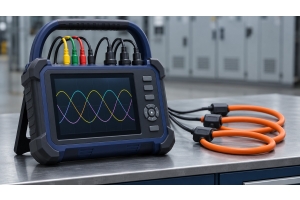
Ever wondered why smartphones can automatically rotate their screens or how machines in factories can detect abnormalities? These problems can be solved with Accelerometer Sensor, and SCMA, a company specializing in automation solutions, is happy to take you through an explanation. This article will delve into what Accelerometer is, its working principles, as well as the differences between IMU Sensor and Gyroscope, so users can choose the right sensor correctly.
What is Accelerometer Sensor?
Accelerometer Sensor or Accelerometer is a linear acceleration sensor used to measure the rate of change of velocity, vibration, and even the gravity of the Earth. This type of device works by converting physical movement into electrical signals for processing. It is commonly used in electronic devices such as smartphones, wearable fitness devices, and even for monitoring the condition of machinery in industrial settings.
How does Accelerometer Sensor differ from Gyroscope Sensor?
The main difference is that Accelerometer measures linear movement such as acceleration or vibration, while Gyroscope is a sensor used to measure angular velocity to detect tilt angles and rotation around an axis. Both types of devices work together in the form of IMU Sensor to identify the most accurate direction and position, in VR devices, smartphones, drones, or autonomous vehicles.
How Accelerometer Sensor Works
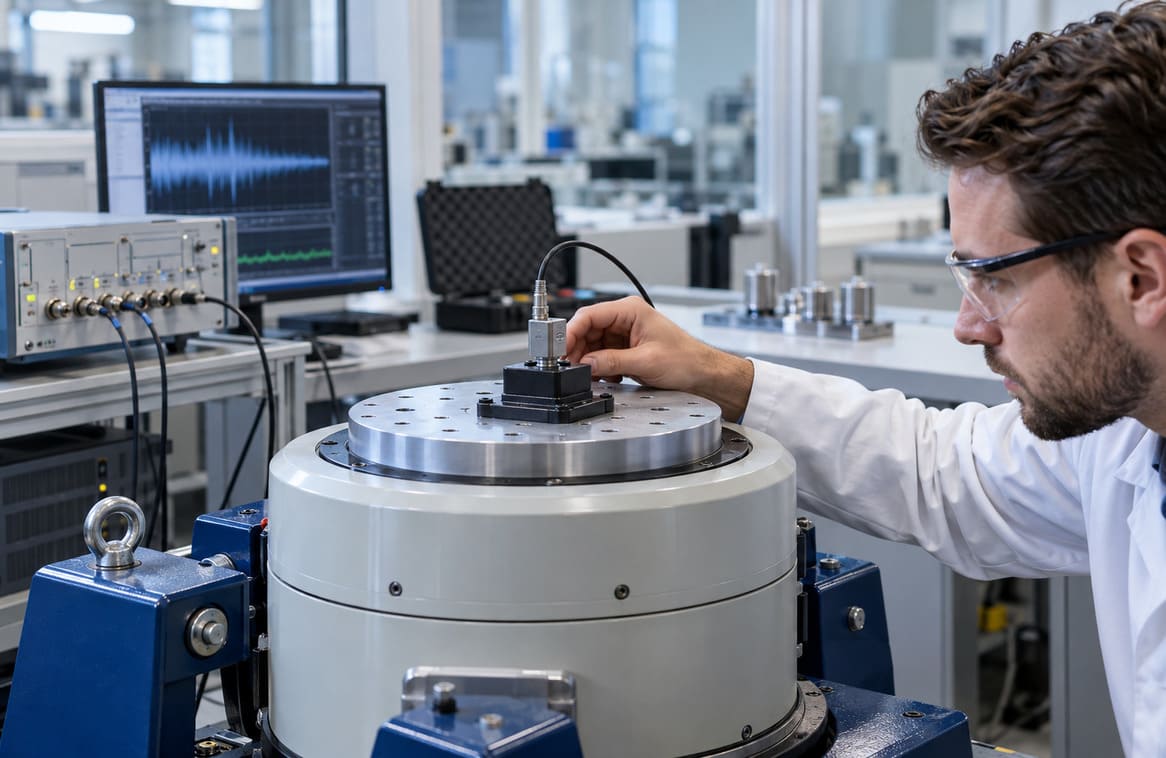
Understanding the working principle of Accelerometer Sensor will help engineers use the device appropriately. The internal mechanism of Accelerometer is converting mechanical force into electrical values based on the technical principle of Epson as follows
Mass-Spring Internal Structure
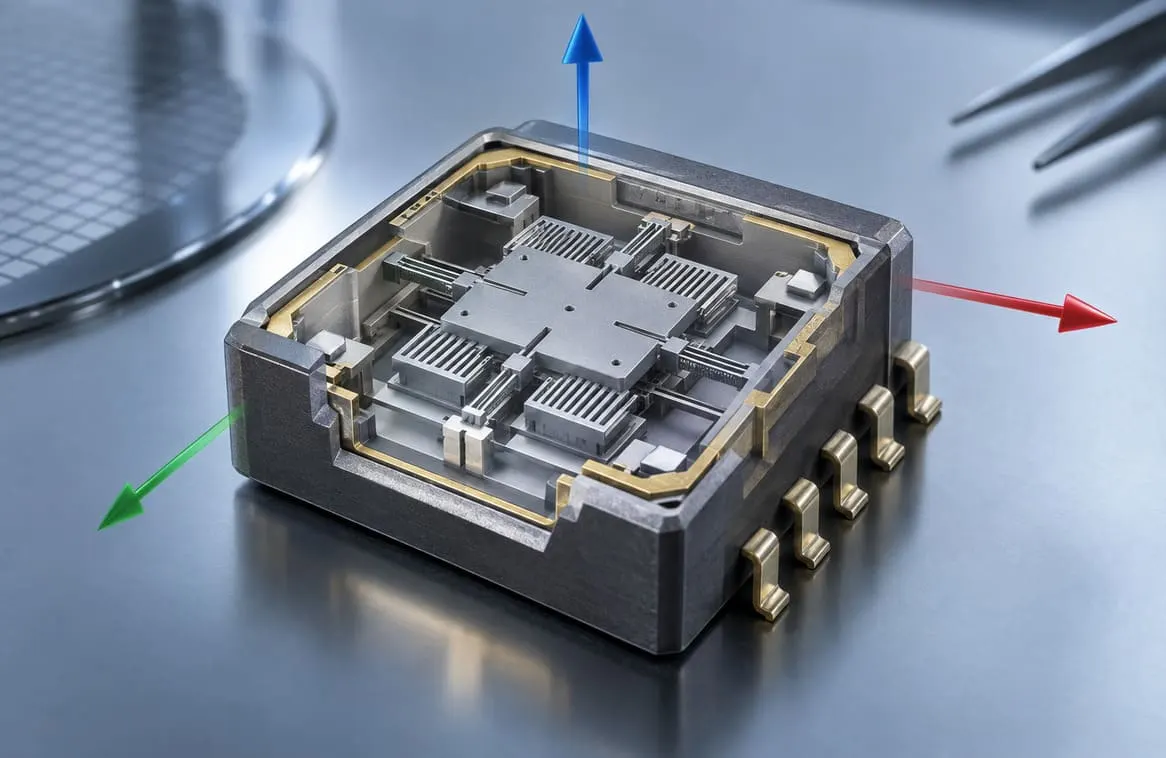
The sensor contains a small mass attached with a spring-like mechanism. When there is movement or change in speed, the mass tries to maintain its state of rest, resulting in the spring stretching or contracting according to the force acting in that direction
Movement Detection and Signal Conversion
The sensor detects the movement of the mass and converts it into an electrical signal. The commonly used technology is MEMS (Micro-Electro-Mechanical Systems) sensors, which rely on changes in electrical capacitance when the distance between internal plates changes
3-Axis Detection
Accelerometer Sensor commonly used can measure acceleration simultaneously in three dimensions, consisting of the X-axis (left-right), Y-axis (front-back), and Z-axis (up-down). This helps the processing chip to perfectly perceive movement in space
Gravity Measurement
Aside from movement, the sensor can also detect the Earth's gravitational pull even when it is stationary. This data helps the processing device immediately know the orientation or direction the device is placed in at that moment
How many types of Accelerometer Sensors are there?
Based on the experience of the SCMA engineering team, selecting the appropriate type of Accelerometer Sensor that matches the nature of the work is extremely important. Vibration sensors commonly used in the industry are divided into 4 main types as follows
Piezoelectric Accelerometer
This type of sensor is the most popular in the industrial field due to its durability in harsh environments. It works by using piezoelectric crystals to generate electric charges when subjected to force. It is particularly suitable for measuring acceleration and analyzing high-frequency vibrations in machinery
MEMS Accelerometer
This is a tiny sensor that uses micro-meter level mechanical component manufacturing technology. It has the advantage of energy efficiency and low production cost, making it an important component in the IMU Sensor of all types of smartphones and portable devices
Velocity Transducer
This type of sensor is specifically designed to measure the velocity of vibration. The internal structure uses the principle of moving coils cutting through a magnetic field, meeting the needs of general machinery condition monitoring within factories
Proximity Probe
Or non-contact distance measuring sensor, designed to measure the displacement between the sensor and the rotating shaft. It is widely used in monitoring the vibration of large turbo machinery to prevent damage
Maintenance of Accelerometer Sensor
Extending the lifespan of the Accelerometer Sensor and ensuring it operates accurately requires proper maintenance. The expert guidelines from SCMA to prevent damage are as follows
Proper Cleaning
Users should clean the sensor with a dry, fine-textured cloth or a soft-bristled brush. It is strictly forbidden to use any corrosive chemicals. Additionally, care must be taken to prevent liquid from seeping into the wiring connector area to avoid short circuits
Mounting Inspection
It is necessary to regularly check that the sensor is securely attached to the machine structure. If bolts are used, ensure the torque values meet the standard. Also, inspect the signal wires to ensure there is no bending or tearing that may cause signal loss
Environmental Protection
Installation of the Accelerometer Sensor should be avoided in areas with standing water. If necessary, use additional protective enclosures. Also, control the ambient temperature to not exceed the limits specified in the sensor's specifications
Regular Standard Calibration
To ensure reliable measurement values, the sensor should be sent to a certified laboratory for calibration every 6 months to 1 year. At the same time, the software system should be tested to check that the signal response remains consistently accurate
Application of Accelerometer Sensor
Accelerometer Sensor is widely applied in various fields, not limited to just the industry, but also a vital component of everyday devices such as the following
Application in Smartphones and Wearable Devices
Accelerometer is a key component that enables smartphones to automatically adjust the screen orientation between portrait and landscape, as well as process walking rhythms in smartwatches. In addition, it can receive commands from shaking the device to interact with applications
Application in Automotive and Aerospace
In cars, the sensor detects impact forces to immediately deploy airbags upon an accident. When working together with Gyroscope Sensor, it helps control the car's stability (ESP) and maintain the direction balance of commercial airplanes
Machine Condition Monitoring in Industry
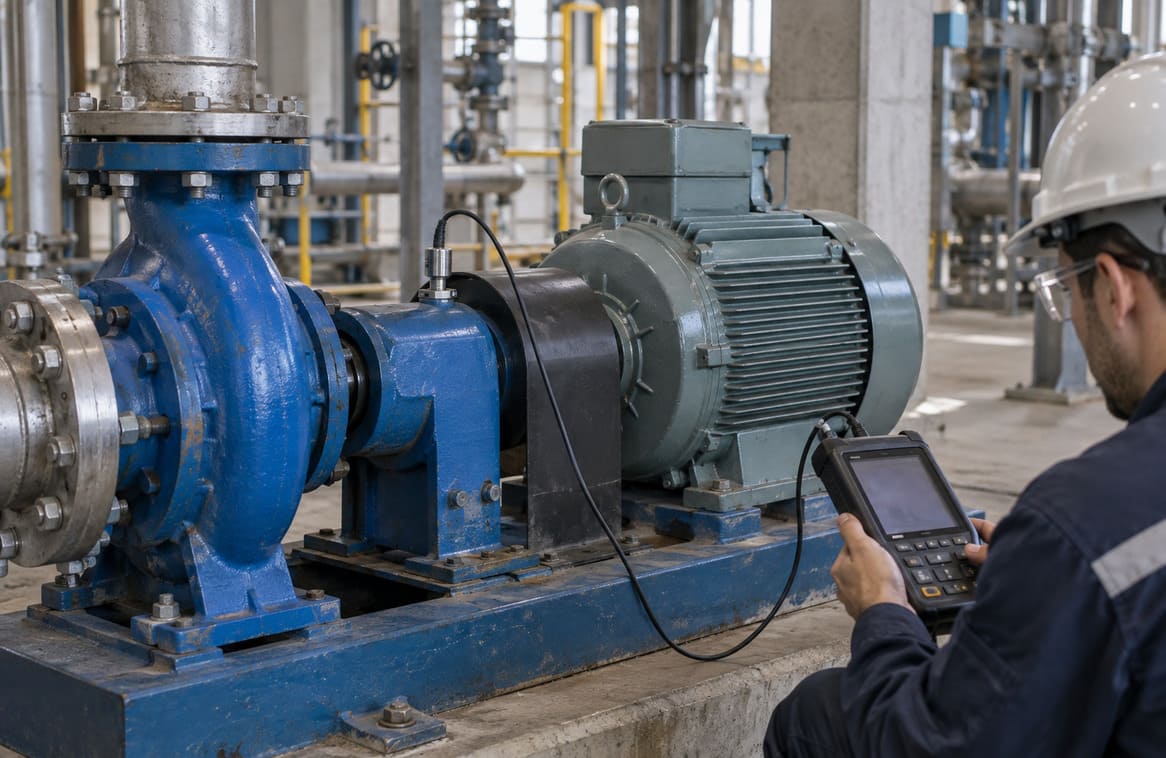
Industrial plants use sensors tomeasure the vibration of motorsor large water pumps. The data obtained is analyzed to detect abnormalities in advance, helping to prevent severe damage before the machine suddenly stops working
Advantages of Accelerometer Sensor
The decision to integrate Accelerometer Sensor into various systems is due to its unique features that other technologies cannot replace. The outstanding advantages of this type of sensor include
Highly Accurate Motion Detection
The ability to measure G-force values allows the sensor to respond rapidly, at the millisecond level, to falling, tilting, or rotation of objects. This accurate data is extremely useful for systems requiring high-level safety
Low Power Consumption
MEMS-type sensors are specifically designed to consume very little electric current, allowing them to be activated continuously for motion detection without affecting the battery life of small portable devices
Resistance to Harsh Environments
The structure without large moving mechanical parts makes the sensor highly resistant to shocks. It can be installed in high-vibration machinery or areas with fluctuating temperatures without losing measurement accuracy
Enhancing Vehicle Safety Systems
With the sensitivity to detect sudden deceleration, the sensor acts as a front-line device to deploy airbags, helping protect the driver's life from accidents in a timely manner, increasing confidence in every journey
Preventing Electronic Device Damage
Hard disks in many computer models use data from the sensor to detect free fall conditions. The system will immediately park the read head before the device hits the ground, helping prevent disk scratches and protecting important data from being lost
How to Choose an Accelerometer Sensor
Selecting an Accelerometer Sensor for industrial applications requires careful consideration of technical specifications to ensure the device works efficiently with the existing system. Based on SCMA's experience, the following factors should be considered:
- Consider the model of the analysis system it will be used with: Check system compatibility or choose a Standalone model with built-in alert output
- Determine the measuring range (Measuring Range): It must match the vibration characteristics of the machine, by calculating the maximum expected acceleration (G) value
- Check the frequency range (Frequency Range): Select a sensor that covers the operating frequency of the machine, for example 10 Hz - 1000 Hz
- Output signal (Output Signal): Assess what type of signal the control system receives, for example Analog 4-20 mA to send to PLC
- Additional necessary functions: Consider additional features such as IP standard dust protection or multi-axis measurement capability of IMU Sensor
Recommended Brands and Reliable Quality
Once you know how to choose, selecting a manufacturer or brand with international standards will help ensure that the Accelerometer Sensor works durably and is a worthwhile investment in the long term
- Brand reliability: Choose a brand that is well accepted in the industry, outstanding in durability and high accuracy
- Quality of materials used in production: The external structure must be strong, resistant to chemicals, and impact-resistant in real working environments
- International standard certification: The product must have passed testing and received relevant industry standard certifications for maximum safety
- After-sales service: You should purchase from a distributor that can provide technical consultation has a wide range of sensor products and has an engineering team available to resolve issues
Summary
In summary, Accelerometer Sensor or Accelerometer is an important device used to measure acceleration and vibration. It differs from the Gyroscope Sensor which measures angular rotation. However, when combined together as IMU Sensor, it provides the most accurate detection system. If your factory is facing machine breakdowns without knowing the cause, the engineering team from SCMA is ready to assess the site and provide consultation on service solutions for fully integrated automation systems.
Interested in purchasing or consulting via LINE Official: @SCMA
If you want to buy Accelerometer Sensor, you can purchase it from SCMA today!
Selecting a Accelerometer Sensor that meets the standard is the key to preventing production line interruptions, saving a huge amount of maintenance costs in the long run. SCMA Company, as a distributor and agent for leading global brands, is ready to deliver the most accurate technology to you SCMA one-stop service, from sales, system design, to expert calibration services.
Frequently Asked Questions
What does the accelerometer sensor in a smartphone do?
It is used to detect tilting to automatically switch between portrait and landscape screen orientations, as well as to count steps in health applications.
What is the function of a Gyroscope Sensor?
It measures angular velocity and the direction of rotation of an object, helping the system know in which direction the device is tilting.
What does MEMS Sensor stand for?
It stands for Micro-Electro-Mechanical Systems, a technology for manufacturing microscopic mechanical components at the micrometer level on circuit boards.
Do vibration sensors need calibration?
They must be calibrated every 6 months to 1 year to maintain the accuracy of measurement results according to engineering standards.
What is 3-axis measurement?
It refers to detecting movement covering the left-right (X), front-back (Y), and up-down (Z) directions simultaneously.