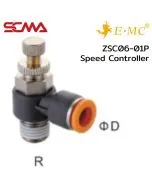
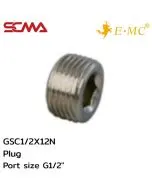
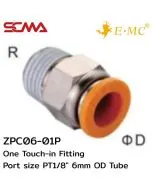
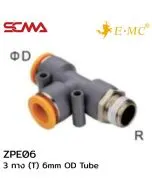
Pneumatic Valves are the heart of pneumatic systems, but do you know what Pneumatic Valves are and how they work in industrial systems? This article will provide a clear explanation about their working principles, types of pneumatic valves, appropriate selection for use, as well as the advantages of pneumatic valves to help you understand pneumatic systems better and choose pneumatic valves and directional control valves effectively.
What is a Pneumatic Valve?

In pneumatic systems, the crucial component that enables users to operate or control pneumatic equipment is Pneumatic Valve or air valve, which determines the direction of airflow to various devices. Pneumatic Valves are control devices used in pneumatic systems to regulate compressed air flow. In addition to being categorized by their actuation methods such as Solenoid Valve, Manual Valve, Mechanical Valve, or Main Valve, they can also be classified based on their structural characteristics.
How a Pneumatic Valve Works
Pneumatic System works by starting with air being directly drawn from the atmosphere through an air filter. This air is cleaned and purified within the air filter. After that, the air is sent to an air compressor powered by an electric motor. The air compressor increases the pressure of the air, and as the pressure rises, so does the temperature. Therefore, compressed air is then sent to a cooler to reduce the temperature while maintaining the original pressure. Then, the cooled air is stored in a receiver tank and passed through an Air Treatment Unit or FRL (Filter Regulator Lubricator) to dry the air. This process is crucial because components in the pneumatic system are very sensitive. Finally, treated air is sent to a Pneumatic Valve to control the direction of flow as required, and actuators use the energy of the air to convert it into mechanical energy.
How many types of Pneumatic Valves are there?
Pneumatic Valves or Pneumatic Valves can be divided into three main types, based on their control characteristics. Each type is suitable for different applications.
1. Directional Control Valve - Manual Valve
This type of directional control valve requires the user to manually open and close it themselves. It is commonly used in machine designs where users need to press a button or step on a switch to operate, such as cutting machines. Examples of devices that can be used to control this type of pneumatic valve include foot pedals (foot pedal), toggle actuators, handles, knobs, and push switches. This makes the operation of directional control pneumatic valves easy and convenient.
2. Directional Control Valve - Air Piloted Valve
This type of directional control valve changes direction by using compressed air to push the spool inside the Pneumatic Valve. It has high accuracy in control and can operate remotely due to its use of compressed air as a driving force, making it suitable for pneumatic valve systems that require remote control or are difficult to access.
3. Directional Control Valve - Solenoid Valve (Solenoid Valve)
This type of directional control valve is operated by a solenoid coil and is widely used in industries such as automotive, electronic component manufacturing, and many others. This pneumatic valve can be quickly and accurately controlled through an electrical system, making it suitable for pneumatic valves that require fast response times and can be connected to automatic systems.

What are the types of directional control valves?
Directional control valves or Pneumatic Valves can be divided into two main types based on the normal state of the valve, which is important for selecting their use in various systems.
- Normally Open (N/O): The spool position will be open if there is no command to the directional control valve, such as using a push button switch or supplying electrical current to the solenoid coil. Air can flow normally after air is supplied to the Pneumatic Valve, making it suitable for systems that require air flow in the normal state.
- Normally Closed (N/C): The spool position will be closed if there is no command to the directional control valve, such as using a push button switch or supplying electrical current to the solenoid coil. Air cannot flow after air is supplied to the Pneumatic Valve, which is suitable for systems that require high safety and strict control of air flow.
Basic Components of Pneumatic Valve
Pneumatic systems and Pneumatic Valves consist of main components that work together to provide efficient control as follows:
- Compressor — Creates compressed air: The compressor is the component that converts normal air into compressed air by compressing it to about 7-10 times atmospheric pressure (700–1000 kPa or 100–150 psi). It serves as the starting point for pneumatic circuits, bringing energy into the system by compressing air into a much smaller space.
- AIR TANK — Compressed air storage tank: The compressed air storage tank is where the compressed air from the compressor or air pump is stored. It helps cool down the compressed air and filter out moisture when the compressed air is released.
- AIR SERVICE UNIT — Control of compressed air: The Air Service Unit, or F.R.L. Units (Filter, Regulator, Lubricator), is a device used in pneumatic systems to prepare the air by improving its quality for use. It consists of F (Filter) for filtering air, R (Regulator) for adjusting air pressure, and L (Lubricator) for oil lubrication.
- VALVE or SOLENOID VALVE: A control device in pneumatic systems that regulates the flow of fluids such as air, water, or gases. This type of Pneumatic Valve adds an electromagnetic coil as a medium to work with electrical energy.
- AIR CYLINDER, ACTUATOR, MOTOR — Devices that use compressed air: The actuator is a device that converts control signals into mechanical motion. Air Cylinder or pneumatic cylinder changes from pneumatic energy to mechanical energy, and the motor transforms electrical energy into mechanical energy.
Collaborative Work Between Pneumatic Actuator and Solenoid Valve
In a pneumatic valve system, pneumatic valves and solenoid valves work together to efficiently control the flow of liquids or gases. The solenoid valve acts as a control component by receiving electrical signals that determine the desired position of the pneumatic valve – open or closed. Upon receiving an electrical signal, the solenoid valve operates by creating a magnetic field that drives the plunger inside the valve. Movement in the solenoid valve triggers the pneumatic actuator; if there is a signal to open the valve, air pressure is applied to the actuator, causing the pneumatic valve to move and open. Conversely, if there is a signal to close the valve, the solenoid valve stops air pressure from reaching the actuator, causing the valve to return to its initial position and close.
What are the advantages of using Pneumatic Valves?
Using Pneumatic Valves and pneumatic systems have many advantages that make them popular in industrial applications, especially regarding safety and cleanliness during use.
- High Safety: Compared to electrical systems, if an electrical device malfunctions it can cause heat accumulation and may lead to a fire. If the wiring is damaged, electric shock or circuit overload could occur. However, for pneumatic systems, if the line breaks only air leaks out, which is not as dangerous as an electrical system.
- Cleanliness: Compared to hydraulic systems that use oil, there will often be oil vapor and when leaks occur the area becomes dirty. On the other hand, if a Pneumatic Valve leaks out only air, which does not cause dirtiness around machinery.
- Simplified Design: Pneumatic valve systems have a simple design.
- High Efficiency: High performance efficiency.
- Unlimited Power Source: Air is an easy-to-obtain and unlimited power source.
- High Reliability and Durability: Pneumatic valves are durable and can operate for long periods without damage.
- Economical: Low cost of use and maintenance.
- Energy Storage: Air can be stored for use.
- Easy to Configure: Energy transfer and speed are easy to configure.
- Adaptable: High adaptability to harsh environments.
- Easily Selectable: Pressure and speed can be selected as needed.
- Environmentally Friendly: Does not cause environmental pollution.
If you are looking for "High-Quality Pneumatic Valves", think of SCMA!
Pneumatic Valves are a crucial component to the efficiency of pneumatic systems. Choosing high-quality Pneumatic Valves is essential for system stability and safety.SCMA specializes in the sale of high-quality pneumatic valves from leading brands, providing consultation on selecting Pneumatic Valves that meet each customer's specific needs, as well as comprehensive after-sales services to ensure your pneumatic directional control valve operates efficiently and lasts long.

Summary
Pneumatic Valves, or pneumatic valves, are a critical component in modern industrial systems. With various types ranging from Manual Valve, Air piloted Valve to Solenoid Valve, each type has its unique advantages and suitability for different applications. Pneumatic Valves have notable benefits such as high safety, cleanliness, efficiency, and environmental friendliness. Understanding the working principles and selecting appropriate pneumatic valves will help your system operate at maximum efficiency. SCMA is a reliable partner in providing high-quality pneumatic valves along withcomprehensive consultation and services to ensure you get pneumatic valves that perfectly meet your needs.
Frequently Asked Questions
What is the difference between Pneumatic and Hydraulic?
Pneumatic uses compressed air as a medium for energy transmission, while Hydraulic uses oil or liquid. Pneumatic Valve is safer because it does not cause fires, cleaner, and cheaper, but Hydraulic provides higher pressure and more precise control.
What does the term "Pneumatics" stand for?
Pneumatics (Pneumatics) comes from the Greek word "pneuma," meaning "wind" or "air." It refers to technology that uses compressed air or gas to transmit energy for the operation of machinery and equipment, including Pneumatic Valve which is an important part of the system.
What is a Pneumatic Control Valve?
A Pneumatic Control Valve is a control valve that operates using compressed air. It controls the flow of fluid or gas in the system and can adjust the rate, pressure, or direction according to control signals. It is commonly used in industries requiring precise and safe control.
What are the functions of pneumatic equipment?
Pneumatic equipment has various functions such as creating compressed air (Compressor), storing compressed air (Air Tank), filtering and conditioning air (FRL Unit), controlling direction flow (Pneumatic Valve), and converting air energy into mechanical energy (Actuator, Cylinder) for use in various industrial applications.
How many types of directional control valves are there? How is each type used?
There are three main types of directional control valves: Manual Valve, which controls by hand through switches or levers suitable for work requiring manual operator control; Air piloted Valve, which uses compressed air to control suitable for remote systems; and Solenoid Valve, which is controlled by electricity suitable for automatic systems and industrial applications.