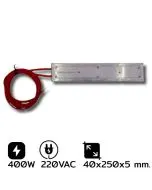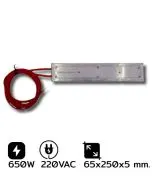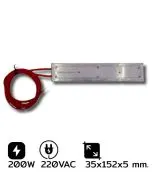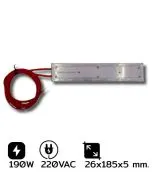
Plate Heater is the heating equipment you are considering for use in industrial production processes, correct? In this article, the SCMA engineering team will delve into all the details of plate heaters, from how they work to material selection and purchasing techniques to ensure maximum value, preventing sudden machine downtime. If you're looking for heat solutions and need expert advice, visit our Services (SCMA) page immediately.
What is a Plate Heater or Heater Plate? How does it work?
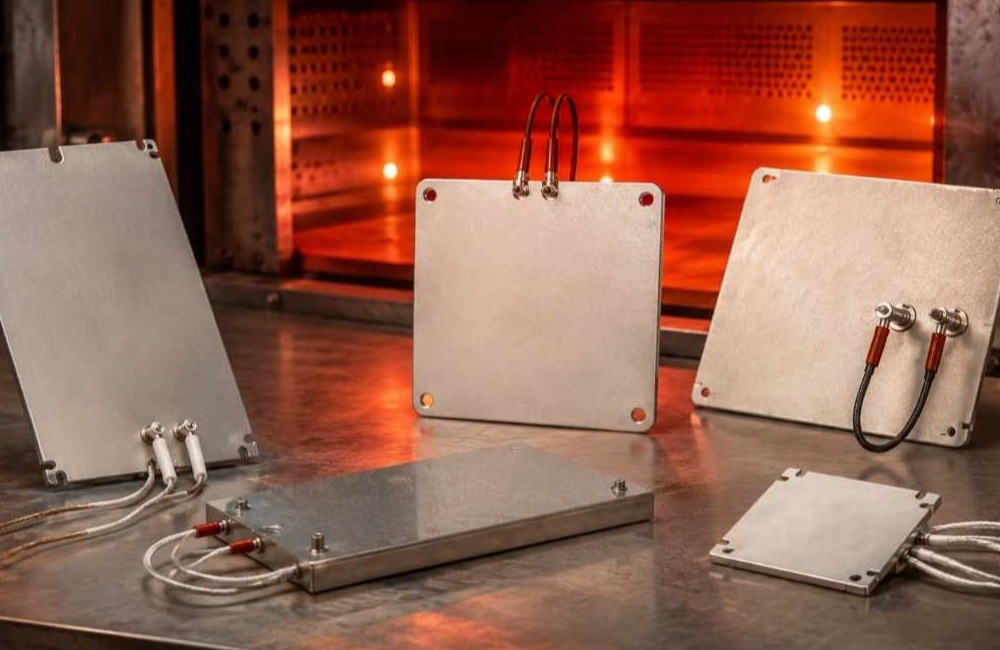
Based on our experience, the question of what Plate Heater or Heater Plate is can be explained as an industrial heater with a flat design intended to transfer heat directly by touching the surface of machinery. The principle of operation involves allowing electrical current to flow through resistance wires inside, generating thermal energy that radiates outward to the external material such as narrow strip heaters (Strip Heater). The advantage is that it can distribute temperature evenly across the entire plate. However, engineers must install the equipment tightly against the targeted workpiece to prevent overheating and wire breakage.
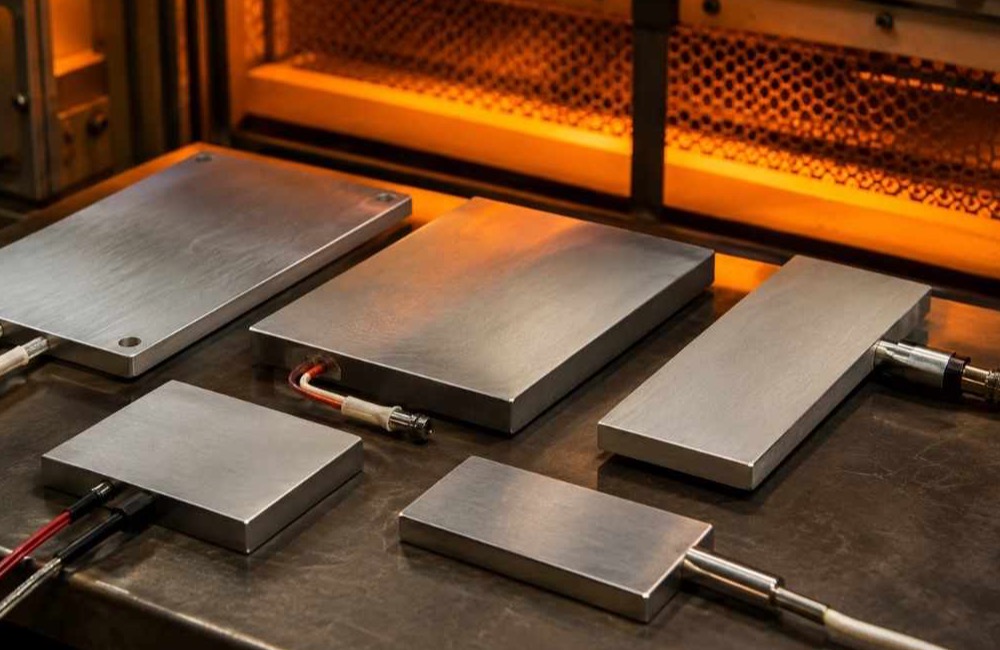
How many types of plate heaters are there? Which type is suitable for what kind of work?
Selecting the appropriate heating equipment directly affects the quality of the product, just like using cartridge heater (rod heater). The engineering team has separated the main types to help you apply them as follows:
Mica Plate Heater
The Mica Plate Heater is produced using mica sheets wrapped with heating wires. Its highlight is its thinness, which allows for rapid heat transfer. This type of equipment is suitable for work requiring temperatures not exceeding 300 degrees Celsius. Installation must be careful to avoid water contact to prevent electrical short circuits.
Ceramic Plate Heater
If your work requires extremely high heat, choosing a ceramic plate is the best solution. This structure can withstand temperatures up to 600-700 degrees Celsius. Regarding Ceramic Heater Plate Price, it will be slightly higher than mica, but it comes with a clearly longer lifespan.
The Difference Between Strip Heater and Plate Heater
The difference lies in the shape ratio. The Strip Heater has a narrow rectangular shape but is very long, commonly used for limited area workpieces. In contrast, the Plate Heater has a large square or rectangular shape, suitable for fitting against flanges or wide steel plates to distribute heat evenly.
External Material: Stainless Steel vs Galvanized Steel
Selecting material affects environmental durability. Stainless Steel is highly resistant to rust and is suitable for food factories. On the other hand, galvanized steel is more cost-effective and conducts heat well, making it ideal for dry production lines without moisture.
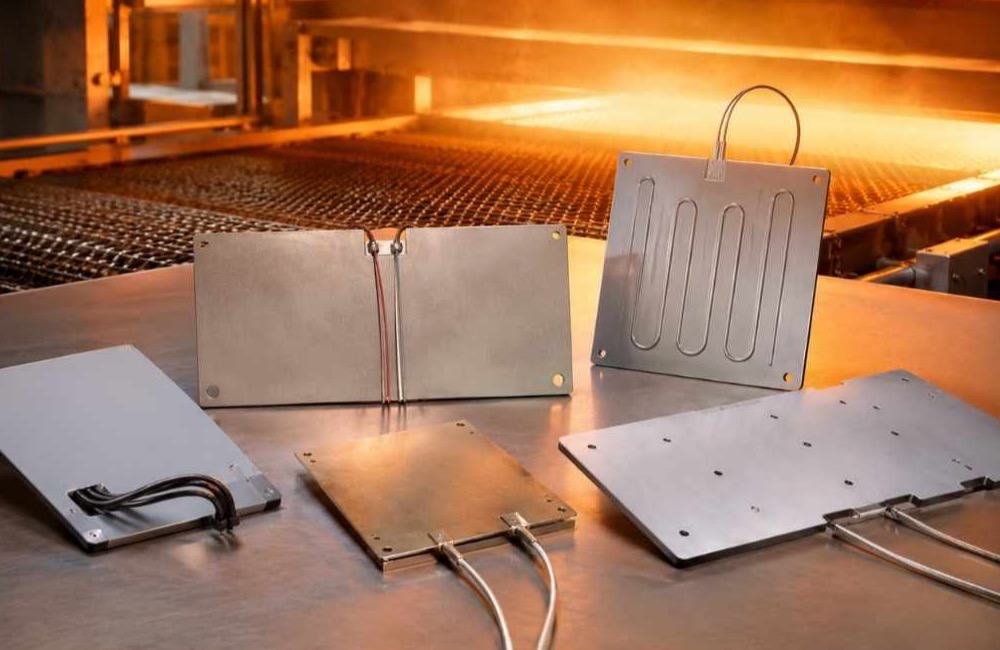
Applications of Plate Heaters in Various Industries
The plate heater is designed to be flexible for installation. We see its application across various industries, with important examples including:
- Plastics and Packaging Industry: Used as a heating element in plastic bag sealing machines and vacuum packaging machines to melt the plastic material completely.
- Food and Pharmaceutical Industry: Used in drying processes or maintaining the temperature of metal trays on food conveyor belts at a constant heat during operation.
- Mold & Die Heating: Attached to the outside of steel mold blocks to pre-heat (Pre-heat) workpieces to standard temperatures before starting metal injection.
- Use with Other Machinery and Equipment: Used as a heating base for laboratory equipment or machinery with smooth surfaces that require consistent temperature.
How to Choose the Most Suitable and Cost-effective Plate Heater
Precise ordering or selection of Plate Heater can effectively reduce energy costs. SCMA recommends 4 key criteria to help you get the best specifications.
- Evaluation based on required operating temperature: Choose mica for low heat applications and ceramic for high heat ones, along with designing a control system that works in conjunction with rtd sensor family to accurately measure temperature.
- Correct calculation of size and wattage (Wattage): Watt Density must be calculated according to the area of the plate heater. If watt per square centimeter is too high, internal coils may break. You can study additional industrial heat transfer academic data for a deeper understanding.
- Selecting shape and installation position: Check the flange area to ensure 100% contact of plate heater, and plan the exit point of heater wire so it does not obstruct movement of machine parts.
- Environmental factors to consider: If the work site has high chemical substances or humidity levels, inform the manufacturer to use stainless steel grade 316L material or special drilling according to the position of the part.
Where to Order Plate Heater Production? Recommended Reliable Manufacturers
Finding a factory that produces Plate Heater to standard is crucial for preventive maintenance. Initial selection criteria include having an engineering team deeply consulting on industrial heaters. Questions you need to ask to evaluate expertise are heat loss calculations and correct material recommendations. If you wonder what resistance temperature detector is, a good manufacturer should be able to explain and integrate such sensors into your heating system, along with transparent after-sales service and warranty.
Summary Checklist Before Ordering Plate Heater
To order a Plate Heater or Strip Heater to standard specifications, you must prepare complete technical data including size, width, length, wattage (W), voltage (V), and the configuration of the heater wire. If you are considering Ceramic Heater Plate Price and quality to upgrade your factory, our team at SCMA Co., Ltd. is happy to provide consultation for designing an accurate heating system for you.
If You Want to Buy, SCMA Is Ready for Your Purchase Today!
The stability of a Plate Heater directly impacts your production line profits. If you are looking for high-quality international standard plate heaters, including equipment such as Strip Heaters, control devices, or temperature sensors, feel free to browse our product page at All Our Products (SCMA). Our team of professional engineers is always ready to support you.
Frequently Asked Questions about Plate Heaters
How long is the average lifespan of a Plate Heater?
The average lifespan ranges from 1-3 years, depending on usage duration. Proper installation in close contact with the workpiece surface and maintaining temperature within its rated capacity can significantly extend its life.
Can they be custom-made to specific sizes and shapes?
The factory can produce them (custom-made) in any size or shape as per customer requirements. Additionally, holes can be drilled at machine mounting screw positions for optimal assembly.
What maintenance is required?
Maintenance personnel should regularly check electrical connections to ensure they are tight and securely fasten the heater plate screws. Cleaning dust or oil residues from the steel surface also aids in better heat transfer.
What precautions should be taken during installation?
Avoid leaving any air gaps between the heater and the workpiece surface as air acts as an insulator, leading to excessive internal heat buildup which can cause heating wire melting and breakage.
What are resistance temperature detectors (RTDs) and how do they relate?
In response to the question about what resistance temperature detectors (RTDs) are, these are high-precision temperature sensors that are commonly installed alongside plate heaters for stable circuit interruption signals.