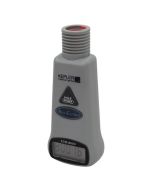
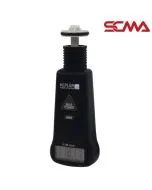
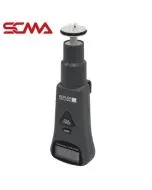
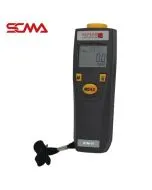
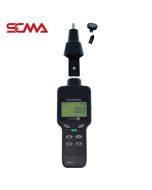
A tachometer is a crucial tool that helps engineers and technicians accurately monitor the performance of mechanical equipment. SCMA has curated high-quality products to meet various needs, from heavy industries to general maintenance work. This article will introduce you to the basic principles of operation, types, and key factors in selecting the appropriate speed sensor to enhance quality control and performance efficiency of your machinery.
What is a Tachometer (Speed Sensor)?
Tachometer or speed sensor is a critical device that enables users to accurately measure and monitor rotational speed, typically in revolutions per minute (RPM). It indicates the number of complete rotations an object makes within one minute. This equipment is vital in industries and maintenance work as it helps determine whether machines or devices such as motors, engines, drive shafts, or fans are operating at optimal speeds, which directly impacts performance, safety, and longevity of machinery.
How does a Tachometer work?

Speed meter or Tachometer works by detecting and measuring the rotation of an object, then displaying it as revolutions per minute (RPM) or other units. The working principle varies according to the type of instrument, which can be divided into two main types based on measurement methods: non-contact and contact.
Working Principle of Non-Contact Speed Meter
Non-contact speed sensor (Non-Contact Tachometer) works by sending a laser or infrared signal to the rotating object, typically with a reflective strip attached to it. When the object rotates, the reflective strip passes through the beam intermittently, causing the sensor to receive reflected pulses. The electronic circuit then counts the number of pulses within a specified time period and calculates the rotational speed. The advantage is that direct contact with the object is not required, making it safe for measuring high-speed rotating parts without interfering with system operation.
Working Principle of Contact Speed Meter
Contact speed meter (Contact Tachometer) works by bringing the probe into direct contact with the rotating object, using either a shaft-type probe to touch the center point of the object or a wheel-type probe to touch the outer surface. When the object rotates, the probe rotates at the same speed. The internal sensor then measures the rotational speed of the probe and converts it into an electrical signal before processing and displaying the value. The advantage is high accuracy, especially at low speeds, and no need for reflective strips on the object.
What is the function of a Tachometer?
A tachometer sensor or speed sensor has the primary function of measuring the rotational speed of an object. It provides real-time feedback about the rotation speed of the measured object, usually in revolutions per minute (RPM) or other appropriate units based on the application. This information is crucial for controlling and monitoring the operation of machinery to ensure that equipment operates at an optimal speed as specified by the manufacturer, which is a critical factor affecting efficiency, safety, and longevity of machines in automotive, aviation, maritime, and various industries.

Types of Tachometer (RPM Meter)
Tachometers, or RPM meters, come in various types designed to meet different usage requirements. They can be categorized based on their display type, measurement method, and operating principle, each with its own advantages and limitations.
1. Analog Tachometer
Analog tachometers use a dial and needle to display results, giving a classic feel and clear visibility of trend changes. They are highly durable in harsh environments such as high temperatures or vibrations, and some models do not require batteries. Suitable for installation on vehicle dashboards or industrial machinery where durability is more important than maximum accuracy.
2. Digital Tachometer
Digital tachometers display results as numbers on an LCD or LED screen, providing high accuracy and clear readability. They often have additional functions such as maximum/minimum value recording, average calculation, and unit conversion. Some models can connect to a computer for data logging and analysis. Suitable for tasks requiring precision and detailed data collection.
3. Contact and Non-Contact Tachometer
Categorized by measurement method, contact tachometers use a probe to touch the object directly, providing high accuracy especially at low speeds but with limitations for measuring very high-speed objects. Non-contact tachometers use laser or infrared light to measure from a distance, safer for measuring rapidly rotating parts without interfering with system operation. Currently, there are models that combine both types in one unit for greater versatility.
4. Time and Frequency Measuring Tachometer
Categorized by measurement principle, time-measuring tachometers measure the time taken to complete a rotation and calculate back to speed, suitable for measuring low to medium speeds. Frequency-measuring tachometers measure the frequency of pulses generated from rotation, suitable for high-speed measurements. Modern tachometers often integrate both techniques to cover a wider range of measurement with higher accuracy at all speed ranges.
How to Choose the Right Tachometer?
Choosing the right speed measurement equipment that suits your needs is crucial for achieving maximum efficiency and accuracy in measurements. Key factors to consider include:
1. Selecting the Type of Tachometer
Choose a meter that fits the nature of your work, which can be categorized into three main types: Contact type, where the probe or rotating wheel directly touches the object, suitable for low to medium speed measurements; Non-Contact type, using infrared or laser beams aimed at reflective strips, ideal for hard-to-reach objects or extremely high-speed rotations; and Dual type, combining both contact and non-contact capabilities in one device, offering maximum flexibility.
2. Measurement Range
Ensure that the meter's measurement range matches the expected speed of the equipment you intend to measure, considering both minimum and maximum values it can detect. Some models may measure from as low as 0.5-20,000 RPM while others might go up to 99,999 RPM. Choosing a device with an insufficient measurement range could result in inaccurate or unattainable readings.
3. Measurement Accuracy
Consider the required accuracy based on your work requirements, typically expressed as a percentage of the measured value, such as ±0.05% or ±1 digit. High-precision tasks like quality control or complex engineering projects require highly accurate meters which often come at higher prices, whereas general tasks may suffice with moderately accurate devices for better cost-effectiveness.
4. Additional Measurement Functions
Modern tachometers usually offer additional functions beyond RPM measurement such as total revolutions count, linear speed, or length measurements. Selecting a device with these features increases versatility and allows for more comprehensive data analysis, especially in processes requiring multi-dimensional information.
5. Data Storage and Transfer
Consider the ability to record and export data; basic meters typically can log maximum/minimum values while advanced models may have memory for storing multiple datasets and USB or wireless connectivity options for transferring data to computers, facilitating easy storage, sharing, and analysis of information suitable for reporting tasks or long-term trend analysis.

If you are interested in Tachometer (RPM Meter), SCMA is now available for purchase!
SCMA is a high-quality tachometer sensor supplier from leading global brands. We offer various models to suit your needs, including contact and non-contact types, highly accurate digital versions, and portable units that are easy to use. Our team of experts is ready to provide consultation in selecting the appropriate tool for your work. Additionally, we also offer calibration services according to standards to ensure measurement accuracy. Every product comes with quality assurance and spare parts service.You can contact us for more information immediately
Summary
Tachometer or RPM Meter is an important tool in industrial and maintenance work, helping users accurately measure the rotational speed of machinery and various equipment. There are several types of meters, including analog and digital, contact and non-contact types, each with its own advantages and limitations. Choosing the right meter should consider job characteristics, required accuracy, and working environment.
SCMA is ready to provide services and consultation in selecting the appropriate Tachometer for your needs, withhigh-quality products from leading brands, product warranty, and impressive after-sales service to ensure smooth business operations with accurate and reliable measuring tools.
Frequently Asked Questions
What are the units of measurement for a Tachometer?
The primary unit of measurement for a tachometer is revolutions per minute (RPM), indicating the number of complete rotations an object makes in one minute. Additionally, some devices may display measurements in other units such as revolutions per second (RPS), Hertz (Hz), or linear speed in meters per minute (m/min) or meters per second (m/s), depending on the capabilities of the device.
What is a speed sensor?
A speed sensor is an instrument used to detect and measure the speed of an object. There are several types, including optical sensors that detect light reflection, magnetic sensors that detect changes in magnetic fields, and mechanical sensors that directly detect rotation. These sensors are crucial components of tachometers as they convert movement into electrical signals.
What is used to measure rotational speed?
Rotational speed can be measured using a tachometer or other speed measuring devices, which come in various types such as contact tachometers that directly touch the rotating object, non-contact tachometers that use laser beams or magnetic systems, and stroboscopes that use high-frequency flashing lights to make objects appear stationary. Additionally, in automatic control systems, encoders or Hall Effect sensors are often used for continuous measurement of rotational speed.
What is the value of tacho?
The value of tacho, or the reading from a tachometer, represents the rotation speed of an object and is typically expressed in revolutions per minute (RPM). This value indicates the rotational rate of machinery or equipment, which is crucial for checking if the machine is operating at an appropriate speed. In vehicles, "tacho" usually refers to the engine RPM gauge on the dashboard, helping drivers know the engine's rotation speed.