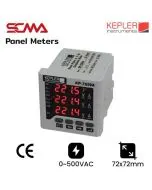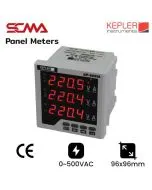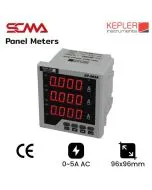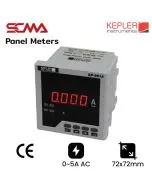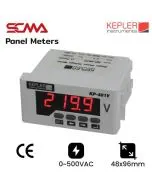

Panel Meters are crucial devices in electrical and industrial systems, serving to display values and monitor various parameters of the electrical system in real-time. This article SCMA aims to provide comprehensive information about panel meters, covering their operation principles, types, differences between digital and analog models, as well as recommendations for optimal usage.
What are Panel Meters?
Panel Meters are devices that receive input signals and display them on a screen, available in both analog and digital formats depending on the requirements of the sensors and systems they are used with. These devices support all signal ranges commonly used in industrial applications and can be applied in various ways, such as displaying counts, measuring flow rates, voltage and current measurements, temperature monitoring, and weight display from scales. With their flexible and comprehensive features, Panel Meters play a vital role in modern measurement and control systems.
What are the main functions of Panel Meters?

Panel Meters or panel meters are measuring instruments designed for installation in control cabinets or various panels. They receive input signals from external sources and display them as numerical values or easily readable data. The operation depends on sensors or transducers that convert physical signals into standard signal formats that panel meters can accept and process. With their diverse capabilities to receive and display results, panel meters are suitable for use in various measurement systems such as digital counting, RPM speed measurement, flow rate measurement, weight measurement, and many other parameters in industrial applications.
4 Types of Panel Meters
Panel Meters come in various types that differ according to usage requirements, ranging from simple Analog models to feature-rich Digital ones
Analog Panel Meters
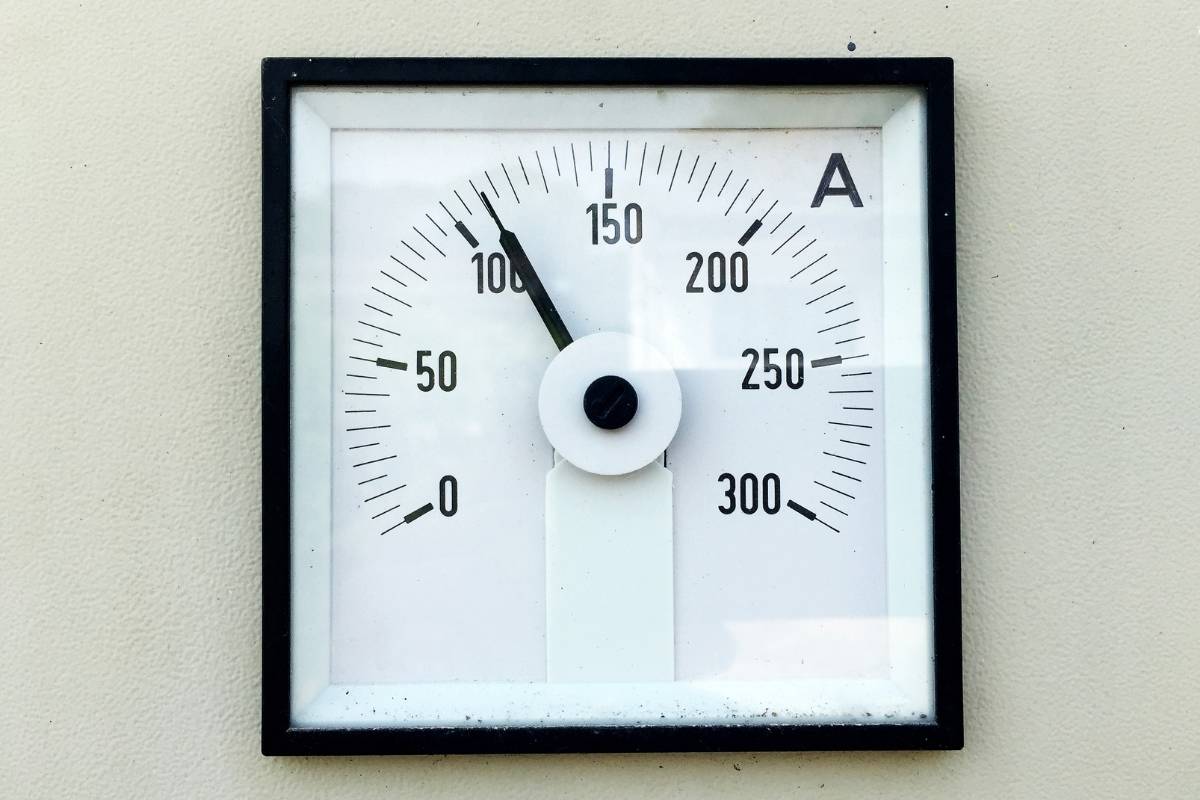
Analog Panel Meters use needles and dials for display, standing out with high durability and ease of use. They do not rely on external power sources, offering quick response times and are ideal for continuous trend monitoring. They are cost-effective and suitable for basic applications.
Digital Panel Meters
Digital Panel Meters feature digital displays that provide high accuracy and easy-to-read values, capable of displaying multiple decimal places. They include Alarm features, data logging capabilities, and the ability to connect with various communication systems. Suitable for applications requiring precision and advanced control.
Multifunction Panel Meters
Multifunction Panel Meters can measure and display multiple parameters in a single unit, such as voltage, current, energy, and frequency. They save installation space and reduce overall costs, ideal for complex systems requiring simultaneous tracking of several parameters. They offer advanced data analysis and processing capabilities.
Power Quality Panel Meters
Power Quality Panel Meters are used to monitor and analyze the quality of electrical power, such as harmonics and energy leakage. They can detect advanced electrical issues like Voltage Sags, Swells, and Flicker. They are crucial for industries using highly sensitive electronic equipment.
Understanding the Difference Between Digital Panel Meter and Analog Panel Meter
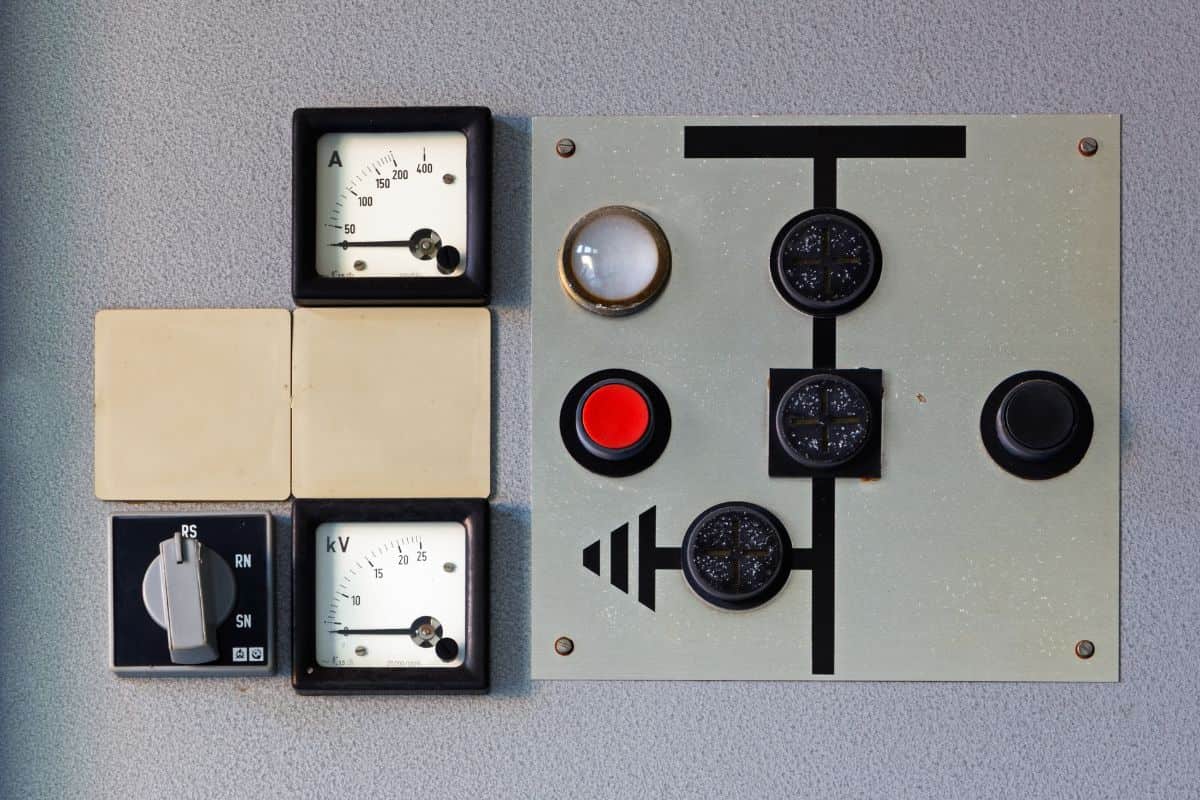
Choosing between a Digital Panel Meter and an Analog one depends on the usage requirements, as each type has its own strengths and limitations.
Digital Panel Meter
Digital Panel Meters use microprocessor processing, making them more accurate than needle types. They have a numeric display that is easy to read even in low light conditions. Installation does not affect accuracy; they can be tilted left or right without causing processing errors. The main advantage is their ability to communicate with software, allowing direct reading and control of meter values from the software interface.
Analog Panel Meter
Analog Panel Meters use a needle gauge for display. They excel in quick response and continuous display, making it easy to see value changes clearly. Suitable for applications requiring trend or continuous change monitoring. However, their accuracy may be limited compared to digital types, and tilted installation can affect reading accuracy. Additionally, they cannot connect with digital systems or software.
Why Panel Meters Matter
Accurate electrical parameter measurement is crucial for efficient and safe operation in various applications. Digital measuring instruments that provide real-time accurate display of important electrical quantities such as voltage, current, resistance, frequency, and temperature can help operators quickly and accurately check system performance.
Interested in Panel Meters? You Can Purchase from SCMA Today!
SCMA is a high-quality supplier of Panel Meters from leading global brands, with extensive experience and expertise in electrical measurement tools. We offer a wide range of Panel Meter options including Analog, Digital, Multifunction, and Power Quality Panel Meters to meet every application need. Our team of experts is ready to provide consultation and recommend products that suit your usage requirements, along with comprehensive after-sales service and continuous technical support.
Summary
Panel Meters are crucial components in modern electrical and industrial systems, serving to measure, display, and monitor various parameters to ensure efficient and safe system operation. Choosing the right Panel Meter for your needs—whether Analog, Digital, Multifunction, or Power Quality—can enhance performance, reduce operational costs, and prevent damage to systems and equipment.
Investing in high-quality and suitable Panel Meters will benefit organizations over the long term, improving energy efficiency, production effectiveness, and reducing system risks. SCMA is ready to be your trusted partner in providing high-quality Panel Meters, along with expert consultation and comprehensive after-sales service, to help your business grow sustainably with efficient and reliable systems.
Frequently Asked Questions
What is a Temperature Panel Meter?
A temperature panel meter (Temperature Panel Meter) is a specialized panel meter designed for measuring and displaying temperature values. It can receive signals from various types of temperature sensors such as Thermocouple (Type K, J, T, E), RTD (Pt100, Pt1000), or Thermistor, then convert and display the results in units of Celsius, Fahrenheit, or Kelvin. This equipment is commonly used in industries that require precise temperature control, such as industrial ovens, cold rooms, or production processes requiring temperature control.
What is a Digital Panel?
A digital panel (Digital Panel) refers to panel meters that use digital technology for processing and displaying data instead of traditional mechanical or electromagnetic systems. A digital panel displays numerical values on an LED or LCD screen, providing high accuracy and the ability to display information in various formats. It also has capabilities for communicating with other systems, flexible configuration settings, and modern control and alert functions.
What are the benefits of a Digital Panel Meter?
Digital panel meters offer several advantages including high accuracy in measurement and display, clear readings that prevent confusion, alert and limit setting functions, communication capabilities with other systems, data logging and storage for analysis, automatic calculation of various values, and customizable display options. This enhances the efficiency of electrical system management.
What are the sizes of panel meters?
Panel meter sizes vary according to installation standards. Common sizes include 48x48mm, 72x72mm, 96x96mm, and 144x144mm for square models, and 48x24mm, 72x36mm, 96x48mm for rectangular models. The choice of size depends on the space in the electrical cabinet, display requirements, and remote reading needs. Larger sizes provide clearer displays but take up more space.