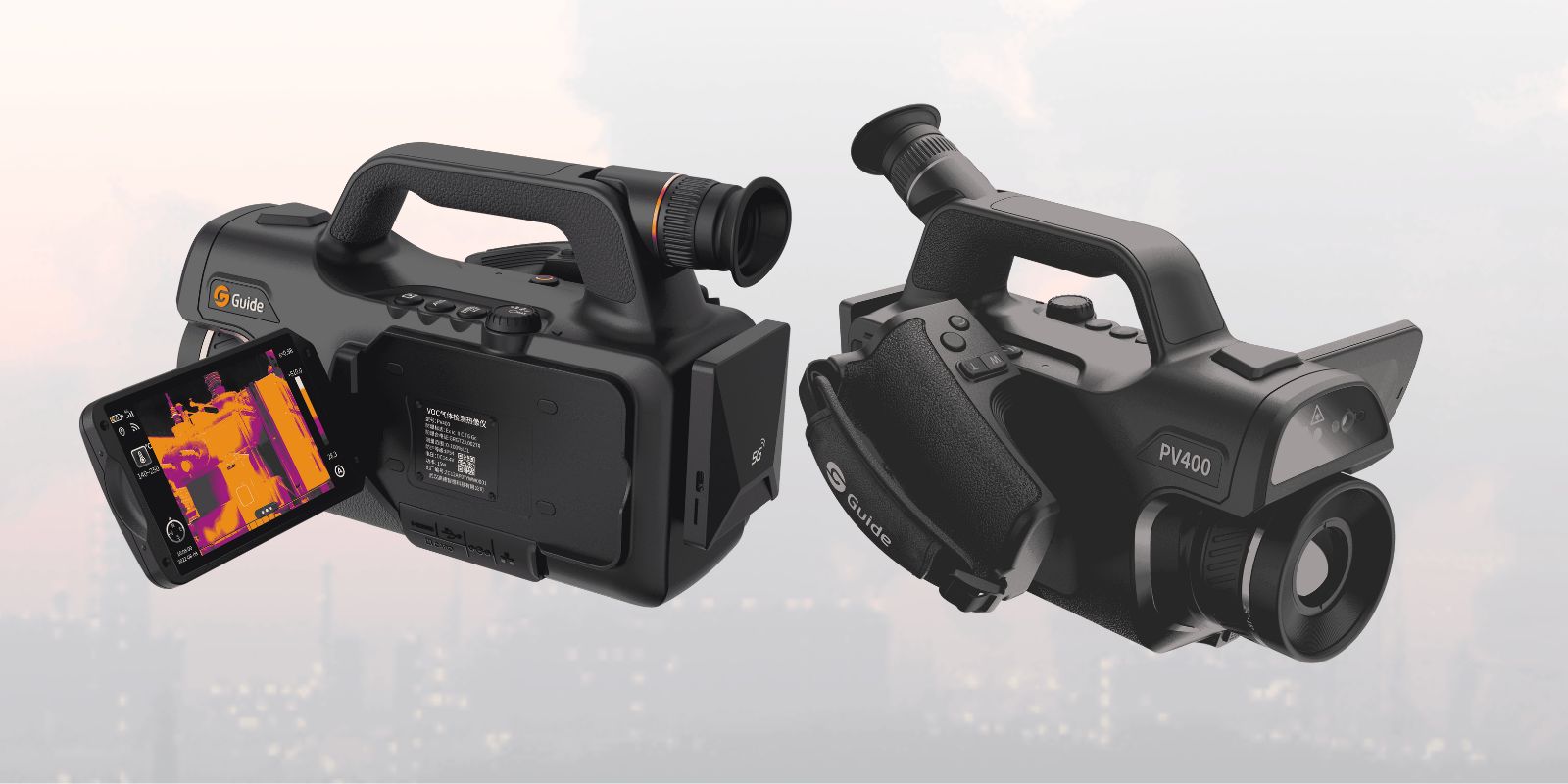
Thermal camera detects VOC gas leaks model PV400 provides the best protection against dangerous gas leaks incidents
Why is using a thermal imaging camera for gas leak detection important?
- Remote and non-contact detection: Allows inspection from a distance without having to approach potentially dangerous areas, reducing the risk of harm to personnel
- High accuracy: Thermal imaging cameras can detect gas leaks even in very small quantities, enabling quick identification and resolution before they become major issues
- Operational efficiency: Enables the visualization of leaking gases that are otherwise invisible to the naked eye by converting them into analyzable infrared images
- Rapid response: Immediate imaging and analysis capabilities allow for prompt action upon detecting leaks
- Prevention and safety: Using thermal imaging cameras helps prevent dangers from gas leaks that could lead to explosions or fires
Using a thermal imaging camera for gas leak detection is thus an essential tool for maintaining safety and operational efficiency in various industries, such as petrochemicals and energy production.
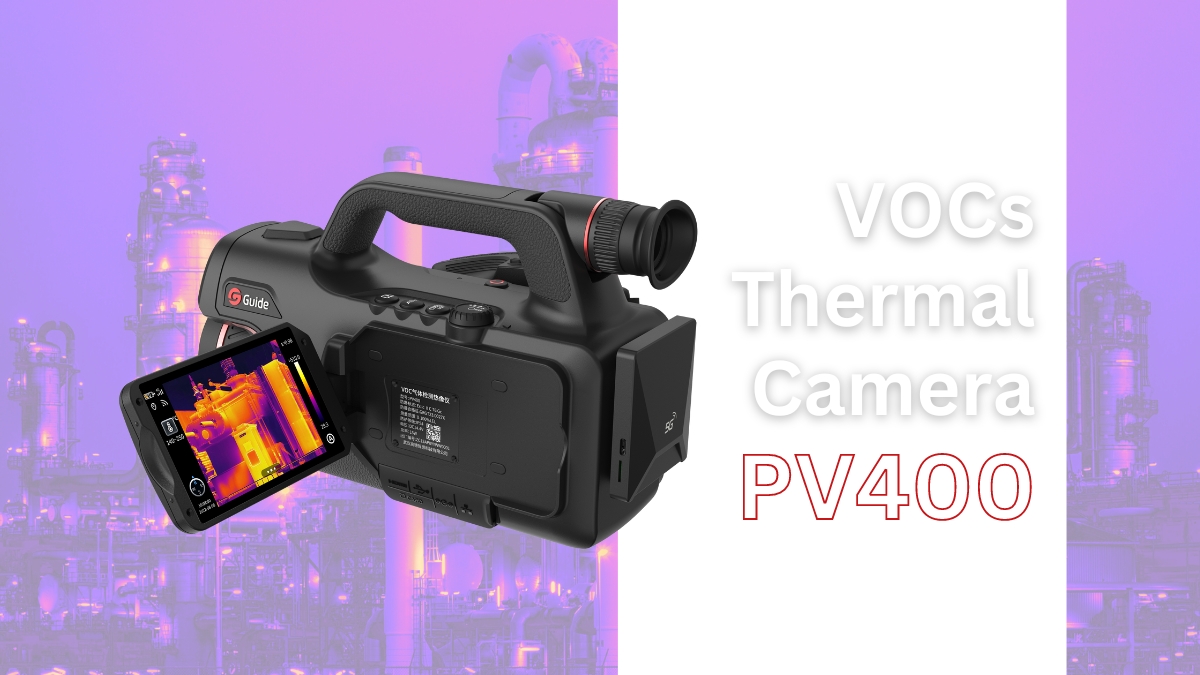
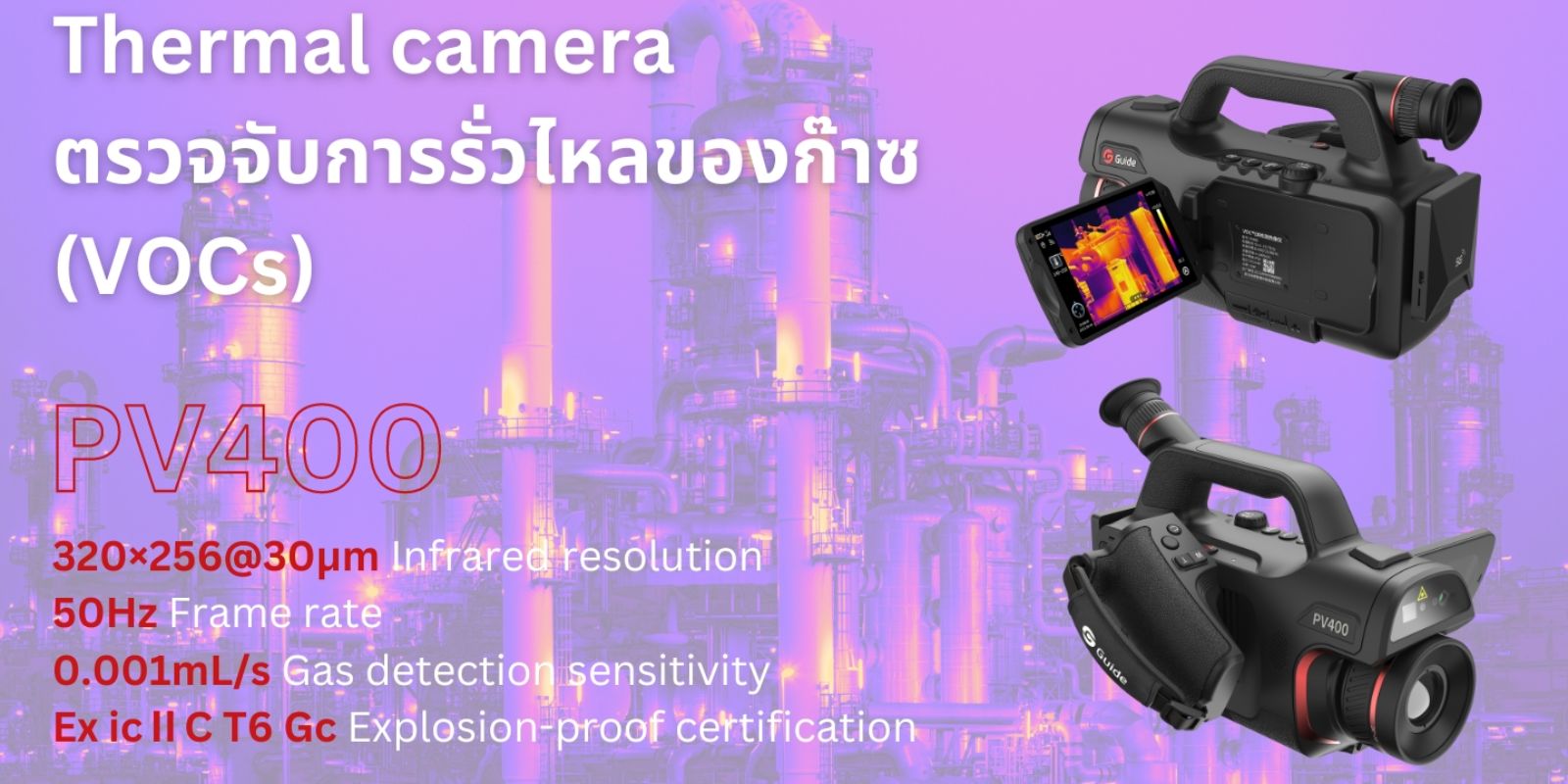
VOCs Detection Thermal Camera Model PV
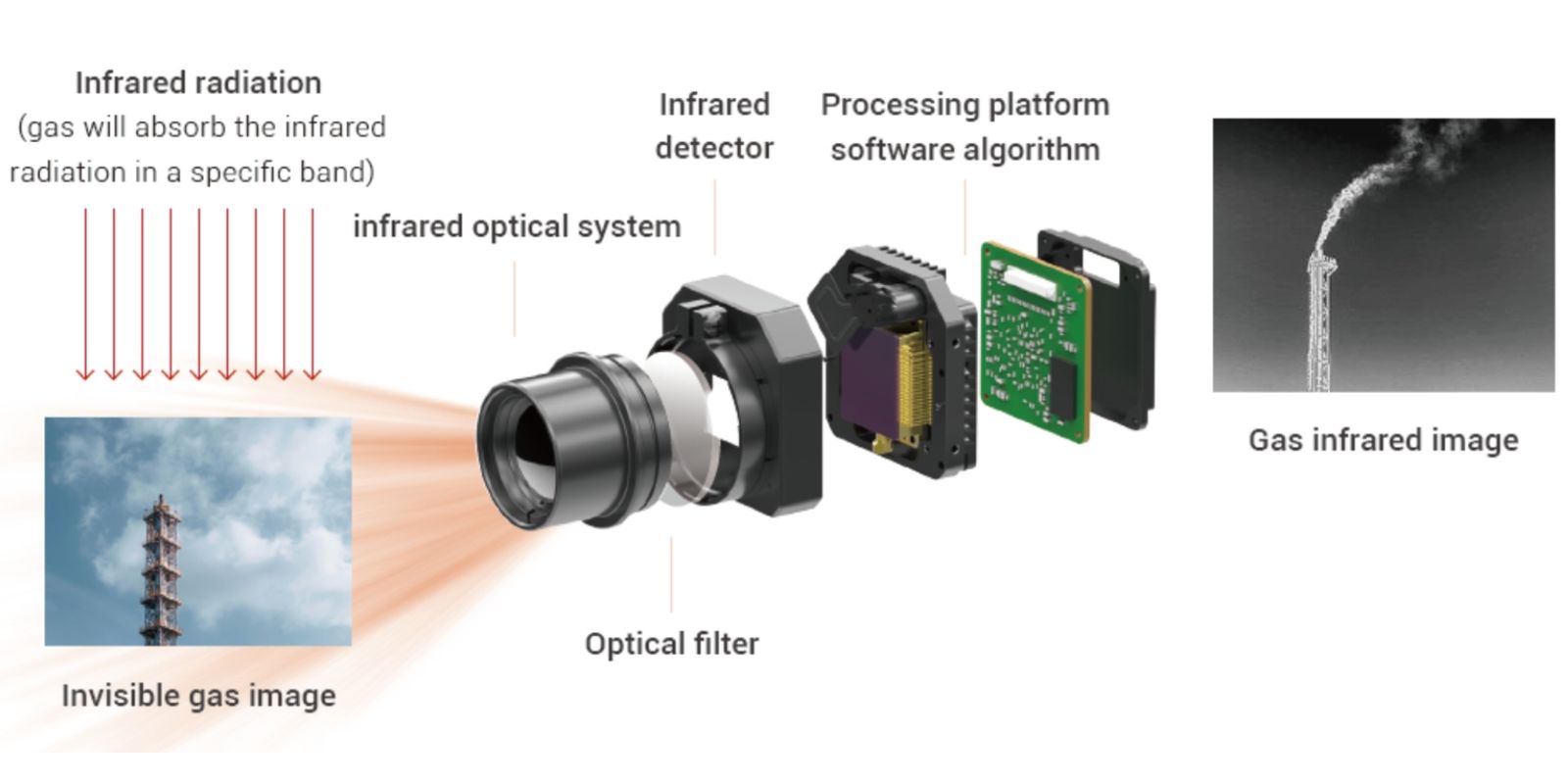
Equipped with high-performance and high-resolution refrigerated infrared sensors developed by Guide Sensmart, the VOCs detection thermal camera (Thermal camera) model PV converts invisible gases into visible infrared images using infrared thermal imaging technology. This makes it highly effective for detecting methane leaks and various other volatile organic compounds (such as Alkanes, Alkenes, Alcohols, Benzenes, Ketones) during production, transportation, and management in petrochemical companies and others. It helps prevent accidents such as the release of dangerous gases into the atmosphere and ensures excellent safety in production.
320×256@30μm : Infrared resolution
50Hz : Frame rate
0.001mL/s : Gas detection sensitivity
Ex icⅡC T6 Gc : Explosion-proof certification
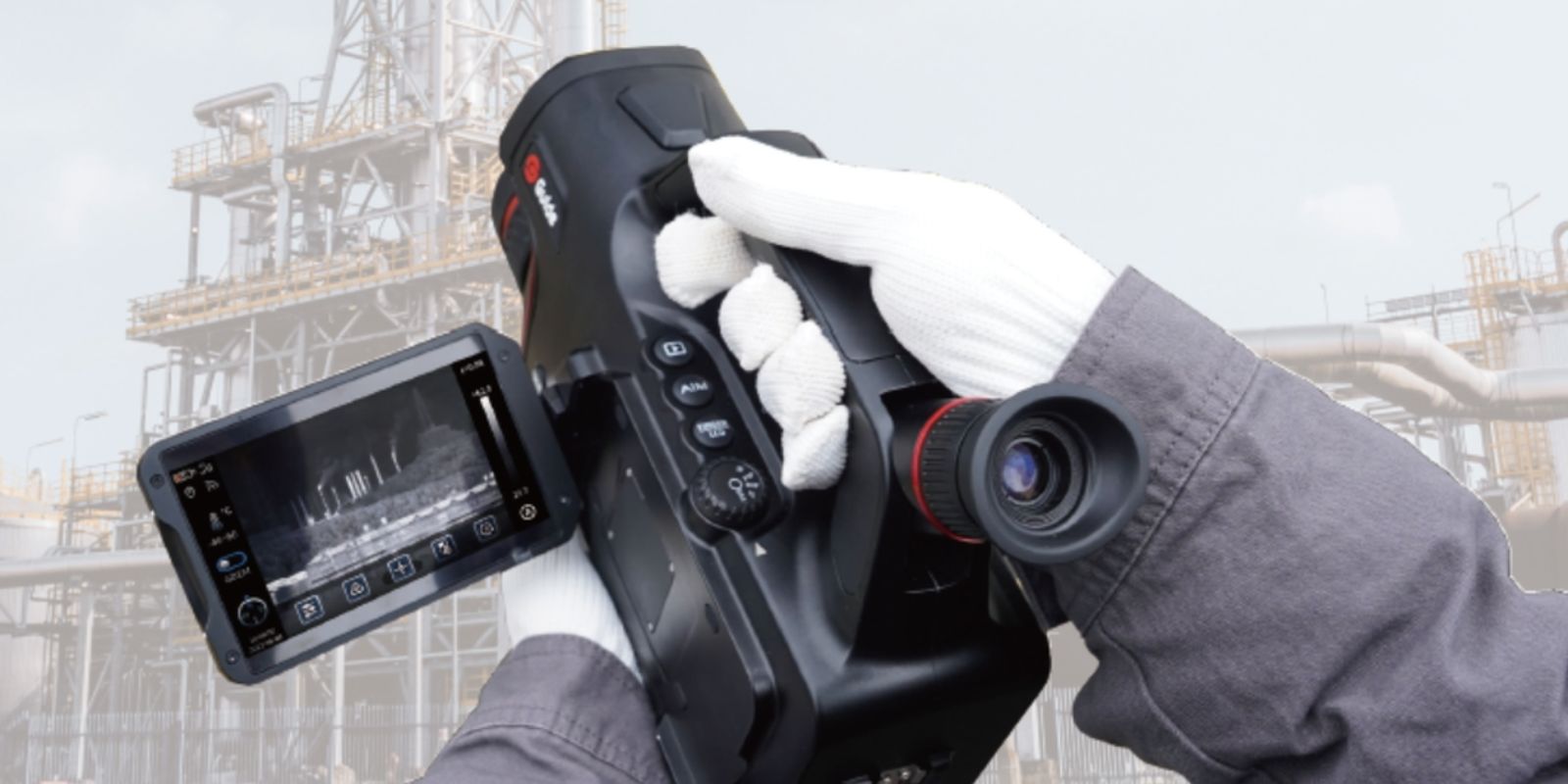
Highlights of PV400 VOCs Thermal Camera
High-sensitivity cooled infrared sensor, capable of detecting small gas leaks. Professional gas imaging algorithm, effectively showing the trend and spread of gases. Efficiently detects leaks of alkenes, alkynes, alcohols, benzene, ketones, and other gases. Rotatable design and ergonomic shape facilitate easy detection from multiple angles in complex situations. Non-contact remote temperature measurement function supports temperature analysis and high-temperature alerts, etc. Multi-lens configuration offers various perspectives to choose from for different scenarios.
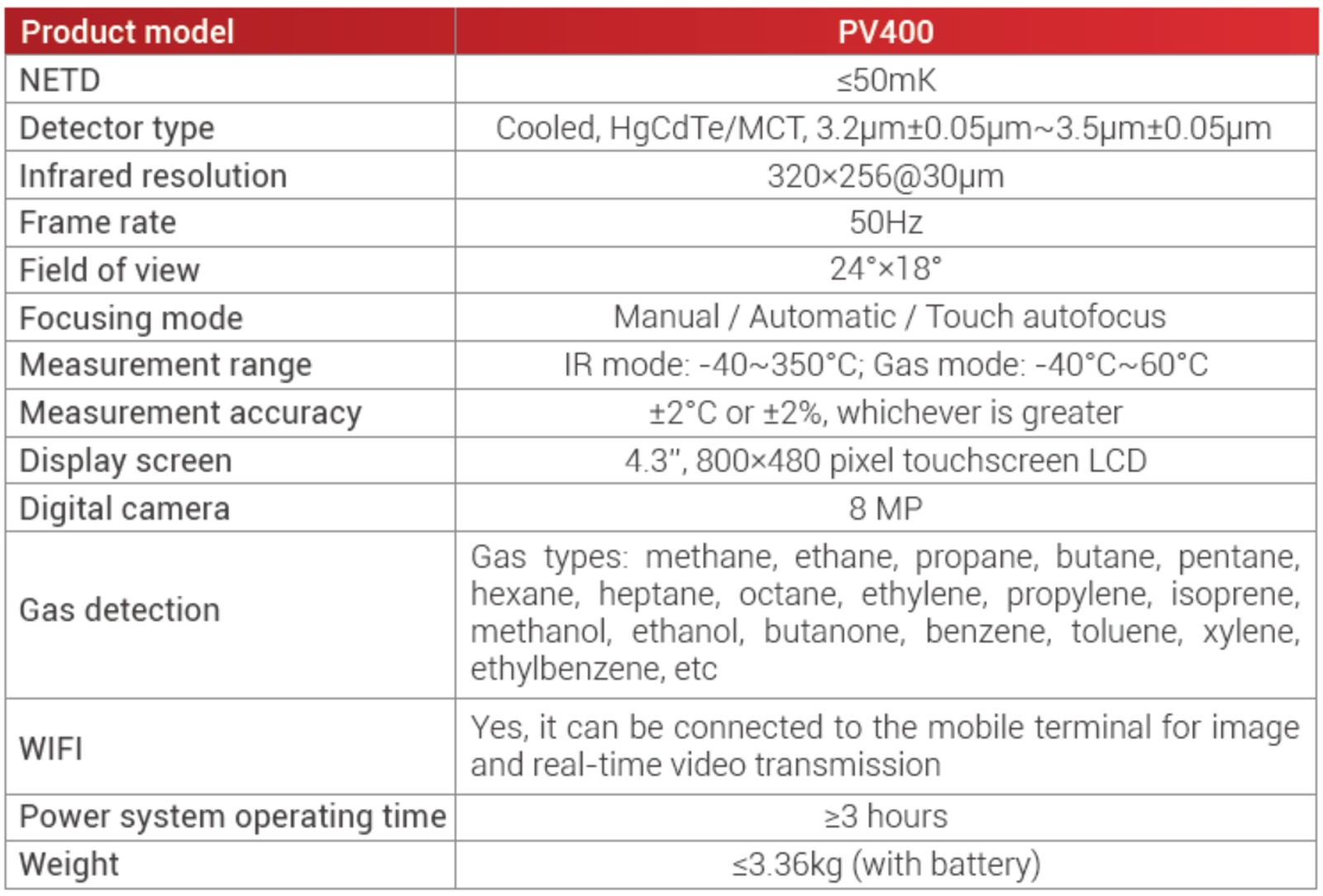
Examples of Various Gases Detected by Guide Sensmart PV400 Refrigerated (Cooled) Detector:
- Alkanes : methane, ethane, propane, butane, pentane, hexane, heptane, octane
- Olefins : ethylene, propylene, isoprene
- Aromatic hydrocarbons : benzene, toluene, ethylbenzene, xylene
- Alcohols : methanol, ethanol
- Ketones : butanone
** The gases listed are only examples of detectable gases. If you have questions about gases not mentioned, please contact us for inquiries.
Discover a New World of Safety and Efficiency, the Power of Thermal Imaging Cameras for VOC Detection
In an era where environmental safety and operational efficiency are paramount, detecting Volatile Organic Compounds (VOCs) has become increasingly important. VOCs, commonly found in industrial environments, can pose health risks and harm the environment if not properly monitored. Thermal imaging cameras for VOC detection revolutionize the inspection of these compounds with superior capabilities to detect and analyze them accurately. This article will introduce you to thermal imaging cameras for VOC detection, covering their operation, benefits, applications, and the future of this technology.
What are VOCs?
Volatile Organic Compounds (VOCs) are a group of carbon-based chemicals that can easily evaporate into the air at room temperature. They are found in various industrial processes such as manufacturing, painting, and chemical production. While some types of VOCs may not be harmful, many can pose health risks, including respiratory issues, headaches, and long-term effects on organs.
How do thermal imaging cameras for VOC detection work?
Thermal imaging cameras for VOC detection use infrared (IR) technology to detect the release of VOCs in the environment. These cameras can identify the heat emitted by VOCs, which often have distinct thermal characteristics different from their surroundings. By capturing and analyzing these thermal features, the camera can accurately pinpoint leaks and emissions of VOCs.
Detection Steps
- VOC Emission Detection: The thermal imaging camera scans the environment to capture infrared radiation emitted from objects and gases.
- Thermal Imaging: The captured infrared data is converted into a thermal image, displaying temperature differences through color gradients.
- VOC Identification: Advanced software algorithms analyze the thermal images to identify VOC emissions based on specific thermal characteristics.
- Real-time Monitoring: Continuous monitoring enables real-time detection and alerting of VOC leaks.
Benefits of Using Thermal Imaging Cameras for VOC Detection
- High Accuracy: Thermal imaging cameras can detect even small amounts of VOCs, ensuring comprehensive inspection.
- Real-time Monitoring: Provides real-time data, enabling immediate action when VOC leaks occur.
- No Disruption to Operations: VOC detection using thermal imaging cameras does not require physical sampling, reducing operational disruptions.
- Wide Coverage Area: Can efficiently inspect large and hard-to-reach areas.
- Increase Safety: Immediate detection of hazardous VOCs helps prevent health risks and environmental damage, making the workplace safer.
Application of Thermal Cameras for VOC Detection
Industrial Manufacturing
In manufacturing plants, especially those dealing with chemicals and solvents, the release of VOCs is common. Thermal cameras can inspect these environments to detect leaks from storage tanks, pipes, and production equipment, preventing potential hazards.
Environmental Monitoring
Thermal cameras play a crucial role in environmental monitoring by tracking VOC emissions from industrial facilities. Regulatory agencies use this data to enforce environmental standards and reduce air pollution.
Oil and Gas Industry
In the oil and gas industry, VOC leaks can occur during extraction, processing, and transportation. Thermal cameras help detect these leaks to ensure compliance with safety regulations and minimize environmental impact.
Pharmaceutical Industry
Pharmaceutical production involves the use of various chemicals that can release VOCs. Thermal cameras help ensure a safe manufacturing environment by continuously monitoring leaks and VOC emissions.
Waste Management
Facilities involved in waste treatment and disposal often emit VOCs. Thermal cameras can monitor these emissions to ensure they remain at safe levels and reduce the risk of harmful exposure.
The Future of Thermal Cameras for VOC Detection
The future of thermal cameras for VOC detection looks promising, driven by technological innovations that enhance accuracy and efficiency. Developments such as improved imaging software, integration with AI, and more compact and user-friendly designs are set to revolutionize VOC inspections. Additionally, the emphasis on environmental sustainability and stricter regulatory frameworks will further increase the adoption of thermal cameras across various industries.
Emerging Trends
- AI and Machine Learning: The integration of AI with thermal cameras will enhance the accuracy of VOC detection, enabling smarter preventive maintenance and environmental management.
- Portable Devices: The development of portable and user-friendly thermal imaging devices will increase the flexibility and convenience of VOC inspections.
- Advanced Data Analysis: Advanced data analysis tools provide deeper insights into VOC patterns and sources, improving decision-making and regulatory compliance reporting.
Summary
Thermal cameras for VOC detection represent a significant leap forward in industrial safety and environmental protection. With high accuracy, real-time monitoring, and non-intrusive detection capabilities, these tools are essential for any industry dealing with VOC emissions. As technology continues to advance, the capabilities and applications of thermal imaging will expand further, playing an increasingly important role in safeguarding health.
Revolutionizing Safety and Efficiency: The Power of Thermal Cameras for VOC Detection
In an era where environmental safety and operational efficiency are paramount, the detection of volatile organic compounds (VOCs) has become increasingly critical. VOCs, often found in industrial settings, can pose significant health risks and environmental hazards if not properly monitored. Enter thermal cameras for VOC detection—a groundbreaking technology that is transforming how industries approach VOC monitoring. This article delves into the mechanics, benefits, applications, and future of thermal cameras for VOC detection, offering insights into why this technology is indispensable.
What are VOCs?
Volatile Organic Compounds (VOCs) are a group of carbon-based chemicals that easily evaporate at room temperature. They are commonly found in various industrial processes, including manufacturing, painting, and chemical production. While some VOCs are harmless, many are hazardous, contributing to air pollution and posing health risks such as respiratory issues, headaches, and long-term effects like liver and kidney damage.
How Do Thermal Cameras Detect VOCs?
Thermal cameras for VOC detection utilize infrared (IR) technology to identify the presence of VOCs in the environment. These cameras detect the heat emitted by VOCs, which often have a distinct thermal signature compared to the surrounding environment. By capturing and analyzing these thermal signatures, the cameras can pinpoint VOC leaks and emissions with high precision.
Step-by-Step Detection Process
- Emission Detection: Thermal cameras scan the environment, capturing infrared radiation emitted by objects and gases.
- Thermal Imaging: The captured infrared data is converted into thermal images, displaying varying temperatures through color gradients.
- VOC Identification: Advanced software algorithms analyze the thermal images, identifying specific VOC emissions based on their unique thermal signatures.
- Real-Time Monitoring: Continuous monitoring allows for real-time detection and alerts, enabling swift response to VOC leaks.
Benefits of Using Thermal Cameras for VOC Detection
- High Sensitivity and Precision: Thermal cameras can detect even minute traces of VOCs, ensuring comprehensive monitoring.
- Real-Time Monitoring: Provides continuous, real-time data, allowing for immediate action in case of VOC leaks.
- Non-Intrusive: Thermal cameras detect VOCs without the need for physical sampling, reducing disruption to operations.
- Wide Coverage: Capable of monitoring large areas and hard-to-reach places, ensuring no VOC emission goes undetected.
- Enhanced Safety: By detecting harmful VOCs early, thermal cameras help prevent health risks and environmental damage, ensuring a safer workplace.
Applications of Thermal Cameras in VOC Detection
Industrial Manufacturing
In manufacturing plants, especially those dealing with chemicals and solvents, VOC emissions are common. Thermal cameras can monitor these environments to detect leaks from storage tanks, pipelines, and production equipment, preventing potential hazards.
Environmental Monitoring
Thermal cameras play a crucial role in environmental monitoring by tracking VOC emissions from industrial facilities. Regulatory bodies use this data to enforce environmental standards and reduce air pollution.
Oil and Gas Industry
In the oil and gas sector, VOC leaks can occur during extraction, processing, and transportation. Thermal cameras help in detecting these leaks, ensuring compliance with safety regulations and minimizing environmental impact.
Pharmaceuticals
Pharmaceutical manufacturing involves the use of various chemicals that can release VOCs. Thermal cameras ensure a safe production environment by continuously monitoring for VOC leaks and emissions.
Waste Management
Facilities involved in waste treatment and disposal often emit VOCs. Thermal cameras can monitor these emissions, ensuring they stay within safe limits and reducing the risk of harmful exposure.
The Future of Thermal Cameras in VOC Detection
The future of thermal cameras in VOC detection is promising, with advancements in technology driving even greater accuracy and efficiency. Innovations such as enhanced imaging software, AI integration, and more compact, user-friendly designs are set to revolutionize VOC monitoring. Additionally, the increasing emphasis on environmental sustainability and stringent regulatory frameworks will likely boost the adoption of thermal cameras across various industries.
Emerging Trends
- AI and Machine Learning: Integrating AI with thermal cameras will enhance the accuracy of VOC detection, enabling predictive maintenance and smarter environmental management.
- Portable Devices: Development of portable and handheld thermal cameras will allow for more flexible and convenient VOC monitoring.
- Enhanced Data Analytics: Advanced data analytics tools will provide deeper insights into VOC patterns and sources, aiding in better decision-making and compliance reporting.
Conclusion
Thermal cameras for VOC detection represent a significant leap forward in industrial safety and environmental protection. By providing high sensitivity, real-time monitoring, and non-intrusive detection, these devices are invaluable tools for any industry dealing with VOC emissions. As technology continues to evolve, the capabilities and applications of thermal cameras will only expand, solidifying their role in safeguarding health, improving operational efficiency, and protecting the environment.
Embrace the future of VOC detection with thermal cameras and ensure your operations are safe, efficient, and compliant with the highest environmental standards.
FAQs
1. How accurate are thermal cameras in detecting VOCs?
- Thermal cameras are highly accurate, capable of detecting even minute traces of VOCs, thanks to their advanced infrared technology.
2. Can thermal cameras be used in all industries?
- Yes, thermal cameras are versatile and can be used across various industries, including manufacturing, oil and gas, pharmaceuticals, and environmental monitoring.
3. Is there any maintenance required for thermal cameras?
- Regular calibration and cleaning are recommended to maintain the accuracy and functionality of thermal cameras.
4. How do thermal cameras contribute to environmental protection?
- By detecting VOC emissions early, thermal cameras help prevent air pollution and ensure compliance with environmental regulations, contributing to a cleaner and safer environment.
Invest in thermal camera technology for VOC detection today and lead the way in safety, efficiency, and environmental responsibility.