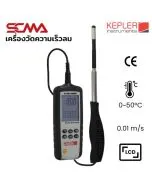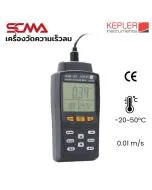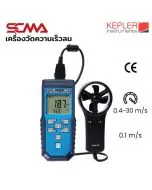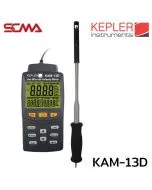
A wind speed meter is a crucial device used to measure the speed and direction of wind, playing an important role in various industries ranging from meteorology and aviation to building air conditioning systems. SCMA, professionals in professional measurement tools, present comprehensive information about Anemometer to help you understand its working principles, types, and how to select the appropriate one for different needs.
What is a Wind Speed Meter (Anemometer)?
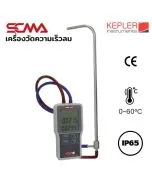
An Anemometer, or wind speed meter, is an accurate tool for measuring air velocity and flow. It measures both atmospheric wind flow and duct airflow, including CFM (Cubic Feet per Minute), CMM (Cubic Meters per Minute), and CMS (Cubic Meters per Second) values. This device is essential for engineers and technicians in HVAC design and maintenance work.
Benefits of Wind Speed Measurement
A wind speed meter has the ability to measure wind speed, air pressure, wind direction, and airflow, making it a primary tool in weather stations and forecasting. It also plays a crucial role in air quality monitoring, wind erosion factors, and other environmental considerations. Additionally, it is important in mechanical engineering, aviation and space, wind energy production, and construction industries, especially for measuring the efficiency of HVAC air flow to achieve optimal performance and energy savings.
How many types of wind speed meters are there?
Wind speed meters can be categorized into several types based on their operating mechanisms, each suitable for different applications.
1. Cup Anemometer
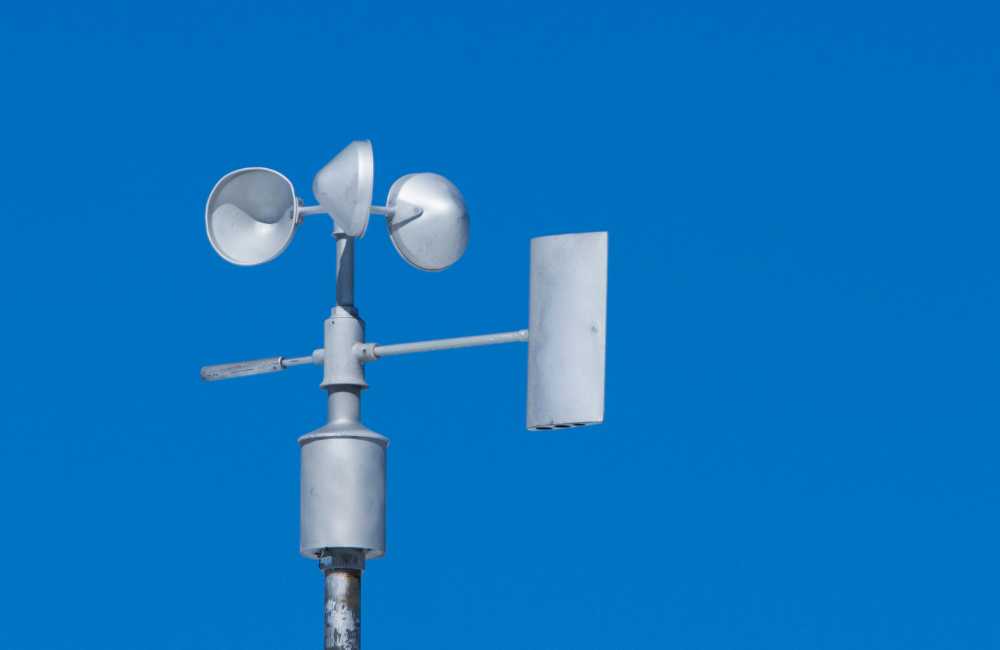
This is one of the most commonly used and widely spread types of anemometers. It typically consists of three or four cups mounted on a horizontal arm at equal intervals around a central axis. The cups are usually half-round in shape with one open side. When wind blows, it causes the cups to rotate around the central axis; the speed of rotation varies directly with wind speed. By calculating the rotational speed of the cups, accurate wind speed measurement can be achieved and is generally displayed in units such as miles per hour (mph), kilometers per hour (km/h), or meters per second (m/s). This meter is designed for simplicity, durability, and accuracy, capable of measuring a wide range of wind speeds from low to several hundred kilometers per hour. It is commonly used at weather stations, wind farm sites, and other applications requiring precise wind speed measurement.
2. Vane Anemometer
This type uses freely rotating vanes that position themselves according to the direction of the wind, measuring both wind speed and direction. It consists of a rotating vane or arrow-shaped device positioned in line with the wind's direction. The vane is typically mounted on a horizontal axis and rotates freely under the influence of wind force, connected to mechanisms that convert movement into electrical signals or mechanical indicators used to determine wind direction. The rotational speed of the vane or cup is usually measured using sensors or mechanical gears to indicate wind speed. Wind speed measurement is generally displayed in units such as miles per hour (mph), kilometers per hour (km/h), or meters per second (m/s). This meter is popularly used in meteorology, aviation, and environmental monitoring where both wind speed and direction are crucial for weather forecasting, wind resource assessment, and understanding air flow patterns in various settings.
3. Hot Wire Anemometer
This is a heat transfer anemometer that uses the principle of heat dissipation from heated wires when they come into contact with air flow. It is suitable for high-precision measurements, using thin wires that are electrically heated. When air flows through, it causes heat transfer; wind speed is directly proportional to the rate of heat loss. This allows for highly detailed detection of changes in wind speed, making it ideal for scientific research and complex airflow analysis. It is commonly used in HVAC systems, laboratories, and fluid dynamics research due to its accurate measurements and quick response.
How to Use a Wind Speed Meter
The use of an anemometer is straightforward with just a few steps, featuring advanced features that make the measurement both precise and convenient.
- Start Up - Connect the probe wire to the device and press the power button; it's ready for immediate use.
- Select Measurement Mode - Press Vel to measure wind speed or Flow to measure flow rate in CFM/CMM. The display will clearly show the selected mode.
- Determine Pipe Area - When measuring flow rate, press Area and enter the cross-sectional area of the pipe in square meters; the device automatically converts it to square feet for CFM.
- Position the Sensor Head - Extend the sensor head and point the probe wire towards the pipe or measurement point to obtain accurate wind speed readings.
- Record and Export Data - Press Record to save measurement data, which can be easily downloaded to a computer and exported as an Excel file.
- Flexible Hotwire Probe Head - The hotwire probe head is bendable according to needs, suitable for narrow pipes or hard-to-reach areas where fan-type sensors cannot reach.

How to Choose the Right Anemometer?
Selecting an appropriate anemometer requires considering several factors to ensure that you get a tool that meets your usage needs and is worth the investment.
- Meter Accuracy - Choose brands known for high accuracy, check Calibration Certificates, and verify the meter's accuracy specifications.
- Durability and Quality - Consider the materials used in production and design durability, especially for harsh or outdoor environments.
- Special Features and Functions - Select necessary features such as data logging, temperature and humidity measurement, unit switching, backlighting, and data connectivity.
- User-Friendliness - Look for an easy-to-use interface, clear display, simple control buttons, and ergonomic design.
- Price and Value - Set a realistic budget, compare features and quality with the offered price. Higher-priced meters may offer more advanced features.
- User Reviews and Reputation - Read customer reviews and ratings to gain insights into real-world performance and reliability.
- Warranty and After-Sales Service - Choose brands that provide reliable customer support, responsive teams, and comprehensive warranties.
How to Maintain an Anemometer?
Proper maintenance of an anemometer will help extend its lifespan and maintain the accuracy of measurements.
- Protect the sensor head from impact - Avoid dropping or impacting the fragile sensor head, as this can easily cause damage and breakage.
- Clean the sensor regularly - Keep the sensor clean by preventing dust accumulation, as dirt can affect the accuracy of readings.
- Store in a box when not in use - Store the tool in its case after each use to prevent external damage and maintain good condition.
- Turn off the device after use - Turn off the device every time it is not being used to conserve battery power and extend equipment lifespan.
- Select an appropriate storage location - Avoid storing in areas with high dust, temperature, or humidity levels to preserve tool condition for longer usage.
If you are interested in purchasing a wind speed meter, SCMA has them available today!
SCMA, the leading supplier of high-quality measuring tools, is now offering anemometers from world-class brands. We cover all types including cup, propeller, and hot-wire models across various levels from Entry to Professional, suitable for every budget. We have stock ready for immediate delivery, along with a team of experts providing consultation on selecting the right model for your needs. Each unit comes with a Thai manual, warranty card, and calibration certificate. Additionally, SCMA offers comprehensive after-sales services including calibration according to standards, maintenance, and spare parts sales, with free shipping nationwide for orders meeting certain criteria. For inquiries about products, contact SCMA today.
Summary
An anemometer is a crucial measuring tool in various industries that accurately measures wind speed, impacting safety, operational efficiency, and energy savings. Choosing the right anemometer involves considering its type, intended use, required accuracy, and budget, along with proper maintenance to ensure long-term efficient operation. SCMA is ready to be your reliable partner for high-quality anemometers and comprehensive services to meet all customer needs.

Frequently Asked Questions
What is an Anemometer?
An anemometer is a device used to measure wind speed or air flow by converting the movement of wind into readable values such as m/s, km/h, or mph. There are several types including cup, propeller, and hot-wire anemometers. They are used in various fields ranging from meteorology and aviation to construction and HVAC systems.
What is another name for an Anemometer?
Anemometers have multiple names. In English, it's called an Anemometer, derived from the Greek word "anemos" meaning wind. In Thai, it can be referred to as a wind speed meter, air flow gauge, or simply a wind meter. Sometimes they are named according to their design such as cup anemometer or propeller anemometer depending on the type.
What is an Anemometer used for?
Anemometers are used to measure wind speeds and air flows in various applications, including weather forecasting, assessing construction safety risks, inspecting building ventilation systems, measuring fan efficiency, evaluating wind energy potential, and sports that require consideration of wind conditions. Additionally, they can measure other parameters such as temperature and humidity, making them essential tools across many industries.
What are the benefits of using a Wind Meter?
A wind meter offers numerous advantages. It enhances safety by warning against strong winds, evaluates work risks at heights, saves energy through HVAC system efficiency checks, controls production quality processes, and aids in weather research. Having a wind meter thus enables efficient and safe operations.