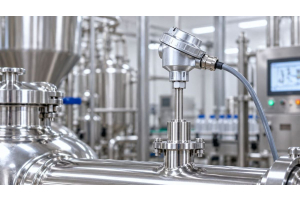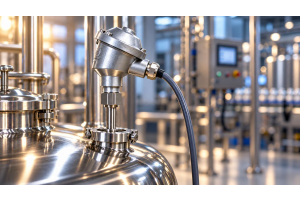

A Humidity Sensor, or a moisture measurement sensor, is an important device that helps control and monitor the humidity levels in the air. It is crucial for manufacturing processes and product storage across various industries. SCMA, experts in quality measurement equipment, provide comprehensive information about air humidity sensors to help you choose and use them effectively.
What is a Humidity Sensor?
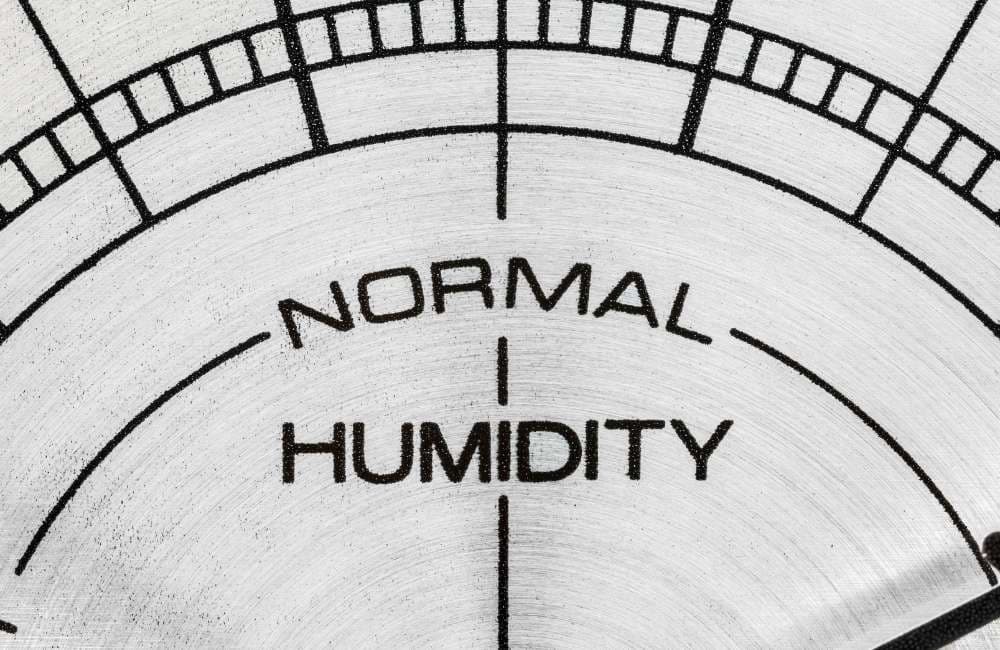
A humidity sensor is a device used to measure temperature or moisture in the working area, converting moisture levels in the air into readable and controllable electrical signals. It is suitable for use in temperature-controlled rooms, food industries, cold storage rooms, cleanrooms, and warehouses requiring precision. Modern humidity sensors can connect with automatic control systems, preventing product and equipment damage from inappropriate humidity while also saving energy by controlling HVAC systems to work at maximum efficiency.
How Does a Humidity Sensor Work?
The principle of operation for a Humidity Sensor involves measuring relative humidity (RH), which refers to the ratio of actual water vapor present in the air compared to the maximum amount of water vapor that the air can hold at that temperature, expressed as a percentage (%RH). Moisture sensors use materials whose properties change according to moisture levels, such as changes in resistance or capacitance values, and convert these changes into electrical signals for accurate processing and display of humidity readings. This allows for precise environmental control.
Why is Measuring Humidity Important?
Measuring humidity is crucial because appropriate humidity levels (40-60% RH) help maintain health and comfort by preventing the growth of mold, bacteria, and dust mites that cause allergies and respiratory diseases. Conversely, excessive or insufficient humidity disrupts body temperature regulation, causing sweat not to evaporate, making breathing difficult, reducing concentration, and in industries, affecting product quality. Therefore, controlling humidity is a critical factor for both health and production efficiency.
How Many Types of Humidity Sensors Are There?
Selecting the appropriate humidity sensor for a job is crucial to achieving accurate results and justifying the investment. In industrial settings, there are primarily three types of humidity sensors that operate on different principles.
1. Capacitive Humidity Sensor
The most popular industrial humidity sensor uses capacitive measurement technology, which changes according to the moisture level in the air. Its advantages include high accuracy, near-linear detection of humidity levels, and a low temperature coefficient, making it less affected by temperature changes.
2. Thermal Conductivity Humidity Sensor
A relative humidity sensor that uses thermal conductivity measurement principles to detect differences in heat conduction between dry air and humid air containing water vapor. It is highly durable and suitable for heavy industrial applications such as textile drying, wood drying, and paper production where a temperature and humidity sensor capable of operating under harsh conditions is required.
3. Resistive Humidity Sensor
A humidity sensor that uses resistive measurement principles to detect changes in resistance when absorbing water vapor; ions are released which increase electrical conductivity, then converted into an electrical voltage signal. Its main advantage is its lower cost compared to other types of temperature sensors, making it suitable for applications where cost savings are necessary but reliable humidity data is still required.
Applications of Humidity Sensor
A humidity sensor is an electronic device that plays a crucial role in environmental quality control and manufacturing processes across various industries.
- HVAC Systems - Control indoor humidity to maintain air quality and prevent the growth of mold and bacteria.
- Meteorological Stations - Measure relative humidity for accurate weather prediction and forecasting, supporting activity planning.
- Food Storage - Monitor and control moisture levels to prevent spoilage and extend product shelf life.
- Medical Equipment - Used in nebulizers and oxygen generators to control the humidity of air delivered to patients.
- Modern Agriculture - Check soil and greenhouse moisture levels to increase yields and use water efficiently.
- Automotive Industry - Control vehicle interior humidity to prevent fogging and enhance driving experience.
- Industrial Manufacturing Processes - Used in drying, coating, and printing processes to control the quality of final products.
How to Choose a Humidity Sensor?
Selecting an appropriate relative humidity sensor requires considering several key factors to ensure you get a cost-effective and efficient device.
- Type of Operation - Choose the operating principle that suits your application, between Capacitive Sensors (high accuracy), Resistive Sensors (cost-effective), or Thermal Conductivity (durable).
- Input and Output - Verify input and output signals match existing systems to prevent damage and operational delays.
- Accuracy - Consider the reading deviation range to ensure it meets your work requirements.
- Operating Conditions - Study the temperature and humidity ranges in which the sensor can operate, then compare with actual working environments.
- Power Supply - Check power supply requirements match existing systems to prevent equipment damage.
- IP Rating - Choose an appropriate water and dust protection level for your application environment, especially for high moisture and dust exposure conditions.
Interested in Motion Sensors? You Can Now Purchase from SCMA!
SCMA, the leader in quality measurement equipment, is now offering high-quality Humidity Sensors from world-class brands to meet every need, from general tasks to specialized industrial applications. Every item undergoes meticulous selection and comes with a manufacturer's quality certificate and warranty. Our team of experts is available for free consultation on selecting the appropriate sensor based on your application and budget, complete with easy-to-understand Thai user manuals. We offer fast nationwide shipping with immediate stock availability and guarantee customer satisfaction with our excellent after-sales service. For more information and to place an order today, contact SCMA.
Frequently Asked Questions
What is the function of a humidity sensor?
A humidity sensor measures the amount of water vapor in the air and converts it into readable electrical signals, helping to control appropriate moisture levels during manufacturing processes, product storage, and creating healthy environments. Data from sensors are used for HVAC system controls, automatic production systems, and alerts when humidity is out of range.
What does relative humidity indicate?
Relative Humidity (RH) indicates the amount of water vapor in the air compared to the maximum it can hold at that temperature, expressed as a percentage. For example, 50% RH means the air has half the moisture it can hold. This value is crucial for controlling manufacturing processes, product storage, and human comfort; an appropriate range for health is 40-60% RH.
How many types of humidity sensors are there?
Humidity sensors are primarily categorized into three types based on their working principles: Capacitive, which uses changes in electrical capacitance with high accuracy and is the most commonly used; Resistive, which uses changes in resistance and is cost-effective for general use; and Thermal Conductivity, which measures thermal conductivity and is suitable for harsh environments. Each type has its advantages and disadvantages, so choose according to the suitability of your work.
How does a humidity meter work?
A device used to measure relative humidity works by using moisture-sensitive sensors as detectors. When air humidity changes, materials in the sensor absorb or release moisture, causing electrical properties to change. Electronic circuits convert these changes into humidity readings displayed on the screen. Modern meters often measure temperature simultaneously for more accurate calculations of values such as dew point.