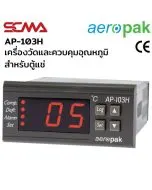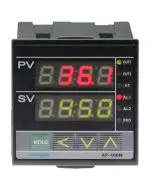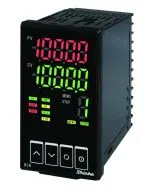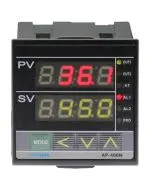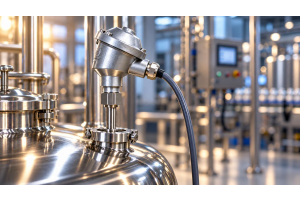
Temperature controllers are important devices for controlling quality and production processes in various industries, such as the food, chemical, automotive, etc. At SCMA, we are leaders in providing and distributing high-quality temperature controllers from top global brands. We also have a team of experts ready to consult on the design and installation of comprehensive temperature control systems to meet all customer needs.
What is a Temperature Controller?
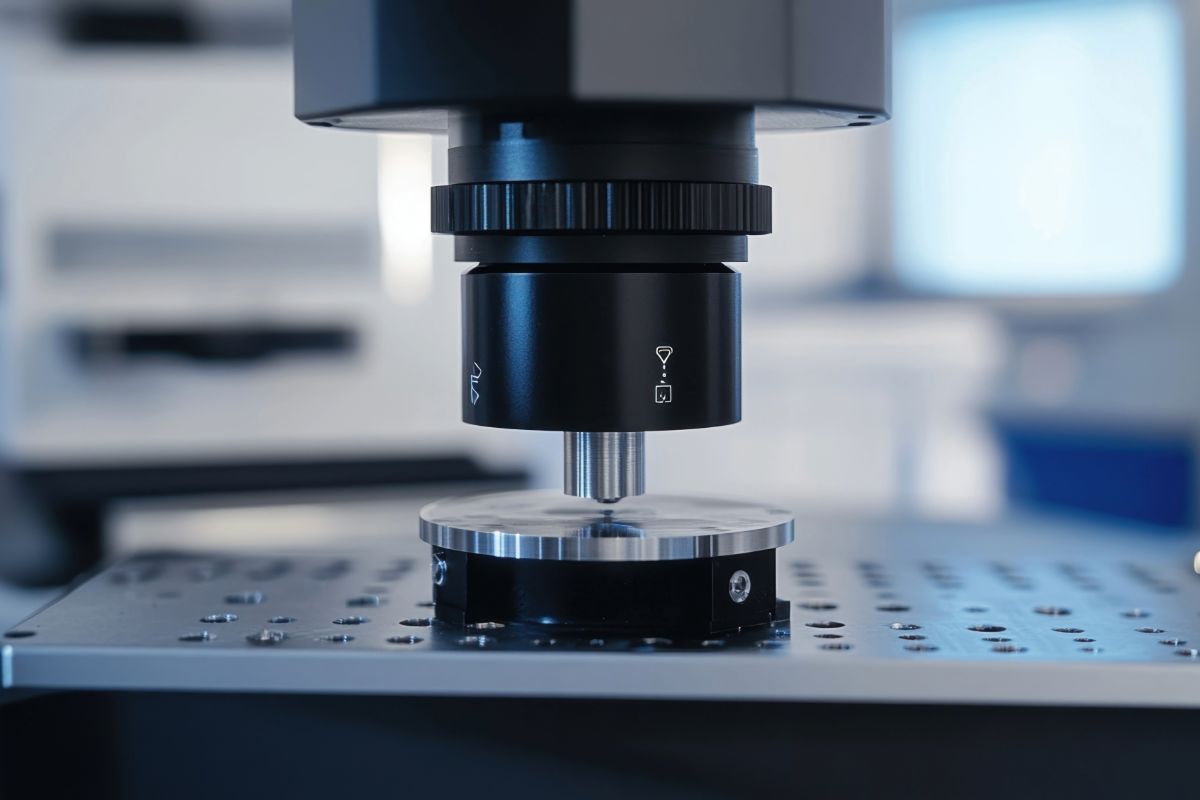
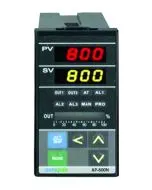
A temperature controller is a device used to maintain the temperature of a process or area at a constant level as required. It measures temperature from various sensors and sends control signals to heating or cooling equipment to adjust the temperature to the set value.
Temperature controllers play a crucial role in industries, especially in processes that require precise and stable temperatures for consistent product quality, such as pharmaceuticals, food, ceramics, steel, and electronics, among others.
Principles of Operation for Temperature Controllers
![[Temperature Controller]](https://scma.co.th/media/magefan_blog/temperature-controller_2.jpg)
A temperature controller is a device that helps maintain the temperature at a constant level as set
which is a critical factor affecting product quality in industries. Let's see how temperature controllers work.
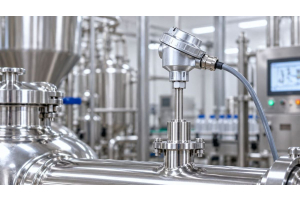
- Temperature measurement from sensors such as thermocouples (Thermocouple) or RTD (Resistance Temperature Detectors) and sending signals to the controller
- The controller compares the measured temperature with the set point (Set Point) to see if they match
- If the temperature differs from the set point, the controller adjusts its output to devices such as heaters, compressors, or solenoid valves to increase or decrease the temperature to the desired level
- The control loop of the controller continuously adjusts its operation automatically for maximum accuracy and stability. Typically, PID (Proportional Integral Derivative) techniques are used for this purpose.
What Types of Temperature Controllers Are There?
Temperature controllers come in various types, depending on their mode of operation, control method, and application. They can be categorized as follows:
On/Off Controller (On-Off Control)
This is the most basic type of temperature controller that operates in an on-off manner by turning heating or cooling equipment on or off within a specified temperature range. Its advantages include low cost and ease of use, but it may cause temperature fluctuations.
Proportional Controller (Proportional Control)
This controller adjusts the power supplied to equipment in proportion to the temperature deviation using a Proportional Band technique, which helps reduce fluctuations and increases accuracy. However, it may still have some constant error (offset).
PID Controller (PID Control)
This controller combines the functions of Proportional, Integral, and Derivative to achieve optimal results. The Proportional function adjusts power based on deviation, the Integral reduces constant error, and the Derivative helps reduce oscillation, making it highly accurate and fast with minimal error.
Smart Temperature Controller (Smart Temperature Control)
A smart controller integrates the advantages of various types of controllers while adding special features such as automatic PID adjustment, network communication connectivity, data logging and graph display, abnormality alerts, etc. This makes it highly efficient for high-precision applications.
What are the categories of temperature measurement?
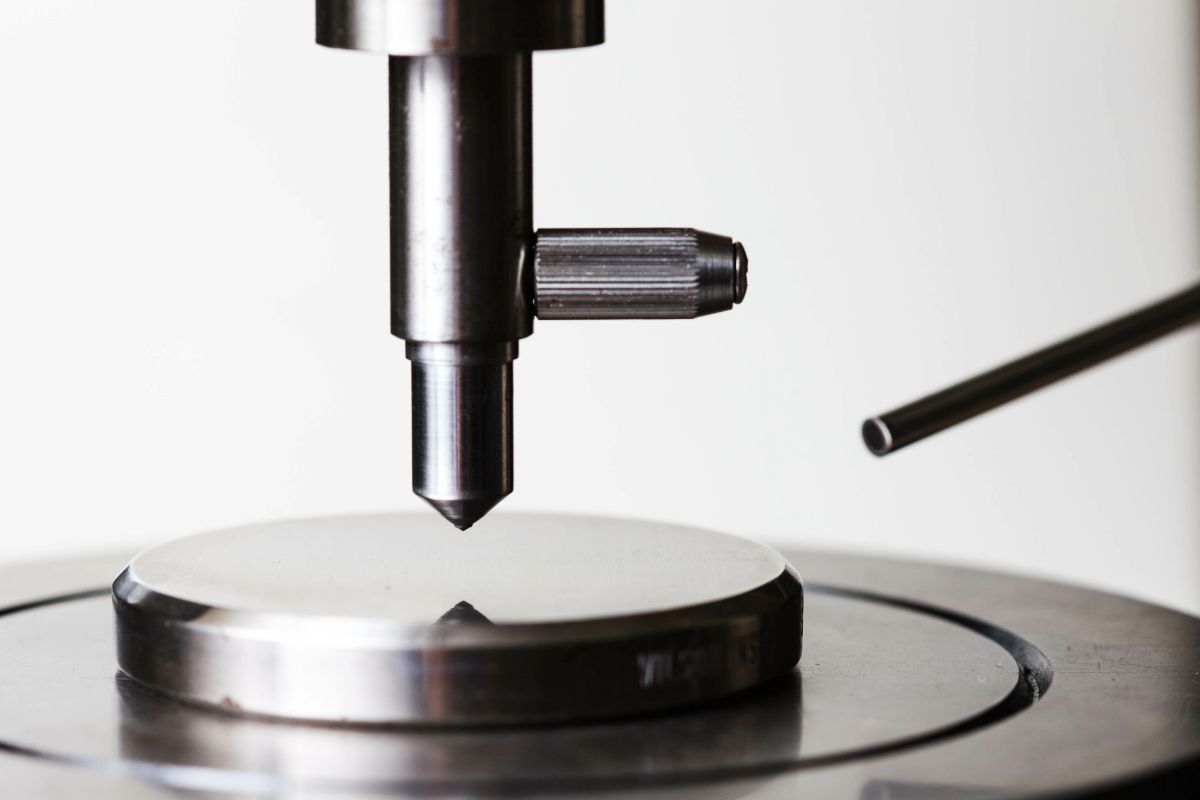
For temperature measurement, we can use a variety of sensor types to suit different applications. Whether it's measuring the temperature of liquids, gases, or solids, temperature sensors are categorized into several types.
- Thermocouple - operates on the principle that an electric voltage is generated at the junction of two different metals when they have different temperatures. It can measure a wide range, withstand high heat, and respond quickly, but its accuracy is moderate.
- RTD (Resistance Temperature Detectors) - operates on the principle that the resistance of a metal changes with temperature. It offers high accuracy, stability, and a wider measurement range than thermocouples but responds more slowly.
- Thermistor - uses semiconducting material where resistance changes significantly with temperature. It provides high accuracy and quick response, but its measurement range is not as wide.
- Infrared Temperature Sensor - measures the temperature of objects from a distance by detecting the infrared radiation emitted by them. It's ideal for very hot, moving, or hard-to-reach objects.
- Semiconductor Temperature Sensor - uses semiconductor materials where electrical properties change with temperature. Commonly used to measure the temperature of electronic devices, it responds quickly but has a narrow measurement range.
Why is a temperature control device important for water quality monitoring?
Temperature has a direct impact on the quality of water, in terms of physical, chemical, and biological characteristics. This affects both drinking water production and wastewater treatment processes. Therefore, using a temperature control device is crucial for the following reasons:
- It ensures that chemical reactions in the water occur correctly and accurately.
- It helps maintain appropriate microbial activity in the water.
- It prevents measurement errors and extends the lifespan of various water quality sensors.
- It enhances the efficiency of water treatment and production systems, ensuring compliance with standards for quality control.
If you are interested in temperature controllers, SCMA is now available for purchase!
SCMA Company is a leader in providing solutions and selling temperature controllers (Temperature Controller) from leading global brands. We are ready to consult and advise on selecting the right temperature control equipment for your needs, including comprehensive design and installation of temperature control systems to ensure maximum efficiency in your processes.
We offer fast and reliable after-sales service with a team of expert engineers providing support, along with spare parts and backup equipment ready for immediate delivery to ensure that your system operates continuously without interruption.
With extensive experience in the temperature control industry, SCMA is ready to be your trusted business partner in any situation. Contact us today to request a quote, seek consultation, or inquire for more information. We are available 24/7 to provide you with efficient, accurate, and internationally standardized temperature control services.
Summary
A Temperature Controller, or Temperature Control Unit is crucial in maintaining quality and standards across various industries. The temperature control unit operates by using sensors to measure temperature, then sending signals to heating or cooling devices to adjust the temperature accurately and stably according to preset values. Currently, there are several types of temperature controllers available for different applications, ranging from basic on-off models to advanced PID and smart models.
If you're looking for high-quality temperature control units for your factory or business, SCMA is ready to provide consultation and supply equipment that meets your specific needs. With products from leading brands, design and installation services by expert engineers, and reliable after-sales service, we ensure the highest quality and efficiency in your production process. Contact SCMA today; we are fully committed to being your partner in temperature control systems.
Frequently Asked Questions
What is a Temperature Controller and how does it work?
Temperature Controller or a temperature control device is an apparatus used to maintain the temperature at a set point by using sensors such as Thermocouple, RTD to measure the temperature and then sending signals to control the operation of heating or cooling devices like heaters, compressors, etc. in order to achieve the desired temperature.
How many types of controllers are there?
Controllers can be categorized into four main types based on their functionality as follows:
- On/off Controller - A simple open-loop control system
- Proportional Controller - A proportional control system that offers more precise control than the on/off type.
- PID Controller - A PID controller combines Proportional, Integral, and Derivative functions to provide accurate, fast control with minimal error.
- Smart Controller - An intelligent controller that integrates various technologies such as automatic PID adjustment, network communication, data logging and alerts, etc. to provide the highest level of control.
What are some temperature control devices?
Temperature control tools typically consist of the following equipment:
- Temperature Sensor, such as Thermocouple, RTD for measuring temperature
- Temperature Controller, such as PID Controller, used to process and control operation according to desired values
- Temperature Transmitter for receiving signals from the Sensor then converting them appropriately before sending to the Controller
- Heater, Cooler heating and cooling devices that are controlled by the Controller to adjust temperature
- Solid State Relay, Solenoid Valve signal switching devices used by the Controller to control on/off commands for Heater/Cooler
- Thermal Camera infrared camera used to check surface temperature and help analyze abnormalities
What are Temperature Measurement and Control Devices?
Temperature measurement and control devices refer to a system or set of equipment that measures temperature and maintains it at the desired level. They consist of sensors or temperature probes, such as Thermocouple, RTD for measuring temperature, sending signals to the controller or Controller which processes and controls heating or cooling device operations to keep temperatures within the required range. This ensures product quality and production process efficiency. Temperature measurement and control devices are therefore crucial in enabling industrial plants to operate at full capacity.