Are you facing issues with overflowing silo bins or shortages during the production process? The Rotary Paddle Level Switch is a crucial device that can effectively solve these problems. Based on SCMA's engineering team experience, we have compiled information from how it works, its advantages, to detailed methods for selecting and purchasing. This article will help you make confident decisions in choosing equipment to enhance your factory’s production efficiency.
What is a Rotary Paddle Level Switch?
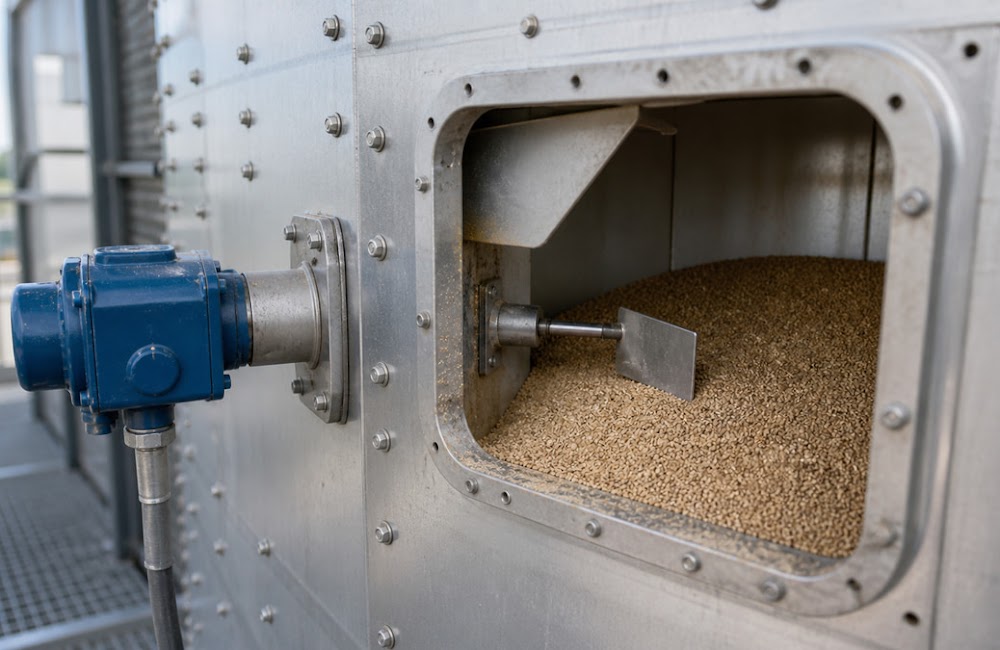
The Rotary Paddle Level Switch from SCMA is a sensor used to measure the level of dry materials such as plastic pellets, seeds, or flour in silo bins. The device works by continuously rotating a paddle; when material contacts the paddle and stops its rotation, the system sends an alert signal to prevent overflow or shortages immediately.
How a Paddle Level Controller Works
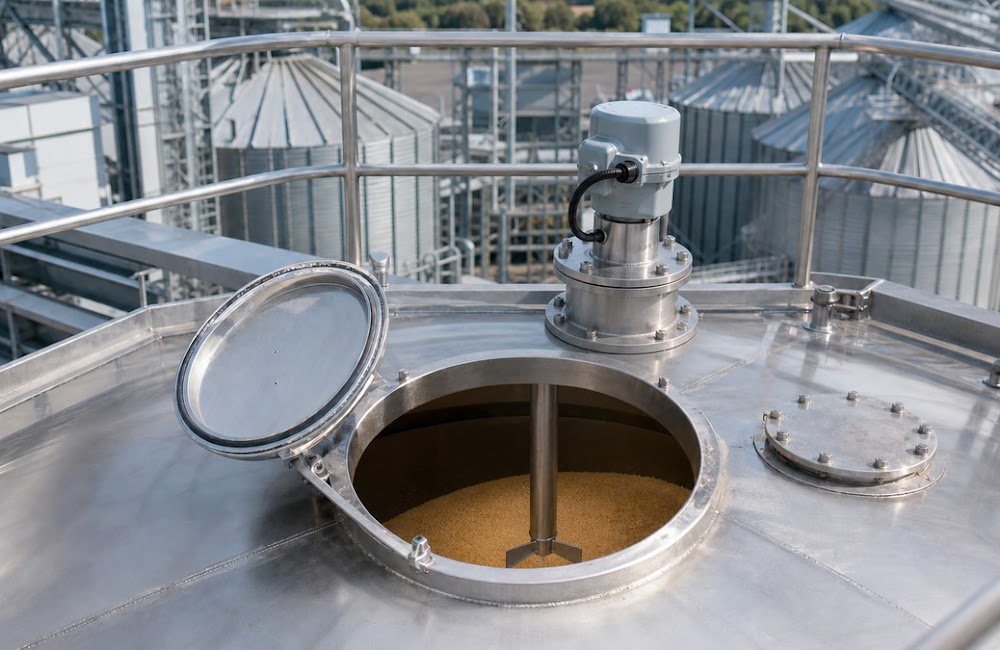
Understanding the working principle of the Rotary Paddle Level Switch helps engineers plan installations correctly. There are four steps in its operation:
1. Normal State (No Material)
When the material level in the silo has not yet reached the installation point of the paddle controller, the internal motor drives the paddle to rotate continuously. This process uses low energy and is designed for continuous standby operation without causing heat accumulation.
2. When Material Contacts the Paddle
When the level of solid materials such as powder or granules rises high enough to touch the paddle, the friction force from the material will obstruct rotation, resulting in mechanical resistance against the internal motor of the Rotary Paddle Level Switch, ultimately causing the paddle to stop rotating.
3. Alarm Signal Transmission
The moment the paddle stops rotating, the torque generated triggers an internal microswitch (Microswitch). The device sends an electrical signal warning of full level to the central control system or issues a command to shut down machinery to stop material feeding.
4. Return to Normal State
When materials are drawn out for use, the material level drops below the paddle range, allowing the paddle to rotate freely again. The switch resets itself back to its original position and is ready for automatic measurement of the next cycle.
How many types of paddle level controllers are there?
The SANGI brand paddle level controller, distributed by SCMA, is designed to accommodate various environments and is divided into 4 main models based on usage characteristics as follows:
Standard Type (HL-400)
SANGI Paddle Level Controller Model HL-400 is the basic model with a short shaft, easy to install in limited spaces. This model supports a maximum operating temperature of 85 degrees Celsius and is suitable for detecting general materials in manufacturing industries.
Flange Type (HL-400F)
The HL-400F model has the same internal features as the standard model. The difference lies in the mounting method, which uses a square flange with dimensions of 80 × 80 millimeters, providing increased stability when installed on silo walls with specific structures.
High-Temperature Type (HL-400H)
For production processes involving high heat, the HL-400H model is designed to withstand temperatures up to 100 degrees Celsius. Choosing this Rotary Paddle Level Switch helps prevent sensor damage from accumulated heat.
Extended Shaft Type (HL-400G)
When measuring material levels at deeper points than usual, the HL-400G model is an appropriate choice. With a specially designed paddle shaft length ranging from 200 to 1,000 millimeters, it can accurately detect levels within large tanks.
Maintenance of Paddle Level Controllers
Proper maintenance extends the lifespan of paddle level controllers and prevents material clogging issues. The SCMA technical team recommends the following 4 maintenance steps.
1. Regular Cleaning of Blades and Shaft
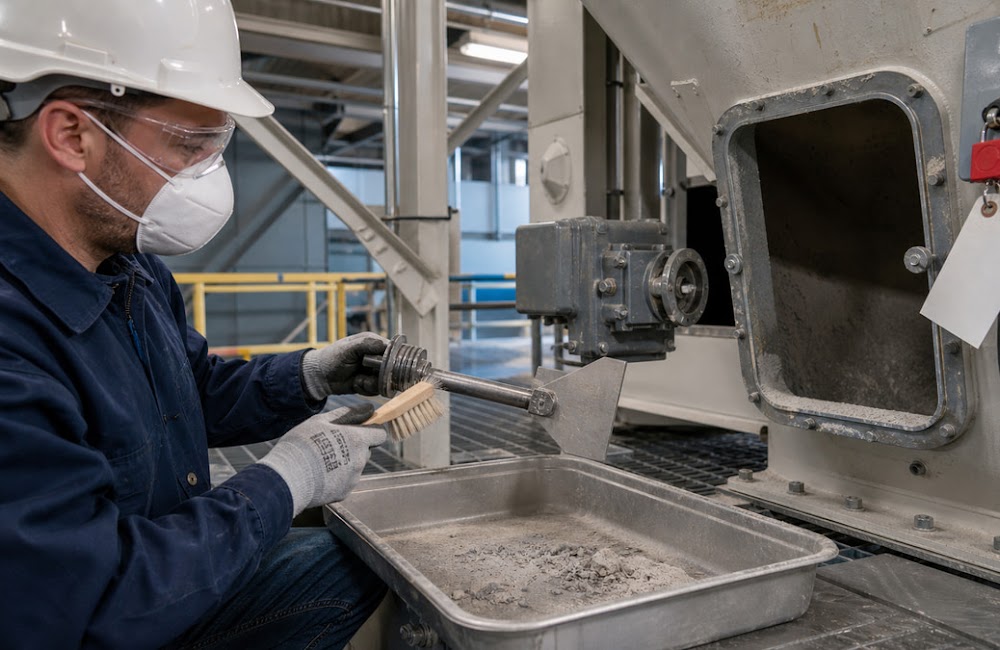
The accumulation of dust or debris on the blades causes the motor to work abnormally hard. A cleaning schedule for the Rotary Paddle Level Switch should be established to remove accumulated deposits, preventing signal transmission errors.
2. Check Seals (Seal) and Gaskets
Dust seals play a crucial role in preventing flour dust or moisture from entering the internal motor assembly. If the seal is found to be deteriorated or torn, immediate replacement of parts must be carried out to prevent electrical system damage.
3. Monitor Motor Operation
Test the paddle level controller under no-load conditions to ensure that the blades rotate freely and smoothly without unusual noise. Any obstruction is a sign that the bearing or internal gears may have issues.
4. Check Connections and Wires
Open the Terminal box to inspect wires and terminals for tight connections. It's essential to ensure there is no dust or moisture accumulation inside the Rotary Paddle Level Switch circuit box to prevent electrical short circuits during operation.
Using Paddle Level Controllers in the Food and Beverage Industry
In food and beverage manufacturing plants, efficient material management is crucial. Paddle level controllers meet this industry's needs with five key advantages.
1. Continuous Quality Control
The consistency of raw material quantity directly impacts product quality. Installing a Rotary Paddle Level Switch allows operators to accurately monitor the dry material levels in tanks, ensuring smooth production without interruptions.
2. Preventing Overflow and Material Shortages
Immediate alerts when the paddle is obstructed by material ensure that system controllers are aware of predetermined material levels. This device prevents overflow issues causing losses as well as downtime due to material shortages.
3. Versatile for Various Materials
Paddle level controllers are designed to work with various dry materials such as flour, sugar, coffee, or grains. Adjusting torque settings enables the sensor to effectively handle materials of different densities.
4. Reducing Production Line Management Costs
Automated and accurate measurement reduces the need for manual labor to climb and check silo tanks. Manufacturers can reduce material loss from overflows, resulting in a more cost-effective overall production process.
5. Meeting Factory Safety Standards
Leading brand Rotary Paddle Level Switches have robust structures that are durable and resistant to high dust environments, thus meeting food industry safety standards and ensuring compliance with international regulations.
Advantages of Paddle Level Controllers
The decision to use level sensors must consider cost-effectiveness and efficiency. Paddle level controllers have four main attractive features:
1. Highly Accurate Level Measurement
This device provides highly accurate results for measuring the level of raw materials in silos, whether it's solid types such as rice grains, plastic pellets, or flour powder. It helps the automatic control system receive correct data to command further operations.
2. Effective Motor Protection System
An important advantage of Rotary Paddle Level Switch is its internal Safety design. If the paddle is blocked by raw materials and cannot rotate, the system will cut off motor operation to prevent overheating that could cause motor damage.
3. Adjustable Torque Setting
The user can adjust the torque (Static Torque) setting of the spring inside the paddle level controller. This adjustment helps the sensor have the appropriate sensitivity for different weights and densities of raw materials to reduce errors.
4. Robust Structure Resistant to Environmental Conditions
The housing of the sensor is made from high-quality material, making it resistant to dust, vibrations, and a certain level of moisture. Therefore, it is ideal for permanent installation in the rugged environment of industrial plants.
How to Choose a Paddle Level Controller
Selecting a paddle level controller that provides good value for investment requires considering on-site factors primarily. The SCMA team has summarized a checklist of 5 points to help you choose the equipment accurately.
- Analyze the type of material: Check the size, weight, and density of the material to select a model that can adjust the switch paddle torque appropriately.
- Check operating temperature: If the production process has high heat, choose the High-Temperature model that supports up to 100°C.
- Evaluate installation position: Consider how deep you need to measure the level and choose between standard short-stem models or special long-stem models for large silos.
- Select mounting style: Check the tank surface contact to determine if it suits a standard thread or requires a square flange mount for stability.
- Aftersales service: Choose from suppliers with technical consultation teams to reduce future machine downtime issues.
Summary
The paddle level controller (Rotary Paddle Level Switch) is a crucial device that helps prevent material overflow or shortage in silos. Choosing the right model for your application and maintaining it properly can significantly increase production efficiency. If your factory is looking for automation solutions, SCMA's engineering team is ready to provide consultation and design comprehensive systems.
If you want to buy a paddle level controller, you can purchase from SCMA today!
Investing in accurate measuring tools is an investment to reduce long-term error costs. At SCMA, we are the representative distributor of leading paddle level controllers and offer integrated solutions (Project & Solutions) from consultation, installation, to after-sales support by experts to enhance your factory's reliability.
Frequently Asked Questions
Which types of materials are suitable for paddle level controllers?
Suitable for dry solid raw materials such as plastic pellets, rice grains, seeds, and flour in various industries.
Will the Paddle Switch motor overheat if it stops rotating due to obstruction?
No overheating will occur because there is an internal safety system that immediately cuts off motor operation when the paddle is obstructed and stops rotating.
Where can a paddle level controller be installed in a tank?
It can be installed both at the top (Top Mount) to warn of full levels, and on the side (Side Mount) to warn of low or medium levels.
What is the output signal from this level measuring device?
The unit will send an output signal as a Relay Contact (Microswitch) for controlling conveyor motor circuits or sending warning signals.
Does SCMA offer pre-purchase consultation services?
The SCMA engineering team is happy to provide free consultations to analyze the site and help you choose the most suitable Rotary Paddle Level Switch model.