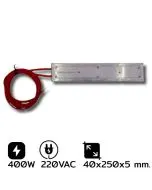
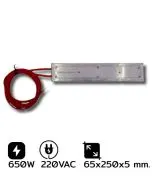
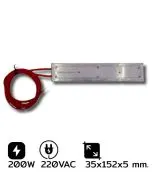
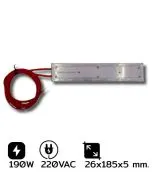
Rod heaters, or rod heaters, are popular heating devices in the industry. They offer high efficiency, versatility, and long-lasting durability.SCMA is a leading company in rod heater products, providing high-quality heaters and consultation services to customers. Let's learn more about rod heaters.
What is a Rod Heater?

A rod heater, or a cylindrical heating element used in industrial applications requiring high temperatures such as drying, hardening, radiant heating, convection and heat transfer. The rod heater converts electrical energy into thermal energy and is available in various sizes and styles to suit different applications.
The basic structure of a rod heater consists of the following components:
- Stainless steel or Incoloy casing
- Nichrome heating coil
- Magnesium oxide powder insulation
- Ceramic core
- Silicone insulation
- Terminal wiring connections
- Wiring jacket
- Nickel terminals
- Insulation
These materials are selected to ensure that the rod heater can withstand high temperatures, efficiently transfer heat, and provide electrical insulation. At the same time, they offer durability and a long service life.
How a Strip Heater Works
A strip heater operates by converting electrical energy into heat. When an electric current flows through high-resistance wire coils, the coils generate heat according to Joule's law of electrical heating. The generated heat is transferred through the insulation casing to the surface and medium it comes in contact with, such as air, liquid, or surrounding objects.
At the same time, electric heaters have magnesium oxide insulation to reduce heat loss, increase efficiency, and protect components from damage. Temperature control devices like thermostats are used to maintain a constant temperature as required.
What are the benefits of rod heaters?

With its prominent features, rod heaters are widely applied in various industries and production processes. The key benefits of rod heaters include:
- Metal Industry - Used for metal forming and processing parts such as heat treatment
- Plastic and Rubber Industry - Used to heat plastic materials in injection molding machines
- Food Industry - Used for cooking food in ovens, grills, fryers
- Chemical Industry - Used to heat materials in reactors and steam boilers
- Electronics Industry - Used as a heating source in soldering stations and testing equipment
- Laboratories - Used to control temperature in equipment and experiments
- HVAC Systems - Used for heating air and liquids
- Paper Industry - Used in paper drying processes
- Agriculture and Livestock - Used to heat water, enclosures, and greenhouses
- Electric Power Plants - Used as heaters for water or liquids in steam boiler systems
It is evident that rod heaters have a wide range of applications across various industries, enabling rapid temperature increases to materials at cost-effective rates.
Things to Know When Installing Rod Heaters
For efficient operation and heat transfer, when installing rod heaters, you should follow these guidelines:
- Drill holes that fit the rod heater with no more than a 0.05 mm gap for optimal heat transfer.
- Use thermal paste to connect the surface between Heater and mold, avoiding air gaps; otherwise, the rod heater may overheat and be damaged or have a shortened lifespan.
- Use an H7 reamer for drilling installation holes.
- Remove all lubricants used during drilling completely; otherwise, soot may interfere with heat transfer.
- If using an electric heater with a flange mount, control the temperature to not exceed 180°C.
- Do not bend wires within 20 mm of the rod heater to prevent breakage and damage.
Another important consideration when installing rod heaters is electrical safety and heat protection, ensuring efficient and long-lasting operation of the heater.
What types of rod heaters are available?
Rod heaters come in various styles to meet diverse application needs. SCMA, the expert in rod heater solutions, offers several interesting models.
Inset Rod Heaters
These are standard rod heaters that are widely used due to their high efficiency, cost-effectiveness, and durability. They provide internal heating of metals by being inserted into precisely drilled holes, offering long service life with stainless steel and oxidation-resistant nickel.
Immersion Rod Heaters
Ideal for direct immersion in water, oil, or liquids. They come in flange, threaded plug, and side-mount styles, offering versatile usage options.
Split Section Rod Heaters
These feature a special design where the heating coil is placed inside a pair of half-round casings. When heated, the casing expands to touch the surrounding material surface, maximizing heat transfer and making it easy to remove from holes.
Custom Cartridge Rod Heaters
For custom requirements beyond standard models, SCMA is ready to manufacture rod heaters tailored to customer specifications for optimal performance.
Additionally, there are other types of rod heater solutions available such as tube styles and WATROD immersion rods, each with unique features and benefits.
How to Use Rod Heaters?

Recommendations for using rod heaters can be widely applied according to the properties of the medium and heating objectives.
- Immersion Heating - Immerse the rod heater directly into the liquid to increase its temperature
- Air Heating - Use the rod heater in an open configuration to transfer heat to the surrounding air
- Surface Heating - Use the electric heater to directly contact solid surfaces such as metal or plastic, to increase the temperature of the workpiece.
With rapid high heat generation, rod heaters are a popular choice for efficient heating.
Why Should You Choose Strip Heaters?
Strip heaters offer numerous advantages that make them a popular choice in industries, including:
- Even heat distribution - With the design of strip heater construction, materials receive uniform heating, resulting in improved product quality and stability.
- High energy capacity - Strip heaters have high and rapid heat generation capabilities, suitable for tasks requiring high temperatures.
- Compatibility with various materials - Material options and designs allow appropriate use with different substances such as solids, liquids, and gases.
- Versatility in usage - Strip heaters can be used across multiple industries, easily adapting to various equipment sizes and shapes.
- Durability and long lifespan - With high-quality materials, heaters withstand harsh environments well, reducing maintenance frequency.
- Easy installation and maintenance - Simple structure allows for quick installation and replacement without disrupting production processes.
- High efficiency and energy savings - Strip heaters transfer heat directly to the target, using energy efficiently.
- High temperature tolerance - Special models can withstand temperatures up to 1200°C, suitable for heavy-duty high-temperature work.
- Wide range of applications - With various forms, sizes, and power options available, they can be used for heating, melting, baking, roasting, boiling, steaming.
With these many advantages, strip heaters are widely popular across a variety of industries.
Guidelines for Using Strip Heaters
For maximum efficiency and safe operation, additional guidelines for using strip heaters are as follows:
- Do not allow the heating element of the heater to come into contact with air during use to prevent damage or fire hazards.
- Avoid getting the wiring wet to prevent electrical leakage or short circuits.
- Frequent on-off switching of electric heaters in short periods may cause voltage spikes and reduce lifespan. Use PID control for power regulation instead.
- Do not exceed the specified electrical voltage.
- Turn off and unplug before removing from the mold, and wait for it to cool down before handling.
- Control the temperature around the wiring terminals not exceeding 130°C.
- Do not use in a vacuum environment.
- If installed horizontally, use screws to secure it to prevent detachment due to thermal expansion.
Additionally, thoroughly study the product information before use as there may be differences between models. If you have any questions, you can consult an expert from SCMA.
If you are interested in bar heaters, SCMA is now available for purchase!
SCMA Company is a leader in automation systems and heating equipment, ready to consult, design, and install bar heater solutions for every industrial need. Whether you require electric heaters for oil tanks or bar heaters for machinery, SCMA has everything available, including custom models tailored to your specific requirements.
In addition, SCMA also offers comprehensive after-sales services including maintenance, updates, and immediate problem-solving. We are happy to provide advice to find the most suitable heating methods to enhance efficiency and safety in your operations.
If interested, you can contact SCMA for a demonstration of technology or free consultation. We are ready to be your trusted partner at every step of your business development process.
Which Tubular Heater Model to Choose? What are the Interesting Models?
TUBULAR HEATER ( I SERIES)
I-shaped bent tubular heater model I-1515 DIA. 8X1500MM 1500W AC220V SANGI
https://scma.co.th/i-1515-dia-8-x-1500mm-1500w-ac220v-sangi.html
I-shaped bent tubular heater model I-6510 DIA. 8X 650MM 1000W AC220V SANGI
https://scma.co.th/i-6510-dia-8-x-650mm-1000w-ac220v-sangi.html
I-shaped bent tubular heater model I-1020 DIA. 8X1000MM 2000W AC220V SANGI
https://scma.co.th/i-1020-dia-8-x-1000mm-2000w-ac220v-sangi.html
Stainless steel I-shaped tubular heater model I-7510 DIA. 8 x 750MM 1000W AC220V SANGI
https://scma.co.th/dia-8-x-750mm-1000w-ac220v-sangi-i-7510.html
I-shaped bent tubular heater model I-2020 DIA. 8X2000MM 2000W AC220V SANGI
https://scma.co.th/i-2020-dia-8-x-2000mm-2000w-ac220v-sangi.html
TUBULAR HEATER ( U SERIES)
Stainless steel U-shaped tubular heater model U-2050 DIA. 8 x 200MM 500W AC220V SANGI
https://scma.co.th/dia-8-x-200mm-500w-ac220v-sangi-u-2050.html
U-shaped bending heater (TUBULAR HEATER) Model U-3050 DIA. 8, 300X300MM 500W AC220V SANGI
https://scma.co.th/u-3050-dia-8-300x300mm-500w-ac220v.html
Stainless steel U-shaped heater (Tubular heater) Model U-3150 DIA. 8 x 300MM 1500W AC220V SANGI
https://scma.co.th/dia-8-x-300mm-1500w-ac220v-sangi-u-3150.html
U-shaped bending heater (Tubular heater) Model U-5150 DIA. 8, 500X500MM 1500W AC220V SANGI
https://scma.co.th/u-5150-dia-8-500x500mm-1500w-ac220v.html
U-shaped bending heater (Tubular heater) Model U-4050 DIA. 8, 400X400MM 500W AC220V SANGI
https://scma.co.th/u-4050-dia-8-400x400mm-500w-ac220v.html
Summary
Rod heaters are highly efficient, versatile, and durable heating devices suitable for a wide range of industrial applications, from metal processing, food, chemical to livestock farming. SCMA, the leader in rod heater products, is ready to provide consultation and sell high-quality products to meet every need comprehensively, whether it's immersion type, insertion type, or custom-made. With our excellent service, you can be assured of maximum heating efficiency and safe usage.
Frequently Asked Questions
How do rod heaters work?
Rod heaters work on the principle of converting electrical energy into heat. When an electric current flows through a high-resistance wire coil inside, it heats up the coil and transfers the heat through the casing to the surrounding surface and medium such as air, liquid, or solid. Insulation helps reduce heat loss, increase efficiency, and there are temperature control devices to prevent overheating.
What are rod heaters used for?
Rod heaters have widespread applications in various industries, such as:
- Metal industry - used for forming, annealing, and metal processing
- Plastics industry - used to warm injection molding machines and extruders
- Food industry - used for heating in ovens, boilers, and fryers
- Chemical industry - used to heat chemicals in reactors
- Electronics industry - used in soldering stations and testing
- HVAC systems - heating air and liquids
- Agriculture - used to warm water, heat animal shelters, greenhouses
They are also used in laboratories, paper mills, power plants, and many more.
Are rod heaters safe?
Generally, tubular heaters are safe to use if installed and operated correctly. Temperature control devices such as thermostats prevent overheating. The wire coils are insulated to prevent electrical leakage, and the stainless steel coating is resistant to corrosion and high temperatures. However, users should strictly adhere to the manual and installation precautions, choose a model suitable for their work, and avoid modifying the equipment themselves.
Which is better: fan heaters or tubular heaters?
Fan heaters and tubular heaters each have different advantages in use.
- Fan heaters are suitable for heating large areas because they can quickly distribute warm air over a wide area, but they cannot provide very high temperatures.
- Tubular heaters provide concentrated heat at higher temperatures and are suitable for work that requires direct contact with heat such as melting, metal plating, or boiling liquids. However, they may take longer to warm up large areas.
Therefore, the choice depends on the nature of the job, the area of use, the required temperature range, and budget. SCMA experts are ready to provide advice to help you get the best heating system for your needs.