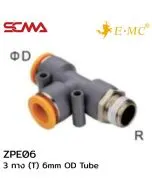
Air leaks in the factory cause energy costs to soar, machinery malfunctions, and replacing low-quality pneumatic parts increases risks. SCMA offers industrial-grade air hose and pneumatic fittings solutions. Easily order pneumatic products online. We have a team of engineers who match specifications before delivery to prevent purchasing the wrong model for immediate express shipping.
What are Pneumatic Accessories?
This group of equipment acts like major arteries connecting compressed air sources to the cylinders in the pneumatic system. Smooth operation relies on these components. Major parts include flow control valves (Speed Controllers) for controlling cylinder speed, air fittings that connect the pneumatic lines, and silencers to reduce noise when exhausting compressed air. Using standardized equipment clearly extends the lifespan of pneumatic main components.
In-depth Engineering Principles of Pneumatic Systems
The basic principle is converting energy from compressed air into mechanical energy to drive mechanisms in automated assembly lines. Compressed air with pressure runs through various pneumatics to push pistons and move them. Engineers must be most cautious about pressure drop (Pressure Drop) in the sub-pneumatic tubing system. Calculating pipe size and selecting appropriate fitting equipment helps maintain a constant flow rate, ensuring machinery operates at full efficiency as designed.
Types of Pneumatic Equipment in Automated Production Lines
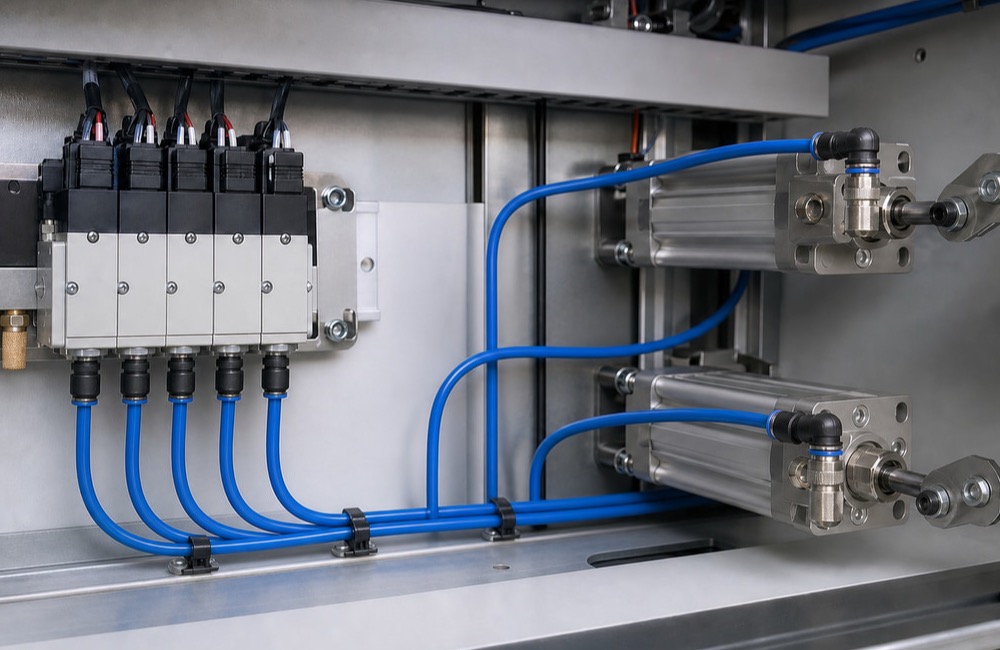
Maintenance technicians encounter various component types on machinery. Categorizing pneumatic equipment helps in diagnosing issues and expediting the procurement of spare parts.
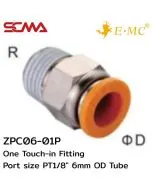
Quick Connect Air Fittings (One-Touch Fittings)
This type of fitting is designed for quick air line connections. On-site technicians can easily assemble or disassemble them, saving time during maintenance or air line changes. The internal locking mechanism is made from brass or stainless steel to withstand high pressure. A good model should have a snugly fitted O-ring to prevent air leaks.
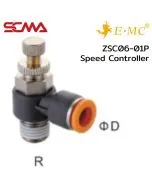
Flow Control Valves
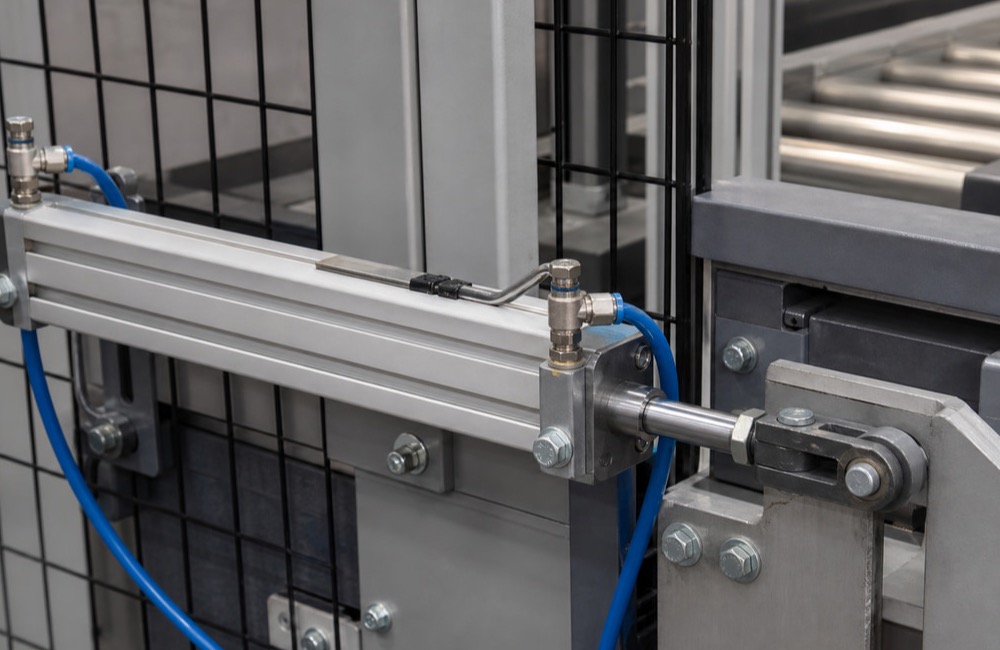
This valve is used to adjust the volume of air supplied into or exhausted from a cylinder. Technicians can turn it to set the speed of movement in sync with machine rhythms. Precise speed control reduces impact at end-of-stroke, preventing damage to workpieces and pneumatic mechanisms from severe collisions.
Selecting the Right Air Hose for Each Type of Pneumatic Equipment
The air hose directly affects the flow rate and lifespan of pneumatic equipment. The choice of material must be based primarily on the working environment.
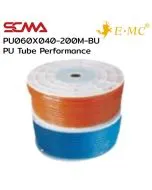
PU (Polyurethane) Air Hose
A PU material hose offers high flexibility, bending into tight corners excellently. This type is suitable for installation points where machinery moves continuously. It can withstand repeated folding without cracking, making it a favorite among maintenance workers to run sub-hoses to the workpiece holding sets.
Nylon Air Hose
A nylon material hose has higher pressure and temperature resistance than PU, resistant to corrosion from certain chemicals. Engineers recommend using this for main air line runs above ground or with pneumatic tools that require high strength hoses. This model is harder to bend, so it's not ideal for areas with frequent movement.
Air Preparation Units Protect Pneumatics
Main pump air is full of moisture and dust. Releasing raw air into machinery will quickly damage the rubber seals of pneumatic equipment. Air preparation units are crucial helpers.
- The FRL Unit consists of Filter (filter), Regulator (pressure regulator), Lubricator (oil injector).
- The filter catches water droplets, dust particles, and rust from main pipes before entering the valve.
- The pressure regulator helps control air pressure to remain constant as per the cylinder requirements.
- The oil injector mixes lubricating oil mist into the air hose, preventing premature tearing of rubber seals inside solenoid valves.
Air Leaks in Pneumatics and Techniques to Check for Leakage on-site
The hissing sound at joints is a classic problem that maintenance teams need to address promptly. Air leaks in the pneumatics system are like burning electricity for nothing.
- Maintenance workers must walk around checking for air leaks at moving joints while the machinery is running.
- The main cause is deep scratches on the end of the air hose, causing the O-ring inside the joint to not seal properly.
- The locking mechanism inside the joint deteriorates from frequent pulling and pushing of the air hose.
- Using regular scissors or cutters to cut the air hose results in an uneven cut.
- A flattened end of the air hose will not fit fully into the joint, creating a gap for compressed air to escape.
- Spray soapy water on suspicious joints; if bubbles appear, it confirms that there is definitely an air leak at that point.
Preventive Maintenance Standards for Pneumatics
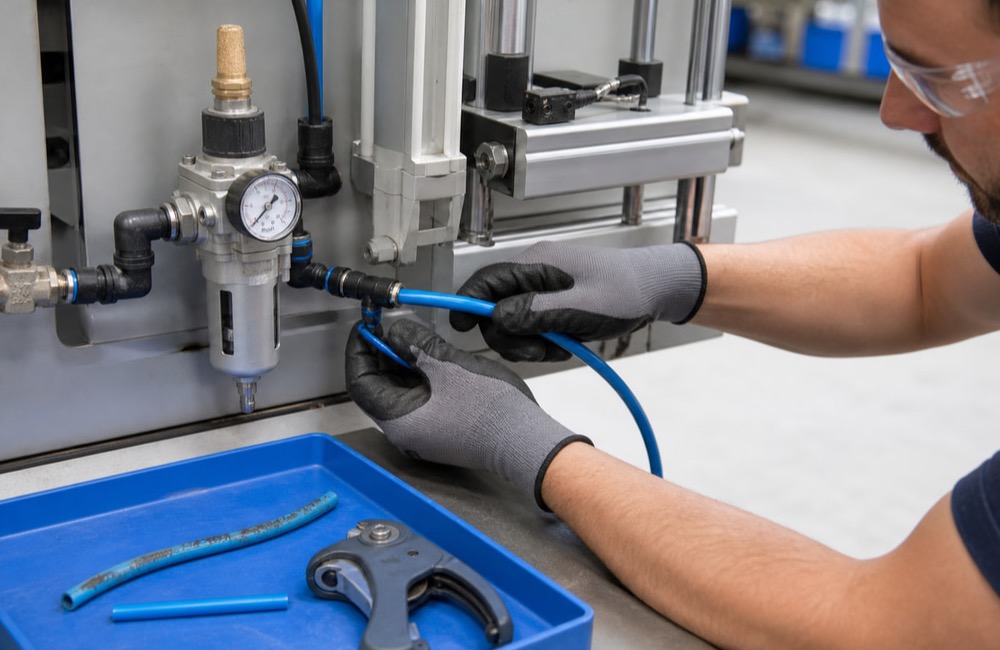
Planning maintenance helps reduce the risk of sudden machine downtime. The team must schedule checks on air hoses pneumatics at points with friction wear. Prolonged exposure to heat can cause hoses to become brittle and crack, necessitating immediate replacement. Technicians should regularly drain water from the air filter (Drain Valve) to prevent it from entering the system and washing away lubricants, which would make pneumatic equipment stiff and eventually damage them.
Summary
Pneumatic accessories are crucial components that enable a pneumatic system to function perfectly. Using high-standard equipment helps solve air leak problems and reduce energy loss in the factory. SCMA is ready to advise on procurement of all types of pneumatic accessories, as well as pneumatic tools. We have a team of engineers who can compare specifications online and deliver pneumatics quickly to your factory for immediate installation.
If you want to buy, you can purchase from SCMA today!
We offer a 100% online service strength that caters to engineers who need speed. Customers simply take photos of the joint, nameplate, or use a vernier caliper to measure the thread size and send it via our Official. The SCMA engineering team will accurately compare the specifications of pneumatic (PT, NPT, G) threads. This eliminates the problem of buying pneumatic parts that do not fit when installed. Order Pneumatic Accessories from us for quick delivery to solve machine downtime issues.
Frequently Asked Questions (FAQ) About Pneumatic Equipment
Q1: What is the difference between R (PT) thread and G thread? Can they be interchanged?
The R thread is a tapered thread with a sharp end that tightens securely on its own. The G thread is straight and requires an O-ring or seal ring for sealing. Field technicians should not force threads of different types together, as this can cause cross-threading and lead to air leaks.
Q2: Why does the One-Touch fitting still leak after inserting the air hose?
The main reason is that the end of the air hose was cut at an angle (not 90 degrees) or flattened. Some technicians use regular scissors instead of special wire strippers to cut the ends. Another cause could be wear and tear on the brass locking teeth inside the fitting from frequent insertion and removal, requiring a new fitting.
Q3: There is water mixed with air coming out of pneumatic tools in use. What needs fixing?
The automatic drain system at the air filter set may be clogged or the filter may have deteriorated. The main air tank of the compressor might also accumulate a lot of water. Maintenance staff need to clear the drainage system from the initial storage tank all the way to the machine's air filter to remove moisture.
Q4: Do black and clear (Transparent) air hoses withstand the same pressure?
If they are made of the same material, such as PU, and have the same specifications, their pressure resistance is the same. The color is merely a pigment mix to help maintenance personnel distinguish between different air hose circuits more easily (Color Coding), reducing errors when tracing circuits for pneumatic equipment.
Q5: How can I be sure that the threads match the original ones when purchasing pneumatic equipment online from SCMA?
SCMA has an engineering support team available through online channels. You can measure the outer thread diameter with a vernier caliper, take photos and send them to us. Our team will immediately convert it into standard thread size for you. We provide pneumatic equipment specifications that match perfectly and offer fast delivery.