Have you ever encountered difficulties in connecting devices in an industrial factory? SCMA Co., Ltd. (SCMA), as a provider of comprehensive automation system solutions, invites you to learn about Modbus, an important communication standard. This article will delve into what Modbus is, covering both Modbus RTU and Modbus TCP formats, so that you can apply it to your machinery with maximum efficiency.
What is Modbus?
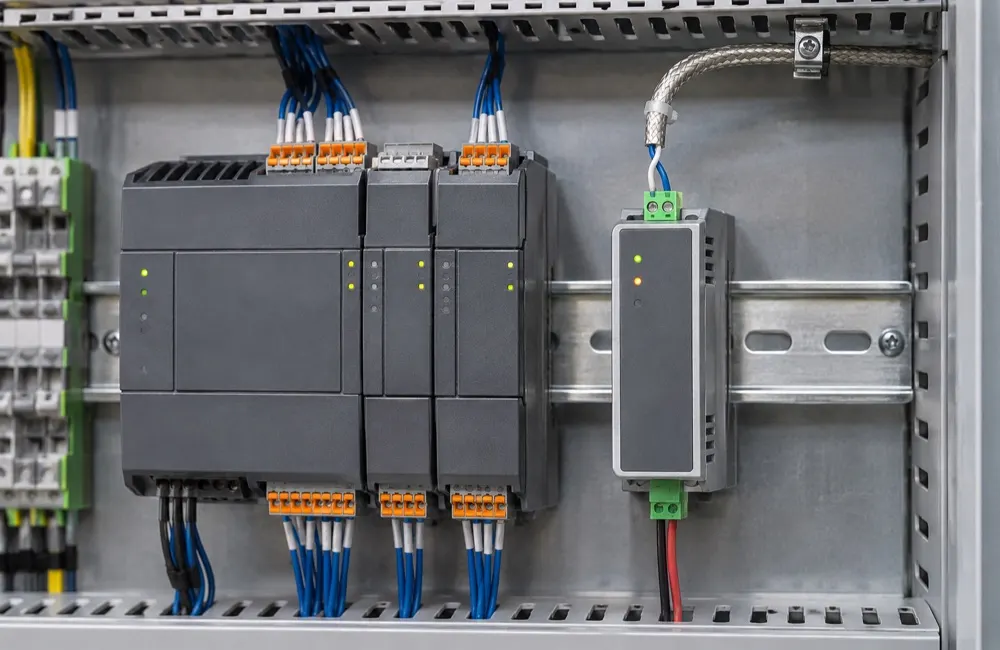
Modbus is a standard data communication protocol in industrial systems that was designed to help control devices, machines, and various sensors exchange data smoothly. This system acts as a common language that allows devices from different brands to communicate, whether through Modbus RTU signals or Modbus TCP networks.
How Modbus Works
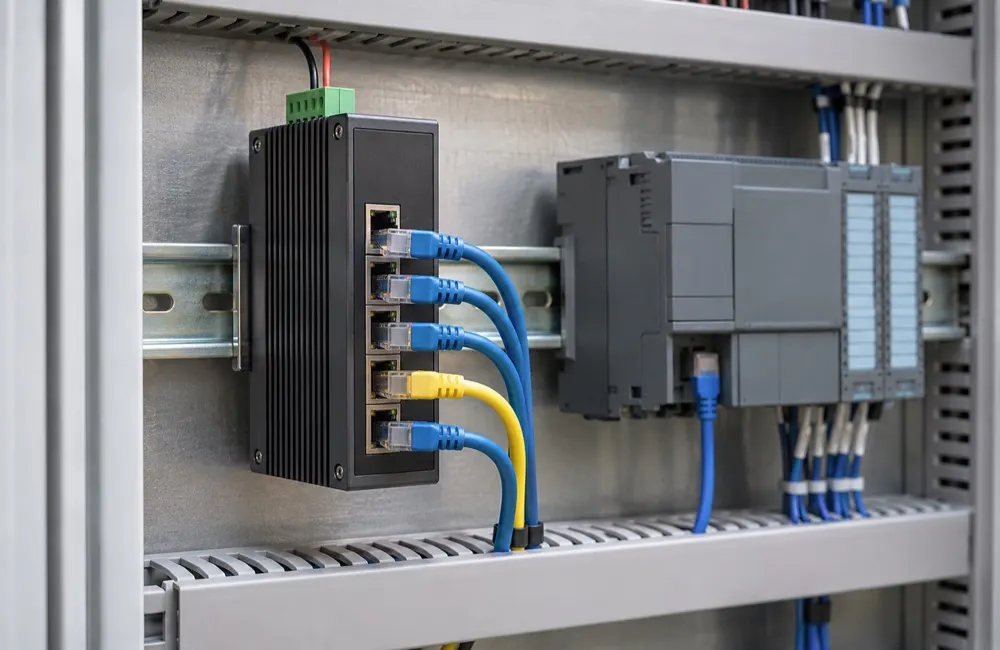
The principle of how Modbus works is a crucial aspect that engineers must understand in order for the automation system to operate stably. The data transmission format of Modbus RTU mainly follows the principle of communication between the control device and the end device.
Master-Slave Architecture
The basic structure of Modbus operates clearly under the Master-Slave system. A Master device, such as a PLC, always initiates sending commands (Request) into the network. Meanwhile, Slave devices only serve to wait for and process commands. This type of operation helps keep data management in Modbus TCP orderly.
Command Sending and Response Process
When the Master needs data, it sends a request to the specific Address of the Slave. A Slave device, such as a temperature sensor, immediately responds (Response) with data or operational status back to the Master. This process occurs very quickly in the Modbus RTU system to provide real-time data.
Data Polling
This communication system does not have an automatic event-driven notification mechanism from the Slave device itself. Therefore, the Master device must use a polling method to sequentially inquire from each destination device one by one. This method helps prevent data collision issues in the network. Those who are interested in learning more can view more information about this principle in the manual from RT Automation
How many types of Modbus are there?
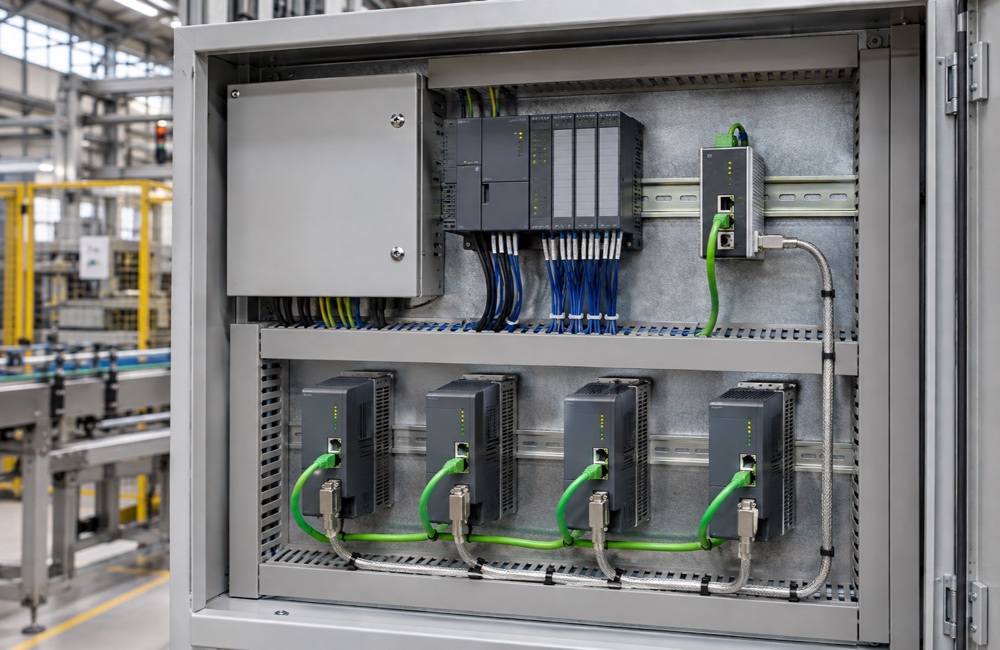
The classification of Modbus is determined by the type of physical medium used for transmitting data. Understanding what each Modbus format is will help you select the right device that fits the environment of your factory.
Modbus Serial (Serial Communication)
This format sends data through a standard serial port, such as RS-485 or RS-232. It is divided into two main types. The first type is Modbus RTU, which encodes data in binary format, allowing for fast data transmission. The other type is Modbus ASCII, which encodes data as characters for easy readability but has a lower data transmission speed.
Modbus TCP/IP (Network Communication)
This solution was developed to support communication through computer networks via LAN or Ethernet. Modbus TCP relies on the TCP/IP protocol to carry data packets, allowing for rapid transmission across the factory's internal internet network. It supports connecting a massive number of devices, fully enabling the transition into the IIoT era.
Modbus Maintenance
Based on the experience of SCMA's engineering team who provide on-site system maintenance for industrial factories, systematic maintenance of the signal transmission system is crucial to reducing machine downtime. Network system maintenance, from Modbus RTU to LAN systems, should be carried out according to the following steps:
Connection Point and Signal Cable Maintenance (Physical Layer)
The most common basic problems encountered when using Modbus RTU arise from loose hardware connection points. Maintenance technicians must check the wiring terminals at the PLC port or Remote I/O device to ensure no oxide buildup. It is necessary to check the installation of the 120 ohm termination resistor at the cable end to prevent signal reflection, as well as inspect the grounding of the shielded cable to prevent interference.
Software Parameter Configuration (Configuration Check)
Mismatched software configurations can cause the system to crash immediately. Administrators must check the Baud Rate, Parity, and Data Bits of all devices to ensure they are completely consistent. It is necessary to verify that no Slave device uses a duplicate Address. Using tools such as Modbus Scanner can accurately check the status of data transmission on the Modbus TCP network.
Application of Predictive Maintenance
SCMA supports upgrading factories by analyzing data from the Modbus system in advance. Using Modbus to retrieve real-time status from sensors can help analyze the trend of motor or water pump system damage before problems occur. Instruments in the system should be sent to the laboratory for calibration at least once a year to ensure the processed data remains accurate over time.
Modbus Usage in Industry
Implementing this protocol in production areas enables devices from different brands to work together. Understanding the practical context of what Modbus is will lead to the design of an efficient machine network.
Connecting Field Devices
At the production level, engineers use Modbus RTU to connect voltage sensors or electrical meters to indicators to display results. These raw data are collected and sent to the main controller, such as a PLC, allowing users to monitor the status of each individual machine in detail.
Creating a Centralized Automated Control System
All data retrieved from end devices are sent to the SCADA system or a central HMI screen. Using Modbus TCP at this level helps support denser data volumes. Factory operators can open or close valves or adjust motor speed values from a single control room.
Integration with Industrial IoT Networks
The Industry 4.0 era has led to the use of IoT Gateways to convert basic Modbus signals via Wi-Fi to the cloud system. Doing so allows management to view production reports on smartphones anytime and anywhere. This is an effective way to leverage existing technology without having to invest in dismantling the old system.
Advantages of Modbus
This protocol has long been favored by users in the industrial sector due to its unique features that are hard to replace with other technologies. Using Modbus RTU or the Ethernet version offers clear advantages that support cost reduction
Open Standard with No Licensing Fees
The top advantage is that it is an open protocol (Open Protocol) that developers can use for free. The simple encoding structure allows engineers to quickly learn how to configure registers and troubleshoot issues. As a result, operators can save a huge amount of software licensing costs compared to other closed systems
Compatibility with Cross-Brand Devices
Most production systems do not use machines from a single brand exclusively. Knowing what Modbus is helps you seamlessly connect a sensor from one brand to a PLC from another brand. Many SCMA measuring instruments support this standard, allowing customers to integrate them immediately with existing SCADA or HMI systems without needing expensive converters
Reduces Signal Wiring Costs
The RS-485 bus allows daisy-chaining devices from one point to another. Doing this in a Modbus RTU system reduces the amount of wiring required to run back to the main control cabinet on a one-to-one basis, significantly saving both cable costs and installation labor costs.
Longer Communication Distance
Large factory areas face issues with the distance between machines. The digital signals of Modbus RTU used on the RS-485 standard can transmit data up to a maximum of 1.2 kilometers. The system has built-in CRC (Cyclic Redundancy Check) for data integrity verification, making it stable and resistant to electromagnetic interference.
Flexibility in Expanding the Network System
Factories that need to expand their production lines can add devices to the existing bus without shutting down the entire system. In addition, upgrading to Modbus TCP allows faster data transmission over Ethernet networks (wired LAN or Wi-Fi), enabling data to be uploaded to the Cloud system for future advancement.
How to Choose Modbus
Deciding to purchase a device that supports the Modbus network must be based primarily on the on-site conditions and the characteristics of the control system. SCMA recommends four criteria for selecting devices to ensure you get the most cost-effective solution.
Consider the type of protocol that matches the main system: If the factory focuses on long-distance wiring, choose a device that supports Modbus RTU. However, if you need to connect to an IT system or a computer via LAN, look for a device that supports Modbus TCP.
Check the device's role (Master or Slave): Understand that Modbus is a standard for sending commands. If you need a master device to retrieve data for display, purchase a Master device, such as the SENECA display. However, if you need a device to send values, purchase a Slave device, such as a voltage sensor.
Environmental durability (IP Rating): Choose a Modbus device with an IP65 or higher dust and water protection rating if you need to install outdoor sensors, or use an Ex-Proof version for hazardous areas.
Ability to connect to IoT: If you have plans for a Smart Factory, choose an IoT Gateway device, such as the SANGI brand from SCMA, to convert signals and transmit them via Wi-Fi to the Cloud immediately.
Design and Installation Services from SCMA
Setting up a complex industrial network system on your own may lead to unnecessary complications. SCMA is ready to be your technical partner to deliver accurate and comprehensive Modbus solutions
Consulting and Design Services: Our engineering team helps assess the site to select the most suitable Modbus RTU network or LAN system
Supply of High-Quality Equipment: We are authorized distributors of sensors and measuring instruments that support Modbus TCP from world-leading brands
Installation and System Configuration Services: Worry no more about parameter configuration because our technical team handles everything from start to finish
Calibration and After-Sales Support Services: We offer Project & Solutions service to maintain the system's full performance throughout its lifespan
Summary
Modbus technology is a crucial foundation that enhances the communication performance of machinery in modern industries. Fully understanding what Modbus is, whether it's applying Modbus RTU to save signal wires or Modbus TCP to support large data volumes, all contribute positively to long-term production potential. If your factory is looking for experts to improve your automation system, SCMA is happy to provide comprehensive design, installation, and calibration services for measurement instruments.
Interested in purchasing or consulting via LINE Official: @SCMA
If you want to buy Modbus, you can buy from SCMA today!
Selecting standard measuring equipment directly affects the stability of the entire production system. SCMA has high-quality products that support Modbus technology, offering a wide range of options, covering everything from Modbus RTU displays to advanced sensors that support Modbus TCP. We are ready to provide in-depth consultation to help clarify which device is most suitable for your production line, ensuring that you receive an accurate solution that meets your long-term investment needs.
Frequently Asked Questions
What is Modbus used for in industrial factories?
It is used as a communication protocol to connect machines, sensors, and control devices together, allowing real-time reading of values and storage of production data.
What is the difference between Master and Slave?
The Master device is responsible for issuing commands and requesting data from the network, while the Slave device is responsible for processing commands and sending responses back to the Master.
How many devices can be connected to an RS-485 signal cable?
According to general standards, up to 32 end devices (Slaves) can be connected to one circuit without using a repeater device.
What are the main causes of errors in the bus system?
The main issues arise from incorrect parameter settings such as mismatched Baud Rate or device addresses, as well as loose signal cable connection points.
Can analog signals from older models be adapted to work with this system?
Yes, by installing a Remote I/O device to convert current signals (4-20mA) into digital data for transmission into the main network.