Dealing with electrical leakage issues or worried about short circuits in your industrial factory? Checking the condition of wiring with standardized equipment is crucial, and the insulation tester is the solution that can help prevent serious damage. The engineering team SCMA, experts in measuring instruments, is ready to provide sales and consultation services. This article will take you through every aspect of the insulation tester, so that you can use it correctly and safely.

What is an Insulation Tester?
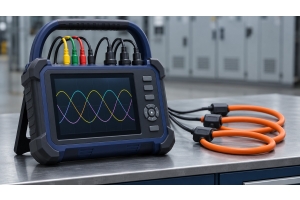
An insulation tester (Insulation Tester) or megohmmeter is used to measure the insulation resistance in wires, motors, and equipment that have been disconnected from the power source. The measurement results help assess the insulation condition in conjunction with the equipment requirements and inspection history.

How an Insulation Tester Works
According to the experience of the SCMA engineering team, the working principle of the insulation tester starts with applying a selected direct current (DC) voltage according to the specifications to the equipment that has been disconnected from the power source. Then, the device measures the amount of leakage current to calculate the insulation resistance according to Ohm's Law (R = V ÷ I). The read value is displayed in megaohms (MΩ) or gigaohms (GΩ), helping to accurately assess the insulation condition, referencing the international testing principles from RS Components

What are the different types of insulation testers?
Once we know what an insulation tester is, the next step is to understand the types of this measuring instrument. Insulation testers distributed by SCMA can be divided into 3 main types according to the display characteristics as follows
Digital Insulation Testers
This type of tester displays resistance values as digital numbers on the screen, making it easy to read and highly accurate. Insulation testers in the digital format stand out with deep analysis functions, such as automatic calculation of PI and DAR values. If you want to compare with a needle-type device, an example is model KEW 3165 which is an analog model
Analog Insulation Testers
This type displays measurement results through the movement of the needle on the scale dial, which is a traditional format familiar to electricians. The advantage is that it allows users to quickly observe the trend of resistance value changes in real time. Therefore, using insulation testers in the analog format meets the needs of preliminary checks that require speed
Multifunction Testers
If you want maximum value, insulation testers are just one of the functions of this type of measuring device. Multifunction devices have combined the ability to measure voltage, test ground continuity, and inspect insulation into one unit. This is considered a insulation tester that covers all the needs of technicians
Maintenance of Insulation Resistance Testers
Proper maintenance of insulation resistance testers is crucial to extending the lifespan and maintaining the accuracy of the device, ensuring that insulation resistance testers are always ready for use. SCMA recommends the following maintenance guidelines:
Care of Probes and Leads
Leads are the parts that come into direct contact with high voltage. Users should inspect for cracks or tears before each use of the insulation resistance tester. If any minor damage is found, replace the lead set immediately for safety during operations.
Cleaning
Maintaining cleanliness helps prevent the accumulation of dirt that may affect the internal circuitry of the insulation resistance tester. Use a dry cloth or a slightly damp cloth to gently wipe the exterior. Caution: Never use corrosive chemicals or solvents.
Storage of Equipment
The storage environment directly affects the lifespan. After use, the insulation resistance tester should always be stored in a shockproof box. The storage area should have appropriate temperature, avoiding areas with high magnetic fields or vibrations from machinery.
Battery Management
Battery degradation or chemical leakage is the main cause of premature equipment failure. If it is assessed that the insulation resistance tester will not be used for a long period, the battery should be removed from the device. Following this guideline effectively protects the internal circuitry.
Calibration
Determine the calibration cycle according to the manufacturer's recommendations, usage conditions, calibration history, and the quality control system of the work site.
Electrical Insulation Tester Usage
The application of electrical insulation tester covers from general maintenance work to production processes. For those who are wondering what the electrical insulation tester application is, let's look at some real-world usage examples in the industry as follows
1. Cable and Wiring System Testing
In the process of wiring inside the factory, the electrical insulation tester is used to check the degradation of the main cable insulation. Checking this resistance value confirms the integrity of the electrical system, prevents ground leakage problems, and reduces the risk of electrical short circuits
2. Motor and Electric Machinery Testing
Maintenance teams use the electrical insulation tester to measure the insulation value between the motor winding and the motor frame, or to check the transformer winding. Preventive maintenance helps reduce the risk of sudden equipment failure, which may lead to unplanned production line shutdowns
3. Automotive and Electric Vehicle (EV) Electrical Systems
Insulation testing of electric vehicles or high-voltage batteries must be done by qualified personnel according to the manufacturer's manual and using the specified equipment for that system. Because selecting the wrong test points and voltage may cause equipment damage or danger
4. Electrical Appliances and Electronic Devices
Post-repair electrical appliance testing should use the specified method and test voltage for the product. Before starting the work, separate the electronic circuits that may be damaged by the test voltage according to the manual
Advantages of the Electrical Insulation Tester
Some models have voltage measurement functions, live circuit detection, or automatic discharge. Check the features and specifications of the model according to the type of work. The continuously recorded measurement results help track the trend of insulation changes
How to Choose an Insulation Tester
Considering the purchase of an insulation tester that is cost-effective and meets real-world usage requirements involves considering several engineering factors to ensure your tool operates at full efficiency. We have the following checklist for purchasing:
- Test Voltage: Choose according to the equipment's rating, manufacturer's manual, and the testing method used. Check that the connected components can withstand the voltage. The size of the motor or operating voltage alone is not sufficient for selecting the test voltage.
- Consider the maximum resistance value: Choose a model that can measure with high precision and covers the test range, with measurement units ranging from megaohms (MΩ) to teraohms (TΩ)
- Advanced analysis functions: For those who are unsure what additional functions of an insulation tester are, choose a model that can calculate the polarization index (PI) and the dielectric absorption ratio (DAR)
- Safety: Check the equipment and probe ratings, the voltage detection and discharge functions of the model, as well as the method for confirming residual voltage according to the manual.
- Brand reliability: Purchase through specialized agents with service centers in Thailand to ensure proper calibration
Precautions When Working with an Insulation Tester
Working with high voltage electricity is risky. Users must strictly follow safety regulations. Important precautions before starting to use an insulation tester are as follows:
- Disconnect the power source and prevent backfeeding according to the on-site procedure. Then,confirm that there is no voltage using an appropriate tool before starting the insulation test.
- Check adjacent equipment: Ensure that the equipment being tested is not connected to an electronic circuit board sensitive to high voltage
- During testing, avoid touching the terminals and test leads. When testing stops, discharge and confirm that the residual voltage is at a safe level according to the manual before removing the leads or touching the workpiece.
Summary
In summary, the Electrical Insulation Tester is an essential measuring device for safety in factories. Understanding what an Electrical Insulation Tester is, as well as knowing the principles of purchasing and maintenance, will help sustainably elevate work standards. If your factory is looking for a high-quality measuring tool, SCMA, as an expert in Electrical Insulation Testers, is ready to provide advice, design solutions, and offer comprehensive services.
If you want to buy an Electrical Insulation Tester, you can buy it from SCMA today!
This article is created to deliver accurate engineering knowledge, helping you realize the importance of electrical system inspection. If you need a reliable solution, you can come and view all products on our website. We have a main service page that covers everything from the distribution of Electrical Insulation Testers, technical consultation, to calibration work, ensuring that Electrical Insulation Testers are the most cost-effective investment for your business. Come and chat with us on the SCMA website immediately.
Frequently Asked Questions
What voltage should be used for insulation testing?
Select the test voltage according to the type of insulation, equipment rating, and manufacturer specifications or testing method used. If there are still connected electronic circuits, check the disconnection procedure before testing.
What do PI and DAR values tell us?
These two values are used to assess the condition of insulation over time, accurately indicating the amount of moisture or dirt accumulated inside the motor winding.
Why should we discharge after measurement?
Cables and some types of equipment can store charge. Discharge and check for residual voltage according to the manual, even if the device has an automatic discharge system.
Can a multimeter be used instead to measure resistance?
They cannot be used interchangeably, as a multimeter provides too low a voltage to detect small leaks inside high-resistance insulation.
When should the insulation tester be sent for calibration?
Consider the manufacturer's manual, usage frequency, environmental conditions, calibration history, and your quality system requirements.