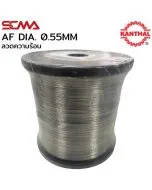
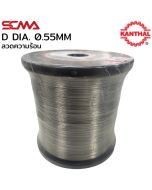
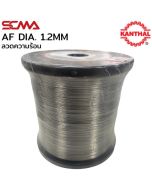
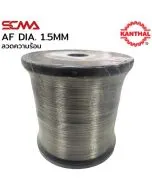
Heaters or heating devices are crucial in today's era, both for homes and industries. They are necessary to provide warmth or heat for various processes. SCMA is a leader in industrial measurement tools and automation solutions, offering a wide range of heaters to meet customer needs, along with comprehensive consultation and services.
What is a Heater?

A heater is an apparatus that generates heat by converting electrical energy into thermal energy. Electric heaters or heating devices can be found both in homes and industries, such as home heating appliances like irons and hot water dispensers. In industries, heaters are often used in processes requiring heat, for example drying, melting, firing, sterilization, etc.
How Heaters Work
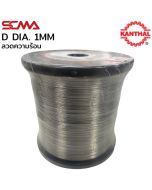
Heaters generate heat by passing an electric current through resistance wire. According to the principle that when electricity flows through a conductor with resistance, it produces heat. The amount of heat generated varies according to the amount of current flowing and the resistance of the wire. Once this heat is produced, it can be used in various processes such as heating workpieces, boiling water, or warming air.
Components of a Heater
A heating heater consists of the following important parts:
- Heater terminals are the part that connects to the power source, allowing current to flow into the resistance wire.
- The heater is a resistance wire made of a mixture of nickel and chromium, which converts electrical energy into heat.
- Magnesium oxide (MgO) insulation acts as an insulator between the heater wire and the casing, preventing electrical leakage.
- The heater case is the outer covering of the heater wire and insulation, made from heat-resistant materials such as stainless steel, Incoloy, or glass tubing.
- Heat-resistant wire is used to connect the heater terminals to the power source and is a special type of wire that can withstand high temperatures.
What are the types of industrial heaters?

There are various types of industrial heaters, categorized by shape, material, and application. The main types include:
Tubular Heater (Tube Heaters)
Long tube-shaped heaters that can heat both air and liquids are commonly used for drying, curing paint, or boiling water. They can be bent into various shapes according to their application.
Immersion Heater (Submerged Heaters)
Tube heaters designed to submerge in liquids for direct heating purposes, featuring multiple tubes within a large heater head. They come in helical and flanged styles suitable for liquid heating applications.
Finned Heater (Finned Heaters)
Tube heaters with fins around them to increase heat exchange area, making them efficient at quickly heating air. They are commonly used in ovens or hot-air cabinets.
Bobbin Heater (Coil Heaters)
Designed specifically for liquid immersion heating, coil heaters feature easy-to-replace heater wire without needing to replace the entire unit. They come in glass tube versions suitable for highly corrosive liquids.
Strip Heater (Plate Heaters)
Sheet-like heaters, available in both rectangular and circular shapes, encasing heating wire within stainless steel or galvanized sheet metal with insulating material. They are commonly used for sealing or forming plastic packaging or food ovens.
Infrared Quartz Heater (Infrared Heaters)
Using infrared radiation to quickly and deeply heat objects, these heaters come in quartz tube and ceramic styles. They are commonly used for curing paint, food baking, or plastic cutting.
Cartridge Heater (Rod Heaters)
Long rod-shaped heaters similar to flashlights that fit into drilled holes for direct heating of metal parts or molds. They are commonly used in plastic injection molding.
What are the benefits of heating heaters?
Heating heaters have both household and industrial benefits.
- In homes or residences, heaters are used to create warmth during cold weather, helping prevent illness.
- In industry, heaters are important equipment in various production processes such as drying products, sterilization, metal melting, ceramic firing, cutting or welding plastics, increasing the efficiency of production.
- Currently, there is more development in electric heater technology, making it possible tocontrol temperature accurately, save energy, and have a longer lifespan.
- Some types of heating heaters, such as infrared heaters, can provide heat without direct contact with the workpiece, making installation and maintenance easier.

Interested in heating heaters? You can buy from SCMA today!
SCMA offers a wide variety of heating heaters, both in form and usage, ranging from small home-use heaters to large industrial electric heaters for factories. We have an engineering team ready to consult and design heater sets according to customer needs, with nationwide delivery and installation services. Additionally, we offer after-sales service and maintenance from expert technicians to ensure your heating equipment operates efficiently throughout its lifespan.
Summary
Heaters are essential equipment for daily life and industry today. They work by converting electrical energy into thermal energy, allowing electric heaters to provide warmth and heat effectively in various processes. Currently, there are many types of heaters available to choose from according to suitability. If you need high-quality heating heaters with comprehensive consultation and service, you can contact SCMA, the leader in industrial automation measurement tools and solutions at any time.
Frequently Asked Questions
How do heaters work?
Heating heaters generate heat by passing electricity through resistance wire, causing the wire to heat up and release thermal energy. The amount of heat depends on the current and resistance of that particular wire.
How many types of heaters are there?
Industrial heaters come in various types, such as tubular heaters, fin heaters, immersion heaters, rod heaters, ribbon heaters, infrared heaters, and plate heaters. Each type is suitable for different applications.
What are heaters?
Heaters are devices that generate heat by converting electrical energy into thermal energy. They are mostly made of resistance wire with a mixture of nickel and chromium, and come in various forms for use both at home and in industry.
Do heaters have terminals?
All types of heaters have electrical terminals to connect to power sources so that current can flow through the heating wire. Heater terminals may be designed as wires, plug-in connectors, or terminal blocks, depending on usage and convenience.