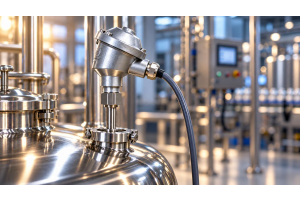

SCMA Company Limited is an expert in high-quality heating system solutions and Cartridge Heater for industrial applications. We are committed to developing technology and providing excellent services to meet every customer need and enhance the efficiency of Thailand's industries. Let's get to know the popular heating device, Cartridge Heater, which has outstanding features that surpass other types of heaters.
What is a Cartridge Heater?

A Cartridge Heater, or tubular heater, is a compact cylindrical heating device designed to provide heat to various objects and mediums such as solids, liquids, and gases. It contains highly efficient resistance wire wound inside and is encased in durable metal sleeves resistant to wear and corrosion. Suitable for industrial applications requiring fast, reliable, energy-efficient, and versatile heating sources.
How does a Cartridge Heater work?
The principle of operation of the Cartridge Heater is to convert electrical energy into heat. When an electric current flows through high-resistance Nichrome wire, rapid heating occurs and is transferred to the outer stainless steel or Incoloy casing before radiating heat to the object or medium in contact.
Inside the cartridge heater, there is densely packed magnesium oxide (MgO) powder that acts as an electrical insulator to prevent leakage and short circuits while also quickly transferring heat from the Nichrome wire to the outer casing. This allows the tubular heater to achieve high temperatures in a short time.
Furthermore, ceramic cores and other insulation materials are used to maintain thermal conditions and increase the strength of the heating element, making it durable even under heavy operating conditions.
How is a Cartridge Heater Different from Other Types?
Compared to other types of heaters such as plate, tube, or tape types, Cartridge Heaters stand out with a much higher watt density (Watt Density) per area. This allows for intense and quick heating in compact sizes, suitable for use in narrow spaces or where specific point heating is required. They are also easier to install and maintain.
Furthermore, Cartridge Heaters are more durable than other types of heaters with a strong protective casing that can withstand vibrations, impacts, and wear better. Additionally, they have high-temperature insulation that helps prevent heat loss, ensuring consistent heating, energy efficiency, and longer lifespan compared to others.
What are the Benefits of a Cartridge Heater?
Electric heaters in the form of Cartridge Heaters offer extensive benefits and applications, including:
- Rapidly increase the temperature of objects and various mediums with high thermal energy
- Provide heat to molds or machinery in industrial processes such as plastic forming, injection molding, rubber extrusion, metal coating, bag sealing, food processing, etc.
- Used as a heating component within various tools and equipment like ovens, steamers, boilers, grills, sealers, packaging machines, etc.
- Control the temperature of liquids, chemicals, gases in chemical industries, refineries, petrochemicals
- Serve as a heater for tanks or pipelines in factory heating systems
- Used as a heating device for high-precision work such as laboratory testing, medical equipment, etc.
Due to its versatile properties and applications, Cartridge Heaters are a popular choice in various industries that require efficient and reliable heat sources.
What Types of Cartridge Heaters Are There?

Tube heaters, or Cartridge Heaters, come in various types to cater to different applications as follows:
Insert Cartridge Heaters
These are standard tube heaters designed for insertion into a precisely drilled hole. They provide heat from the inside outwards and are made of stainless steel or nickel alloy, resistant to oxidation. They offer high value and efficiency.
Immersion Cartridge Heaters
These tube heaters are designed for direct immersion into liquids such as water, oil, or chemicals. There are three types: flange type, threaded plug type, and side entry type to suit various installation needs. They offer versatility, convenience, and safety.
Split Cartridge Heaters
These heaters have the heating element divided into two parts placed in a half-round casing. When heated, the casing expands to fit snugly against the surrounding surface, improving heat transfer and making it easy to remove when replacement is needed. They are suitable for frequent change-out applications.
Custom Cartridge Heaters
For special requirements, SCMA can produce Cartridge Heaters in custom sizes, shapes, and specific properties to meet the unique needs of each application perfectly.
Additionally, there are other specialized tube heaters such as pipe type, tape type, disc or plate type, and immersion types for liquids to accommodate every industrial need.
Which Brand of Cartridge Heater is Good and Worth Using from SCMA?
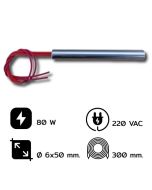
SANGI CARTRIDGE HEATER, Size ∅ 6 x 50 mm. Lead Wire Length: 300 mm.
https://scma.co.th/cartridge-heater-sangi-300-mm-6-50-80-w.html
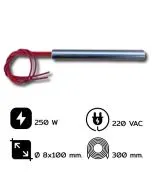
SANGI CARTRIDGE HEATER, Size ∅ 8 x 100 mm. Lead Wire Length: 300 mm.
https://scma.co.th/cartridge-heater-sangi-300-mm-8-100-250-w.html
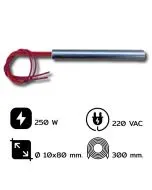
SANGI CARTRIDGE HEATER, Size ∅ 10 x 80 mm. Lead Wire Length: 300 mm.
https://scma.co.th/cartridge-heater-sangi-300-mm-10-80-250-w.html
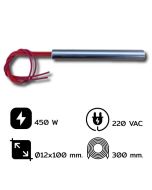
SANGI CARTRIDGE HEATER, Size ∅ 12 x 100 mm. Lead Wire Length: 300 mm.
https://scma.co.th/cartridge-heater-sangi-300-mm-12-100-450-w.html
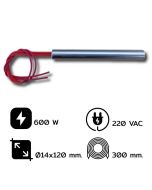
SANGI CARTRIDGE HEATER, Size ∅ 14 x 120 mm. Lead Wire Length: 300 mm.
https://scma.co.th/cartridge-heater-sangi-300-mm-14-120-600-w.html
SANGI CARTRIDGE HEATER, Size ∅ 16 x 150 mm. Lead Wire Length: 300 mm.
https://scma.co.th/cartridge-heater-sangi-300-mm-16-150-900-w.html
What Should You Know for Installing a Cartridge Heater?
To ensure that the Cartridge Heater operates efficiently and has a long lifespan, proper installation is crucial. Here are some important points to consider:
- The size of the hole must fit the heater rod properly; it should be drilled slightly larger than the diameter of the Heater, not exceeding 0.05 mm to ensure good heat transfer and prevent the Heater rod from overheating.
- A thermal compound (thermal grease, thermal pad) must be applied between the heater rod and the surrounding surface to eliminate air bubbles that act as insulation. Otherwise, it may cause excessive heat in the heater rod leading to damage or reduced lifespan.
- Use a reamer of size H7 for drilling and smoothing out the hole surface to ensure that the heater rod fits snugly.
- Clean and remove any remaining coolant debris completely; otherwise, it may become contaminants or insulators hindering heat transfer.
- If using a flange-type heater rod, do not allow the temperature at the flange to exceed 180 degrees Celsius.
- Do not bend or kink wires within 20 mm of the heater to prevent potential damage.
Additionally, select a suitable cartridge heater based on the application requirements, power rating, and temperature range. Also, install control and heat protection systems correctly for maximum safety and efficiency.
How to Use a Cartridge Heater?

The method of using a Cartridge Heater is highly flexible, depending on the type of material, environment, and heating objective, such as:
- Immersion Heating – Use the heater cartridge to directly immerse it in liquid to increase temperature to the desired level. Suitable for boiling, chemical heating, etc.
- Air Heating – Install the heater cartridge in a position where air flows through or circulates, such as in an air duct, to increase air or gas temperature.
- Surface Heating of Objects – Attach the heater cartridge directly to the surface of the object that needs heating. Suitable for warming molds, tanks, workpieces, etc.
The high temperature and rapid heat transfer make Cartridge Heaters an efficient choice for localized heating or quickly providing temperature to a system.
Why Should You Choose Rod Heaters?
Rod heaters have several advantages that make them widely popular, such as:
- They create and distribute heat evenly, helping to enhance the quality and consistency of production processes.
- They provide high thermal capacity in a small space, suitable for localized or size-constrained applications.
- They are versatile and can be used with solids, liquids, and gases.
- They are easy to install, maintain, and replace due to their cartridge-style construction.
- They are highly durable, safe, resistant to corrosion and oxidation, ensuring a long service life.
- They are energy-efficient as they deliver heat directly with high-performance insulation.
- There are models that support temperatures up to 1,200 degrees Celsius.
- They offer a wide range of options in terms of size, power rating, and shape, catering to almost every application need.
With these outstanding features, Cartridge Heaters are leading heating devices that enhance efficiency, convenience, and cost-effectiveness for industries.
Guidelines for Using Cartridge Heater
To ensure smooth and safe operation of cartridge heaters, users should consider the following:
- Do not allow exposed heating coils to come into contact with air during use as it may cause excessive heat buildup leading to damage or fire.
- Avoid exposing plugs or wires to moisture or liquids, which can lead to electrical leakage or short circuits.
- Do not repeatedly turn the cartridge heater on and off in quick succession as it may cause voltage spikes that reduce its lifespan. Instead, use a PID controller to adjust power.
- Use the cartridge heater according to the specified voltage and do not connect it to an overvoltage source.
- Always turn off the cartridge heater before removing it from equipment, and allow it to cool down before handling.
- Maintain the temperature of wire connection points below 130 degrees Celsius to prevent insulation melting and damage.
- Do not use cartridge heaters in a vacuum environment as it cannot dissipate heat properly.
- If installed horizontally, secure the heater with screws to prevent it from sliding out due to thermal expansion.
Additionally, read the manual thoroughly before use as each model may have different specifications. If you have any questions, please consult an expert from SCMA.
If you are interested in purchasing Cartridge Heaters, contact SCMA today!
SCMA is a leading provider of automation solutions and industrial heating equipment, ready to help you select and use the most suitable Cartridge Heaters for your needs efficiently. Whether you require immersion heaters for liquid heating, special-sized cartridge heaters, or high-precision temperature control devices, we have the solution for you.
Our team of experts is available to consult and advise from initial selection through installation, including fast and attentive after-sales service to help save energy, increase productivity, and elevate your industry towards excellence.
Contact SCMA today to schedule a consultation on sample products and technology, and receive free offers and consulting services. We are ready to be your reliable technical partner accompanying you in every step of sustainable business development.
Summary
Cartridge Heaters or cartridge heaters are highly efficient, versatile, and robust heating devices that meet the demands for high heat and precision in various industrial applications. SCMA is a specialist in Cartridge Heaters offering comprehensive services from consultation to design, installation, and after-sales care. With modern technology, selection of top-quality materials, and professional teams, we guarantee premium-grade heating equipment with high temperatures, durability, energy efficiency, and long-term reliability.
Frequently Asked Questions
What is a cartridge heater?
Cartridge Heater or a cartridge heater is a cylindrical heating device that converts electrical energy into heat through high-resistance nichrome wire inside. When electric current flows through the wire, it heats up and transfers heat to the metal casing and anything in contact with it. It is used to warm or increase the temperature of objects, materials, or substances during industrial production processes.
What is insulation for a heater?
Insulation for a heater is material that wraps around or is inserted into a heater to prevent electrical leakage, reduce heat loss, and improve the efficiency of the heater. Common insulating materials used in Cartridge Heaters include magnesium oxide (MgO), which has excellent electrical insulation properties but also conducts heat well, thus preventing electrical leaks and short circuits while efficiently transferring heat from the wire to the casing.
What is the function of a heater?
A heater's role is to generate or increase the temperature of substances, objects, or areas as required by converting electrical, gas, or liquid energy into thermal energy. The heat generated can be used in various processes such as melting, drying, heating, sterilizing, temperature control, and general applications in household appliances and heating equipment.
How many types of heaters are there?
There are numerous types of heaters depending on their usage characteristics, energy source, temperature range, heat transfer medium, such as:
- Categorized by physical appearance, such as cartridge (Cartridge), disc or plate type, U-shaped, clamshell, tube, tape, immersion, etc.
- Categorized by heating method, such as radiant, conductive, convective, electromagnetic, inductive, etc.
- Categorized by type of electricity, such as alternating current (AC), direct current (DC), low voltage, high voltage
- Categorized by fuel type, such as gas-fired, oil-fired, steam-fired, hot air-fired, solar-powered
- Categorized by application, such as air heating, liquid immersion, surface mounting, material heating
Cartridge Heaters are cylindrical electric heaters that provide heat through conductive contact, offering high and rapid heat output in a compact size suitable for various industrial applications.