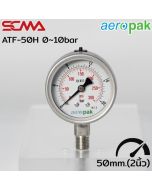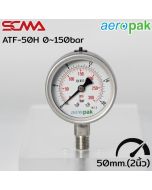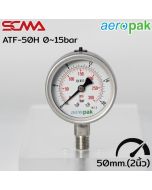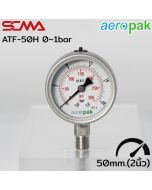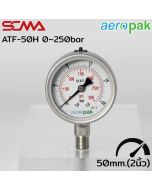

Currently, air pressure gauges are widely used in industries, particularly in the food and beverage industry, to check the pressure levels in testing rooms, which affect the performance of air pressure measuring instruments and product quality.SCMA Company, a leading provider of industrial measurement solutions, recognizes the importance of this and offers high-quality barometers or air pressure gauges to customers across various industries.
The History of Air Pressure Gauges

The air pressure gauge was invented by the Italian scientist Evangelista Torricelli in 1643. He used a glass tube filled with mercury and inverted it into a basin of mercury, causing the mercury level in the tube to rise approximately 760 millimeters, which is equivalent to standard atmospheric pressure at sea level. This is the basic principle used to create the widely used mercury barometer in early times.
What is an Air Pressure Gauge (Barometer)?
A barometer, or air pressure gauge, is a device for measuring atmospheric pressure that uses liquid or solid materials in direct contact with the air to measure changes in pressure. These changes can also be used to predict short-term weather changes.
How an Air Pressure Meter Works
The operation of an air pressure meter relies on the force exerted by atmospheric pressure on a liquid, material, or pressure sensor inside the device. When atmospheric pressure changes, the level of liquid, position of material, or signal from the sensor will change, allowing for reading the pressure value from the gauge that comes with the meter.
What are the Benefits of an Air Pressure Meter?

Barometers are primarily used to measure atmospheric pressure and air pressure in various areas. The measured values can be utilized for a variety of purposes, such as:
- For weather forecasting by tracking changes in air pressure.
- In the food and pharmaceutical industries to control environmental conditions during production processes.
- In air conditioning systems to monitor and control pressure in ductwork.
- In aviation work to measure altitude and atmospheric pressure above the ground.
Furthermore, the measured atmospheric pressure values can also be used as a reference for calibrating other pressure-related measuring instruments.
How many types of barometers (air pressure gauges) are there?
When it comes to the types of barometers, they can be divided into four main categories as follows
Aneroid Barometer
This type of air pressure gauge uses a thin metal capsule that is vacuum-sealed. When external pressure changes, the capsule contracts or expands slightly, causing the needle on the dial to move and point to the changed pressure value. Aneroid barometers have simple operation principles, compact size, easy portability, but may be less accurate than mercury barometers.
Mercury Barometer
This is the traditional air pressure gauge that uses Torricelli's principle by using mercury to measure pressure in a glass tube. When atmospheric pressure presses down on the surface of the mercury in the basin, it causes the level of mercury in the tube to rise according to the barometric pressure. Mercury barometers provide accurate readings but have limitations for transportation due to their large size.
Barograph
This type of measuring instrument works similarly to a capsule-type barometer but adds a data recording system. It uses a pen to record changing pressure values over time on a rotating graph sheet by clockwork mechanism, suitable for long-term pressure data collection.
Altimeter
What is an altimeter? It is a weather measuring instrument adapted from barometers to measure altitude based on the relationship between air pressure and height above ground. They are mostly installed in aircraft or aerial sports equipment to indicate altitude and flight level.
Atmospheric Pressure Units
To indicate atmospheric pressure levels, various measurement units are used. However, the commonly used ones include:
- Atmosphere (atm) 1 atm = 1013.25 millibars
- Pascal (Pa) the primary pressure measurement unit in the SI system
- Millibar (mbar) 1 mbar equals 100 Pa, commonly used in meteorology
- Pound per square inch (psi)
- Millimeters of mercury (mmHg) used with mercury barometers
The choice of units depends on the type of barometer, intended use, and relevant standards.
What do you need to use an air pressure meter (barometer)?

To use an air pressure meter correctly and safely, users should follow these guidelines:
- Study the usage instructions and precautions from the manual before each use.
- Place the barometer vertically, not tilted or leaning too much to ensure accuracy.
- Choose a location for installation that is away from heat, humidity, and disturbances.
- Regularly clean and check the condition of the air pressure measuring instrument.
- Calibrate the air pressure meter according to the specified intervals to maintain accuracy.
- Store in a safe place, protecting it from impact or dropping.
- Use the equipment by trained personnel who understand its operation.
If you have any questions or encounter problems during use, consult a reliable expert or authorized dealer for the best results.
How to Choose an Air Pressure Meter?
When choosing a barometer, the following factors should be considered:
- Purpose and environment of use
- Measurement range and accuracy required for the air pressure meter
- Ease of use, readability, and maintenance
- Quality and reliability of the manufacturer, including warranty and after-sales service
- Price that fits within your budget and investment
If you are unsure about the selection, it is advisable to seek advice from a professional service provider such as SCMA, which offers consultation and recommendations for choosing an air pressure meter that meets your needs.
Interested in Air Pressure Meters? You can purchase them from SCMA today!
SCMA is a leader in the barometer and air pressure measurement tool market, offering high-quality air pressure meters that have been carefully selected. They come with calibration and certification according to international standards. We have a team of experts ready to provide consultation, recommendations, and problem-solving services throughout the lifespan of your equipment, ensuring you get an air pressure meter that meets your needs and operates at full efficiency.
Summary
An air pressure gauge or barometer is a crucial tool for measuring atmospheric pressure, which is useful in various applications ranging from weather forecasting to quality control in industrial production. Choosing the right barometer will help ensure accurate and reliable measurements. If you are looking for an air pressure measurement tool that meets standards and comes with expert support,SCMA is ready to serveand provide consultation to answer all your questions.
Frequently Asked Questions
What is the working principle of a barometer?
A barometer works by measuring the pressure of air acting on a liquid or material and converting it into readable values, such as in a mercury barometer where air presses down on the surface of the mercury in a basin causing the level of mercury in the tube to rise according to the pressure.
How does an aneroid barometer work?
An aneroid barometer uses a thin metal chamber that is vacuum-sealed. When external air pressure changes, the chamber contracts or expands slightly causing the needle on the dial to move according to the changing pressure levels.
What does a barometer measure?
A barometer measures atmospheric pressure, which is caused by the weight of air around us. The value read is called atmospheric pressure or air pressure.
What is an altimeter used for?
An altimeter is used to measure altitude based on the relationship between air pressure and height above ground level. It is commonly used in aircraft or sports equipment to indicate position and elevation above the earth.