
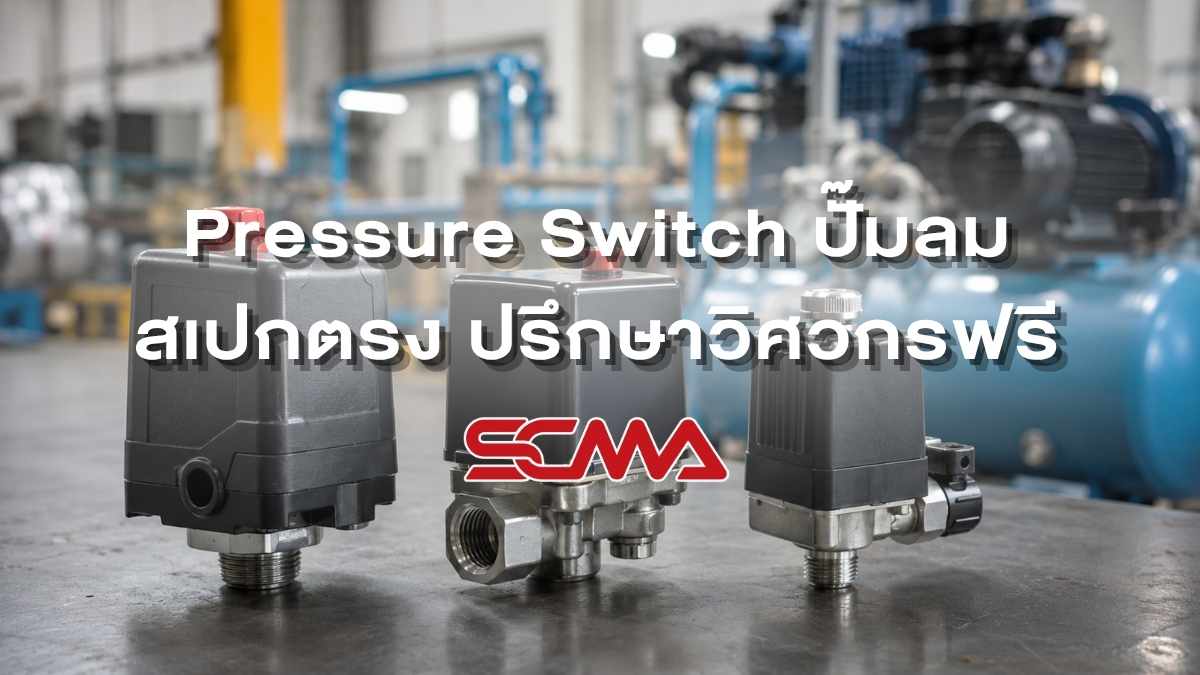
Pump Pressure Switch is the solution when on-site technicians encounter problems with pumps running continuously without shutting off, causing contact burnout and motor damage. We offer high-quality pump pressure switches and air pressure switches to prevent these risks. SCMA provides online services for consultation with free specification comparisons by our real engineering team, as well as quick nationwide delivery of spare parts that technicians can install immediately.
What is a Pump Pressure Switch? The Heart of Air Control in Factories
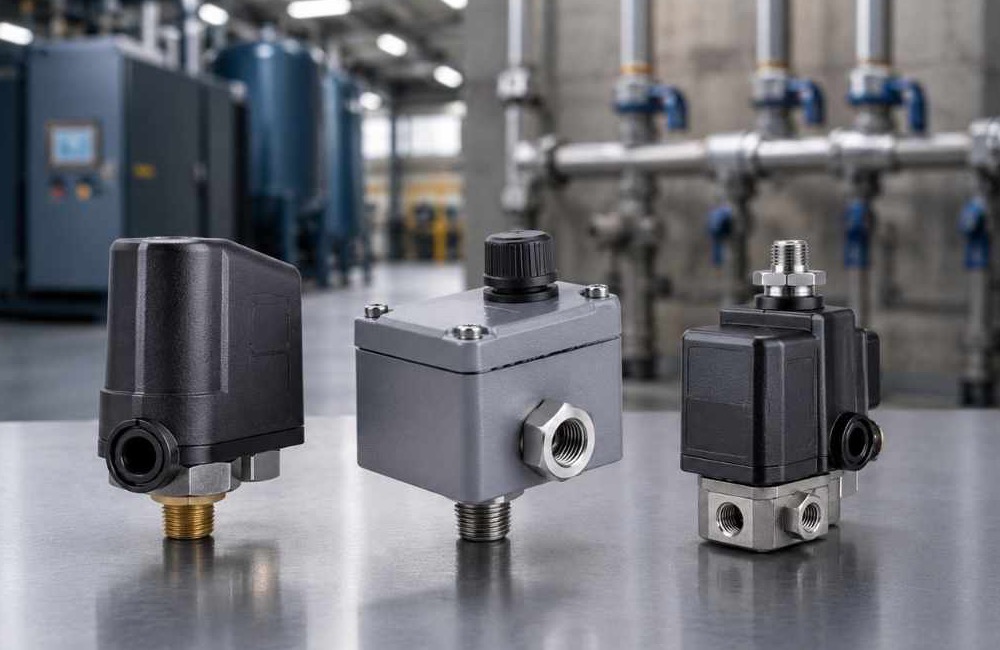
Plant engineers must pay attention to this first safety device, the pump pressure switch, which continuously monitors the air pressure inside the receiver tank. The mechanism immediately cuts off power supply to the motor when the air pressure reaches the preset maximum level. The precise operation of the air pump pressure switch prevents dangerous incidents such as an air tank explosion. Maintenance technicians must regularly check the condition of this part for maximum safety.
In-depth Engineering Principles of Air Pressure Switch Operation
The internal mechanism of the air pressure switch relies on physical principles of pressure resistance. The diaphragm receives direct air pressure from the receiver tank. When the pressure overcomes the main spring's strength, it pushes the contacts apart to cut off the circuit (Cut-out). As the factory uses compressed air and the pressure drops, the spring pushes the contacts back together again (Cut-in) to order the air pump to start a new cycle.
Components of an Air Compressor Pressure Switch Affecting Lifespan
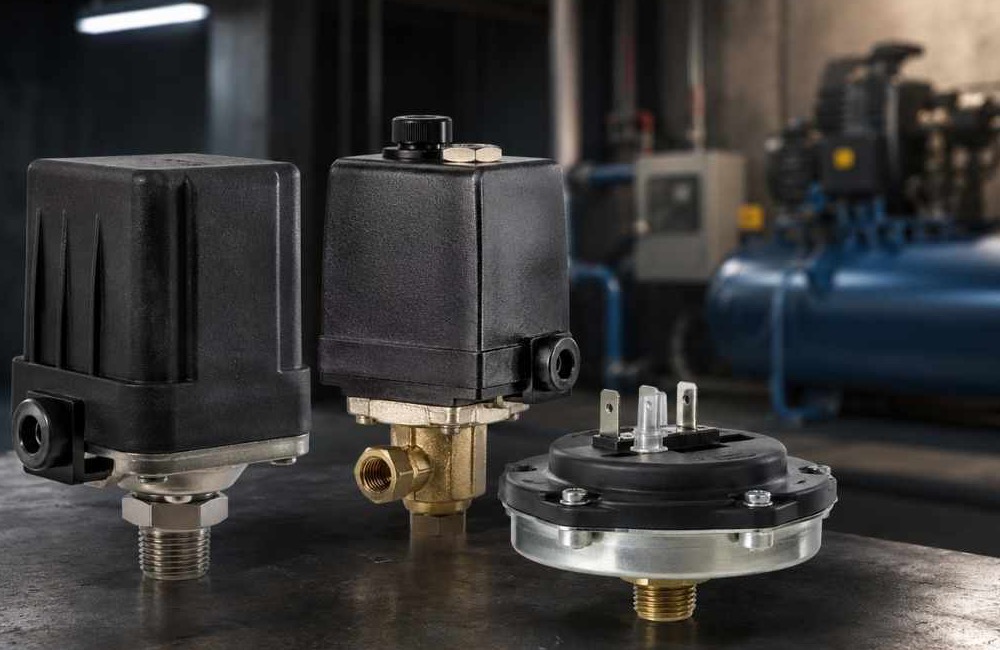
Maintaining the air compressor pressure switch for long-term use requires technicians to understand the key components hidden inside first.
Electrical Contacts
This component bears the heaviest load in interrupting power supply to the motor. The contact material must withstand high surge currents (Inrush Current). Maintenance staff should regularly inspect white arc marks on contacts; if black soot is found, a new phase switch for air compressor must be replaced immediately to prevent motor failure.
Unloader Valve
This mechanism is installed below the switch to help release compressed air remaining in the delivery pipe. Releasing air reduces resistance during motor restarts, preventing the issue of starting under load (Start under load), which is a major cause of overheating and burning out motor windings.
Differential Spring
The small spring inside sets the distance between start and cut-off points. Technicians must check the spring's stiffness (Spring Rate) over time to prevent wear. Properly setting the spring force helps maintain a steady operating cycle of the compressor, reducing heat buildup in the motor system.
The Difference Between Mechanical and Digital Air Compressor Pressure Switches
The technology of air compressor pressure switches is currently divided into two main types, engineers must choose the appropriate one for their production line requirements.
Mechanical Pressure Switch
This technology uses springs and diaphragm mechanisms to control everything. It has extremely high durability; mechanics are familiar with adjusting settings by turning nuts easily. This type of part does not require an external power source to operate the circuit board, making it excellent at resisting moisture and dust from machinery.
Digital Pressure Switch
This model uses electronic sensors to measure pressure values, which are then processed by a microcontroller. Mechanics can set the air compressor pressure switch's pressure levels with precision down to decimal points. It has an LED display showing clear numerical readings, making it suitable for high-precision compressed air systems that require signal transmission into PLC cabinets.
How to Set Cut-in and Cut-out for Air Compressor Pressure Switches to Function Perfectly
Misconfiguration of air compressor pressure switches is the main cause of motor damage; mechanics must learn the correct technique for adjusting springs.
- The mechanic must check the maximum pressure capacity of the air tank before setting the pressure switch configuration.
- The cut-out point setting should be lower than the maximum pressure tolerance of the air tank and safety valve to ensure safety.
- Tighten the large screw (Range Adjustment) to set the highest pressure at which the compressor will shut off.
- Turn the small screw to set the differential distance between the Cut-in point, instructing the compressor to restart again.
- A narrow differential setting can cause excessive motor starts (short cycling), leading to overheating and eventual motor failure.
Main Causes of Burnt Contact Faces on Air Compressor Pressure Switches
The problem with the air compressor pressure switch contact melting is not solely due to the switch itself; technicians must also analyze external factors at the site.
- A voltage drop (Voltage Drop) in the factory causes severe arcing on the contacts when switching circuits.
- Allowing the drive belt of the air compressor to become loose, causing the motor to draw excessive current (Overcurrent), directly damages the silver contacts.
- Moisture and lubricating oil vapor accumulating around electrical terminals creates high resistance leading to accumulated heat buildup.
- Selecting an air compressor pressure switch that is cheap but not up to industrial standards, unable to withstand the inrush current of large motors.
Selecting Specifications for Pressure Regulators and Switches Compatible with Original Compressors
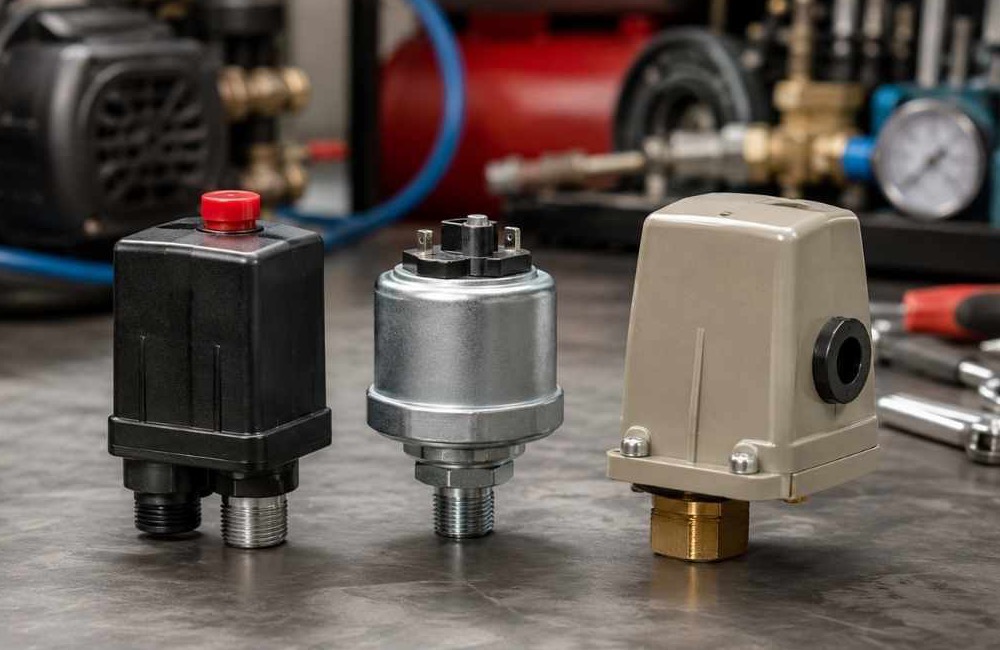
When ordering replacement parts, technicians must carefully check the specifications of pressure regulators and switches. Start by measuring the size of the copper-threaded ports at the bottom, such as 1/4 inch or 3/8 inch. Engineers need to verify whether the site's electrical system is single-phase (220V) or three-phase (380V). Properly checking the specifications of air compressor switches helps you get a reasonable price for air compressor pressure switches. Parts with matching specifications can be installed directly into existing connections without modification.
Predictive Maintenance Standards (PM) for Air Control Systems
The maintenance department must have a robust plan to maintain pressure switches. Technicians should drain water from the air receiver tank daily to prevent moisture vapor from damaging internal diaphragms. Clean dust off electrical contact surfaces to reduce heat buildup issues. Regularly monitor for hissing sounds around exhaust valves while the compressor is running. Paying attention to these small details greatly extends the lifespan of air compressor pressure switches.
Summary
Selecting the Pressure Switch for Air Compressors that matches your electrical system and pipe size is crucial for maintenance work that helps save the main motor of the factory. Properly maintaining the Air Compressor Cutout can help procurement departments reduce long-term repair costs for Air Pressure Pumps. If you have any issues with your machinery parts, our team of engineers at SCMA is ready to provide free online specifications comparison and fast delivery so that mechanics can immediately install them.
If you want to purchase, SCMA is available for purchase today!
SCMA offers convenience through our online services. Customers simply need to take a photo of the nameplate of the existing Air Compressor Pressure Switch, send it via Line OA, and our engineering support team will quickly compare specifications, check thread sizes, evaluate the price of air pressure pumps, all for free. We deliver Air Pressure Switches nationwide at a fast pace so that mechanics can immediately install them into air compressors.
Frequently Asked Questions (FAQ) About Using Air Pressure Switches for Compressors
Q1: Is the air leaking from the unloader valve of the pressure switch always due to a faulty switch?
A: Not necessarily. Continuous air leakage through the unloader valve when the compressor is not running usually results from an improperly closed check valve in the tank, causing compressed air to flow back and vent at the switch. The technician should disassemble and clean the check valve first.
Q2: How do I adjust the pressure switch if the compressor runs too frequently (Short Cycle)?
A: Adjust the differential setting or the distance between the on-point and off-point to be wider. Setting it too close together can cause the motor to start running immediately with a slight drop in pressure, leading to excessive heat buildup and potential motor burnout.
Q3: Can I use a water pump's pressure switch as an air compressor cutoff?
A: No, you cannot. Water pumps do not have unloader valves that maintain residual pressure in the line; using it for an air compressor would cause the motor to struggle against compressed air pressure when starting up, leading to overheating and eventual failure.
Q4: Can I purchase a 220V air pressure switch and use it to control a larger 380V air compressor?
A: Yes, you can. Engineers will connect the switch in the control circuit to operate the coil of the magnetic contactor again. We do not directly connect the contacts of the switch to handle the three-phase motor load.
Q5: When purchasing spare parts online from SCMA, will I know the price of the air pressure switch and get a thread comparison as well?
A: SCMA provides comprehensive comparisons. You just need to measure the external thread size with a vernier caliper, take photos and send them via LINE. The engineering team will convert the measurements into standard sizes, provide clear pricing, and quickly deliver precise specifications directly to your factory.