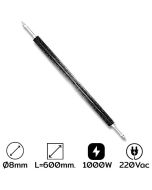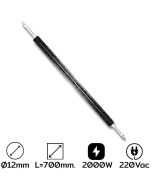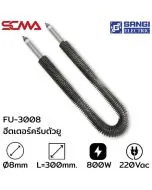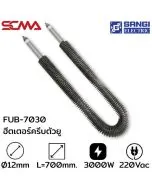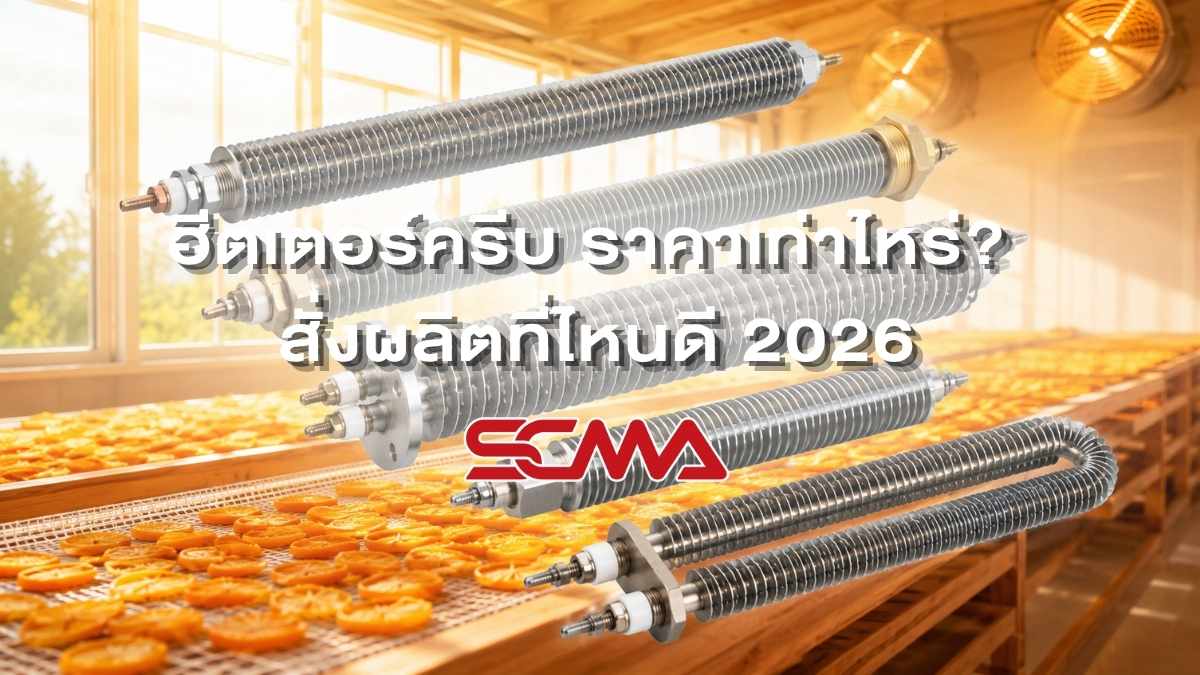
Finned Heater (Finned Heater) are you considering this equipment to enhance efficiency in your factory's drying or hot air blowing processes? In this article, the SCMA engineering team will take a deep dive into everything about heaters of this type, from basic operating principles, how to select specifications, all the way to evaluating the Finned Heater price, so that you can make the most cost-effective decision when purchasing or ordering production. If you need consultation on designing a heating system for your industry, you can contact our services (SCMA Services) immediately.
What is a Finned Heater? And how does it work?
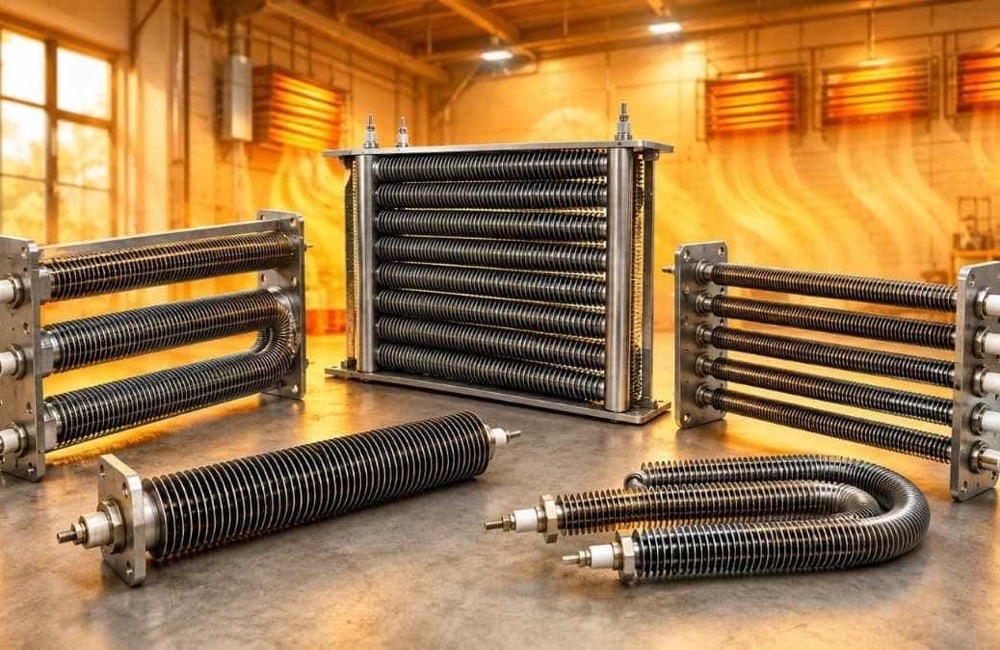
Based on the experience of the SCMA engineering team, we explain that a Finned Heater is an advanced heating device developed from round tube heaters by attaching thin metal sheets or "fins" around the tubes to increase surface area for quickly dissipating heat from the center into the air. The internal structure consists of resistance coils surrounded by magnesium oxide powder (MgO) insulation, which prevents electrical leakage to the machinery frame. Common materials used for producing the tube include stainless steel grade SUS304 for general applications, while Incoloy is chosen for high-temperature work due to its superior heat resistance.
Applications of Finned Heaters in Various Industries
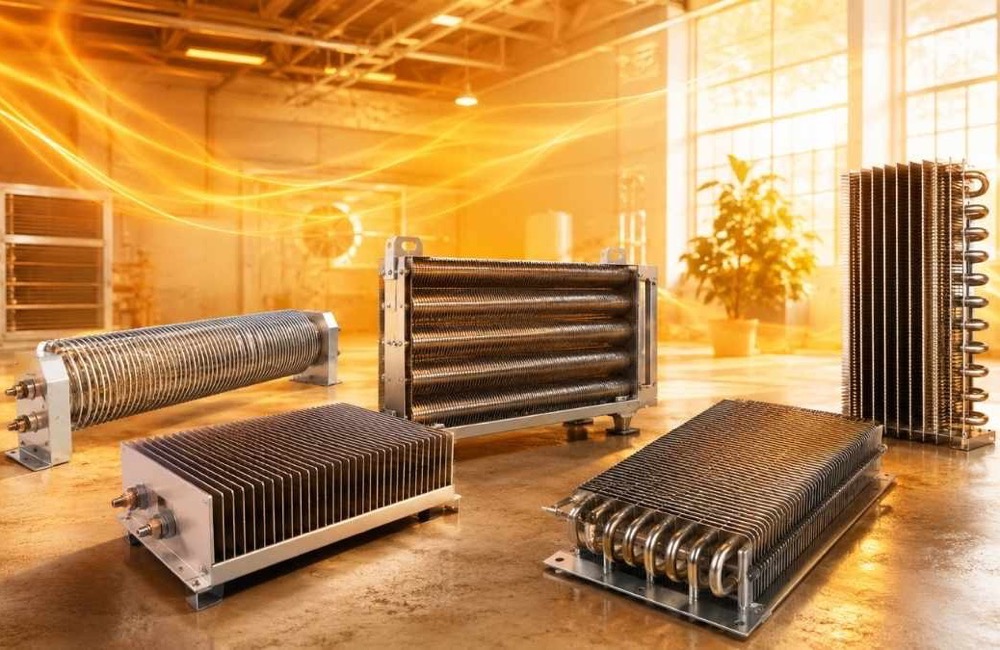
Selecting equipment that meets production process requirements can significantly reduce energy consumption. The team recommends the following applications for finned heaters in factories:
Use in Ovens or Drying Processes (Drying Oven)
In automotive parts industries or general factories with drying processes, these oven heaters are commonly installed along with circulating fans. The fins help distribute heat evenly inside the oven, resulting in faster and higher quality dried products as per specified standards.
Air Duct Heating System
In large air conditioning systems (HVAC) or hot air ducts used in production processes, this equipment is installed across the airflow direction. As air passes through the duct, heat energy is immediately transferred out, accurately adjusting the temperature of the air to set values.
Dehumidification in Control Rooms
In specialized storage rooms or electrical control rooms, maintaining a constant relative humidity level is essential. This type of heater slightly increases room temperature to prevent water droplets from forming on circuit boards, which are major causes of electronic equipment damage.
Applications in the Food and Pharmaceutical Industries
Cleanliness standards are paramount in the food industry. Using finned heaters made from high-quality stainless steel prevents rusting and contamination, meeting requirements for drying grains, baking pastries, or sterilizing packaging safely.
How many types of fin heaters are there? What is the difference between I-Shape and U-Shape?
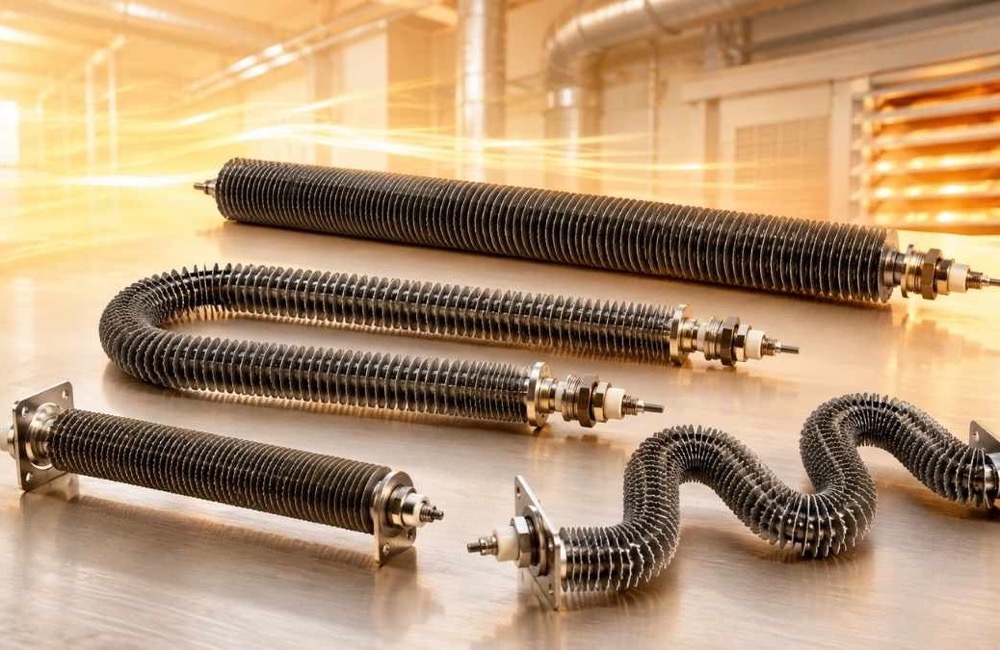
The advantage of this heating equipment lies in its flexibility to bend into different shapes. You can choose a shape that fits the installation space of your machinery as follows:
I-Shape Fin Heater: Suitable for what kind of work
The straight or I-Shape type has a long straight tube design, which is ideal for installation in narrow and elongated air ducts or arranging parallelly inside large ducts. Installation requires wiring to both ends of the tube separately.
U-Shape Fin Heater: Shape and Installation
The U-Shape form results from bending the tube until both electrical terminals are on the same side, offering a significant advantage in saving space for flange drilling. Maintenance workers can easily run heater wiring and connect the electrical system from one point only, making it popular in medium-sized ovens.
Selecting the Right Shape to Fit Installation Space
In addition to basic shapes, factories can also bend tubes into M-Shape or curve them according to site requirements. The key in design is to leave sufficient spacing between each tube so that air can flow through and carry away heat efficiently.
What Should Be Considered When Selecting the Right Finned Heater for Your Application?
To ensure a safe and long-lasting H eating solution, SCMA's engineering team has compiled an important checklist of 4 key factors to consider before purchasing:
- Calculating Required Wattage (Wattage): This calculation should be based on the volume of air inside the cabinet compared to the time required to achieve temperature. If you choose too high wattage, the internal coils may break due to insufficient heat dissipation.
- Selecting Diameter and Length: Measure the actual installation area carefully. The length of the heating zone must be proportional to the volume of air passing through it. Ordering a heater that is too long might not fit into your existing cabinet.
- Choosing the Appropriate Voltage for Your System: Check if your control panel supplies 220V or 380V power. Choosing an incorrect voltage can cause immediate damage to the equipment when it starts operating.
- The Maximum Surface Temperature Tolerance: Consider the speed of air flow; if the fan is too weak, surface temperature will rise rapidly. It's advisable to install a temperature controller (Temperature Controller) to help shut off operation when heat exceeds limits.
What Factors Affect the Price of Finned Heaters?
If you're wondering about the price of finned heaters, our engineering team explains that prices vary primarily based on engineering specifications, such as choosing Incoloy tubing which is more expensive than standard stainless steel. Additionally, increased length and wattage also impact the cost of heating wire. For standard-sized equipment, prices range approximately from 800 to 1,900 THB, which is considered a worthwhile investment for its lifespan. You can check specifications and place orders immediately on ourSCMA Shopping Finned Heaters page. If your factory requires large quantities of custom-made sizes, you can negotiate prices to achieve lower overall costs.
Comparing Differences: Finned Heater vs. Tubular Heater
Many people are unsure between choosing the finned model and the standard tubular model. Here is a comparison to help you make an easier decision.
- Air heating efficiency: The finned model has up to 2-3 times more surface area for air contact than the tubular model, making it heat up faster and saving more electricity in air blowing applications.
- Advantages, disadvantages, and suitable scenarios: Finned models have better cooling but may accumulate dust easily in the fin crevices. In contrast, standard tubular heaters are easier to clean and are more suitable for environments with high dust contamination.
- Selecting the most cost-effective option: If you are setting up a hot air oven system, choosing the finned model is your best bet. However, if you need to heat metal molds directly, you should consider switching to a cartridge heater (Cartridge Heater) for more efficient heat transfer.
Summary
In summary, the operation of finned heaters relies on metal fins to increase the surface area for air heating. To achieve optimal performance, you must understand wattage calculations, material selection, and proper installation. Regardless of how much you compare Finned Heater prices, safety and machine stability are the most important factors. The SCMA Engineering Team is happy to advise you on selecting the best solution.
Where Can You Order and Buy High-Quality Finned Heaters?
If your factory is looking for a reliable international manufacturer and distributor of heaters, choosing a partner with engineers to manage the system is a smart investment. The team at SCMA is ready to provide services from consultation, design, to precise equipment delivery.
- Advantages of ordering directly from the factory: You will receive equipment that is designed with wattage and curved size perfectly fitting your existing machinery at 100%, ensuring stable system operation.
- How to choose a reliable heater manufacturing shop or company: Consider organizations that can explain engineering data clearly, have clear track records, and provide straightforward quality warranties.
- Consultation and custom design services: The SCMA team is happy to listen to your problems. You can check the specifications of the 1000W AC220V Finned Heater CAL-P1063, or browse the SCMA's full range of measuring tools and sensors products to find technology that suits your business immediately.
Frequently Asked Questions
Can fin heaters be used in water?
No, these devices are designed to distribute heat in air or gas only. Submerging them in water would cause water to seep into the electrical contacts, leading to short circuits and severe danger.
What happens if there is no fan blowing?
If operated without airflow to draw away heat, the fin plates and internal coils will overheat excessively and melt within just a few minutes.
About how many years is the average lifespan?
The average lifespan is 1-3 years, depending on proper wattage calculation, airspeed through the unit, and maintenance to prevent excessive dust buildup in the fin crevices.
What is the maximum length of a fin heater?
Custom-made lengths can range from 30 centimeters up to over 2-3 meters, though this depends on designing power output to balance with length so as not to cause overheating in the wire.
Why is using it with a temperature controller important?
This is very important. A temperature controller (Thermostat/Temperature Controller) will cut off the electrical current when heat reaches the set point, helping maintain consistent heating levels and preventing fires from excessive heat.