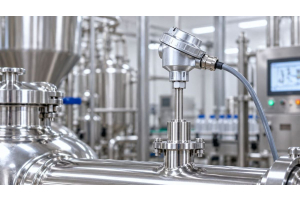
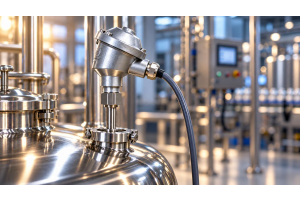
A vibration sensor is a crucial device in modern industrial applications that helps detect and prevent machine vibration issues. SCMA offers comprehensive vibration sensor solutions, from consultation to installation. This article will guide you through the working principles, types, benefits, and methods of selecting appropriate Vibration Sensors to enhance safety and efficiency in your factory.
What is a Vibration Sensor?

A vibration sensor, or Vibration Sensor, is an instrument that measures the vibrations occurring in machinery, equipment, or structures. It detects and converts vibration signals into digital or analog values for analysis by a control system. This enables plant managers to identify problems or damage trends before unexpected incidents occur. Therefore, Vibration Sensors are essential for preventing sudden downtime and serve as primary tools for Predictive Maintenance systems in all 4.0 era industrial plants.
How Does a Vibration Sensor Work?
The working principle of a vibration sensor (Vibration Sensor Working Principle) involves detecting the movement or vibrations caused by rotation, motion, or impact and converting mechanical signals into electrical signals for data processing. Different types of vibration sensors, such as Piezoelectric, MEMS, or Strain Gauge, have varying sensitivities in measurement. The choice depends on the type of machinery and analysis objectives. These vibration sensors are ideal for proactive damage prevention and predictive maintenance planning in automated systems.
What are the benefits of measuring vibration?
The installation of vibration sensors in manufacturing processes or industrial machinery directly impacts system reliability and safety. Continuous measurement of vibration is a method that helps identify deep-rooted issues before machines suffer severe damage, which not only reduces maintenance costs but also clearly enhances machine performance.
Key benefits of measuring vibration include:
- Detect problems before damage occurs: Vibration sensors help detect early warning signals such as worn bearings and misaligned shafts before machinery suddenly stops working.
- Plan predictive maintenance in advance: Data from the Vibration Sensor allows factories to accurately schedule Predictive Maintenance, avoiding emergency repair costs.
- Extend machine lifespan: Proper management of vibration conditions reduces wear and tear and extends the life of critical equipment in production lines.
- Reduce safety risks: Prevent accidents caused by machinery with abnormal vibrations, making the working environment safer.
- Increase production efficiency: Vibration sensors enable better control over product quality, reduce downtime, and maintain product quality to standard levels.
Vibration Sensor Types
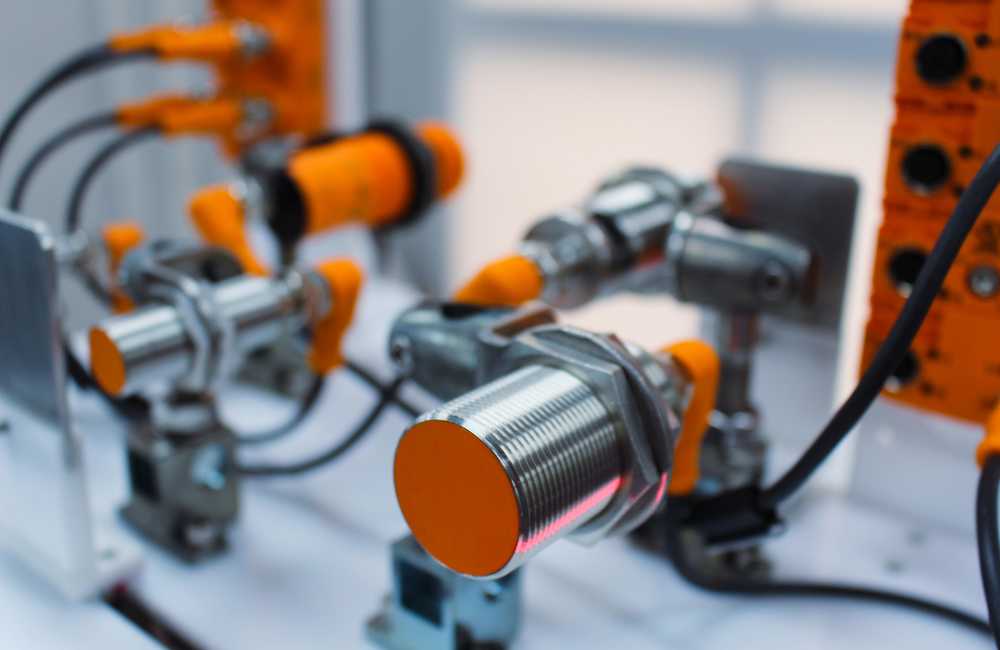
In today's industrial market, there are various types of vibration sensors available to meet diverse control and maintenance needs. When selecting a sensor, it is important to consider its suitability for the machinery, the type of signal required to be measured, and the desired accuracy. This article will discuss real-world Vibration Sensors used in industries, which can be broadly categorized into 7 main types: Analog Vibration Sensors.
Analog Vibration Sensor
These are suitable for applications that require continuous vibration measurement with detailed readings, such as Piezoelectric or Strain Gauge sensors. They send continuous vibration signals to the vibration measuring instrument and control systems in production lines, making them ideal for monitoring high-speed machinery in industrial settings.
Digital Vibration Sensor
Digital Vibration Sensors convert vibration measurements into digital signals for precise processing and direct connection with IIoT or Smart Factory systems. They are suitable for remote monitoring and data analysis in smart factories, enhancing the efficiency of sensors in industrial applications.
Applications of Vibration Sensors
Vibration Sensors (Vibration Sensor) do more than just measure; they play a crucial role in monitoring machinery in modern industries. Their use can be extended to various aspects to create safety and maximize production system efficiency.
Examples of Vibration Sensor Applications include:
- Real-time machine condition monitoring, connecting the Vibration Sensor with SCADA or IIoT systems for vibration measurement and immediate alerts when abnormal values are detected.
- Predictive Maintenance using vibration data to analyze bearing, motor, or shaft wear trends and plan part replacements before damage occurs.
- Quality control of products and production processes by checking the vibration of production lines, packaging, or electronic equipment to ensure product quality meets industry standards.
- Automatic system control by applying Vibration Sensors for automatic machine on/off when abnormal vibrations are detected, increasing safety and reducing accident risks.
Why is Vibration Monitoring Important?
Vibration monitoring with vibration sensors plays a crucial role in industrial plants and infrastructure, as undetected vibrations can lead to machine damage, production downtime, and impact worker safety. Vibration Sensors and vibration measurement sensors have become essential tools for risk management and predictive maintenance, reducing costs and helping businesses remain competitive over the long term. They are also key components of Smart Factories that emphasize real-time data connectivity at every stage.

Looking to purchase a vibration sensor? SCMA is now available!
Selecting high-quality and job-appropriate vibration sensors is the first step in preventing machine damage and raising safety standards in factories. SCMA provides consultation, design, installation services for Vibration Sensors along with comprehensive after-sales support and training. Whether you are looking for vibration measurement sensors in production lines, motors or any rotating equipment, rest assured that SCMA's products cover both vibration measuring devices and technical services to meet the true needs of Thailand’s Industry 4.0.
Summary
Vibration Sensors (Vibration Sensor) are critical tools for maintaining safety, preventing damage, and enhancing production efficiency in all industrial plants. As a leader in industrial sensor solutions, SCMA offers design, installation, and consultation services on all types of Vibration Sensors to enable customers to monitor vibrations effectively, prevent damage, and reduce costs efficiently. If you are looking for ways to manage risks and enhance business capabilities, SCMA is your solution.
Frequently Asked Questions
What is a vibration sensor?
A vibration sensor, or Vibration Sensor, is an equipment used to measure and detect vibrations in machinery, structures, or components. The data collected can be analyzed and utilized for maintenance planning, helping to reduce risks and extend the lifespan of industrial machines.
What is vibration?
Vibration refers to repetitive movement or oscillation of an object, which may result from rotational force, impact, or imbalance in machinery. Abnormally high vibration values often indicate internal mechanical issues that require inspection. Vibration can be caused by various factors such as imbalance of parts, bearing wear, impacts, or abnormalities in shafts and motors. These factors contribute to vibrations that need to be measured for damage prevention.
How many types of vibration are there?
In engineering, vibration can primarily be categorized into two types:
- Free Vibration occurs when an initial force is applied and then the system moves on its own.
- Forced Vibration happens due to continuous external forces acting upon the system, such as vibrations from a motor or rotational force of machinery.
What is vibration testing?
Vibration Testing involves measuring and analyzing the vibration values of equipment or components to assess their strength and lifespan. This test uses vibration sensors to ensure that parts or machines will not be damaged by vibrations.
What are the units for measuring vibration?
The commonly used units for measuring vibration include millimeters per second (mm/s), meters per second squared (m/s²), or G-force, selected based on measurement type and industrial standards. Vibration sensors can accurately read these units.