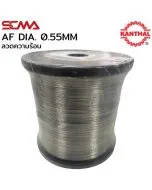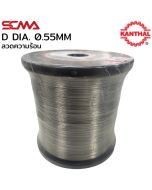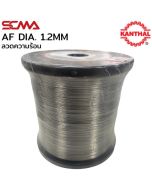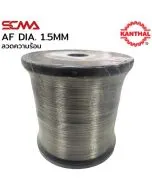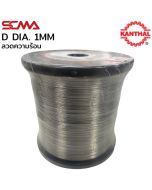

What is a heating wire, also known as Heating Wire and Heat Wire, and how does it work? Why is it used in various industries? This article will help you understand from the meaning, working principle, function, to benefits and methods of selecting suitable heater wires. As an expert in industrial solutions, SCMA shares in-depth knowledge that can be practically applied.
What is a Heating Wire?

A heating wire or heater wire is an electrical conductor with high resistance properties. When electricity flows through it, heat is generated, which can be used as a heat source in machinery or equipment and the heat produced can be controlled. Suitable for both household and industrial applications such as hot water dispensers or automatic heating systems. These coil heaters are crucial components of many production heating systems.
How does a Heating Wire Work?
The working principle of a heating wire (Heating Wire) involves converting electrical energy into thermal energy. When an electric current flows through high-resistance wire, heat is generated and transferred to objects or liquids that require higher temperatures. This heat can be controlled by selecting the appropriate size and type of heater wire for the required voltage and power. In practical use, hot wires and heating coils are designed to handle loads appropriately to prevent damage or overheating beyond specified temperatures.
What is the Function of a Heating Wire?
The primary function of a heating wire is to convert electrical energy into thermal energy, which can be used to control temperature in production processes or appliances as needed. Heat wires are used in hot water dispensers or food dehydrators up to metal furnaces and kilns requiring high temperatures. Coil heaters help ensure consistent product quality, save energy, and meet the precise heating needs of various industrial applications.
Read Article>> What is a Heating Wire (Heating Wire)? What are its main functions?
Benefits of Heating Wire
Heating Wire, or heating wire, plays a crucial role both in daily life and industry because it can efficiently convert electrical energy into thermal energy. Therefore, heaters and heating coils are widely used to create controllable and cost-effective heat.
- Home appliances: Used in water kettles, electric kettles, hot water dispensers, irons, and hair dryers to enhance the convenience of daily life.
- MEDICAL WORKS: Applied in autoclaves and dental drying equipment to sterilize tools and make them ready for use.
- Manufacturing industry: Helps control temperature on production lines, improving product quality and reducing costs.
- High-temperature industries: Used in metal melting, ceramic firing, and metal plating processes that require high and consistent heat.
- SPECIAL HEATING SYSTEMS: Such as infrared systems, which quickly distribute heat and reach deeper than conventional methods.
Steps for Designing Heating Wire
The design of heating wire (Heating Wire) requires electrical engineering principles and technical understanding to ensure that the heater can meet requirements in terms of temperature, safety, and lifespan. Properly designed heat-conducting wires help increase efficiency and reduce system failure risks.
- Determine usage patterns: Consider installation size and required temperature to determine the type and structure of heating coils.
- Calculate electrical power and voltage: Specify appropriate values for the heating wire to operate as needed without exceeding limits.
- Select suitable heater wire types: Such as nichrome wire for general work or chrome steel wire for high-strength requirements.
- Calculate resistance and wire length values: To find dimensions that match manufacturer data tables.
- Check surface area energy density: To prevent excessive heat generation and extend the lifespan of hot wires.
How Many Types of Heating Wire Are There and How to Choose the Right One for Your Needs
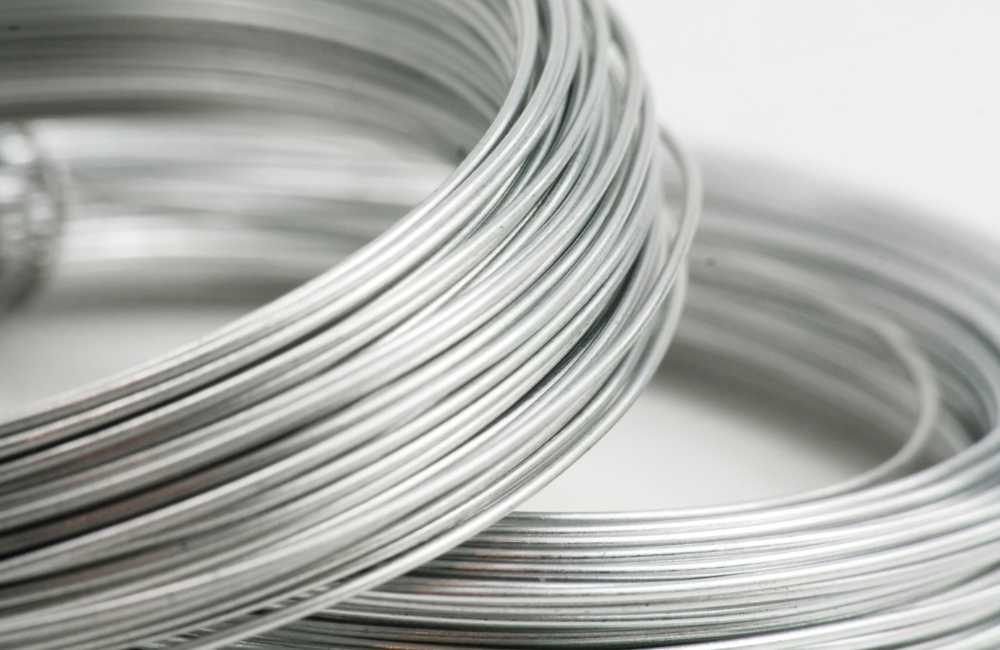
There are various types of heating wire, each with different characteristics in terms of temperature tolerance, durability, and cost. Choosing the right type of heating wire depends on the nature of the work, target temperature, and environmental conditions to achieve maximum efficiency and extend system lifespan.
1. Nichrome Wire
Nichrome wire is the most commonly used type because it can withstand temperatures up to 1,200°C and has excellent corrosion resistance. It is suitable for heating wires in household appliances and general industrial applications. Although it is more expensive, its long lifespan and consistent heat distribution make it cost-effective.
2. Iron-Chrome Wire
Iron-chrome wire is strong and can withstand temperatures up to 1,400°C, making it suitable for heavy industrial work such as metal furnaces or continuous high-temperature kilns. Its strength is its main advantage, but it has limitations in terms of corrosion resistance.
3. Nickel-Iron Wire
Nickel-iron wire is ideal for applications requiring temperatures below 600°C, such as household appliances that do not require high heat. It is cost-effective and suitable for general use but has a shorter lifespan compared to other types. It is best suited for applications focusing on short-term value without the need for long-term durability.
Choosing the Right Size of Heating Wire for Your Needs
Selecting the appropriate size of heating wire or resistance wire is crucial in enhancing efficiency and extending equipment life. If not chosen correctly, it may lead to energy waste or premature damage.
- Power (Wattage): Must be selected according to usage requirements to prevent overheating or underperformance.
- Electrical Resistance: Must match the voltage for controlling current and heat output.
- Wire Surface Area: Larger wires provide better heat dissipation but require more space for winding.
- Actual Operating Temperature: Must account for wire expansion to prevent errors from continuous operation.
How to Calculate for Selecting the Size of Heating Wire
Accurate calculation helps ensure that heating wire or heater wire operates at maximum efficiency and also prevents system damage. Calculation must consider both power, resistance, and length of the heating wire to achieve an appropriate heating coil.
- Determine power (P) and voltage (V): For example, a 1000W 220V heater
- Calculate wire resistance (R): Use the formula R = V² / P to get the desired value
- Find wire length (L): Calculate from specific resistance and cross-sectional area of the wire
- Select wire size according to manufacturer's spec: Compare R and L values with standard heating wire tables
- Check energy density per surface area: To ensure that the wire does not exceed its limit and extend the lifespan of the heating coil
If you want to buy heating wire, you can purchase from SCMA today!
Heating wire is a critical component that must be carefully selected for safety and maximum efficiency. SCMA offers comprehensive services, from consultation to selecting the appropriate size and type of heating wire, all the way through after-sales service. We have an engineering team ready to assist in designing and sourcing high-quality heater wires that meet your needs, whether it's industrial or educational work.
Summary
Heating wire or heater wire is a critical component that converts electrical energy into thermal energy to meet both daily life and industrial requirements. Proper selection of type, size, and design of the heater wire significantly increases efficiency and extends lifespan. If you need an integrated and reliable heating coil solution, SCMA provides services from consultation, design, installation, all the way through after-sales service to elevate your production standards sustainably.
Frequently Asked Questions
What is the function of a heating wire?
A heating wire (Heating Wire) converts electrical energy into thermal energy to accurately control temperature in various equipment or manufacturing processes.
How many types of heating wires are there?
There are several types of heating wires, such as nichrome wire, chromel wire, and nickel-iron wire. Each type has different properties and is suitable for different industrial applications.
Why are heating wires important?
Heating wires or heater wires are crucial to both electrical appliances and industrial work because they help generate controllable heat, improve production quality, and extend the lifespan of systems.