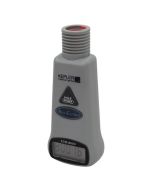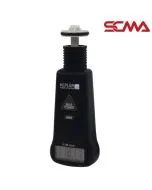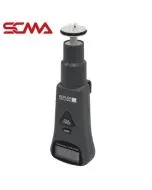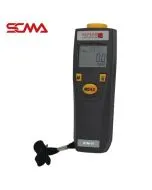

Rotary speed sensors, a crucial technology that enhances the efficiency of industrial and modern vehicle machinery, are in high demand in the market! Gain insight into timing and torque with accurate RPM measurement techniques used by professionals. SCMA offers consultation and high-quality sensor solutions tailored to your business needs.
What is a Rotary Speed Sensor?

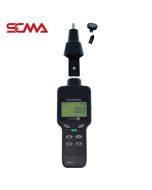
Tachometer is a smart sensor designed to measure the rotational speed of various objects, particularly in mechanical and electrical systems. Whether it's an engine shaft in vehicles or motors in industrial machinery, it displays measurement results in revolutions per minute (RPM), providing critical information that helps engineers and technicians assess performance and prevent damage from abnormal speeds.
What is RPM Measurement?
RPM or Revolutions Per Minute measurement involves assessing the rotational speed of an object around its axis, counting the number of rotations it makes in one minute. This standard international unit, symbolized in various forms such as rpm, RPM, rev/min, r/min, or min⁻¹, is crucial for evaluating performance, controlling operations, and diagnosing issues across different types of mechanical systems.
Main Function of a Tachometer Sensor

A tachometer, or Tachometer is a crucial device used to measure and display the rotational speed of an object, showing results in revolutions per minute (RPM). It plays a vital role in monitoring and controlling the operation of machinery, engines, and various motors in industrial settings. Accurate detection of RPM values helps users maintain and control the efficiency of rotating equipment appropriately.
Types of RPM Sensors
Rotational speed sensors come in various types that differ based on measurement technology and application characteristics. The choice of type depends on the specific needs of each industry and the required accuracy for measurement. Below are the main types of rotational speed measuring devices commonly used in industrial and automotive applications:
- Analog Tachometer - Uses a dial and needle to display RPM values, which is easy to read and interpret visually. Suitable for general use where extremely high accuracy is not required, and still popular in classic cars due to their durability and reliability in highly vibrating environments.
- Digital Tachometer - Displays high-precision digital values that are clear to read. Can record data and connect with computer systems for further analysis, commonly used in industries requiring high-quality control and machine operation history tracking.
- Contact and Non-Contact Tachometer - Contact type uses a probe that must touch the object directly, suitable for easily accessible surfaces. The non-contact type uses laser or infrared technology to measure RPM, allowing for measurement of hard-to-reach or dangerous equipment without stopping machine operation.
- Time and Frequency Measuring Tachometer - Works by measuring the number of revolutions in a specified time period (time measurement method) or the time taken to complete one revolution (frequency measurement method), providing flexibility for accurate measurement of both high and low RPMs. Suitable for research work and applications requiring exceptionally high accuracy.
How to Use a Tachometer Sensor

Using a tachometer sensor effectively requires following the appropriate steps
Start by preparing the equipment to be measured → Install the sensor in an optimal position → Choose a measurement mode that aligns with your objective, whether it's contact or non-contact → Measure the RPM value → Read the results obtained → Finally, don't forget to record data for analysis and long-term performance tracking
If you are interested in tachometer sensors, SCMA is now available for purchase!
SCMA is a leading supplier of high-quality tachometer sensors that meet international standards. We offer various models to cater to all levels of needs, whether it's large-scale industrial applications or professional use. Additionally, we have a team of experts ready to provide consultation and recommend products tailored to your requirements.Contact SCMA today for more information!
Summary
Tachometer sensors or tachometers are essential in various industries, serving to measure the rotational speed of objects or machinery in RPM units to control efficiency and safety. There are several types including magnetic, optical, Hall Effect, inductive, and capacitive, each with its own advantages suitable for different applications.
Selecting a high-quality sensor that fits your work requirements will enhance operational efficiency and extend the lifespan of machinery. SCMA is committed to providing top-tier tachometer sensors along with comprehensive services, ensuring customers maximize benefits from modern RPM measurement technology.
Frequently Asked Questions
What tools are used to measure speed?
Tools specifically designed for measuring rotational speed are called tachometers (Tachometer) or revolution counters. Tools that measure linear speed or wind speed are called anemometers (Anemometer), and tools that measure vehicle speed are called speedometers (Speedometer). Each type has different working principles and applications.
How does a speed meter work?
A revolution counter works by detecting the movement or rotation of components, then converting it into an electrical signal through various mechanisms such as magnetic induction, light detection, or Hall Effect. The signal is then sent to processing circuits to calculate speed and display results in a human-readable format, such as RPM on a dashboard or screen.
How many types of Anemometers are there?
Anemometers (Wind Speed Meters) come in several types including cup anemometer, vane anemometer, hot-wire anemometer, ultrasonic anemometer, and laser Doppler anemometer. Each type has different working principles and suitability for use depending on the environment and required accuracy.
What are the benefits of a revolution counter?
Revolution counters offer several advantages such as helping users control engine or machine speed within an appropriate range, preventing damage from excessively high or low speeds, aiding in diagnosing machinery issues, saving energy by operating at the most efficient speed, and assisting with preventive maintenance planning.