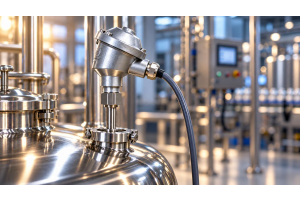

What is a Temperature Controller? How to Choose the Right One for Your Industrial Needs?
A temperature controller is a crucial component of manufacturing processes in Industry 4.0, requiring maximum accuracy and efficiency. Whether it's food processing plants, pharmaceutical factories, or heavy industries, all rely on this technology to control product quality.SCMA offers comprehensive knowledge and solutions about temperature control equipment to help enhance production efficiency and reduce costs for your organization.
A temperature controller (Temperature Controller) is the heart of manufacturing in Industry 4.0, requiring accuracy, stability, and energy efficiency. Whether it's food, pharmaceuticals, metal, ceramics, or electronics industries, all rely on this technology to maintain product quality and reduce production costs.
What is a Temperature Controller?
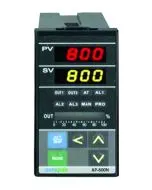
A temperature controller (Temperature Controller) is an electronic device that measures and maintains a constant temperature as set by the user. It does this by receiving signals from sensors such as thermocouples or RTDs, comparing them to the target value (Set Point), and then sending control signals to heating/cooling devices like heaters, cooling fans, or solenoid valves.
The operation mechanism relies on a Feedback Control Loop which can be either ON/OFF or PID (Proportional–Integral–Derivative) to maintain the temperature as stably as possible.
How does a Temperature Controller Work?
Temperature Controller works based on the high-precision feedback control loop (Feedback Control Loop) principle, where the system continuously monitors and adjusts temperature to achieve desired values. The process of operation includes the following key steps:
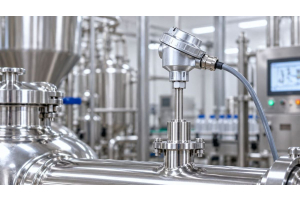
- Temperature detection with sensors - Temperature control devices typically install temperature sensors such as thermocouples (Thermocouple) or RTDs (Resistance Temperature Detectors) to measure the current environmental or equipment temperature with high precision up to two decimal places.
- Comparing set values with actual values - The controller compares the measured temperature from the sensor with the target temperature (Set Point) set by the user, calculating the error value to use for control.
- Adjusting output - The controller adjusts the output signal according to temperature differences and sends signals to heating or cooling devices such as heaters, cooling fans, solenoid valves to maintain temperatures within specified ranges.
- Feedback control - Temperature control equipment continuously adjusts the output using control algorithms, which may be simple ON/OFF or more complex and precise PID (Proportional-Integral-Derivative) types to minimize temperature fluctuations.
What are the types of temperature controllers?
Temperature controllers have been developed with a variety of forms and features to meet different usage requirements across various industries, ranging from simple easy-to-use models to complex multi-point control systems. The main types can be categorized as follows:
1. Analog Temperature Controller
- Easy to use and cost-effective
- Suitable for basic tasks that do not require extremely high accuracy
- ON/OFF control via a needle gauge display
2. Digital Temperature Controller
- Most popular type
- Features LED display, supports PID control
- Supports outputs such as Relay, SSR, and 4-20mA
- Connectable via RS-485 Modbus
- Suitable for tasks requiring high accuracy and comprehensive functions
3. Multi-Loop Modular Controller
- Control multiple temperature points simultaneously
- DIN Rail mount saves space
- Connects to PLC or PC software
- Suitable for large factories requiring centralized control systems
4. Special Controller
- Used for HVAC systems or electronic valve control
- Provides Proportional Control of valve position
- Suitable for applications requiring precise temperature and flow control
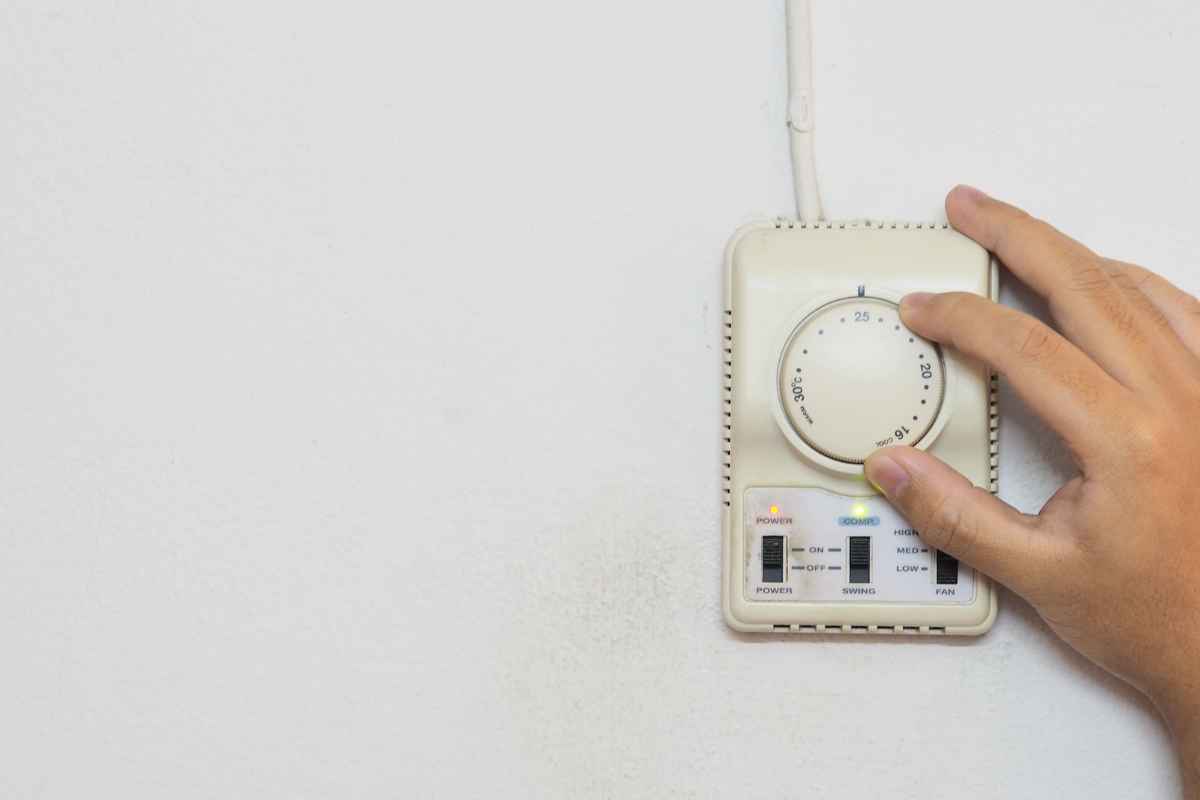
Analog Temperature Controller
This is a basic temperature controller that has been in use for a long time. Its main advantages are its affordability and ease of use, with no complex features. It uses an analog needle display to show the current status, allowing users to read values immediately. Suitable for applications where high precision is not required, it operates on an ON-OFF control method, turning heating/cooling devices on or off when temperatures reach set points. Despite limitations in accuracy, it remains popular for basic tasks requiring durability and affordability.
Digital Temperature Controller
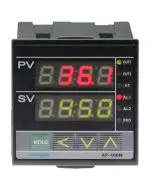
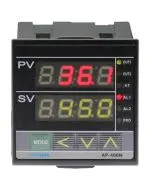
It is the most popular type currently, with high accuracy and a wide range of functions. It features a clear LED 7-Segment numerical display that can be seen from a distance, available in various sizes ranging from 48x48 mm to 96x96 mm for panel mounting. It supports both ON-OFF and PID Control modes, with an Auto-Tuning function that automatically adjusts the PID values. It offers multiple output types such as Relay, SSR, and 4-20mA, and can communicate via RS-485 Modbus. Additional functions include Alarm, Timer, Ramp/Soak Programming.
Multi-Loop Modular Temperature Controller
This is a new innovation designed for simultaneous control of multiple temperature points. It mounts on DIN Rail to save space and wiring, ideal for control cabinets with limited space. It can be expanded as needed, typically without a display screen to reduce size, requiring connection through PLC or PC software for configuration and monitoring. It supports up to 64 control points in a single system if using RS-485 port, expandable beyond 1,000 points. It includes password security features suitable for large factories needing centralized control systems.
Special Temperature Controller
This controller is designed for specialized applications, particularly for controlling Electronic Valves in HVAC systems or processes requiring flow and temperature control. It features special Proportional Control functions to set valve opening/closing percentages accurately, with real-time valve position display. It supports RS-485 communication for continuous monitoring and data logging, ideal for systems needing high precision in both temperature and flow rate control.
Why is a temperature controller important?
- Pharmaceutical Industry → Precise temperature control is necessary for safety
- Food Industry → Used in baking, freezing, and sterilization for quality and shelf life
- Electronics Industry → Must be controlled at ±0.1°C in clean rooms
- Steel and Ceramics Industry → Control in furnaces affects product properties
- Energy Savings → Can reduce electricity costs by up to 10–30%
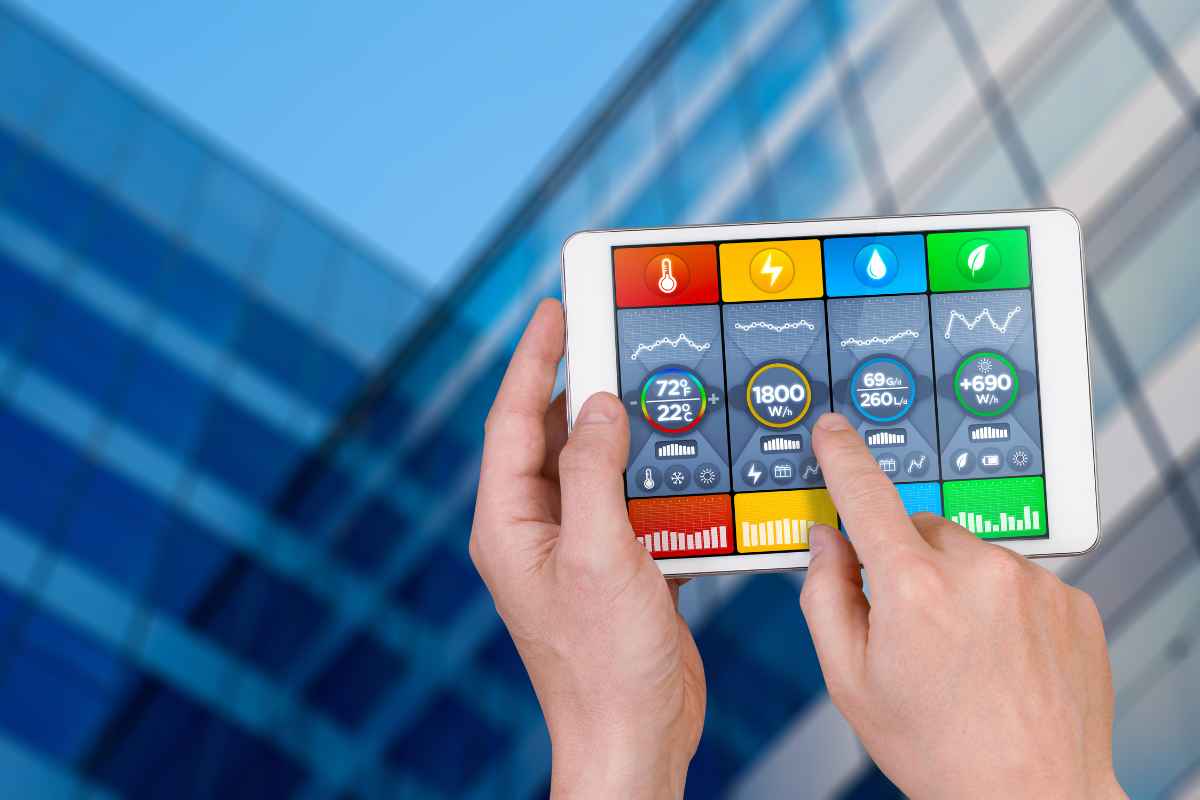
If you want to purchase a temperature controller, SCMA is ready to serve you today!
SCMA, the leader in industrial equipment sales, offers high-quality temperature controllers from top global brands. We have all types available including analog, digital, multi-loop, and special function models. Our expert team is ready to advise you on selecting products that meet your needs and budget. We stock items for immediate delivery with a 100% genuine guarantee and certification documents. Additionally, we provide comprehensive after-sales services such as training, Thai language manuals, and support teams available for assistance. With our commitment to delivering the best solutions, SCMA is a trusted partner in enhancing your production efficiency.
Popular Temperature Controllers from SCMA
SCMA offers a wide range of products, including Analog, Digital, Multi-loop, and Special Function models from leading brands such as
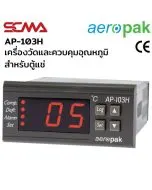
✅ AEROPAK – popular models AP-107FE, AP-618D, AP-900N, AP-56S etc., covering Relay, SSR, 4-20mA, Multi-input types
✅ AUTONICS – TC4S, TC4M easy to use and reliable
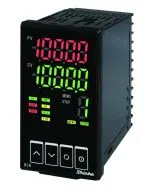
✅ Shinko – BCS2, BCD2, BCR2, JIR Series for advanced control applications
Why Buy Temperature Controllers from SCMA?
- Complete range of leading brands (AEROPAK, AUTONICS, Shinko etc.)
- In stock and ready to ship, 100% genuine
- Quality assurance with certification documents
- Free consultation from expert team
- Comprehensive after-sales service, including Thai language manuals and training
Summary
Temperature controllers are crucial equipment in modern industrial manufacturing processes. With their precise feedback control loop operation, they can maintain the desired temperature consistently. There are various types to choose from, ranging from simple analog models, accurate digital ones, multi-loop models that control multiple points, to special function models for specific applications. Selecting an appropriate Temperature Controller can enhance product quality, reduce waste, save energy, and improve overall production efficiency. SCMA is ready to advise and supply the right temperature controllers for every need
Temperature Controllers are the heart of manufacturing quality control in Industry 4.0 Choosing the appropriate controller enhances accuracy, reduces costs, and improves overall efficiency. With a team of experts and comprehensive services, you can be assured of receiving high-quality products that are worth your investment Contact SCMA today to receive free consultation and special offers
If you are looking for high-quality temperature controllers at a good price, with comprehensive services choose SCMA – your trusted partner
Frequently Asked Questions
What is the function of a temperature controller?
A temperature controller measures and maintains the temperature at a set point by receiving signals from a temperature sensor, comparing it to the target value, and then sending control signals to heating or cooling devices such as heaters, fans, or valves to automatically keep the temperature within the desired range.
What are the 3 types of temperature control tools?
The three main types of temperature controllers commonly used include 1) analog type with a needle display, which is inexpensive and easy to use; 2) digital type displaying numerical values, offering high accuracy and supporting PID control; and 3) modular multi-loop type capable of controlling multiple points simultaneously, suitable for large systems.
What is a temperature controller?
A temperature controller is an electronic device used to control and maintain the temperature at a desired constant level. It works by receiving data from a temperature sensor, processing it in comparison with the set value, and then sending control signals to devices that adjust the temperature. This equipment is crucial in production processes requiring precise temperature accuracy.
Which Temperature Controller Model is Good and High Quality from SCMA
Temperature Controller is the heart of an Industry 4.0 factory.
It provides accurate, stable temperature control, saves energy, and reduces production costs!
SCMA offers a full range of products including Analog, Digital, Multi-loop, and Special Function models from leading brands such as:
✅ AEROPAK – Popular models like AP-107FE, AP-618D, AP-900N, AP-56S etc., covering Relay, SSR, 4-20mA, Multi-input types.
✅ AUTONICS – TC4S, TC4M easy to use and reliable.
✅ Shinko – BCS2, BCD2, BCR2, JIR Series for advanced control applications.
100% genuine products in stock and ready to ship
Free consultation from expert team