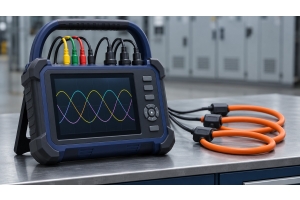
Ever wondered which device is used to solve the problem of achieving high accuracy in measuring tension or compression forces in industrial factories? This article from SCMA, the provider of comprehensive measurement and testing solutions, will take you through an in-depth understanding of Strain Gauge Sensors, so that you can properly and appropriately understand the working principles of Strain Gauges as well as how to select and use them in real applications.

What is a Strain Gauge Sensor?
A Strain Gauge Sensor is an industrial measuring device that converts changes in mechanical shape into electrical signals. When an object is stretched, compressed, twisted, or bent due to applied forces, the internal electrical resistance of the Strain Gauge changes accurately according to the condition of the object.

How Strain Gauge Sensor Works
The working principle of this type of sensor relies on the electrical theory that when a conductive wire is stretched or compressed, it causes a change in its electrical resistance. The working process of the Strain Gauge is divided into the following steps:
Installation
Start by installing the sensor plate, which is a film with small metal wires arranged in a grid, firmly attached to the object to be measured, so that the Strain Gauge can seamlessly detect changes in the shape of the target object.
Stretching and Shrinking
When an external force acts on an object, whether it is pulling, pressing, or bending, the target object will deform, causing the Strain Gauge Sensor attached to the surface to stretch or shrink in accordance with the shape of the target object, which is unavoidable.
Change in Resistance Value
Stretching causes the wires in the sensor to become longer with a reduced cross-sectional area, resulting in an increase in electrical resistance. Conversely, if the Strain Gauge shrinks, the electrical resistance within the wires will decrease proportionally to the force applied.
Electrical Signal Conversion
After that, the system connects the sensor to a circuit called a Wheatstone Bridge, which converts the slight resistance changes of the Strain Gauge into a measurable voltage signal, which is expressed in millivolts per volt.
Data Display
The final step is to amplify the obtained voltage signal. The data is converted into numbers for use in measuring weight or tension through devices such as load cells, as well as for measuring pressure through pressure sensors.

How Many Types of Strain Gauge Sensors Are There?
The application of Strain Gauge Sensors in the industrial sector is highly diverse. Based on the experience of SCMA's engineering team, we can classify the usage of Strain Gauges into 2 main groups, namely
1. Load Cell Sensor
This is a device that is widely used for measuring compression, tension, and even industrial-level weighing. Inside the load cell, Strain Gauges are installed to receive various types of forces, such as high-capacity load types or S-Type for tension measurement
2. Pressure Sensor
This group of devices uses the principle of sensor expansion and contraction to convert the pressure of gas or liquid within the system into an electrical signal, which can be applied as Pressure Transducer to control pressure in the production line to achieve maximum stability
Maintenance of Strain Gauge Sensor
In order for the Strain Gauge Sensor to have a long service life, preventive maintenance is important. Proper care of the Strain Gauge will effectively reduce the chances of measurement errors.
Inspection and General Cleaning
A dry cloth or slightly damp cloth should be used to clean dust from the sensor area. Chemical solvents must never be used. Also, regularly inspect the wires and connections of the Strain Gauge Sensor for any signs of bending, twisting, or looseness to prevent signal interference.
Environmental Control
Unrelated vibrations directly affect the measured stress values. Installing vibration-damping devices is therefore essential. Additionally, avoid installing the Strain Gauge in areas with high temperature fluctuations, as extreme heat or cold can cause metal to expand or contract abnormally.
Proper Usage
Users must avoid applying force or weight beyond the device's maximum limit to prevent permanent deformation of the sensor's structure. In cases where the Strain Gauge is used for load-bearing applications, ensure that the Strain Gauge is installed flat and that the load is evenly distributed.
Regular Calibration
The engineering team recommends sending the sensor along with the Strain Gauge for annual calibration using standard equipment to ensure the output signal remains accurate. Proper calibration helps prevent data drift over time.
Application of Strain Gauge Sensor
The application of Strain Gauge Sensor in the current industry covers tasks that require high accuracy. We can find the use of Strain Gauge in the following main processes:
Weight Measurement in Industrial Systems
Industrial weighing systems rely on high levels of accuracy. Using Strain Gauge embedded in load cells allows for the rapid conversion of pressure values from object weight into digital numbers, supporting everything from tabletop scales to large truck scales.
Measurement of Force and Torque
In the manufacturing process of machinery, checking tension, compression, or torque is extremely important. Installing Strain Gauge Sensor into the structure of components allows engineers to monitor various mechanical forces to prevent damage that may occur from overworking.
Measurement of Liquid and Gas Pressure
Aside from measuring mechanical forces, this type of sensor is also used in fluid control processes. Applying Strain Gauge in pressure gauges allows the system to convert liquid or gas pressure into electrical signals for complete input into an automatic control system.
Material Strength Testing
Testing the structure of parts, such as automotive components or bridge girders, requires accurate stress data. Engineers will attach Strain Gauge Sensor plates onto the material surface to observe deformation behavior under applied force, helping to assess safety before actual use.
Advantages of Strain Gauge Sensor
The features that make industrial factories choose Strain Gauge Sensor are its small size, light weight, and ease of installation on curved surfaces or narrow areas. In addition, the device can measure stress with high accuracy, respond quickly to changes, and Strain Gauge is also cost-effective compared to other types of force sensors.
How to Choose a Strain Gauge Sensor
Selecting equipment that matches the requirements of the production process is a step that users must pay attention to, in order to obtain a Strain Gauge Sensor that provides accurate measurements. We have a checklist of 5 factors to consider when selecting a Strain Gauge as follows:
- Usage Characteristics: Evaluate the type of force to be measured, such as tension, compression, or torsion, to correctly identify the type of sensor.
- Measurement Range (Capacity): Choose an appropriate maximum measurement range, and reserve a capacity of about 20-30% to prevent damage to the Strain Gauge Sensor from sudden forces.
- Working Environment: If the installation point has high humidity or is exposed to chemicals, choose a model made of Stainless Steel with a standard IP Rating to protect against water and dust.
- Signal Output Format: Select a processing system that supports the output signal of the Strain Gauge, whether it is 4-20 mA or 0-10 V, to enable immediate connection with the control system.
- Accuracy: Check error values such as Linearity or Repeatability to ensure that the sensor results meet the precision required by your process.
Case Study: Solving Problems with Strain Gauge Sensors
From the experience of advising an automotive parts manufacturing plant, the SCMA engineering team found that the installation of non-standard sensors led to production line disruptions. Solving the problem using high-quality Strain Gauge Sensors involves the following important steps:
- Analyze the Root Cause of the Problem: The team found on-site that the original Strain Gauge had deteriorated due to moisture.
- Design a New Solution: Select a Strain Gauge Sensor model that is resistant to temperature and has a moisture-proof coating (Coating).
- Install and Calibrate: Install the new sensor into the structural system and calibrate the values to achieve micro-meter level accuracy.
- Delivery and Training: Explain the correct method of reading electrical resistance values to the on-site technicians.
Summary
In summary, Strain Gauge Sensor is a crucial component for measuring mechanical forces, converting data into electrical signals that drive accuracy in industrial systems. Proper selection and maintenance of Strain Gauge will help extend its lifespan and reduce long-term costs. If your organization is looking for high-quality sensors with in-depth consulting services, you can view the details of our services immediately.
Interested in purchasing or consulting via LINE Official: @SCMA
If you want to buy Strain Gauge Sensor, you can buy it from SCMA today!
Investing in standardized measurement technology is a guarantee of quality for your business production process. SCMA Co., Ltd. (SCMA) is an expert and leading distributor of industrial measuring instruments. If you need a comprehensive solution from design to installation of Strain Gauge Sensor, you can come to view all products or consult with our engineering team at SCMA
Frequently Asked Questions
Can Strain Gauge Sensor be used at high temperatures?
It can be used but you must choose a model specifically designed with a temperature compensation system to prevent resistance deviation
What type of signal does the Strain Gauge output?
The raw signal output is a very small voltage in millivolts per volt (mV/V), which requires an additional signal amplification circuit
Why is the adhesive used to attach the Strain Gauge important?
The adhesive transfers stress from the workpiece surface to the sensor. If the wrong type of adhesive is used or if it is not securely attached, the measured values will be immediately distorted
Where can I find reliable information sources about Strain Gauge?
Users can study in-depth technical manuals from global manufacturers through the article titled Strain Gages
What is the average lifespan of this type of sensor?
If installed correctly and without overload, the sensor can be used for many years. However, this depends on the scheduled maintenance