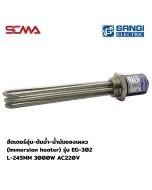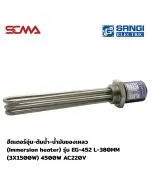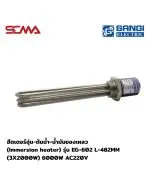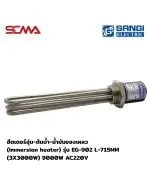

Immersion Heater is a crucial heating device for the industrial process of heating liquids, with direct heat transfer efficiency up to 100%, making it a cost-effective and energy-saving option. Company SCMA, an expert in industrial heating equipment, provides comprehensive information about immersion heaters to ensure optimal use and benefit for your business.
What is an Immersion Heater?

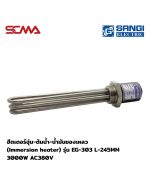
Immersion Heater, or submersible heater, is an electric heating device designed to be submerged directly into liquids for heat transfer to water, oil, chemicals, or other fluids. With efficiency up to 100%, it features a high-temperature resistant metal tube housing a wound resistance wire and packed insulation material to prevent leakage and enhance thermal conductivity. This type of heater is popular in industries due to its fast heating rate, precise temperature control, easy installation, and suitability for production processes requiring consistent heat and energy savings.
General Features of Immersion Heaters
Immersion heaters feature high-quality materials such as stainless steel 304 or 316, and Incoloy for corrosion resistance and high temperature tolerance. They come in various shapes like round bent U-shape or others, attached to screw threads or flanges for easy installation, suitable for heating a variety of liquids including water, oil, and chemicals that do not react with the tube material. The size, voltage, wattage, and bending shape can be customized according to specific usage requirements. It is recommended to use it in conjunction with mixing systems or propellers to ensure even heat distribution throughout the tank, enhancing thermal transfer efficiency and preventing hot spots.
Applications of Immersion Heaters
Immersion Heater (Submerged Water Heater) is widely used across various industries, from large-scale manufacturing to specialized applications. Each industry has different requirements and methods of use.
- Chemical and Petrochemical Industries - Used in chemical reactors to control temperature for reactions, heating storage tanks to maintain viscosity Pre-heating raw materials before distillation or separation processes, and used in Reboiler systems for distillation columns.
- Food and Beverage Industries - Applied in pasteurization of milk and fruit juices, boiling water for beverage production, heating beer and wine fermentation tanks, dissolving sugar, chocolate, or fat during manufacturing processes, and used in CIP (Clean-in-Place) systems for cleaning.
- Metal and Plating Industries - Installed in hot-dip galvanizing tanks to maintain the temperature of plating solutions, used in degreasing tanks with hot water, and processes such as Phosphating or Anodizing that require specific heating.
- Building Systems and Utilities - Used in hot water systems for hotels and large buildings, swimming pool heating systems Boiler for steam production, Hot Water Supply systems in hospitals, and Backup Heater for solar energy systems.
Types of Immersion Heater

Electric Immersion Heater is divided into four main types based on installation and usage characteristics. Each type has its own advantages and suitability for different applications.
Screw Plug Immersion Heater (Screw-in Immersion Heater)
The screw-in immersion heater is the most commonly used type due to its easy installation, simply screwed into a container or tank. It comes in standard NPT thread sizes from 1" to 2.5", supporting power ratings of 1-50 kW. Suitable for small to medium-sized tanks such as water heaters, cleaning tanks, and metal plating baths. Its advantages include cost-effectiveness and easy replacement, but it is limited to use with containers that have threaded fittings.
Flange Immersion Heater (Flanged Immersion Heater)
The flanged immersion heater is designed for heavy-duty applications requiring high power. Installed by bolting the flange to a tank, it comes in standard JIS or DIN sizes and supports up to 500 kW of power. Multiple heating elements can be installed within a single flange, making it suitable for boilers, pressure tanks, chemical reactors, or large industrial tanks. It is durable under high pressure and easy to maintain.
Over-the-Side Immersion Heater (Pipe-in-Pipe Immersion Heater)
The pipe-in-pipe immersion heater or over-the-side heater is designed for hanging or mounting at the edge of a tank without drilling holes. It is easy to move and suitable for tanks that cannot be modified structurally, or temporary work requiring frequent relocation. Available in L-shaped and straight models with power ratings from 1-20 kW, it is easy to use and can adjust its depth according to liquid levels but is not ideal for tanks with lids or liquids prone to evaporation.
Circulation Immersion Heater (Inline Heater)
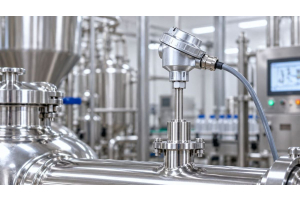
Circulation heater or inline heater is installed in a piping system with fluid circulation. Its structure includes a heating chamber containing the element, through which fluid flows and receives consistent heat. It offers maximum efficiency due to forced convection flow, making it suitable for systems requiring precise temperature control such as hot water circulation systems, hot oil systems, or continuous production processes.
Benefits of Immersion Heater
Electric Immersion Heaters have a wide range of benefits, used to warm or boil almost any type of liquid such as water, oil. They are utilized in production processes for warming food and beverages, boiling and heating chemicals, glues, asphalt, etc. With high direct heat transfer efficiency up to 100%, they help save energy, provide accurate temperature control, and deliver quick heating. Additionally, they are durable, easy to install, and convenient to maintain, making them a cost-effective choice for industries requiring efficient and reliable liquid heating systems.
Selecting the Right Immersion Heater for Your Application
Choosing the right Electric Immersion Heater requires considering the type of liquid. The suitable liquid should not be too viscous and should not have a very high corrosive effect, such as acids with a pH above 10 or bases with a pH below 4. Other important factors must also be considered to achieve maximum efficiency and longevity.
- Liquid Properties - Viscosity, pH value, and corrosive ability should be taken into account. Liquids with high viscosity require a lower Watt Density to prevent fouling buildup. For liquids with high corrosiveness, such as acids with a pH > 10 or bases with a pH < 4, special tubing materials like Hastelloy or titanium must be selected.
- Heat Area Calculation - Watt Density (W/cm²) should match the type of liquid. Water uses 10-30 W/cm², while oil uses 3-8 W/cm². For viscous liquids or those prone to scaling, a lower value below 5 W/cm² is recommended to extend lifespan and prevent burning.
- Installation Level and Safety - Ensure the Heat Zone is submerged at least 5-10 cm below the lowest liquid level. Install a Low Level Switch to automatically cut power when levels are low, and use a Thermostat to control maximum temperature for protection against damage.
- Selecting the Right Type - If contamination is a concern when tubing breaks, choose a Double Tubed Bobbin Heater or an Over-the-Side Type for tanks that cannot be drilled. Consider maintenance and ease of replacing parts as well.
Interested in Immersion Heater? You can now purchase from SCMA!
SCMA, the leading supplier of industrial heater equipment, is proud to present high-quality Immersion Heaters from world-class manufacturers. Our range includes Screw Plug, Flange, Over-the-Side, and Circulation Type heaters in various sizes and power ratings, with a selection of tubing materials based on your application needs. We maintain stock for standard models and offer free consultation by our team of expert engineers to calculate power requirements, design systems, and select appropriate materials. Additionally, SCMA provides comprehensive control equipment including Temperature Controllers, Thermostats, Level Switches, along with installation accessories. Our fast nationwide delivery service comes with a warranty on every item, complete tax invoices, and Thai language user manuals.Interested in ordering or requesting a quote? Contact SCMA today

Summary
Heater isthe most efficient heating device for liquids, transferring heat directly at 100% efficiency to save energy, provide accurate temperature control, and achieve rapid heating. With various types available based on installation and usage requirements, selecting the right one involves considering liquid type, power rating, tubing material, and control system to ensure maximum performance and longevity. SCMA is ready to be your partner in providing high-quality Immersion Heaters with a team of experts and comprehensive services for smooth and efficient production processes.
Frequently Asked Questions
What is an Oil Immersion Heater?
An oil heater, or oil immersion heater, is designed to heat oil specifically. It uses a low watt density (3-8 W/cm²) to prevent oil charring. The casing is made of stainless steel or coated iron and can withstand high temperatures up to 300-400°C. It is commonly used in Heat Transfer Oil systems, deep frying, and industries that use oil as a heat transfer medium.
What is an Immersion Water Heater?
An immersion water heater is designed specifically for heating water. It has power ratings from 1-50 kW, with casings made of stainless steel 304 or 316 for clean water. Installation is easy using threads or flanges and often comes with a thermostat to control temperatures between 60-95°C. Suitable applications include hot water dispensers, water boilers, and building heating systems.
What are Titanium Heaters Used For?
Titanium heaters are ideal for high corrosion resistance requirements, especially in saltwater, seawater, corrosive chemicals, and diluted acids. Titanium is strong, lightweight, and can withstand high temperatures well. It is commonly used in saltwater pools, large aquarium systems, metal plating industries, and chemical manufacturing plants. Although expensive, it offers long-term value.
How Many Types of Heaters Are There?
Industrial heaters come in various types based on their application. These include Immersion Heaters for submerging into liquids, Band Heaters for wrapping around pipes, Cartridge Heaters for insertion into holes, Tubular Heaters as versatile straight tubes, Ceramic Heaters that withstand high temperatures, Infrared Heaters providing radiant heat, and Air Heaters for warming air. Each type has its advantages and is suitable for different applications.