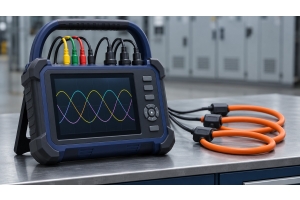
Is your factory facing problems with damaged parts or non-standard quality control? Choosing an accurate Force Sensor or force-measuring sensor is crucial to solving this issue. The SCMA engineering team, experts in automated system solutions, is ready to provide professional advice. This article will take you deep into the working principles, types, and techniques for selecting equipment to reduce errors in your production line.
What is a Force Sensor?
A Force Sensor, or force-measuring sensor, converts mechanical forces such as tension or compression into electrical signals. A calibrated measurement system displays the results in newtons (N). An example of a tool using this principle is the Digital Push-Pull Force Gauge for testing tension and compression forces.
How Does a Force Sensor Work?
When force is applied to the sensor, the force-receiving component deforms slightly or generates an electric charge, depending on the technology of the force-receiving component. The signal conditioning circuit and data acquisition system convert the signal into a force value according to the calibration results.
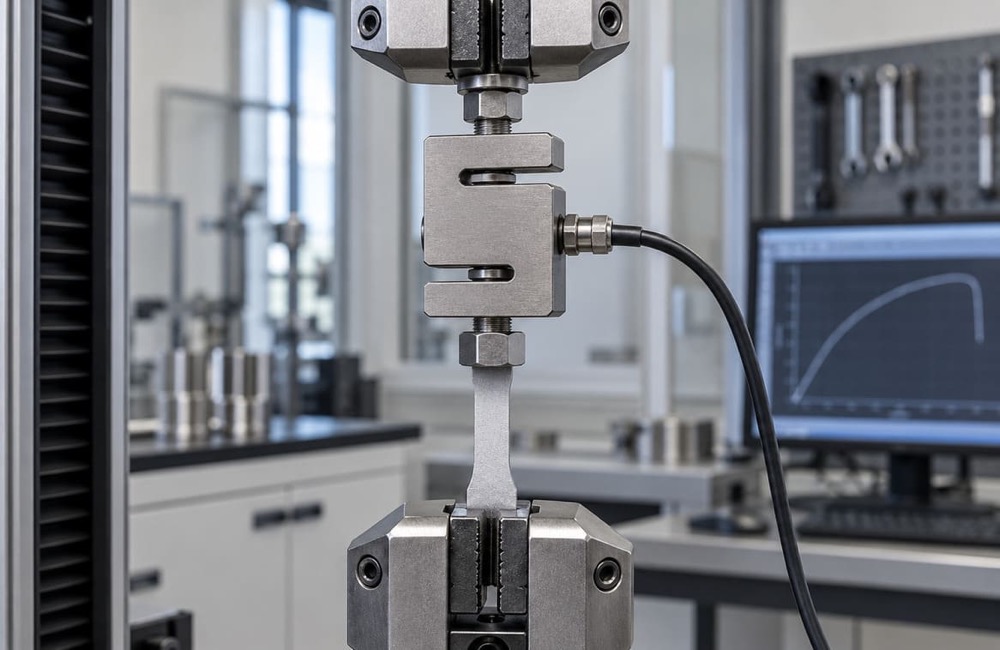
How Many Types of Force Sensors Are There?
The following examples are categorized by technology and the number of axes measured, which are different criteria. Multi-axis sensors may also use Strain Gauge technology. Pressure sensors for measuring fluid pressure are another group of tools.
Strain Gauge Load Cell
When force causes the force-receiving component to deform, the resistance of the Strain Gauge changes. The bridge circuit then provides a signal related to the force. It is suitable for measuring steady or slowly changing forces, such as tracking compression forces in assembly machines. Choose a structure that matches the direction of tension or compression force.
Piezoelectric Force Sensor
Piezoelectric materials generate an electric charge when subjected to force. It is suitable for measuring rapidly changing forces, such as impact or forming cycle forces. If you need to measure steady force over a long period, check the sensor's limits and signal conditioning circuit before selecting.
Multi-Axis Force and Moment Sensor
The 6-axis model measures force components along the X, Y, and Z axes and the moment around each axis. It is suitable for robotic assembly tasks that require simultaneous tracking of force and moment. Check the coordinates of each axis and cross-axis errors.
Maintenance of Force Sensor
Proper maintenance of the force sensor helps extend its lifespan and ensures consistent measurement accuracy according to industrial production standards.
Regular Cleaning
Users should regularly wipe dust off the force sensor with a dry or clean cloth. A warning is that the use of harsh chemical cleaners must be strictly avoided to prevent damage to the internal circuitry.
Inspect Cables and Connection Points
Frequently check the condition of the signal cable to ensure there are no tears, scratches, or loose connections. Secure connection points help ensure smooth signal transmission to the control system without causing measurement errors.
Calibration of Measuring Instruments
Calibrate in the actual direction and force range using a reference force that can be recalibrated. Determine the calibration cycle based on the usage frequency, environmental conditions, acceptable tolerances, and calibration history, following the guidelines of NIST.
Be Cautious of Overload Usage
Check the measurement range and overload force limits specified by the manufacturer, including axial force, lateral force, and impact force. Exceeding the specified limits may cause the zero point to shift or permanent deformation of the force-receiving components.
Control Installation Environment
Check the operating temperature range and the dust and water protection level of the selected model. If the work environment has moisture or chemicals, assess the housing material, signal cable, and connector together.
Force Sensor Application
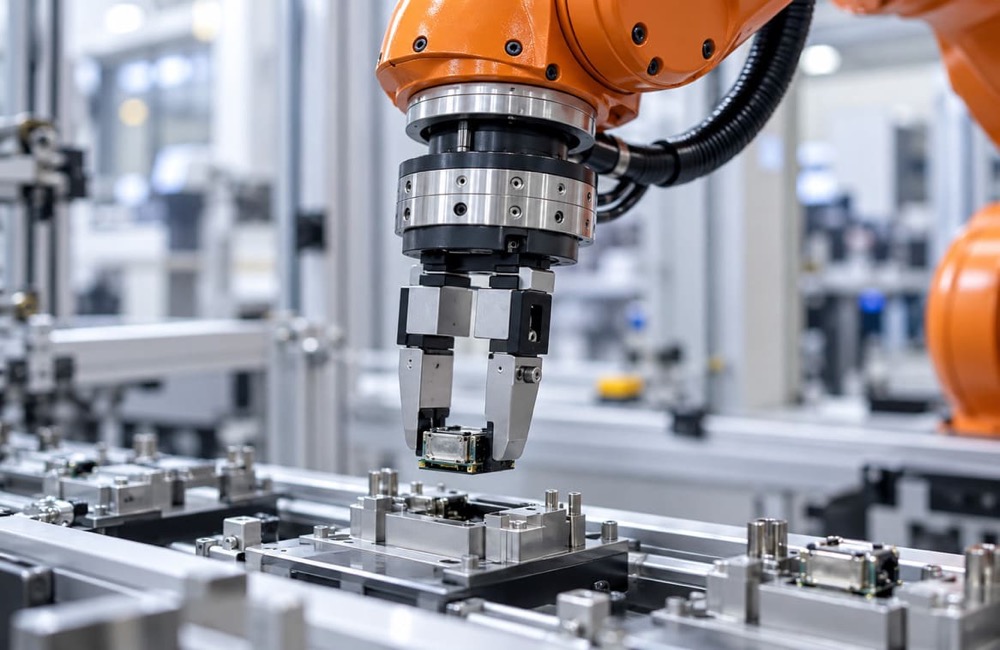
The force sensor is used to inspect product quality, monitor pressing force in production lines, and provide data to the gripping force control system.
Quality Control and Material Testing
Material testing equipment uses tensile or compressive force sensors to evaluate product properties according to relevant testing methods. In assembly lines, it is also used to check pressing force during component fitting to screen out products with excessively high or low assembly forces.
Robotics & Automation Systems
Robots use data from force sensors to adjust gripping force or control assembly. If force detection is used to protect people, the entire system's safety functions must be designed and verified according to risk assessment principles as explained by OSHA.
Automotive and General Manufacturing Industries
In automotive applications, sensors with appropriate response ranges are used to measure impact forces during component testing. For tightening nuts, select a torque measuring tool when the control criteria are specified in newton meters (N·m).
Advantages of Force Sensor
Force data helps detect process variations before products exceed specifications. The results depend on coordinates, deviations, installation, and calibration.
High Accuracy Measurement
When the measurement range and calibration are selected appropriately, the sensor enables consistent comparison of actual force with quality control criteria.
Protection of Product Damage
The system controls the robotic arm's gripping force to prevent excessive operation. The sensor prevents fragile products from breaking during handling, clearly reducing resource loss in production lines.
Detection of Abnormal Forces in the Process
The control system can alert or stop the process when the force exceeds the set limit. Safety functions must be separately designed and verified according to the machine and job requirements.
Fast Response and Processing
New sensor models can send warning signals to the control system in real-time. Operators can adjust various parameters promptly before damage spreads.
How to Choose a Force Sensor
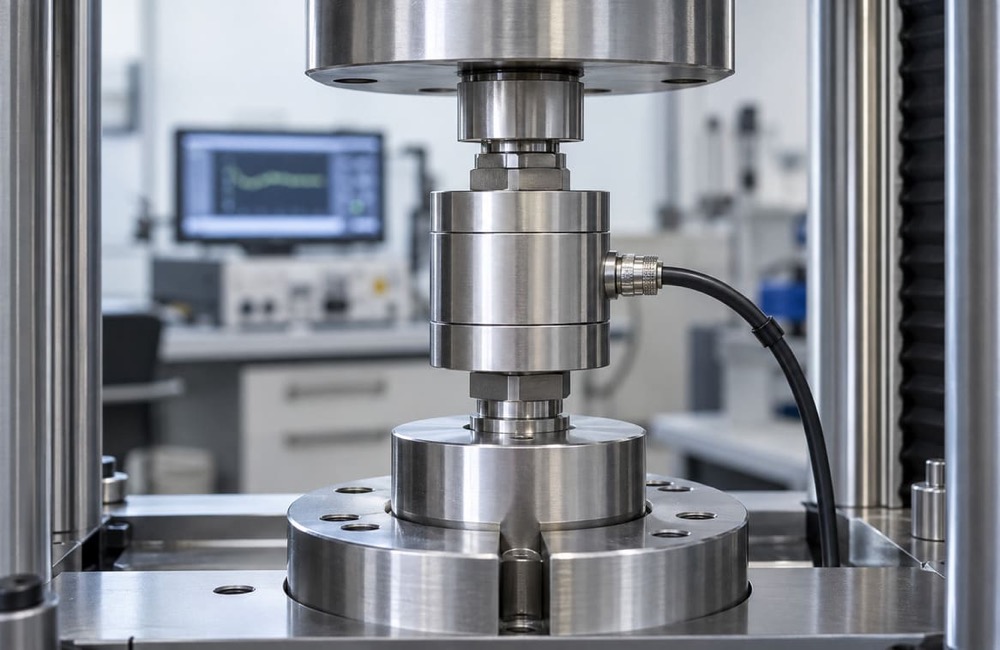
Providing an appropriate force sensor must primarily consider the engineering requirements of each application. Users should check basic specifications to prevent purchasing equipment that cannot be used in actual applications.
Measurement Range and Capacity (Range/Capacity): Specify the maximum force to be measured in Newtons, such as 20 N, then evaluate impact force, lateral force, and overload capacity according to manufacturer data. Choose a range that still provides accuracy and deviation within the work criteria.
Supported Axes (Axes): Use a single-axis type when measuring force in one direction. If you need to track forces in multiple directions and moments around axes, such as in robotic assembly work, consider multi-axis types.
Output Signal Format (Output Signal): Bridge load cells typically send mV/V level signals and require signal reading circuits that support them. Models with signal conditioning circuits may send 4–20 mA or 0–10 V. Check that it matches the control system input before ordering. You can find more information from the source Leading Force Sensor Manufacturers
Measurement Instrument Services from SCMA Engineers
Aside from selecting the equipment, having a technically proficient consultant is a factor that helps ensure the system setup is successful. SCMA offers an integrated solution to meet the needs of advanced manufacturing industries.
Consultation and System Design Services: Our engineering team is ready to go on-site to analyze problems and help select the type of force sensor that matches the requirements of each type of machine.
Calibration Services: You can inquire with SCMA about the scope, force range, and required calibration documents before sending the equipment.
After-sales Services: Contact SCMA to inquire about equipment inspection, signal troubleshooting, and maintenance according to the model in use.
Summary
Force Sensor converts mechanical force into a signal that can be used for quality inspection and process control. Choose one that matches the direction of force, measurement range, working conditions, and system input. If you need advice on industrial measuring instruments, our services are ready to assist you from system design to after-sales service.
Interested in purchasing or consulting via LINE Official: @SCMA
If you want to buy Force Sensor, you can buy it from SCMA today!
Investing in standardized force measuring equipment is an investment to enhance the reliability of your production line in the long run. SCMA Co., Ltd. is a technical partner ready to supply industrial sensors as well as various types of sensor products to your factory. Interested parties can visit SCMA main website or go to all product pages to start improving production efficiency with us.
Frequently Asked Questions
What is the difference between a Load Cell and a Force Sensor?
A load cell is a type of force sensor that can be used in weighing scales and for measuring tension or compression forces, depending on the structure, direction of force, and coordinates of the model.
How often should Calibration be performed?
Determine the frequency based on the requirements of the task, usage frequency, environmental conditions, and calibration history. Check further after abnormal overloads or impacts according to the manufacturer's manual.
Can the sensor be connected directly to a PLC system?
It can be connected if the signal type, signal range, and wiring match the PLC input. If the load cell sends an mV/V signal, use a load cell module or a signal conditioning circuit that supports it.
What should be done if Overload occurs during usage?
The responsible person should stop and disconnect the power according to the machine's safety procedures. Check the condition and zero value according to the manufacturer's manual. If deformation of the load-bearing component is suspected, discontinue use until inspection and measurement results are confirmed.
Does SCMA offer sensor system installation services?
Our team offers Project & Solutions services, ready to visit the site, design the system, and guide the installation process to ensure your robotic system operates fully and effectively.