
In industrial production, controlling various variables with precision is crucial for efficiency and quality. A flow meter, or Flow Meter, is one of the essential measuring tools. Have you ever wondered what a Flow Meter is and why it's necessary for your factory? This article will answer all questions, from definitions to working principles, important types, and how to select the most suitable flow measurement tool for your work to help you maximize production processes. If you need expert advice on solutions tailored to your factory, you can explore our services immediately.
What is a Flow Meter?

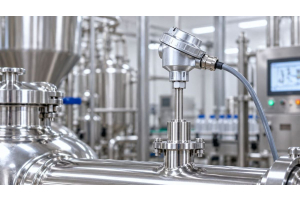
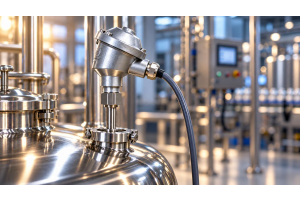
A flow meter is a measuring device used to detect the volume or rate of movement of fluids (liquids or gases) passing through any point in a pipe system or open channel during a specified period. The Flow Meter is an important tool that helps engineers and operators accurately monitor, analyze, and control fluid quantities used in production processes. Data from this flow measurement tool, the Flow Meter, is crucial for resource management, product quality control, and overall production efficiency.
How a Flow Meter Works

The working principle of a flow meter, or Flow Meter, varies depending on the technology and type of measuring instrument. The core idea is to convert physical phenomena caused by fluid flow into measurable signals. Important examples include:
- Electromagnetic Principle: Utilizes Faraday's law of induction; when electrically conductive fluids move through a magnetic field, an electrical voltage is generated which is directly proportional to the flow velocity.
- Thermal Mass Principle: Uses two temperature sensors where one is heated. As gas flows past it carries heat away causing a temperature difference between the two sensors, this difference is then calculated as the mass flow rate of the gas.
- Ultrasonic Principle: Measures fluid speed by timing high-frequency sound waves traveling between transmitters and receivers.
For more detailed information about working principles, refer to reliable sources such as Baker Hughes.
Types of flow meters: What are they?

The question about how many types of flow meters there are is actually quite varied, designed for different applications. Choosing the correct type is crucial. Based on the experience of the SCMA engineering team, we can categorize the main types commonly used in industries as follows:
Differential Pressure Meter
This type of flow meter works by creating a pressure drop (Pressure Drop) in the pipe using devices that reduce cross-sectional area such as Orifice Plate or Venturi Tube. Then it measures the pressure before and after these devices to calculate the flow rate according to Bernoulli's equation. This method is robust and can be used at high temperatures and pressures.
Positive Displacement Meter
A Positive Displacement (PD) meter works by directly measuring the volume of fluid flowing into a chamber with a fixed volume, causing internal components (such as gears or pistons) to rotate or move. Counting the number of rotations gives an accurate measurement of the volume of fluid that has passed through it. Suitable for fluids with high viscosity.
Ultrasonic Flow Meter
The ultrasonic flow meter uses the principle of sending high-frequency sound waves through a flowing fluid in a pipe and measuring the speed of the fluid from the effect on the sound wave. A key advantage is that it can be installed externally (Clamp-on) without direct contact with the fluid, making it suitable for corrosive fluids or liquids that cannot be contaminated.
Inferential Meter
This is an indirect flow meter where volume is calculated from the movement of internal components caused by flow, such as the rotation of a turbine. The speed of the turbine blades has a direct relationship with the flow rate of the fluid passing through it. This type is widely used, for example in Turbine Meters or Propeller-type flow meters.
Electromagnetic Flow Meter
The electromagnetic flow meter, also known as Magmeters, is one of the most accurate and reliable types for electrically conductive fluids. It works without moving parts inside, reducing wear and maintenance issues. Suitable for potable water-wastewater, food and pharmaceutical industries, or liquids with suspended solids. If you are interested in what an electromagnetic flow meter is, read our detailed article here. SCMA specializes in consulting and selecting the right electromagnetic flow meter for your application.
Oscillatory Flow Meter
This type of flow meter works by utilizing the principle that when fluid flows past an obstruction, it causes oscillation or vibration. The frequency of this vibration is directly proportional to the speed of the fluid. A well-known example is the Vortex Flow Meter, which has high accuracy and can measure both liquids, gases, and steam.
What Can a Flow Meter Measure?
A flow meter can provide two main types of critical information for process control, which helps engineers analyze and improve efficiency precisely:
- Volumetric Flow Rate: This measures the volume of fluid flowing through a specified point per unit time. The units are typically cubic meters per second (m3/s) or liters per minute (LPM). It is commonly used to measure liquid quantities such as water or oil.
- Mass Flow Rate: This measures the mass of fluid flowing through a specified point per unit time. The units are typically kilograms per second (kg/s). This type of measurement is crucial in processes involving chemical reactions or mixing substances that require precise mass accuracy, such as in the chemical or food industry.
What Benefits Does a Flow Meter Provide to Industry?
Based on our direct experience working with industrial customers at SCMA, we find that flow meters are not just equipment but strategic tools that provide significant benefits. Here are the main advantages our customers receive:
- Increase Efficiency and Control Quality: Helps accurately control the amount of raw materials or chemicals used in production processes, resulting in consistent product quality and reduced waste.
- Manage Costs: Can correctly monitor the use of various resources such as water, gas, or steam, allowing for energy planning and reduction of unnecessary costs.
- Detect and Prevent Leaks: Installing flow meters at critical points in pipeline systems helps quickly detect abnormalities such as leaks before severe damage occurs.
- Create Safety in Factories: In processes involving dangerous chemicals, accurate control of the flow rate is essential to employee safety and production process security.
- Compliance with Environmental Regulations: Helps measure and report wastewater or pollutant emissions according to legal requirements.
How to Select the Right Flow Meter for Your Application
Selecting the right flow meter involves complex considerations and requires evaluating several factors. Tips from SCMA's engineering team suggest answering these key questions before making a decision:
- Type of fluid: Is it liquid or gas? Does it have corrosive properties? Are there particulates present? What is its viscosity and temperature? These factors determine the most suitable technology.
- Required accuracy: How precise does your process need to be? Some applications may require extremely high precision, while others can tolerate minor inaccuracies.
- Metering range and operating conditions: What are the minimum and maximum flow rates you need to measure? What is the pressure and temperature in the pipe? Ensure that the chosen tool performs well under these conditions.
- Installation constraints: Is there enough straight-run piping space available? Does installation require production downtime? Sometimes, clamp-on flow meters may be a better choice to minimize impact on production.
- Budget and total cost of ownership (TCO): Don't just consider the initial price; also look at maintenance costs, lifespan, and long-term reliability. Investing in high-quality equipment might have higher upfront costs but offers better returns over time.
If you need further guidance on selecting a flow meter that fits your application, our expert team is ready to consult with you.
When Looking for "High-Quality Flow Meters," Think SCMA!
Selecting low-quality or inappropriate flow meters can lead to major issues, from producing substandard products and unnecessary material waste to production line disruptions that cause significant damage. At SCMA, we understand these challenges well. We are not just distributors but also "technical partners" with expertise in selecting and presenting high-quality flow meter solutions from leading global brands, along with consulting services by experienced engineering teams to ensure you receive the most accurate and suitable solution.
Summary
A flow meter is an essential tool in modern manufacturing industries. Understanding its working principles, various types, and the factors involved in selecting the right one will help you efficiently control production processes, enhance product quality, and sustainably reduce operational costs. Choosing a knowledgeable and reliable partner is crucial. SCMA is ready to provide accurate end-to-end solutions with services from trusted experts.
Frequently Asked Questions
What is a flow meter?
A flow meter, or Flow Meter, is an apparatus used to measure the volume or mass of fluids (such as water, air, chemicals) moving through a pipe in one unit of time. It is a critical tool in industrial plants for quality control, resource usage monitoring, and production efficiency enhancement.
How many types of flow meters are there?
There are numerous types of Flow Meters, each with different working principles and suitable applications. Common types found in industries include Differential Pressure, Positive Displacement, Ultrasonic, Inferential, Electromagnetic, and Oscillatory (Vortex). The choice depends on the type of fluid, required accuracy, and operating conditions.
What is a portable flow meter?
A portable flow meter (Portable Flow Meter) is designed to be compact and easy to move around for measurements at various points. It usually comes in an ultrasonic clamp-on type that can be installed externally on pipes immediately. This makes it suitable for inspection, maintenance work, or measuring at locations without permanent meters.
How does a flow meter work?
The working principle of a Flow Meter varies according to its type. For example, an electromagnetic type measures the voltage generated by electrically conductive fluids flowing through a magnetic field, while an ultrasonic type measures fluid velocity by sending sound waves through pipes. All principles aim at converting physical properties of flow into readable values.