Temperature Control, or Temperature Measurement and Control Devices, are tools to maintain set temperature values. They can control temperatures by either increasing or decreasing them according to the required usage period and specified time. For example, controlling heater heat or maintaining coldness in a freezer room. There are different types of controls available, and choosing the right one for an industry requires careful consideration.
How to Operate and Select Temperature Measurement and Control Devices
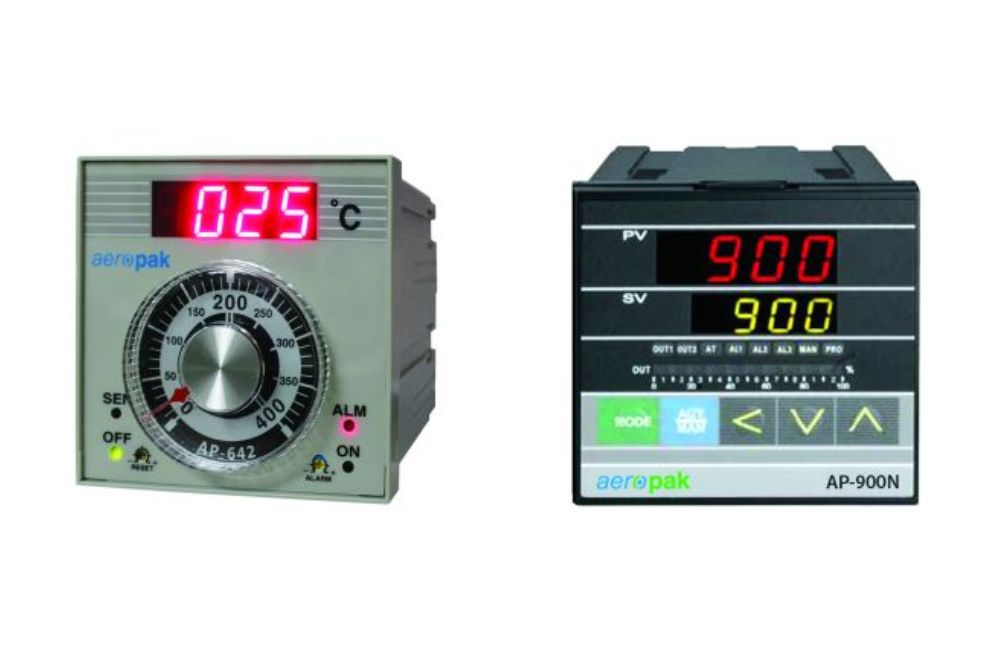
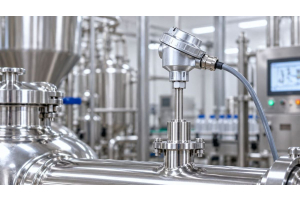
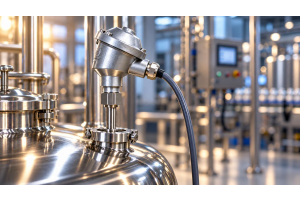
For accurate temperature measurement and control in a system without the need for constant human supervision, temperature control relies on various types of temperature sensors to send measured values to the controller to maintain temperatures within the desired range. For example, thermocouples or RTDs based on selected inputs are compared with required controlled temperatures or set points, and commands are sent to the devices being controlled. The temperature controller is an integral part of the entire control system.
Control of Temperature Measurement and Control Devices
There are three basic types of control for temperature measurement and control devices to meet the requirements and suitability for different work needs. The controls include:
On/Off Control
The On/Off control method for temperature measurement and control devices is a simple way of operation, where the output from the Temperature Control can only be either on or off, with no intermediate states.
In terms of how On or Off controls heat or coldness, constant values or desired controlled minimum and maximum values are set. When the temperature exceeds the set value, the output changes to off, and this cycle repeats continuously, known as a loop.
For example, if you want to control hot water at 70°C with normal water temperature being 25°C, setting the temperature control to 70°C using a heater. When the water reaches 70°C, the controller will instruct the heater to stop working (the output changes to off when the water is at 70°C), and it remains in this state until the water temperature drops below 70°C again, then the heater starts working again (output changes to on by instructing the heater to work to adjust the water temperature back to 70°C). This cycle repeats continuously as set by the Temperature Control.
In cases where temperature changes rapidly, causing frequent contactor status changes that may lead to damage. Therefore, a delay between on and off (On/Off) or called hysteresis is necessary for protection, such as using relays. This can also affect the lifespan of equipment. On/Off control is suitable for work with slowly changing temperatures.
Proportional Temperature Control
Proportional temperature control is designed to replace On/Off control by reducing the power supplied to the heater as the process temperature approaches the setpoint (SV). This slower heating effect helps prevent overshoot of the setpoint (SV) and allows for a more stable approach to and maintenance of the setpoint (SV).
Proportional control operates by cycling on and off over short periods. The Time Proportioning setting changes the ratio of on time to off time in proportional temperature control, which is determined by the Proportional Band. When the process temperature approaches the setpoint (SV), the system works within the Proportional Band; if it exceeds this band, On/Off control takes over at the setpoint (SV) (the midpoint of the Proportional Band).
On/Off operation has a ratio of 1:1, meaning on time and off time are equal. If the temperature differs significantly from the set point, the on/off times vary proportionally to the temperature difference. When the temperature is below the setpoint (SV), it will be on for longer periods; if the temperature exceeds the setpoint (SV), it will be off for longer periods.
PID Temperature Control
PID temperature control consists of Proportional, Integral, and Derivative controls. PID control is an advanced form of proportional control that automatically compensates for changes in the system by adding integral and derivative actions.
Adjusting the integral and derivative settings is done in units of time. The Proportional, Integral, and Derivative adjustments must be made individually to achieve the most accurate and stable control. PID temperature control works well in relatively small systems that respond quickly to added energy.
Another mode of operation for temperature measurement and control devices is Step Control or Programmable Temperature Control, which is another way to control temperature by setting multiple temperature points in sequence beforehand. This is suitable for tasks that require maintaining a constant temperature level or gradually increasing or decreasing the temperature, such as ceramic firing processes, etc.
Applications of Temperature Measurement and Control Devices
Temperature measurement and control devices can be used in various industries for temperature measurement and control. They are applicable across a range of sectors such as the ceramic industry, plastic industry, rubber industry, chemical industry, food industry, etc.
How to Select Temperature Control Devices
Selecting temperature control devices that suit your application is essential for ensuring correct operation and optimal performance. The selection process depends on several factors.
Input (Input)
Choosing the input (input) is crucial to the efficiency of the temperature control system, including the measurement range, accuracy, and environmental conditions in which it will be used.
Output (Output)
Selecting the output (output) depends on the equipment needed to control temperature or actuators such as Relay, SSR, 4-20mA and 0-10VDC.
Alarm (Alarm)
Alarms are used for warning when abnormalities occur in the system or to select functions with desired temperature alerts. The selection of alarms depends on the user's required functionality.
Device Size
The size of the device is also important and should be chosen appropriately for the application site. Common sizes include 48 x 48, 96 x 96, 48 x 96, 96 x 48, and 72 x 72 mm.
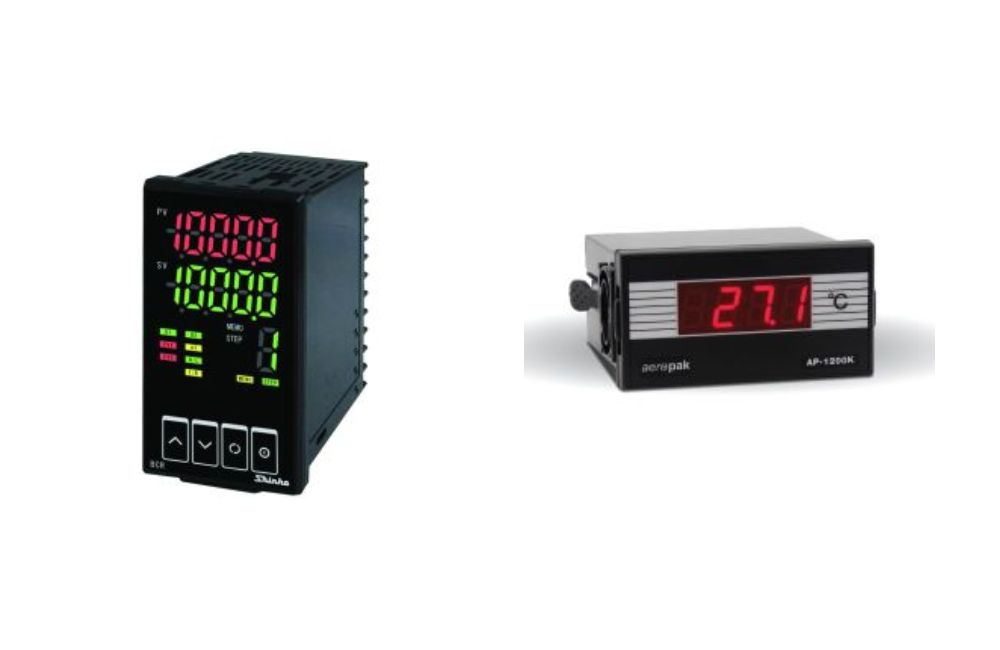
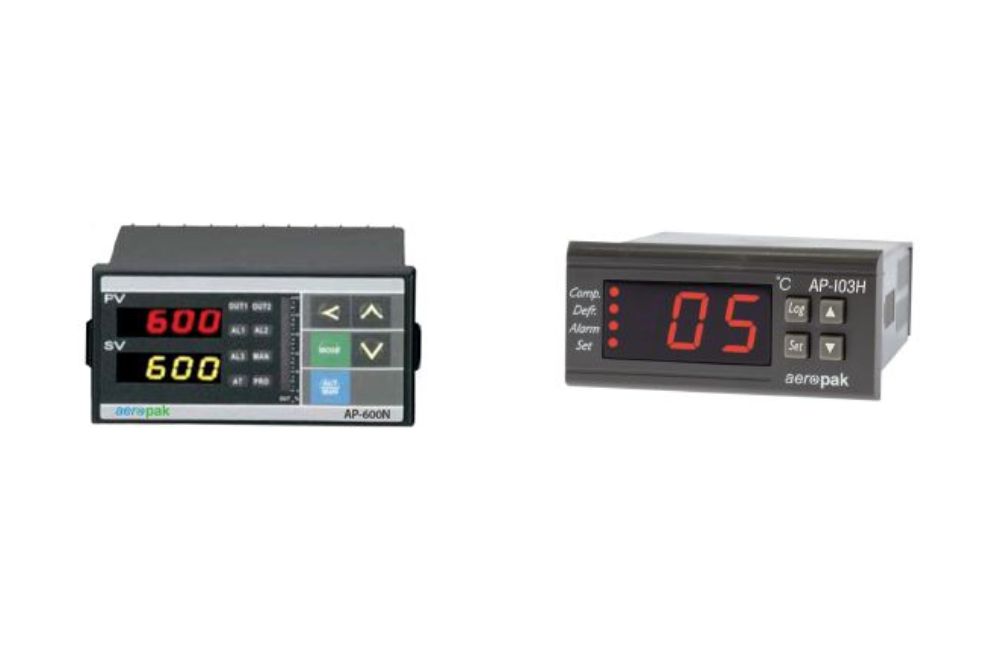
Temperature control devices are used in a variety of industries, from complex tasks to simple water boiling. The use of temperature control devices aims to reduce the number of people needed to operate systems and minimize errors that may occur due to human factors. For SCMA's Temperature Control units, there are various brands available, and sizes can be chosen according to suitability. Here are some interesting models: