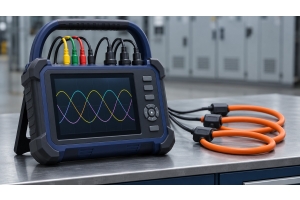
Have you ever encountered problems with environmental control in factories that affect production quality? Choosing accurate air measurement devices, air quality meters, and air measuring instruments is the solution that engineers and factory managers need. SCMA, as an expert in industrial measuring instruments and comprehensive calibration services, has compiled important information to help you understand the working principles and select air pressure measuring devices correctly. This article will delve into every detail in an easy-to-understand checklist format to enhance efficiency and safety in your work environment.
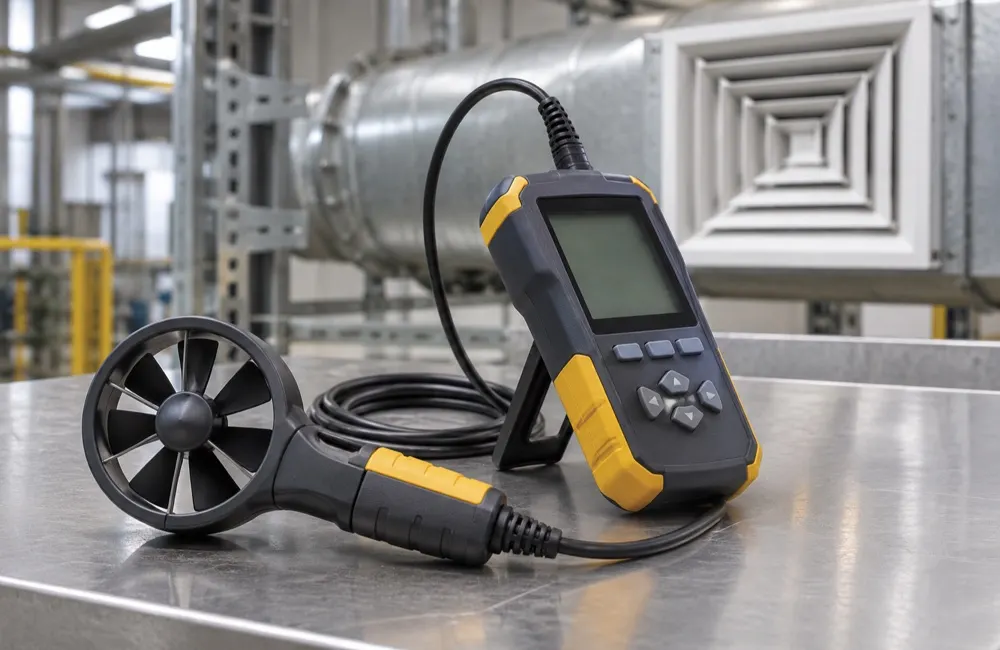
What is an Air Measuring Device?
An air measuring device is an important tool used to measure and assess levels of pollution, meteorological factors, and chemical substances present in the atmosphere around us. These air measuring instruments collect data on the current state of the air to be used for analysis and control of the environment according to specified standards. Whether they are portable or permanently installed air quality measuring devices, these tools play an important role in alerting abnormalities to prevent potential dangers to the health of factory personnel.
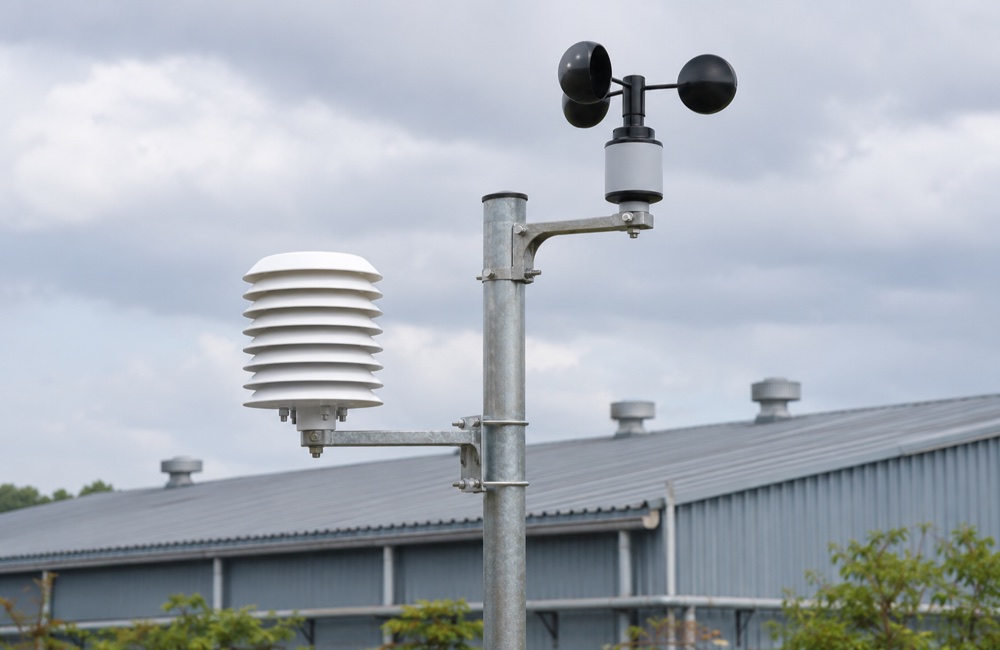
How the Weather Meter Works
The weather meter operates by using specialized sensors to measure meteorological variables. Then, it converts the obtained physical data into electrical signals or digital display values. Understanding these principles will help users select the appropriate weather measuring instrument for their specific application.
1. Thermometer
This type of weather instrument works by using a substance that expands in response to heat. When the temperature rises, the liquid inside expands and pushes the level up along the designated scale. In industrial levels, electronic sensors are used to change the electrical resistance according to temperature changes, resulting in highly accurate readings.
2. Hygrometer
The operation principle of this device relies on chemicals or materials that can absorb water vapor in the air to change electrical properties. This type of weather instrument converts the capacitance or electrical resistance back into relative humidity values. This data is extremely important for controlling humidity in clean rooms or electronic component production lines.
3. Barometer
The barometer measures the pressure of the surrounding air mass using a vacuum metal capsule that can contract or expand according to air pressure. Then, it sends a pulling force to the scale needle to display the result. Barometers are necessary for calculating future weather conditions, as well as controlling pressure within various test rooms.
4. Anemometer (for Measuring Wind Speed and Direction)
The cup rotation system uses wind speed to rotate the turbine to count the number of revolutions, or may use the principle of heat transfer, where the wind carries heat away from the sensor wire. The stronger the wind, the cooler the wire becomes, relating to the electric current used to maintain temperature. It is considered an external air quality measuring device that helps assess the distribution of airborne particles.
5. Rain Gauge
This device collects rainwater through a funnel down to a water scoop mechanism. When the water accumulates to the specified weight, the mechanism flips over to create a pulse signal for counting the number of times. Working together with external weather measuring instruments helps factories effectively plan to deal with weather conditions that may affect the transportation system.
How many types of air quality meters are there?
If categorized by usage patterns and mobility, air quality meters are divided into 3 main types, to meet the needs of different areas. Choosing the correct type will help the air measuring instrument work efficiently.
1. Portable Air Quality Meters
This type of air measuring instrument is small, lightweight, and powered by batteries, making it highly mobile. It is suitable for field data collection, risk point inspections within factories, or use in open areas that require constant movement. Engineers can immediately use this device to inspect air quality at various locations.
2. Fixed Air Quality Meters
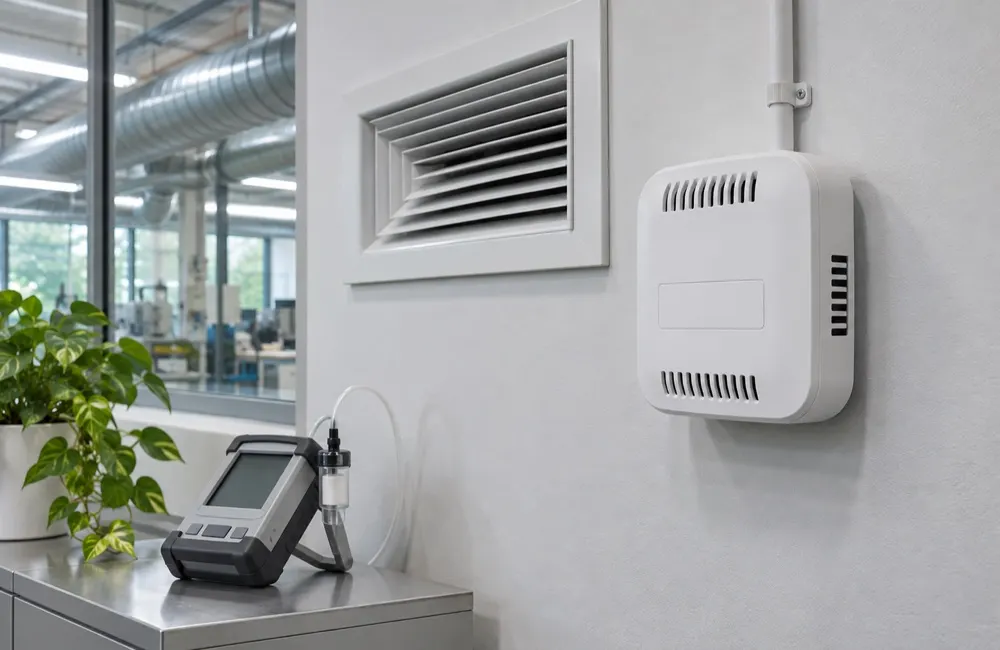
This permanently installed device is designed to continuously monitor air quality Air quality meter This type is suitable for installation at fixed points within office buildings or production lines in industrial factories. The measured data is sent to a central system for analysis and real-time control of the ventilation system.
3. Indoor Air Quality Monitors
This group of air measuring instruments focuses on installation within buildings or enclosed areas to measure PM2.5 particulate matter and carbon dioxide (CO2) levels. The device helps building managers maintain an environment that is suitable for the health of workers, reduce fatigue, and improve work efficiency in a tangible way.
Air Quality Monitor Maintenance
In order for the air quality measuring instrument to be accurate and have a long service life, users must regularly clean and check the sensors. Proper maintenance will effectively reduce the measurement errors of the air quality monitor.
1. Cleaning the External Body
External maintenance should use a slightly damp cloth to gently wipe the body. It is strictly forbidden to use harsh chemicals or corrosive solvents, as they may cause the casing of the air quality measuring instrument to deteriorate or damage the internal circuit board.
2. Sensor Maintenance
Users should inspect and clean the temperature or humidity sensor head at least once a month. During cleaning, special care must be taken to avoid impact on the sensor head of air pressure monitor, as this may cause the readings to deviate from the standard.
3. Inspection of Air or Rain Inlet Points
For automatic monitoring stations, it should be checked whether leaves or insects have blocked the rain funnel or wind vane area. Regular inspection at least twice a month will help the air quality measuring instrument to operate and collect data continuously without any obstacles.
4. Avoiding Harsh Environments
The air quality monitor should be stored away from accumulated moisture, direct sunlight, or areas with concentrated chemicals when not in use. Storing in an appropriate location will help extend the service life of electronic components and help maintain consistent accuracy over time.
Application of Air Measuring Instruments in Industry
The application of air measuring instruments in the industrial sector helps effectively control production quality, workplace safety, and environmental management within factories. The technology of air measuring instruments plays an important role in the following several steps
1. Dust and Toxic Gas Measurement
Steel plants, chemical industries, and power plants need to use air quality measuring instruments to monitor pollution and prevent hazards to employees. Accurate data helps the safety team to promptly implement preventive measures and evacuate personnel when chemical levels exceed standards
2. Automatic Ventilation Control System
Factories can connect the sensor of the air measuring instrument to a real-time air replenishment system. When the level of carbon dioxide gas exceeds the standard, the system will immediately open the exhaust fan. This method helps save energy and maintain a suitable working environment at all times
3. Inspection of Waste Gas Stacks (CEMS)
The system for measuring waste gas emissions from factory stacks requires air pressure measuring instruments and high-durability gas analysis sensors. This data is used to confirm that the factory emits pollution at levels specified by law, which is considered a demonstration of responsibility to the surrounding society and environment
4. Measurement of Heat Index (WBGT)
Evaluating accumulated heat in the factory is important to prevent heatstroke in workers. Air measuring instruments that can calculate the heat index help production managers to appropriately schedule rest times and prepare drinking water for employees, effectively reducing health risks precisely
Advantages of Air Quality Meters
Investing in high-quality air quality meters brings many benefits to organizations, both in terms of protecting employees' health and improving operational efficiency. The in-depth advantages of using air measurement instruments are as follows
1. Prevent Health Risks
The device warns of invisible fine dust PM2.5 and toxic gases. Knowing the information in advance allows employees to wear personal protective equipment (PPE) correctly. Air quality meters are thus like a shield for long-term respiratory health protection.
2. Improve Air Quality
Knowing the level of humidity or accumulated carbon dioxide allows engineers to improve the indoor air circulation system. Air measurement instruments help create a refreshing working environment, reduce fatigue, and increase the focus of all employees.
3. Increase Safety in Work Areas
Controlling the environment in the factory to prevent the accumulation of chemicals or flammable gases to dangerous levels is crucial. Air pressure meters and gas detection sensors help prevent serious accidents, resulting in maximum safety in high-risk areas according to international standards.
4. Improve Work Planning Efficiency
Checking wind conditions, humidity, and temperature in advance helps managers plan outdoor activities or weather-sensitive production processes. Air condition measurement instruments help reduce losses from work delays and make resource management smooth.
How to Choose an Air Meter
Selecting an air meter that meets industrial usage requirements should primarily consider the function and type of values to be measured. Buyers should carefully compare the features of each air meter model as follows:
Clearly define the variables to be measured: Consider whether you need to measure temperature, relative humidity, or detect PM2.5 dust to select temperature and humidity meters with sensors suitable for the application
Consider accuracy and international standards: Choose an air quality meter that uses high-quality sensors, responds quickly, and supports calibration to confirm the accuracy of the data
Check additional functions: The display of the weather measuring instrument should clearly show values, have a wireless connection system for viewing values through an application, for convenient monitoring
Consider the durability of the structure: Air pressure meters installed in factories should have an appropriate dust and water protection standard (IP Rating) to prevent damage from the environment
Select a specialized supplier: You should buy air pressure measuring instruments from a distributor that can provide technical advice and has a quick after-sales service
Installation Precautions for Air Measuring Instruments
From the practical field experience of the SCMA engineering team, it has been found that the installation location of air measuring instruments directly affects the accuracy of the data. Installing air measuring instruments at inappropriate locations may lead to erroneous analysis results.
Avoid heat sources: Do not install air quality measuring instruments near high-heat-emitting machinery or air vents, as this will cause the variables to be distorted.
Select an area with good air circulation: The sensor of the air measuring instrument requires natural air flow. Avoid corners where air does not circulate.
Protect from direct sunlight and rain: Outdoor installation equipment should have a sunshade panel to prevent the pressure sensor of the air measuring instrument from deteriorating prematurely.
Maintain distance from electromagnetic waves: Cables and air pressure measuring instruments should be kept away from large motors to prevent signal interference in the display.
Summary
Selecting high-standard air measuring and air quality measuring instruments is crucial for improving efficiency and safety in industrial factories. Understanding the operating principles and proper maintenance of air condition measuring instruments will help your organization save costs in the long run. The engineering team from SCMA is ready to provide consultation and design a complete system of air pressure measuring instruments suitable for your production process.
Interested in purchasing or consulting via LINE Official: @SCMA
If you want to buy an air meter, you can buy it from SCMA today!
Having accurate environmental data helps you make critical decisions quickly and correctly. As a technically specialized partner, SCMA provides the distribution of high-quality air meters from leading global brands, along with customized Project & Solutions design services tailored to your specific needs. Whether it is an air quality meter or a pressure measuring instrument, we have a team of technicians ready to handle everything from calibration to professional after-sales service.
Frequently Asked Questions
What is the difference between a portable air meter and a permanently installed air meter?
The portable type emphasizes flexibility for scanning different points, while the permanently installed type is used for continuous 24-hour monitoring of air quality in that area.
How often should air measuring instruments be calibrated?
To ensure maximum accuracy according to industry standards, it is recommended to send air pressure meters and various sensors for calibration at least once a year.
Can air quality meters be connected to existing factory systems?
Yes, if you choose equipment with standard signal ports, our engineering team can design the system to connect the data to your existing production control system.
How do high levels of PM2.5 and CO2 affect employees?
They cause fatigue, lack of focus, and increase the risk of respiratory diseases, which directly affect work performance and safety in the production line.
5. What after-sales services does SCMA offer for air measuring instruments?
We have service centers covering major industrial areas, along with maintenance teams and engineers who provide quick consultation to minimize machine downtime as much as possible.